Under the dual pressures of the global climate crisis and energy transition, the rubber industry, especially tire manufacturing, is facing unprecedented challenges. Industry pain points are becoming increasingly prominent: How to effectively reduce rolling resistance to save energy and cut carbon emissions while meeting the rigid demands of high performance, long lifespan, and high safety? How to provide more reliable grip on wet roads to ensure driving safety? How to achieve product differentiation and green value through technological innovation in a fiercely competitive market?
For those seeking a Bio based tire additive for rolling resistance o un High wet grip tire compound additive, the limitations of traditional materials are all too familiar. Traditional solutions, such as relying on high proportions of silica or carbon black, often fall into a “seesaw” dilemma between performance and environmental protection—improving one property may come at the expense of another, and the heavy use of mineral fillers exacerbates environmental burden and product weight.
And all of this is being transformed by an innovative material derived from nature.
I. Core Industry Pain Points: The Triple Pressure of Performance, Cost, and Sustainability
Before delving into the solution, we must first clearly define the severe challenges facing the rubber products industry, particularly in the high-end tire sector. These are the very issues that drive searches for a Green tire additive manufacturer or an ESG sustainable rubber material:
- The Eternal Game of the “Magic Triangle”: There is an inherent contradictory relationship between a tire’s rolling resistance, wet grip, and wear resistance. Improving one often compromises another. Breaking this “Magic Triangle” law to achieve a balanced and superior performance in all three areas is the long-sought holy grail of the industry. This is the core challenge behind queries for low rolling resistance high wet grip tire technology.
- Carbon Emission and Energy Consumption Pressure: Transportation is a major source of global carbon emissions. Tire rolling resistance accounts for approximately 20%-30% of a passenger car’s total energy consumption. Reducing rolling resistance is the most direct and effective way to decrease vehicle fuel consumption and CO₂ emissions, and it is a key regulatory indicator in various national regulations and green labeling schemes (such as the EU Tire Label). This pressure fuels the need for low carbon footprint tire production.
- Raw Material Sustainability Crisis: The volatility and non-renewability of petrochemical raw materials, coupled with the “high-carbon” nature of traditional fillers like carbon black, run counter to global “dual-carbon” goals and the circular economy concept. The market urgently needs renewable, biodegradable green tire manufacturing sustainable materials y renewable materials for automotive industry.
- Urgent Need for Lightweighting: Lighter tires mean lower unsprung mass, which not only further improves energy efficiency and handling but is also key to extending the range of electric vehicles. However, weight reduction cannot come at the cost of strength and safety, creating a need for lightweight tire compound design solution.
- Product Lifespan and Safety: Consumer demands for tire durability, aging resistance, and all-weather safety performance (especially wet braking distance) are increasingly high, leading to searches for an Additive to improve tire wear resistance and lifespan and solutions for tire rubber compound aging resistance improvement.
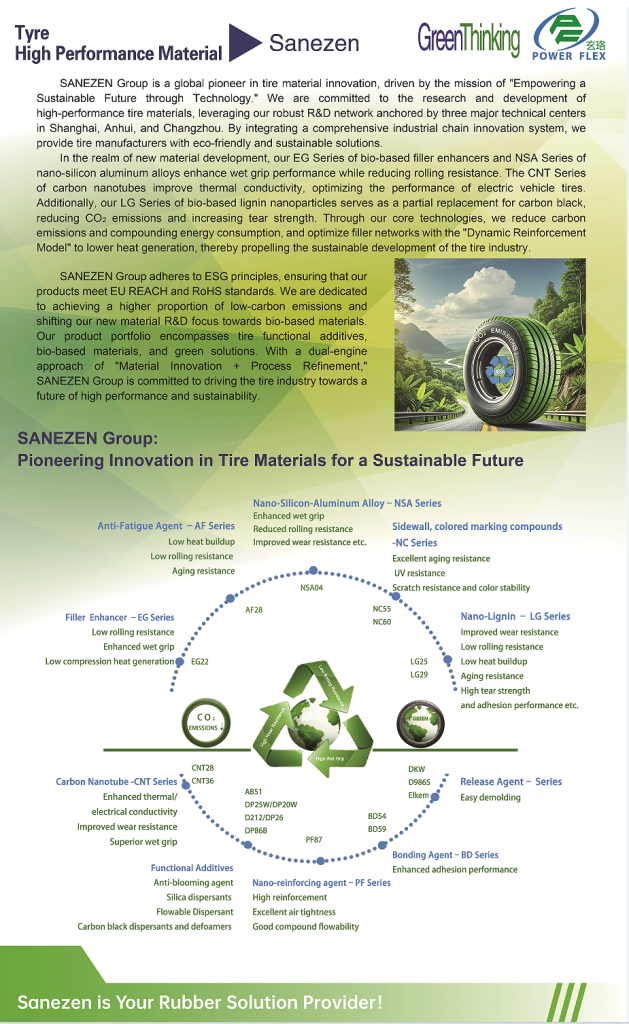
Faced with these systemic challenges, the GreenThinking® LC Series Bio-Based Functional Modifiers (LC25, LC25T, etc.) launched by SANEZEN are not merely “another additive.” Instead, starting from the origin of materials and through multi-level structural design, they provide a synergistic and efficient integrated solution to the aforementioned pain points, positioning us as a leading Tire compound additive manufacturer y Bio based tire additive supplier.
II. Technical Core: Nano-level Synergistic Effects Derived from Nature, Refined by Design
The core advantages of the GreenThinking® LC Series are rooted in their unique technical architecture. As a Green tire additive manufacturer in China with a global vision, our innovation is key:
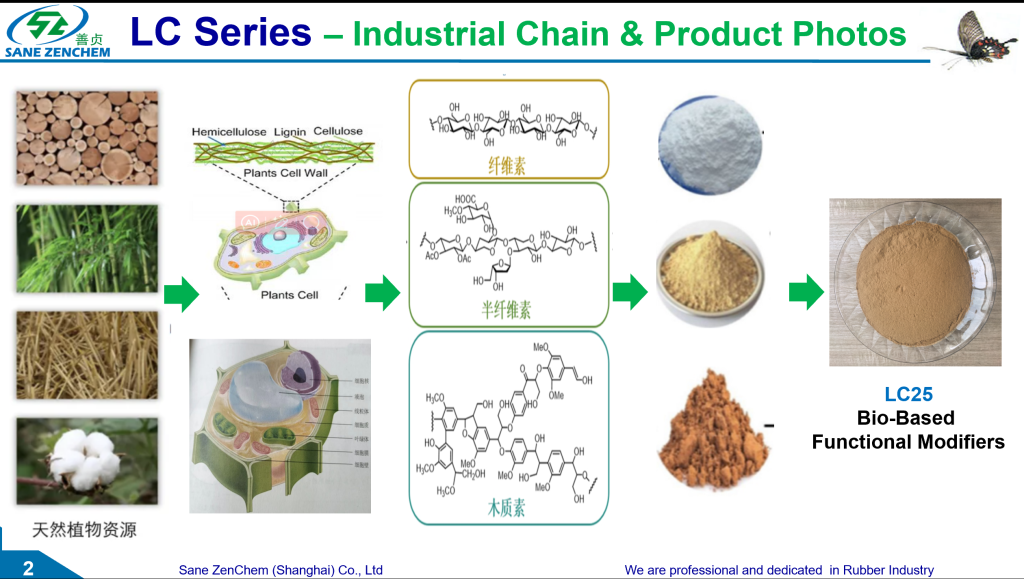
- 100% Plant-Derived: The main components are modified nano-lignin and nano-cellulose, entirely sourced from renewable resources, endowing the product with inherent low-carbon attributes and sustainable genes. This makes it an ideal plant based rubber additive for tires.
- Multi-level Structural Design: Through nano-sizing (greatly increasing specific surface area and active sites), functionalization (introducing active functional groups), and supramolecular assembly (forming an ordered reinforcement network), an intelligent “three-dimensional synergistic enhancement system” is constructed within the rubber matrix.
- Natural Porous Structure and Active Functional Groups: This structural characteristic is the physico-chemical basis for its ability to partially replace traditional fillers (silica/carbon black), acting as a high-performance Filler for sustainable tire material that ensures mechanical strength while reducing compound density.
It is this ingenious design that enables the LC series products to act simultaneously on the molecular, nano, and macro scales within rubber composites, producing a comprehensive synergistic effect where “1+1 > 2”. This directly addresses the query of how to reduce tire rolling resistance without sacrificing grip.
III. Performance Advantages: Let the Data Speak, Surpassing Tradition Comprehensively
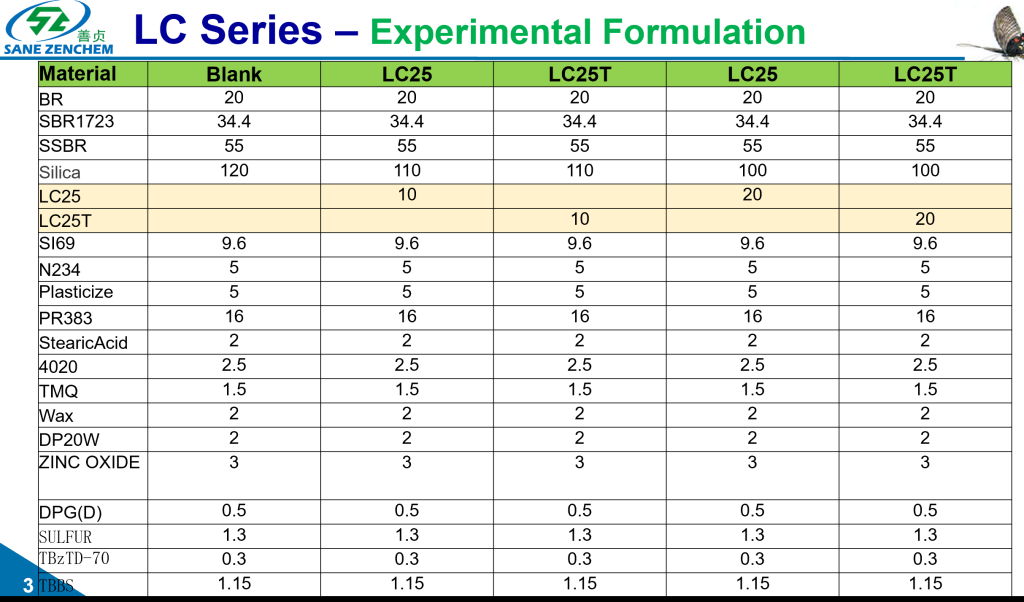
The performance improvements of the LC series are not conceptual claims but are verified through rigorous laboratory tests and simulation experiments. The following data clearly demonstrates its outstanding performance as a premier bio based additive for tire manufacturing:
1. Exceptional Balance of Dynamic Performance — Cracking the “Magic Triangle”
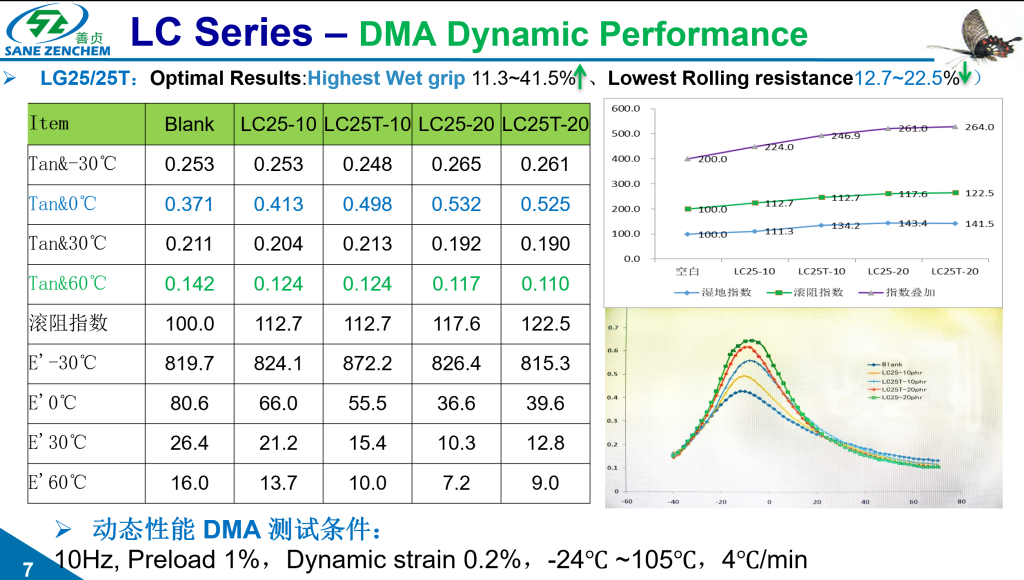
- Significantly Enhanced Wet Grip: Improvement of 11.3% to 41.5%. Its rigid aromatic ring structure restricts polymer chain segment mobility, while creating nano-scale protrusions on the tread surface, significantly increasing the actual contact points with wet roads. This substantially reduces braking distance in rainy conditions, enhancing driving safety.
Substantially Reduced Rolling Resistance: Reduction of 12.7% to 22.5%. The material’s inherent low density and soft characteristics, combined with its ability to facilitate easier molecular chain slippage and reorganization under dynamic strain, effectively reduce the hysteresis loss of the tire, directly translating into higher fuel efficiency or extended electric vehicle range.
Substantially Reduced Rolling Resistance: Reduction of 12.7% to 22.5%. The material’s inherent low density and soft characteristics, combined with its ability to facilitate easier molecular chain slippage and reorganization under dynamic strain, effectively reduce the hysteresis loss of the tire, directly translating into higher fuel efficiency or extended electric vehicle range.
2. Dual Assurance of Durability and Processability
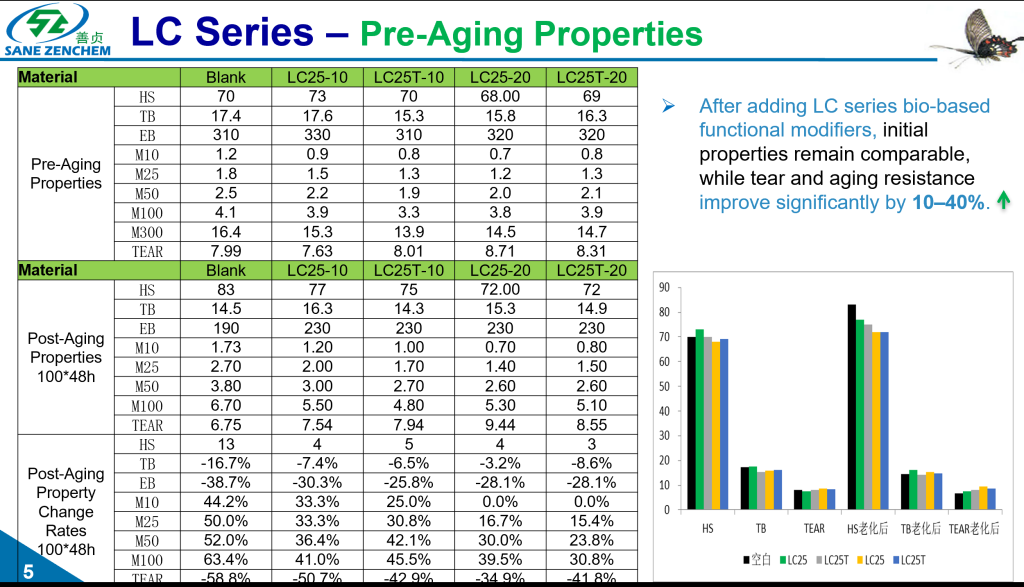
- Excellent Aging and Heat Resistance: The phenolic hydroxyl groups it contains efficiently scavenge free radicals generated in rubber during thermal, oxidative, and dynamic fatigue processes, and decompose hydroperoxides, interrupting oxidation chain reactions. Experiments show that after adding the LC series, the compound’s tear resistance and aging resistance are significantly improved by 10% to 40%, effectively delaying compound hardening, cracking, and performance degradation.
- Low Heat Buildup Characteristics: Under dynamic strain, LC modifiers help reduce internal friction heat generation, lowering tire operating temperature. This not only extends tire life but also improves safety during high-speed, long-distance travel, making it a true Green tire additive low heat buildup.
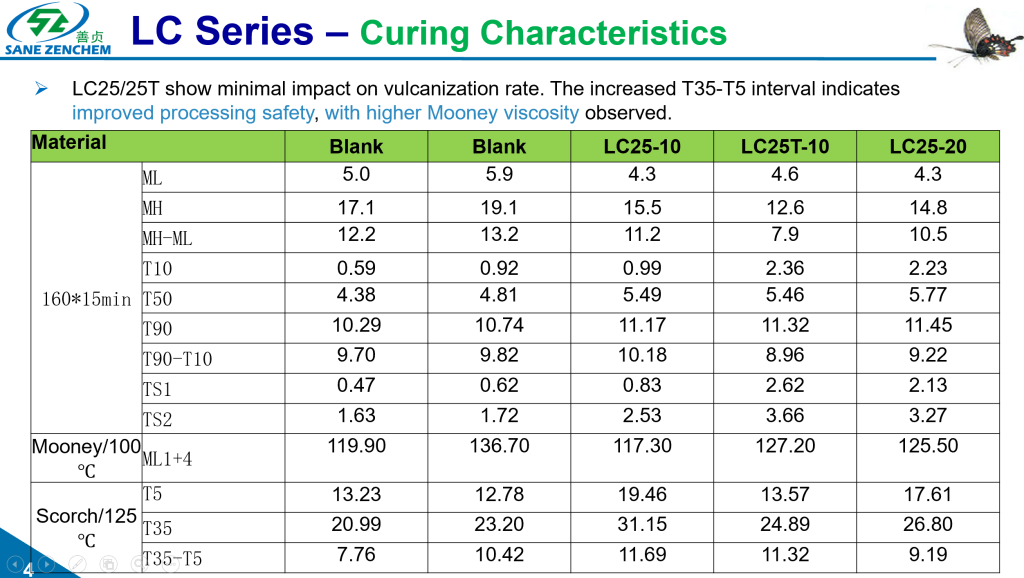
- Good Processing Safety: LC25/25T have minimal impact on vulcanization rate, and the increased T35-T5 interval indicates they provide a wider processing window and higher operational safety. Although a moderate increase in Mooney viscosity is observed, this precisely reflects their good interaction with and reinforcing effect on the rubber matrix.
3. Direct Value in Green and Lightweighting
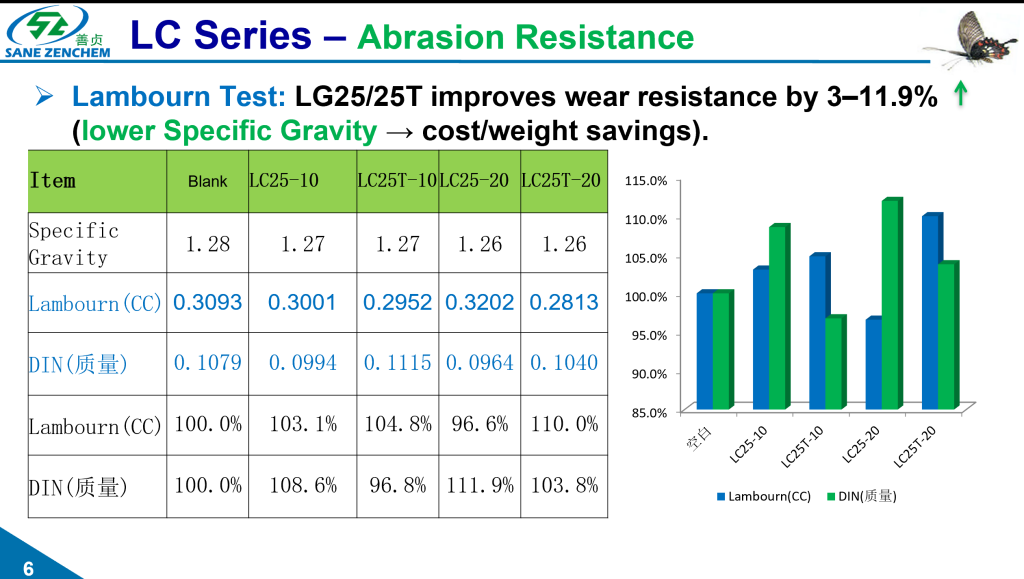
- Reduced Compound Density: Its low specific gravity directly contributes to lighter tire weight, facilitating the lightweight tire compound design solution that the market demands.
- Partial Replacement of Traditional Fillers: It can reduce reliance on silica and carbon black without sacrificing mechanical strength, decreasing dependence on non-renewable resources and advancing green tire manufacturing sustainable materials.
- Plant-Based and Low Odor: 100% plant-derived with a naturally pleasant woody aroma, making it highly suitable for applications with strict requirements on VOCs and odor, such as automotive interior parts and low-odor tires. It is also an excellent fit as ESG compliant tire raw materials.
IV. Customer Value: Comprehensive Benefits from Cost Savings to Brand Upgrading
Adopting the GreenThinking® LC Series brings customers far more than just product performance improvements; it paves a path toward sustainable competitiveness and higher profitability. This is the value proposition of a forward-thinking Tire additive manufacturer in China like SANEZEN:
- Meeting and Exceeding Regulations, Seizing Market Opportunities: Helps tire manufacturers easily comply with increasingly stringent global fuel economy regulations (such as B or even A grade rolling resistance requirements under the EU Tire Label) and wet grip safety standards, serving as a green passport to enter high-end markets.
- Achieving Product Differentiation, Enhancing Brand Premium: In a competitive market, tires that can simultaneously offer “lower rolling resistance, stronger wet grip, and longer life” become a powerful selling point. Combined with the “bio-based” and “sustainable” green labels, it significantly enhances brand image and product added value.
- Optimizing Formulation Costs, Delivering Direct Economic Benefits:
- Weight Reduction and Cost Saving: Lower compound density means more product volume can be produced per kilogram of compound, directly saving material costs.
- Performance-Oriented Cost Optimization: Through the comprehensive performance enhancement by the LC series, a more economical balance of the filler/oil system within the overall formulation might be achieved, thereby optimizing total formulation cost.
- Extended Lifespan Value: Improved tire wear and aging resistance reduces warranty and claim risks, creates lower cost-per-kilometer for end-users, and enhances product reputation.
- Strengthening Supply Chain Resilience, Practicing ESG Responsibility: Utilizing renewable plant-based raw materials reduces dependence on the petrochemical supply chain, enhancing supply chain sustainability and stability. Simultaneously, it significantly reduces the product’s lifecycle carbon footprint, serving as strong proof of a company’s commitment to Environmental, Social, and Governance (ESG) responsibility, aligning with the green procurement preferences of downstream automakers and consumers seeking ESG compliant tire raw materials.
- Simple Process Adaptability: The recommended addition level is 5-30 phr. It can be added during the first mixing stage alongside silica/carbon black, requiring no changes to existing main production processes and equipment, facilitating quick customer adoption and application.
V. Application Guidelines and Outlook
Recommended Applications: High-performance green passenger car tires, energy-saving truck tires, aging-resistant lightweight rubber products (e.g., automotive seals, damping components), special rubber products with odor requirements.
Addition Guidelines: Recommended to be added during the first mixing stage and blended with fillers. The specific dosage (5-30 phr) can be flexibly adjusted based on the emphasis on rolling resistance, wet grip, wear resistance, and cost to achieve the optimal comprehensive performance balance.
Outlook: The GreenThinking® LC Series represents a clear path for material innovation in the rubber industry—the integration of high performance, functionality, greening, and lightweighting. It is not just a product but a future-oriented solution, helping partners seize the high ground in technological upgrading and industrial transformation. It embodies the shift towards renewable materials for automotive industry.
Faced with the dual-era test of performance and environmental protection, choosing the GreenThinking® LC Series means choosing to use nature’s wisdom as the engine, driving products toward a future of higher performance and greater sustainability with quantifiable, outstanding data. Let us join hands to redefine the possibilities of rubber together.
For more product information and technical data, please visit: www.sanezenrubber.com
SANEZEN — Innovation Driven, Green Future.
We are a globally competitive Tire additive manufacturer in China. We continuously pursue technological innovation to create sustained value for our customers. Beyond the LC series, we also provide other high-performance additives and technical support.
 English
  Español
  Русский