
What this page answers
A flame retardant specification usually arrives as two numbers and two letters: an oxygen index target, a hardness ceiling, and UL94 V-0. Turning those into a loading is arithmetic, and the arithmetic is where most projects go wrong, because the two requirements move in opposite directions.
This page works through a single grade, FR99RP, using the four compound trials we have run on it. It covers what the loading does to cure time, tensile strength, elongation, compression set and hardness in an EPDM 70 Shore A compound at 80 and 100 phr, in an EPDM 50 Shore A compound at 100 phr and in an NBR 70 Shore A compound at 100 phr. It then uses the dosage rules from the data sheet to work out whether a given specification is reachable, what it costs in hardness and elongation, and the case where the honest answer is that this grade cannot get there.
What the material is
FR99RP is a compounded halogen free flame retardant for EPDM and for the other rubbers that make up most of the flame retardant market: NBR, HCR, NR, SBR, CR, IIR and ACM. It is supplied as a surface treated, flake structured powder with a high specific surface area and a controlled particle size distribution, packed at 25 kg per bag.
It contains no polybrominated biphenyls, no polybrominated diphenyl ethers, and no chlorine, fluorine or antimony trioxide. That last exclusion is the one that decides a lot of projects, because an antimony trioxide free flame retardant is often a compliance requirement rather than a performance choice: antimony trioxide is a declared substance in several regulatory lists, and a part that contains it has to be declared even when it passes the burn test.
The product is stated as compliant with the EU RoHS and WEEE directives, which is why a RoHS compliant flame retardant is how it is usually specified in an electronics or railway bill of materials.
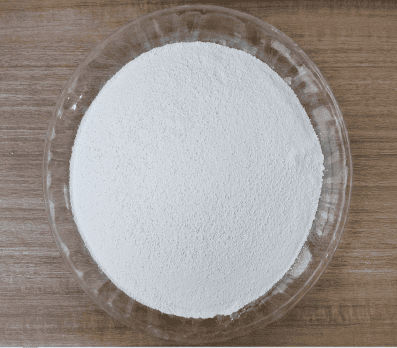
Figure 1. The flame retardant as supplied, a surface treated white powder dosed at 60 to 130 phr.
How it puts a fire out
The mechanism has three parts and all three are needed to understand why the dosage behaves the way it does.
When heated, the material decomposes at the surface and forms a thick, coherent coating. That coating is a barrier: it slows the diffusion of oxygen in, the diffusion of heat in, and the diffusion of the small fuel molecules out. A barrier is a physical mechanism, so it depends on how much material is present at the surface, which is why the loading matters more than the chemistry after a certain point.
The decomposition also releases free radicals that react with the H and OH radicals which propagate combustion, terminating the chain reaction that keeps a flame going. That part is chemical and it scales with the amount of material decomposing.
And the decomposition is endothermic, releasing water and carbon dioxide, which cools the surface and dilutes the flammable gases. That part is thermal.
An intumescent flame retardant additive works mainly through the first mechanism, swelling into a bulky char. This grade is described as forming a dense coating rather than a swollen one, and that difference shows up in the smoke: a dense coherent char produces less soot than a bloated one, which is why a Retardante de llama libre de halógenos y de bajo humo and a coating forming mechanism tend to go together.
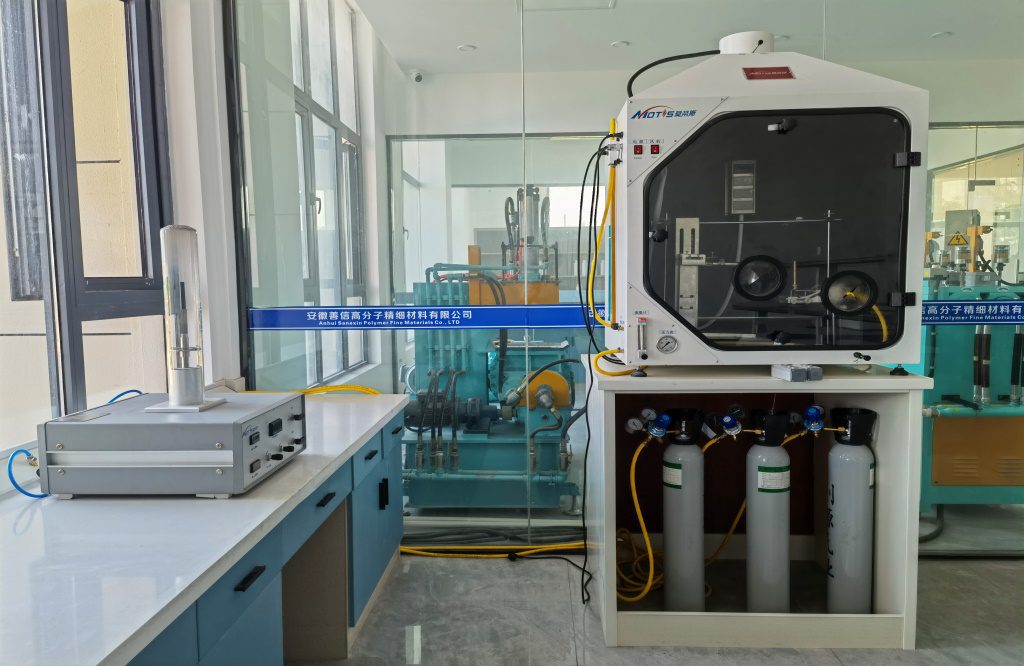
The dosage rules, and why they are the most useful thing on the data sheet
The data sheet gives three numbers that make a specification calculable.
| Rule | Value from the data sheet |
| General dosage range | 60 to 130 phr |
| Hardness effect | 6 to 8 phr raises hardness by 1 Shore A |
| Oxygen index effect | 3 to 5 phr raises the oxygen index by 1 unit |
Those two increments are rules of thumb, not laws, and they interact badly at the top of the range: the hardness increment is roughly linear because it is a filler loading effect, while the oxygen index increment tends to fall off as the loading rises, because the surface is already covered. That is the first thing to understand before a specification is accepted, and it is the reason the last ten phr of a high loading do less than the first ten.
They also let a specification be tested before any compound is mixed. If a customer asks for an oxygen index of 38 and a hardness of 76 in an EPDM compound, the arithmetic can be run in a minute, and it will sometimes show that the request is not reachable with this grade.
The four compounds
The trials below are the evidence base for this page. All four used the same grade at the stated loading; the EPDM 70 Shore A compound was run at two loadings so that the direction of change can be seen.
| Material, phr | EPDM 70 A | EPDM 50 A | NBR 70 A |
| KEP350 | 50 | 40 | – |
| TER 4038 | 50 | 60 | – |
| NBR 3350 | – | – | 100 |
| Carbon black CZ500R | 40 | 40 | 40 |
| Precipitated calcium carbonate | 20 | – | – |
| FR99RP | 80 or 100 | 100 | 100 |
| Paraffinic oil 6030 | 15 | 35 | – |
| Plasticiser IATBC | – | – | 10 |
| Zinc oxide | 6 | 6 | 5 |
| Stearic acid | 1.5 | 1.5 | 1.0 |
| PEG 4000 | 2 | 2 | 1 |
| Antioxidante RD | – | – | 1.5 |
| Antioxidante 4010NA | – | – | 1.0 |
| L-24 | 1 | 1 | – |
| L-12 | – | – | 1 |
| Sulphur S-80 | 1.25 | 1.25 | 0.75 |
| Accelerator EP-33 | 2.5 | 2.5 | – |
| Accelerator TMTD | – | – | 1.5 |
| Acelerador CZ | – | – | 1.5 |
| Total | 269.25 or 289.25 | 289.25 | 264.25 |
Two numbers matter before any property is discussed. At 100 phr in the EPDM 70 Shore A compound the total is 289.25 phr, so the flame retardant is 34.6 percent of the compound by weight. In the NBR compound at the same loading it is 37.8 percent. At that share, the flame retardant is not an additive; it is a structural component of the recipe, and its density and its cure behaviour set the compound’s cost.
What the loading does to cure
| Propiedad | EPDM 70 A, 80 phr | EPDM 70 A, 100 phr | EPDM 50 A, 100 phr | NBR 70 A, 100 phr |
| ML, lbf-in | 0.90 | 1.04 | 0.58 | 0.70 |
| MH, lbf-in | 12.55 | 14.62 | 9.89 | 13.23 |
| MH minus ML, lbf-in | 11.65 | 13.58 | 9.31 | 12.53 |
| TS2, seconds | 41 | 41 | 41 | 38 |
| TC10, seconds | 35 | 36 | 35 | 35 |
| TC90, seconds | 96 | 112 | 131 | 94 |
The first observation is that this grade shortens the cure rather than extending it, which is unusual for a mineral filler at 30 percent of the compound. A flame retardant for EPDM sealing strip that cures in 96 to 112 seconds at 180 C is a production advantage, and it is the opposite of what a customer expects after a bad experience with a different chemistry.
The second is that the state of cure rises with loading: MH minus ML goes from 11.65 at 80 phr to 13.58 at 100 phr in the same compound. More flame retardant means a tighter network in this system, not a looser one, which is worth knowing because a tighter network is stiffer and takes a higher set.
The third is the scorch behaviour. TS2 sits at 38 to 41 seconds in every compound, so the safety window does not change with loading. For a compound that has to survive a transfer mould or a long flow path, a constant scorch is easier to live with than one that shortens as the loading goes up.
What the loading does to hardness, strength and elongation
| Propiedad | EPDM 70 A, 80 phr | EPDM 70 A, 100 phr | EPDM 50 A, 100 phr | NBR 70 A, 100 phr |
| Ítems de prueba | 74 | 76 | 67 | 76 |
| Resistencia a la tracción, MPa | 9.26 | 9.32 | 9.31 | 9.23 |
| Elongation at break, percent | 421 | 497 | 553 | 455 |
| Modulus at 100 percent, MPa | 2.77 | 2.69 | 1.85 | 2.94 |
| Specific gravity, g/cm3 | 1.238 | 1.242 | 1.189 | 1.312 |
| UL94 vertical burn | V-0 | V-0 | V-0 | V-0 |
| Oxygen index, percent | not measured | 35.4 | 30.5 | 32.6 |
The tensile strength column is nearly flat across the EPDM compounds: 9.26, 9.32 and 9.31 MPa at loadings that differ by 20 phr and across two hardness levels. That is the signature of a filler that is not interfering with the cure. Elongation, by contrast, rises with loading in the EPDM compounds, from 421 to 497 percent, which is the opposite of what a simple filler model predicts and is the reason the compound does not become brittle as more flame retardant is added.
Both compounds reached V-0 at every loading tested, so UL94 V0 flame retardant compound status is not the constraint here. The constraint is the oxygen index, and the oxygen index is where this grade’s honest limitation sits.
The oxygen index margin, read properly
At 100 phr the oxygen index measured 35.4 percent in the EPDM 70 Shore A compound, 30.5 percent in the EPDM 50 Shore A compound and 32.6 percent in the NBR 70 Shore A compound.
An oxygen index flame retardant for rubber is bought against a number, so it is worth being precise about what that number predicts. The number that matters is not the value itself but the margin above 27 percent, which is the threshold normally used to call a material self-extinguishing. In the 70 Shore A EPDM compound the margin is 8.4 points, which is comfortable. In the 50 Shore A compound it is 3.5 points, which is thin.
That difference is not a measurement artefact and it is not specific to this grade. A softer compound contains more plasticiser and less filler, and both dilutions reduce the flame retardant’s effective concentration at the burning surface. It is the reason a flame retardant for EPDM sealing strip at 55 Shore A and one at 75 Shore A cannot be specified with the same loading, and the reason the formulation has to be tested at the hardness that will be produced rather than at a convenient one.
The second point about the oxygen index is that it is a screening number, not a compliance number. How to test UL94 V0 on a rubber part and how to measure oxygen index are two different procedures: oxygen index finds the minimum oxygen concentration at which a small specimen sustains candle-like burning, while V-0 is a vertical burn that judges afterflame time, afterglow and whether drips ignite a cotton pad. A coating forming system can pass V-0 at 30.5 percent because the coating stops the drip, while a higher index material can fail V-0 by dripping. Both readings are needed.
Ageing, compression set and resilience
| Property, EPDM 70 A at 100 phr | Valor |
| Hardness after 70 h at 100 C, Shore A | 79 |
| Hardness change, points | +3 |
| Tensile strength after ageing, MPa | 8.99 |
| Tensile strength change, percent | -3.54 |
| Elongation after ageing, percent | 406 |
| Elongation change, percent | -18.31 |
| Compression set, 24 h at 120 C, percent | 31.43 |
| Resilience, percent | 47 |
A 3 point hardness rise and a 3.5 percent tensile loss after 70 hours at 100 C describe a compound that has stabilised rather than one that is still curing in service. The elongation loss of 18 percent is the largest change in the set, and it is the normal direction for a filled vulcanisate.
Compression set at 31.43 percent is the number to argue about with a seal customer, because whether it passes depends entirely on the specification they wrote. For a static gasket at moderate temperature it is acceptable. For a dynamic seal it is high, and the answer is not more flame retardant; it is a different base polymer or a lower loading with a different flame chemistry.
Resilience at 47 percent is a mid-range figure and it matters for two reasons. A low resilience compound converts deformation into heat, which in a thick part becomes a thermal problem. And a high resilience compound is what a customer means when they say the part feels right.
The specification arithmetic, worked through
En flame retardant dosage in EPDM cannot be set from the oxygen index alone, because the same phr produces a different margin at each hardness. Here is what the dosage rules are for. Take a customer who wants an oxygen index of 38 in an EPDM compound at 76 Shore A, which is a plausible railway sealing strip requirement.
The measured point is 35.4 percent at 100 phr and 76 Shore A. To gain 2.6 points at 3 to 5 phr per point requires 8 to 13 phr more, which takes the loading to 108 to 113 phr. At 6 to 8 phr per Shore A, that same increment adds 1 to 2 points of hardness, so the compound arrives at 77 to 78 Shore A rather than 76.
| Target | Loading needed | Hardness consequence | Verdict |
| LOI 36, 76 Shore A | about 102 to 105 phr | plus 0 to 1 point | Reachable |
| LOI 38, 76 Shore A | about 108 to 113 phr | plus 1 to 2 points | Reachable if the window is 76 to 78 |
| LOI 40, 76 Shore A | about 114 to 125 phr | plus 2 to 4 points | At the top of the 60 to 130 phr range |
| LOI 42, 76 Shore A | beyond 130 phr | plus 4 or more | Not reachable with this grade |
The table is arithmetic on rules of thumb, not a set of measured points, and it should be read as a first estimate that a trial confirms. Its value is that it tells you before the trial whether the specification is inside the product’s envelope, and it tells you what the price will be in hardness.
The last row is the one worth saying out loud. An oxygen index of 42 in a 76 Shore A EPDM compound is beyond what this grade can do at its stated maximum loading. A different chemistry is needed, and in our own range that is the grade with the higher oxygen index and the slower cure. Recommending the wrong one of the two costs the customer a season.
Where the loading goes wrong
| Symptom | Usual cause | What to check |
| V-0 passes on a plaque, fails on the finished part | The part is thinner than the specimen | Test the thinnest section, at the production loading |
| Hardness rises faster than the rule predicts | Filler loading plus a cure that tightened | Compare MH minus ML against the previous batch |
| Elongation falls below the drawing | Loading at the top of the range, or a different base polymer | Check elongation at 80 phr before going to 130 |
| Cure time longer than expected | A different grade or a contaminated batch, not the loading | Compare TC90 against the trial record at the same loading |
| White bloom after a few weeks | Dispersion, or storage at the top of the temperature range | Check dispersion grade and storage temperature |
| Oxygen index short of target in a soft compound | Plasticiser dilution, not the flame retardant | Test at the production hardness, then raise the loading or change the polymer |
| Part weighs more than the drawing allows | Specific gravity at 1.24 against 1.19 in the softer compound | Recalculate the part weight before the tool is cut |
The last row is a commercial problem disguised as a technical one. The density penalty of a flame retardant at this loading is about 5 to 8 percent against an unfilled compound, and on a large extruded profile that is a real material cost per metre. It is worth calculating at the quotation stage rather than at the first delivery.
The fifth row, bloom, is where a halogen free flame retardant China supplier is usually blamed for a problem that belongs to the mixing room. At 30 percent loading, dispersion is not automatic, and an undispersed agglomerate both blooms and protects a volume of polymer that contains no flame retardant at all. A flame retardant rubber compound supplier should be able to tell you the dispersion equipment and the mixing sequence that the grade was validated on.
Which rubbers, and which applications
The grade is positioned for EPDM, NBR, HCR, NR, SBR, CR, IIR and ACM. Three of those deserve a specific note.
For EPDM, the behaviour measured here applies directly, and EPDM is where most flame retardant for railway rubber parts and sealing profiles are built.
For NBR, the numbers in the table are the ones to use, and the NBR result is different from the EPDM result in one important way: elongation at 100 phr is 455 percent against 497 in EPDM, and modulus at 100 percent elongation is higher at 2.94 MPa against 2.69. Nitrile is a stiffer compound, so the same loading produces a less extensible part. A flame retardant for NBR compound should therefore be specified from nitrile data, not from EPDM data.
For CR, IIR and ACM the mechanism still applies but we have not run the trials, and the loading should be established in the customer’s own compound. That is an honest gap rather than a marketing position.
The application list in the data sheet covers flame retardant for cable sheath rubber, electronic parts, automotive parts, and flame retardant for mining rubber parts. The mining and cable cases share a requirement that the burn test does not measure: smoke. A conveyor belt in a mine or a cable in a tunnel is judged on smoke density and toxicity as well as on flame spread, and a low smoke mechanism is worth more there than an extra two points of oxygen index.
Smoke, and the two applications where it decides
Two of the applications in the data sheet are judged on smoke rather than on flame spread, and they deserve separating from the rest.
A conveyor belt in a mine and a cable in a tunnel are occupied spaces. What injures people in those spaces is usually not the flame front but the smoke: its density, which removes the exit route, and its toxicity, which removes the ability to use it. A standard written around V-0 does not measure either, which is why the mining and cable specifications add smoke density and gas analysis on top.
A coating forming grade is the right starting point for those specifications because the mechanism keeps more of the carbon in the residue and less in the plume. The failure mode to watch is the opposite one: a compound that passes V-0 by intumescing strongly can produce a large volume of soot, and that is what a smoke density test will catch even when the burn test passes.
The practical instruction is to test smoke at the same time as the burn, at the production thickness, and to treat a V-0 result on its own as a screening result rather than a qualification.
Cost, per kilogram of compound
At 100 phr the flame retardant is a third of the compound, so the cost conversation is simple and usually wrong.
The first term is the price of the flame retardant multiplied by 100 phr. The second is the density: a compound at 1.24 g/cm3 uses 5 to 8 percent more material per unit volume than an unfilled one, so the part cost rises faster than the compound cost. The third, and usually the largest, is the cure time, and here this grade is a saving rather than a cost, because 112 seconds instead of 221 seconds is most of the available capacity on a short cycle.
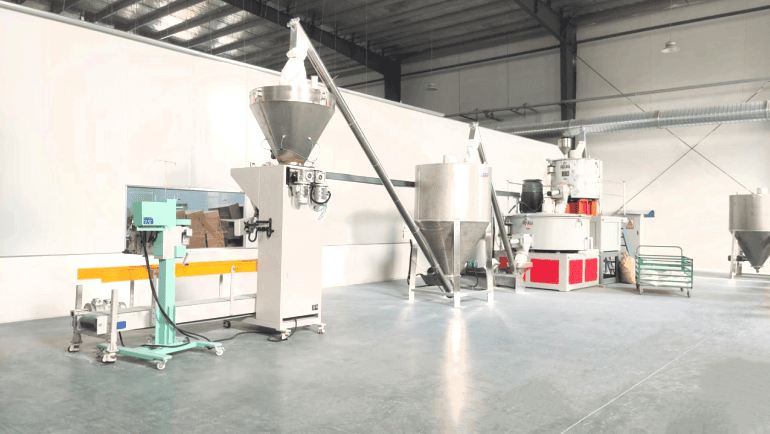
Figure 2. The flame retardant line where the grade is compounded and packed, 25 kg per bag.
That is the case to make to a customer who is comparing two flame retardants on price per kilogram. The cheaper grade that doubles the cure time is the more expensive one.
Preguntas frecuentes
How much flame retardant to add to reach V0 in EPDM
Start at 80 phr and verify on the thinnest section of the part. In the EPDM 70 Shore A compound here, 80 phr and 100 phr both reached V-0, so V-0 was reached at the lower loading. The loading that matters is the one that meets the oxygen index and the hardness, not the one that meets V-0.
How to raise the oxygen index of a rubber compound
Add flame retardant, or reduce the plasticiser, or change the polymer. The data sheet rule is 3 to 5 phr per oxygen index unit for this grade, and the rule gets less efficient at the top of the range. Reducing plasticiser raises the effective concentration without adding filler, which is why the 50 Shore A compound measured 30.5 percent at the same 100 phr that gave 35.4 percent at 70 Shore A.
Why does a flame retardant shorten cure time
Because this grade is surface treated and buffered rather than acidic, so it does not adsorb the accelerator the way an untreated mineral filler does. The measured effect here was TC90 of 96 to 112 seconds at 180 C, against 207 to 221 seconds for a gas phase flame retardant in the same compounds. Always re-verify the cycle, because a shorter cure also means a shorter safety window.
How to keep hardness when adding flame retardant
Accept that hardness will rise and compensate elsewhere, rather than trying to avoid it. The rule is 6 to 8 phr per Shore A, so going from 100 to 113 phr costs 1 to 2 points. The compensation options are reducing the plasticiser, reducing the reinforcing black, or raising the polymer oil extension. Reducing plasticiser also helps the oxygen index, which makes it the first lever to try.
What is the oxygen index of a flame retardant in EPDM
For this grade at 100 phr, 35.4 percent in an EPDM 70 Shore A compound, 30.5 percent in an EPDM 50 Shore A compound and 32.6 percent in an NBR 70 Shore A compound. Quote the polymer and the hardness with the number, because the same loading gives three different results.
Which flame retardant does not contain antimony trioxide
This grade does not contain antimony trioxide, polybrominated biphenyls, polybrominated diphenyl ethers, chlorine or fluorine, and is stated as compliant with the EU RoHS and WEEE directives. That matters in automotive and electronics bills of materials where antimony trioxide is a declared substance.
How to reach V0 without losing elongation
Choose a grade whose mechanism does not embrittle the compound, and keep the loading inside the range where elongation holds. In the EPDM 70 Shore A compound here, elongation rose from 421 to 497 percent between 80 and 100 phr, so this grade does not trade elongation for flame retardancy in that range. A gas phase chemistry in the same compound fell from 497 to 417 percent over the same interval.
Flame retardant for a railway sealing strip
Specify on oxygen index, smoke and hardness together, and test at the production hardness. A railway part is assessed on smoke density, smoke toxicity and heat release as well as on flame spread, so a V-0 result alone is not a qualification. The 50 Shore A case here, at 30.5 percent oxygen index, shows how much margin a soft profile gives up.
How to test UL94 V0 on a rubber part
Test the finished geometry at its thinnest section, not a standard plaque, and report the thickness with the result. A vertical burn judges afterflame time, afterglow and whether drips ignite a cotton pad below the specimen. A plaque result is a screening result and should be described as one.
Why does one flame retardant give a lower oxygen index than another
Because the mechanisms differ. A coating forming system works at the surface and needs enough material there, so it reaches a moderate oxygen index at high loading and passes V-0 by preventing drip. A gas phase system inhibits the flame chemistry itself and reaches a higher oxygen index at the same loading, at the cost of smoke and of the cure.
How to compensate for a flame retardant in a sulphur cure
Reduce the plasticiser first, then the reinforcing filler, and only then adjust the accelerator. This grade shortened the cure rather than extending it, so the usual compensation of adding accelerator is not needed and would overshoot. Check TC90 and TS2 together after any change, because a faster cure with the same scorch is not the same compound.
Flame retardant for an EPDM cable gland
A cable gland is a thick section with a metal insert, so the burn test and the compression set both matter. At 100 phr here, compression set at 120 C for 24 hours measured 31.43 percent and resilience 47 percent. If the gland has a sealing function, that set figure is the one to specify against, not the oxygen index alone.
How to avoid bloom with a high loading flame retardant
Disperse it properly, cure it fully, and store it cool. At 30 percent loading the flame retardant is far above its solubility limit in the matrix, so dispersion quality and cure state are what keep it in place. A bloom that appears weeks after production points at storage temperature or at an under-cured part rather than at the grade.
What is the density penalty of a flame retardant
About 5 to 8 percent against an unfilled compound at this loading. Specific gravity measured 1.242 in the EPDM 70 Shore A compound at 100 phr against 1.189 in the 50 Shore A compound at the same loading, because the softer compound carries more oil and less filler. On an extruded profile, that difference is a material cost per metre and should be in the quotation.
How to write a flame retardant specification for rubber
Four lines: the burn test with the specimen thickness, the oxygen index with the test method, the hardness with a tolerance, and compression set at the service temperature. Add the smoke requirement if the part is in a tunnel, a mine or a rail vehicle. A specification that says only V-0 has said nothing about whether the part will still seal in a year.
Soporte técnico
Flame retardant projects fail on one of three things: the oxygen index target is outside the grade’s envelope, the hardness window was not costed, or the part was never tested at its thinnest section. Send us the four specification lines and the part drawing, and we will tell you which of the three you are facing before a compound is mixed.
Póngase en contacto con
Dirección de la planta: Baishou Road, Distrito Norte de la Zona de Desarrollo Económico de Xuan Zhou, Ciudad de Xuan Cheng Provincia de Anhui, China.
Commercial address: Room 1606-1608, Boda Commercial Building, No. 11 Puhuitang Road, Xuhui District, Shanghai, China 200030
Teléfono: +86 21 6487 9251
Email: kevenwang@sanezen.com / yorichen@sanezen.com
Sitio web: www.sanezenrubber.com
FR99RP is supplied as part of the GreenThinking FR series by SaneZenChem, a flame retardant rubber compound supplier working with cable, rail, electronic, automotive and mining rubber producers.
named in the data sheet have not been tested in these trials, so the loading for those polymers should be established in the customer’s compound.
 Spanish
 English
 Russian