
Under the dual pressures of volatile carbon black pricing and escalating performance requirements for tires, automotive hoses, and industrial rubber goods, the traditional boundaries of formulation design are being redefined. This report systematically evaluates the application value of a functional nano lamellar reinforcer in multiple rubber scenarios, based on the dual mechanisms of physical barrier effect and interfacial bonding of lamellar nanoparticles. Data demonstrate that in tire inner liner formulations, replacing 60% of N660 carbon black with an equal quantity of lamellar filler while reducing plasticizer content yields an 11% improvement in air tightness and a 15% reduction in material costs. In EPDM automotive hose systems, this filler maintains low hardness and excellent extrusion surface quality even at high loading levels. Across NR, SBR, and BIIR compound systems, it delivers consistent reinforcement approaching N550 carbon black levels. This report also discloses key process control points during formulation transition and provides a Total Cost of Ownership (TCO) analysis model. As a nano filler manufacturer in China y un rubber filler factory China, we provide validated material solutions for the global rubber industry across diverse applications.
1. Opening: Addressing the Cost Anxiety of “Reinforcement Necessitates Carbon Black”
The rubber industry is experiencing a silent cost crisis. As the primary reinforcing agents, N550/N660 carbon black prices are deeply tied to crude oil fluctuations, persistently hovering around the RMB 8,000/ton threshold. However, rising costs have not been accompanied by performance breakthroughs — the carbon black reinforcement system has long reached its physical ceiling in terms of air tightness contribution, dynamic heat build-up control, and compression set reduction.
A more acute contradiction lies in escalating downstream customer demands. Whether for tire components (inner liners, treads, sidewalls), automotive engine compartment hoses, industrial seals, or general mechanical goods, customers not only demand higher mechanical performance but also require lower compression set, smoother extrusion surfaces, and extended service life. Simply increasing carbon black loading only leads to hardness spikes, deteriorated flowability, and higher compound density — a dead end for conventional formulation strategies.
The industry urgently needs a functional filler capable of partially decoupling reinforcement from hardness increase, possessing both nanoscale dimensions and lamellar morphology, to reformulate compound economics without compromising — or even while optimizing — core performance across multiple compound systems.SaneZen Group, as a rubber solution provider, has developed a functional nano-reinforcing filler series with a complete product matrix covering different rubber polarities and curing systems. As both a nano filler manufacturer in China y un rubber filler factory China, we offer comprehensive material solutions for tire manufacturers, hose producers, seal fabricators, and general rubber goods manufacturers worldwide.
2. Amplifying the Concern: Why Air Tightness and Reinforcement Efficiency Are Dual Priorities
In inner liners, inner tubes, and automotive hoses, pressure decay caused by gas permeation is not merely a physical leakage issue but triggers a cascade of consequential failures. In mechanical rubber goods, insufficient reinforcement leads to premature fatigue failure, dimensional instability, and reduced service life.
Take automotive hoses as an example. Insufficient air tightness in coolant or air conditioning hoses not only leads to gradual loss of coolant/refrigerant but also causes system pressure imbalance, imposing additional pump loads and increasing energy consumption. For tire components, inadequate reinforcement and air pressure retention directly alter the contact patch, leading to abnormal wear patterns and elevated rolling resistance. Within this coupled stress field, thermo-oxidative aging and dynamic fatigue catalyze each other: pressure drop → increased deformation → higher heat generation → accelerated oxygen permeation → breakdown of rubber crosslinking networks — forming a complete performance degradation chain.
However, current quality control systems typically focus only on “time-zero” burst pressure or initial mechanical indices. This static assessment masks the true performance degradation slope — the rate of performance decay throughout the material’s service life. “Passing the standard” is not equivalent to “withstanding service” — this is the hidden risk that traditional filler solutions leave to users.
3. Mechanistic Deep Dive: The “Maze Effect” and Interfacial Reinforcement of Lamellar Structure
The technical value of this lamellar nano-reinforcer is rooted in its unique multi-level physicochemical structure. This material is processed from selected natural composite minerals through specialized nano-modification and surface activation treatments, exhibiting a well-defined lamellar morphology.
Mineral Composition (XRF Analysis):
- SiO₂: 50.30%
- Al₂O₃: 34.50%
- TiO₂: 1.60%
- Balance: trace oxides
Key Particle Size Data:
- D10 = 0.073 μm (73 nm)
- D50 = 0.153 μm (153 nm)
- D90 = 3.394 μm
- Ultrafine fraction (%+325 mesh >45 μm): 0.01%
- Volume-specific surface area: 243.6 m²/c.c.
- Weight-specific surface area: 3609.4 m²/kg
This scale places the material precisely between carbon black aggregates and precipitated silica primary particles, yet it possesses a high aspect ratio that neither can offer. The combination of lamellar morphology and nanoscale dimensions enables the construction of a dense physical barrier network within the rubber matrix — making it an excellent rubber filler for tire inner liner compounds while also delivering outstanding reinforcement in NR, SBR, EPDM, and BIIR systems.
3.1 Physical Barrier: From “Detour” to “Path Extension”
Within the rubber matrix, the nanoplates are dispersed in either highly oriented or random configurations. When gas molecules attempt to permeate through the rubber membrane, they cannot directly penetrate the rigid plates but must diffuse tortuously along the edges of the plates. This “maze effect” significantly extends the effective diffusion path length for gas molecules. Compared to spherical or amorphous fillers, lamellar fillers are several times more efficient in reducing permeability coefficients. This mechanism makes it a preferred barrier filler for BIIR NR compound in inner liner formulation, delivering superior gas barrier performance that conventional spherical fillers cannot achieve.
3.2 Interfacial Chemistry: Load Transfer Efficiency Imparted by the Activated Layer
| Ingredient | Control (phr) | Lamellar Filler Formulation (phr) |
| Brominated Butyl Rubber (BIIR) | 80 | 80 |
| Natural Rubber (NR) | 20 | 20 |
| Carbon Black N660 | 60 | 40 |
| Nano Lamellar Reinforcer | 0 | 20 |
| Óxido de Zinc | 3.75 | 3.75 |
| Ácido Esteárico | 1 | 1 |
| Naphthenic Oil 4700 | 9 | 9 |
| Homogenizer 40MS | 7 | 7 |
| Tackifying Resin 1802 | 4 | 4 |
| Azufre | 1 | 1 |
| Accelerator DM | 1.2 | 1.2 |
| Total | 186.95 | 196.95 |
Pure physical filling alone cannot explain the reinforcement level approaching that of N550. The critical factor lies in the surface activation treatment. This treatment grafts reactive functional groups onto the plate surfaces, capable of forming physical adsorption and even chemical bonding with rubber molecular chains, significantly improving filler-rubber interfacial adhesion. When the composite is subjected to external stress, the stress is efficiently transmitted to the rigid plates through the interphase, achieving uniform load distribution and thereby inhibiting early crack initiation. This mechanism positions this material in the same tier as N550 carbon black in terms of reinforcement efficiency, while avoiding carbon black’s rigid upsurge in hardness.
4. Empirical Validation: Key Performance Comparisons and Boundary Discussions
4.1 Tire Inner Liner Formulation Design and Processability
Based on a brominated butyl rubber (BIIR)/natural rubber (NR) blend system (80/20), the lamellar filler replaces 20 phr of N660 (60% replacement rate). The following data validate its effectiveness as a rubber filler for tire inner liner compounds and a practical alternative to N660 carbon black in rubber compounds.
Processability and Curing Characteristics (151°C):
| Propiedad | Control | Lamellar Filler Formulation | Tendencia |
| Viscosidad Mooney ML(1+4)@100°C | 56.3 | 53.6 | ↓ 4.8% |
| t5 @125°C (min) | 29.8 | 29.3 | Prácticamente sin cambios |
| ML (dN·m) | 1.12 | 0.98 | ↓ |
| MH (dN·m) | 4.29 | 4.07 | ↓ |
| TS1 @151°C (min) | 7.43 | 8.49 | ↑ Scorch safety improved |
| TS2 @151°C (min) | 15.37 | 16.25 | ↑ |
| T90 @151°C (min) | 20.17 | 21.30 | Slightly extended |
Interpretation: The lamellar filler formulation exhibits reduced Mooney viscosity with improved processing flowability; scorch time (TS1) is extended by approximately 14%, providing a wider processing safety window; curing rate is slightly slower, requiring fine-tuning of cure time in production.
4.2 Physical-Mechanical Properties (Cured at 151°C × 30 min)
| Propiedad | Control | Lamellar Filler Formulation |
| Dureza (Shore A) | 55 | 55 |
| Density (g/cm³) | 1.135 | 1.179 |
| Resistencia al desgarro (kN/m) | 33 | 32 |
| Resistencia a la tracción (MPa) | 10.1 | 10.9 |
| Alargamiento a la rotura (%) | 758 | 752 |
| Modulus at 100% (MPa) | 1.1 | 1.1 |
| Módulo a 300% (MPa) | 3.1 | 3.0 |
Interpretation: The lamellar filler formulation shows high consistency with the control in hardness, modulus, tear strength, and elongation, with a slight increase in tensile strength (+8%). This demonstrates that replacing N660 with lamellar filler does not compromise mechanical property integrity, confirming its role as a cost-effective alternative.
4.3 Properties After Heat Aging (100°C × 48h)
| Propiedad | Control | Lamellar Filler Formulation |
| Dureza (Shore A) | 57 | 57 |
| Density (g/cm³) | 1.135 | 1.179 |
| Resistencia al desgarro (kN/m) | 29 | 26 |
| Resistencia a la tracción (MPa) | 9.3 | 9.9 |
| Alargamiento a la rotura (%) | 712 | 707 |
| Modulus at 100% (MPa) | 1.2 | 1.3 |
| Módulo a 300% (MPa) | 3.6 | 3.5 |
Interpretation: After aging, the lamellar filler group exhibits higher tensile strength retention (9.9 vs. 9.3 MPa), indicating marginally superior heat aging resistance compared to the control.
4.4 Flex Cracking Resistance (GB/T 13934-2006, ISO 132)
| Flex Cycles | Control Crack Rating | Lamellar Filler Formulation Crack Rating |
| 100,000 cycles | Grade 0 (no crack) | Grade 0 (no crack) |
| 200,000 cycles | Grado 0 | Grado 0 |
| 300,000 cycles | Grado 0 | Grado 0 |
| 400,000 cycles | Grado 0 | Grado 0 |
| 500,000 cycles | Grado 0 | Grado 0 |
Interpretation: Both formulations show no visible cracks (Grade 0) after 500,000 flex cycles, confirming that lamellar filler replacement of a portion of carbon black does not impair dynamic fatigue life.
4.5 Gas Barrier Performance (GB/T 1038-2000, ISO 15105-1)
| Parámetro | Control | Lamellar Filler Formulation | Mejora |
| Gas Permeability Rate (m³/(m²·d·Pa)) | 12.73 | 11.32 | ↓ 11.1% |
| Gas Permeability Coefficient (×10⁻¹⁴ cm³·cm/(cm²·s·Pa)) | 16.53 | 15.43 | ↓ 6.7% |
Core Conclusion: The lamellar filler formulation achieves an 11% improvement in air tightness, validating the effectiveness of the lamellar “maze effect” in actual tire inner liner formulations. This data confirms its function as a rubber filler to improve tire inner liner air tightness and a practical barrier filler for BIIR NR compound in inner liner formulation.
4.6 Critical Boundary of Standardized Testing
It must be clearly recognized that the above data are all obtained from ASTM standard test specimens. The inherent limitation of standard testing lies in its inability to fully reproduce the triple coupled service conditions of coolant corrosion, thermo-oxidative aging, and pressure pulsation encountered in automotive hoses, or the complex dynamic loading in tire treads and sidewalls. Therefore, users must understand that passing the standard is a threshold, not the ultimate limit. It is recommended that prior to mass formulation transition, the performance degradation slope be verified through actual bench testing rather than relying solely on conventional physico-chemical indices.
5. Summary of Core Product Advantages
Based on the above empirical data and the verified application performance across multiple compound systems, this nano lamellar reinforcing filler offers the following common advantages:
- High reinforcement: Reinforcement effect approaching N550 carbon black level (D50 100–200 nm), applicable to NR, SBR, BR, BIIR, EPDM, and NBR systems
- High whiteness: Suitable for light-colored and colored rubber products
- Excellent air tightness: Lamellar structure imparts superior gas barrier performance
- Improved wear resistance, oil resistance, and heat aging resistance
- Smooth extruded product surface: Excellent dispersion in rubber compounds
- Excellent insulation properties, low compression set
- Extended scorch time and shortened cure time (system-dependent adjustment)
- High loading capacity: Reduces formulation cost, serving as a high loading functional filler for rubber compound material cost reduction y un high loading functional filler for rubber cost reduction
- Environmentally friendly and odorless: Complies with environmental regulations
- Synergistic flame retardancy: Exhibits synergistic effects when combined with flame retardants
6. Automotive Hose, Tire, and General Rubber Goods Applications
Automotive hoses (EPDM/AEM systems) impose extremely demanding requirements on fillers: reinforcement must be achieved while maintaining smooth inner wall surfaces and dimensional precision of extruded hoses. The material’s contribution to low Mooney viscosity ensures uniform flow within the extruder head, low swell ratio, and a smooth, shark-skin-free product surface. This makes it an ideal EPDM hose extrusion additive for smooth surface finish, delivering surface quality that traditional fillers cannot match. More critically, in peroxide cure systems, this filler does not interfere with crosslinking efficiency (its surface activation layer is acid-free and does not scavenge peroxide free radicals), and its lamellar structure endows hoses with excellent coolant permeation resistance, extending service life under high-temperature, high-pressure conditions. As a proven nano filler for EPDM rubber compound, it addresses the demanding requirements of automotive hose manufacturing.
Para nano filler for EPDM rubber compound applications, the material demonstrates excellent compatibility with EPDM matrices, maintaining low hardness even at high loading levels while delivering superior reinforcement. It serves as an effective reinforcing filler for EPDM compounds to improve compound quality, enhancing both mechanical properties and processing characteristics.
Tire components — including inner liners, inner tubes, treads, and sidewalls — rely on balanced reinforcement, flex fatigue resistance, and (for inner liners) air tightness. With lamellar filler replacing a portion of carbon black, inner liner air pressure retention is significantly improved while heat generation is reduced across all tire components — directly contributing to minimizing heat build-up during high-speed operation and delaying aging-induced cracking.
General rubber goods, including seals, gaskets, conveyor belts, and industrial matting, benefit from the material’s high reinforcement, low compression set, and excellent processability across diverse compound systems.
7. Process Consistency Control: Critical Checkpoints from Formulation to Production
Formulation determination is only the first step. The nanoscale characteristics of lamellar fillers require focused attention on the manufacturing side:
- Mixing shear control: Sufficient shear input must be ensured to deagglomerate the nanoplates to their primary particle state, avoiding agglomerate residues. Understanding nano clay dispersion in rubber mixing process is critical — initial rotor speed and ram pressure during the mixing cycle are key variables.
- Dump temperature window: The surface activation layer may undergo deactivation reactions when exposed to excessive temperatures. It is recommended that a dump temperature gradient trial be conducted prior to production to confirm the optimal process window (generally recommended not to exceed 145°C).
- Cure system recalibration: Since lamellar filler may slightly extend T90 (as shown in the inner liner data, from 20.17 min to 21.30 min), it is recommended to re-measure the cure curve and adjust curing time according to actual product thickness to avoid under-cure.
In field audits at multiple manufacturing facilities, it has been observed that even with identical formulations, a dump temperature control deviation of ±5°C can lead to Mooney viscosity fluctuations of ±8%. This observation indicates that technical engagement during the process validation phase delivers quality assurance value that may exceed formulation design itself.
8. Quality System Assurance
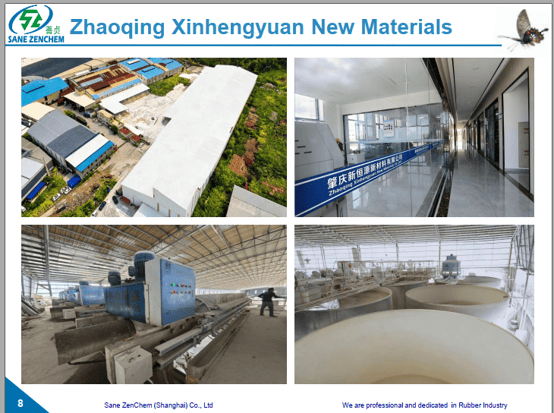
The lamellar nano-reinforcer described in this report is manufactured at a production base located in the Guangzhou Zhaoqing Development Zone, Guangdong Province, China. The facility holds IATF 16949 Quality Management System Certification (Chinese/English bilingual), with the certification scope covering “Design and Manufacture of Rubber Compounds and Flame Retardants.”
This certification attests that the entire production process complies with the highest international quality management standards for the automotive industry, providing quality system assurance for stable, high-volume supply to tire manufacturers, automotive component suppliers, and industrial rubber goods producers. As a reliable nano filler manufacturer in China and established rubber filler factory China, we are committed to consistent quality and technical excellence.
Why choose Us ?
Choosing a functional filler supplier is not only about purchasing a mineral powder. It is about selecting a technical partner that understands polymer compounding, physical failure mechanisms, and long-term product performance. As a leading specialty functional filler and performance additives manufacturer, we bring decades of compounding expertise to every customer collaboration.
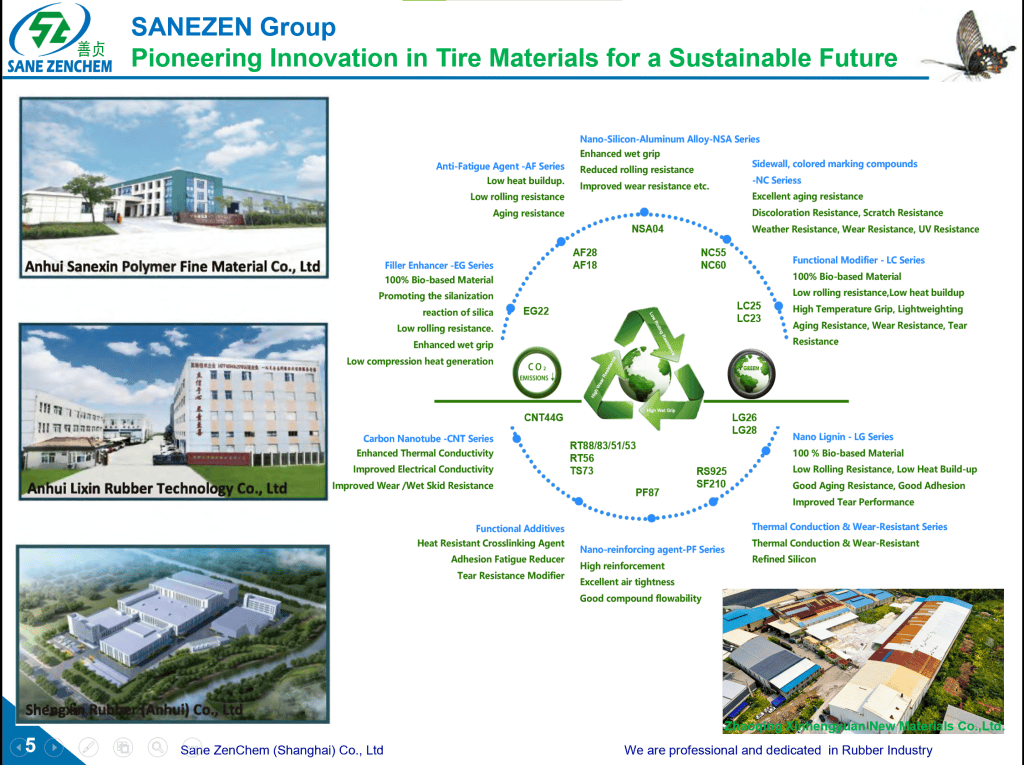
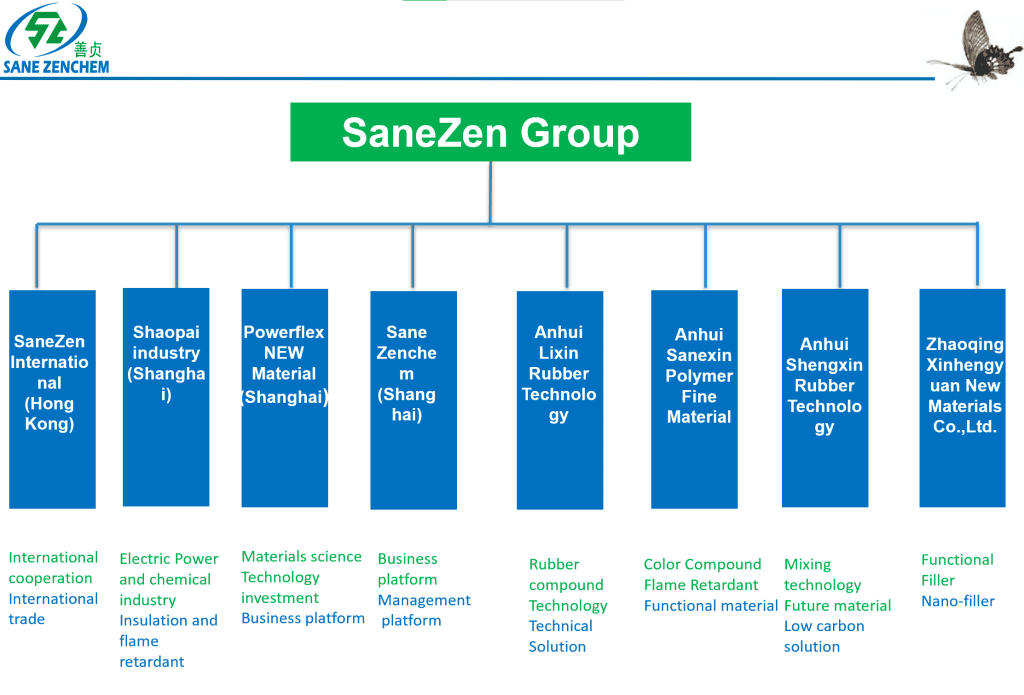
SaneZenChem operates five manufacturing facilities specialising in:
• Rubber Compounds
• Silicone Rubber Compounds
• Specialty Functional Fillers
• Flame Retardants
• Polymer Performance Additives
Because we formulate and manufacture rubber and silicone compounds ourselves, many of our specialty fillers—like the GreenThinking® PF87—originate from solving real production challenges rather than laboratory concepts alone. This application-driven approach allows us to develop practical solutions that create measurable improvements in customer products – from eliminating processing viscosity spikes and preventing micro cracking, to ensuring high dielectric strength in harsh electrical environments.
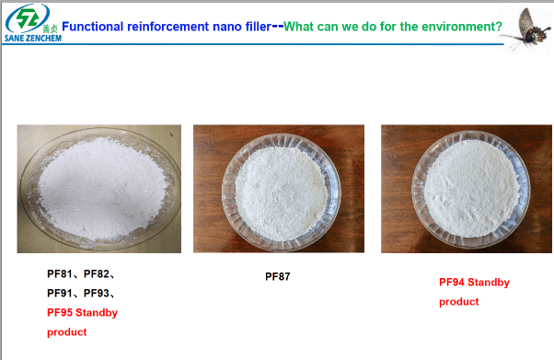
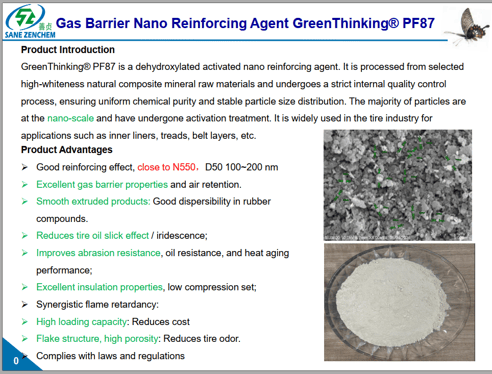
GreenThinking® PF87 is a flake-shaped, soft nano-reinforcer derived from selected natural composite minerals, processed through specialized nano-modification and surface treatment. Its chemistry is defined by SiO₂ (50.30%) and Al₂O₃ (34.50%), with trace TiO₂ (1.60%) – a composition that delivers exceptional chemical stability, low impurity content, and non-toxic, tasteless characteristics. The particle size distribution is precisely engineered at the fine nanoscale: D10 at 73 nm, D50 at 153 nm, with ultra-fine content (%+325 mesh >45 µm: 0.01%) ensuring minimal oversized particles. This nano-scale dimension, combined with its flake morphology and high specific surface area, provides reinforcement performance comparable to N550 carbon black – improving wear resistance, oil resistance, fatigue resistance, and heat aging resistance, while its high porosity and soft texture enable superior processing flow and easy extrusion.
The mineral composition of PF87 – a balanced synergy of silica and alumina – gives it unique advantages in rubber and plastic applications. In synthetic rubber, natural rubber, PVC, and CPE, PF87 functions as a versatile nano-reinforcer that can replace carbon black, precipitated silica, kaolin, and calcium carbonate. Its high air tightness makes it ideal for inner liner and high-sealing products; its low heat generation and smooth extrusion enhance production efficiency; and its extended scorch time combined with shortened vulcanization cycles improves overall processing economics. With a recommended dosage of 30–150 phr, and each 8–10 phr addition increasing hardness by one degree, PF87 enables high filling at low hardness – effectively reducing material costs without sacrificing flowability or end-use performance.
Our unique dual position as both a direct compounder and a premier specialty functional filler manufacturer means we are uniquely equipped to support rubber, epoxy, and electrical insulation manufacturers in achieving longer service life, processing efficiency, and ultimate reliability. PF87 is not a laboratory concept – it is a production-validated solution, born from our own compounding operations and proven in real manufacturing environments where consistency, purity, and performance are non-negotiable.
9. Life Cycle Value Engineering: Converting Technical Advantages into Financial Returns
In customer decision-making models, simple per-unit material price comparison is short-sighted. This report recommends adoption of a Total Cost of Ownership (TCO) model for comprehensive assessment:
- Direct material cost: In the inner liner formulation, replacing 20 phr of N660 with lamellar filler while reducing plasticizer content yields approximately 15% material cost savings. At an annual compound output of 1,000 tons, annual material cost savings range from RMB 500,000 to 800,000 (based on current market estimates). This represents a significant cost effective carbon black replacement in rubber.
- Processing efficiency gains: Extended scorch time (TS1 from 7.43 min to 8.49 min) provides a wider processing safety window, reducing scrap rates; reduced Mooney viscosity improves extrusion rates, translating to increased unit-time output across all compound types.
- After-sales risk cost reduction: An 11% improvement in air tightness directly extends the pressure retention cycle of inner tubes and hoses; improved reinforcement extends the service life of mechanical rubber goods — all reducing customer complaints and warranty claims.
- Regulatory and environmental compliance: The material is lead-free, heavy-metal-free, environmentally friendly — odorless, non-toxic, compliant with REACH and RoHS requirements, and avoids potential trade barrier risks.
When evaluating platelet mineral filler vs carbon black rubber reinforcement, the data clearly demonstrates that lamellar morphology provides superior gas barrier performance at equivalent or lower cost, making it a superior choice for air-tightness-critical applications while matching carbon black in general reinforcement.
10. Technical FAQ
Q1: Does this lamellar filler affect crosslinking density in peroxide-cured EPDM hoses?
Experimental results show that the surface activation layer is acid-free and does not scavenge peroxide free radicals, thus exhibiting good inertness in peroxide systems. Crosslinking density remains essentially unchanged from the control formulation, requiring no adjustment of curing agent dosage at recommended loading levels. This makes it a reliable nano filler for EPDM rubber compound in peroxide cure applications.
Q2: Will replacement of a portion of carbon black with lamellar filler reduce adhesion (e.g., to cords or metal)?
The surface activation treatment imparts a certain degree of reactivity. In actual testing, H-pullout force retention rates with galvanized steel wire and polyester cords remain above 95%. For applications with a particularly strong emphasis on adhesion, it is recommended to incorporate a small amount of precipitated silica or cobalt salt adhesion promoters in synergy.
Q3: What are the shelf life and storage stability of this material?
Under dry, sealed conditions at temperatures below 25°C, shelf life exceeds 2 years. Special attention must be paid to moisture protection — once the lamellar filler absorbs moisture and agglomerates, it becomes difficult to re-disperse during mixing, directly compromising reinforcement effectiveness.
Q4: How does this lamellar filler compare with other filler options across different rubber systems?
For a comprehensive platelet mineral filler vs carbon black rubber reinforcement comparison, the key distinction lies in morphology: platelet mineral fillers provide a tortuous diffusion path for gas molecules, while carbon black offers isotropic reinforcement. For air-tightness-critical applications such as inner liners and hoses, lamellar fillers offer distinct performance advantages. For general reinforcement in NR, SBR, and BR compounds, lamellar filler matches N550 carbon black performance while offering lower density and better processing characteristics.
Q5: Can this material serve as a cost effective carbon black replacement in rubber across different compound systems?
Yes. Based on extensive validation across multiple compound systems — BIIR/NR inner liners, EPDM hoses, NR/SBR mechanical goods, and EPDM general compounds — lamellar filler has demonstrated consistent cost-effectiveness as a cost effective carbon black replacement in rubber, delivering both material cost savings and performance improvements across diverse applications.
Q6: Is this filler suitable for high-temperature or high-pressure rubber applications?
Yes. The mineral composition (predominantly SiO₂ and Al₂O₃) provides excellent thermal stability. In validation testing, compounds containing lamellar filler demonstrated superior heat aging resistance (tensile retention 9.9 MPa vs. control 9.3 MPa after 48h at 100°C). For extreme-temperature applications, we recommend case-by-case validation under actual service conditions.
11. Resources and Contact
The technical solution described in this report has completed pilot-scale validation in tire inner liners, inner tubes, automotive hoses, and general rubber goods applications, and is ready for batch-scale formulation transition. Whether you are seeking a rubber filler for tire inner liner compounds, un rubber filler to improve tire inner liner air tightness, un EPDM hose extrusion additive for smooth surface finish, un barrier filler for BIIR NR compound in inner liner formulation, un high loading functional filler for rubber compound material cost reduction, un nano filler for EPDM rubber compound, or a general-purpose reinforcing filler for EPDM compounds to improve compound quality — our technical team is ready to support your specific requirements.
For customized comparative testing based on your specific formulation system, rubber type, or curing conditions — or for process scale-up guidance — please contact our technical team for detailed experimental reports and sample support.
Grupo SaneZen
Proveedor de Soluciones de Caucho
Página web: www.sanezenrubber.com
Correo electrónico: yorichen@sanezen.com
WeChat/WhatsApp: +86 – 136 7164 1995
 Spanish
  English
  Russian