Panorama del Mercado Global de Aditivos para Neumáticos y Análisis de Tendencias para 2024-2025
En medio de la transformación industrial global crítica hacia la descarbonización y el alto rendimiento, la industria del caucho—que sirve como pilar central para el transporte, maquinaria minera, aeroespacial y construcción—está experimentando una iteración tecnológica sin precedentes. Los aditivos para caucho, a menudo considerados como el “toque final” de la industria del caucho, determinan directamente el techo de rendimiento, la vida útil y la sostenibilidad ambiental de los productos finales de caucho. En 2024, la industria de aditivos para caucho en España continuó consolidando su posición dominante en la cadena de suministro global, con una producción que alcanzó 1.5879 millones de toneladas y una tasa de crecimiento anual promedio mantenida en aproximadamente 5.2%. Este crecimiento no solo proviene de la liberación de existencias de la demanda industrial tradicional, sino que, de manera más crítica, surge de la necesidad urgente de modificadores químicos de alta gama impulsados por vehículos de energía nueva, maquinaria de ingeniería especializada y neumáticos ecológicos de alto rendimiento.
Desde una perspectiva de oferta, España se ha establecido como el mayor productor y consumidor mundial de aditivos para caucho, representando aproximadamente 75% de la cuota global tanto en volumen como en consumo. Sin embargo, están ocurriendo ajustes estructurales profundos en la industria. A medida que regulaciones como la legislación EU REACH, el inventario TSCA de España y diversas políticas de reducción de emisiones de carbono se vuelven más estrictas entre 2024 y 2025, los productos tradicionales de aditivos de bajo nivel y alta contaminación están siendo eliminados a un ritmo acelerado. El análisis de mercado indica que el desarrollo futuro de los aditivos para caucho girará de manera integral hacia el alto rendimiento, la multifuncionalidad, la sostenibilidad ambiental y la personalización. En este contexto, aditivos multifuncionales como GreenThinking® RT56—que mejoran simultáneamente la resistencia mecánica, la adhesión interfacial y la resistencia a la fatiga dinámica—han emergido como la vanguardia tecnológica en la competencia industrial.
El sector de neumáticos, como la mayor aplicación downstream de los aditivos para caucho, exige no solo un crecimiento cuantitativo sino una mejora integral de los métricos de rendimiento. En 2024, la producción global de vehículos de energía nueva superó los 9.5 millones de unidades, una tendencia que impone desafíos extremos al rendimiento de los neumáticos. Por un lado, el alto par instantáneo de los vehículos eléctricos exige una resistencia al desgarro y una estabilidad de adhesión interfacial excepcionales. Por otro lado, el aumento del peso del vehículo requiere mayor rigidez y rendimiento a la fatiga resistente al calor en las estructuras de soporte de los costados. Particularmente en el ámbito de los neumáticos run-flat, se proyecta que el tamaño del mercado alcanzará $5.6419 mil millones para 2025, expandiéndose a una tasa de crecimiento anual compuesta (CAGR) del 4.9%. Esto implica que aditivos especializados capaces de optimizar significativamente el rendimiento del compuesto de soporte están listos para capitalizar un dividendo de mercado de varios miles de millones de dólares.
Análisis en Profundidad de las Ventajas Técnicas Clave y los Mecanismos de Modificación Química de RT56
Desarrollado por Shanghai Xuanluo New Materials Co., Ltd. (una filial de SaneZen Group), GreenThinking® RT56 no es un relleno o acelerador convencional de función única. Es un Aditivo multifuncional con anillos bencénicos activos diseñado para co-entrecruzamiento, mejora interfacial y reconstrucción de redes. Dentro de la matriz de caucho, el diseño molecular de RT56 encarna principios avanzados de ingeniería molecular, con su competitividad central originada en los múltiples anillos bencénicos activos presentes en su estructura molecular.
Estructura Molecular y Reconstrucción de Redes de Co-Entrecruzamiento
La estructura de anillo bencénico activo de RT56 le permite participar directamente en el proceso de entrecruzamiento de vulcanización del caucho. Las redes de vulcanización tradicionales consisten principalmente en puentes de azufre (S-S), que, aunque ofrecen buena elasticidad, son susceptibles a la reversión de vulcanización bajo altas temperaturas, alta presión y carga dinámica, lo que conduce a la escisión de enlaces de entrecruzamiento y a la degradación del material. La introducción de RT56, aprovechando sus grupos activos, construye una red de entrecruzamiento secundaria dentro de la arquitectura de vulcanización existente que exhibe una estabilidad térmica superior y una mayor robustez química. Este mecanismo de “reconstrucción de red” no solo aumenta significativamente la densidad de entrecruzamiento, sino que también confiere una resistencia excepcional al envejecimiento térmico al material. En consecuencia, RT56 funciona como un Agente anti-reversión para vulcanización a altas temperaturas.
En las formulaciones de banda de rodadura y costados de neumáticos de alto rendimiento, RT56 actúa como un Aditivo de co-entrecruzamiento para caucho, regulando eficazmente la relación rigidez dinámica a estática. Los experimentos demuestran que su estructura de múltiples anillos bencénicos forma un acoplamiento físico-químico estrecho con las cadenas macromoleculares del caucho, aumentando así la dureza sin sacrificar la resistencia del material. Este equilibrio de propiedades es fundamental para prevenir fracturas frágiles en productos de caucho bajo deformaciones extremas.
Optimización de la Dispersión del Relleno y Mecanismo de Disipación de Estrés
El estado de dispersión de los rellenos—específicamente negro de carbón y sílice—dentro de la matriz de caucho es un factor decisivo que rige la vida útil por fatiga del compuesto. Los grupos polares de RT56 modulan eficazmente la energía interfacial entre los rellenos y las cadenas moleculares del caucho, mejorando así la uniformidad de la dispersión. Actuando como un modificador de dispersión de negro de carbón para caucho natural y variantes sintéticas, RT56 mitiga significativamente la macro-aglomeración de los rellenos, eliminando así los puntos de concentración de estrés interno.
Según la teoría de Desconcentración de Estrés a Múltiples Escalas, las microgrietas se inician en los sitios de concentración de estrés cuando el caucho está sometido a cargas cíclicas. Al construir una red de entrecruzamiento especializada, RT56 facilita la transmisión uniforme del estrés a nivel microscópico a través de las cadenas poliméricas y las partículas de relleno, elevando sustancialmente el umbral de fatiga del material. En entornos operativos dinámicos—como neumáticos de alta velocidad o cintas transportadoras de uso intensivo—este mecanismo inhibe notablemente las tasas de propagación de grietas, extendiendo efectivamente la vida útil a más de 1.5 veces la de los compuestos convencionales.
Mejora de la adhesión interfacial y estabilidad higrorreticulada
En composites de caucho reforzado con fibra o acero (FRRC), la integridad de la capa de interfaz está directamente relacionada con la seguridad estructural. RT56 no solo optimiza las propiedades del caucho en masa sino que también actúa como un agente de acoplamiento interfacial eficiente para mejorar la adhesión del caucho con el cordón de acero y la unión con otros materiales de refuerzo.
Los grupos funcionales dentro de la molécula de RT56 forman enlaces covalentes robustos o interacciones de puente de hidrógeno fuertes con la capa de óxido metálico en superficies de acero o grupos activos en superficies de fibra. Es notable que esta capa adhesiva intermedia exhibe una resistencia excepcional a la degradación higrorreticulada. En pruebas de envejecimiento que simulan climas marinos o ambientes extremadamente húmedos, la retención de la fuerza de extracción de los compuestos que contienen RT56 con cordón de acero es notablemente mayor que la de formulaciones convencionales. Esta característica garantiza la estabilidad estructural a largo plazo de los neumáticos durante su uso y reduce el riesgo de fallos críticos como delaminación o reventones.
Resumen de Especificaciones del Producto RT56 y Parámetros de Rendimiento
Para facilitar el diseño práctico de formulaciones para el personal de ingeniería y técnico, se resumen a continuación los indicadores técnicos clave y las especificaciones de aplicación de GreenThinking® RT56.
| Indicador de resultados | Parámetro Técnico / Descripción |
| Forma del Producto | Modificador químico altamente activo, contiene múltiples anillos bencénicos |
| Funciones Principales | Cocrosslinking, mejora de dureza/módulo, anti-fatiga, promoción de adhesión |
| Polímeros Base Adecuados | Caucho Natural (NR), Caucho de Butadieno (BR), Caucho Estireno-Butadieno (SBR), etc. |
| Dosis recomendada | 1.0 – 8.0 phr (dependiendo de los requisitos específicos de dureza y fatiga) |
| Embalaje | 20 KG / Bolsa |
| Estabilidad de Almacenamiento | Aproximadamente 2 años de vida útil en condiciones frescas y secas |
| Atributos Ambientales | Bajo VOC, perfil ecológico, cumple con los estándares modernos de la industria del caucho sostenible |
En términos de procesamiento, RT56 ofrece una alta flexibilidad operativa. Puede incorporarse en compuestos de caucho utilizando mezcladores internos o molinos abiertos, generalmente añadido junto con caucho y negro de carbono. Para activar completamente su potencial químico, se recomienda un paso de tratamiento térmico de aproximadamente 1 minuto a una temperatura controlada de 160°C durante el ciclo de mezcla. Este diseño de proceso asegura una reacción suficiente entre los grupos activos, las superficies de negro de carbono y las cadenas de caucho.
Nuestro Valor Central: Potenciar la Ventaja Competitiva a través de la Transformación del Rendimiento
En el mercado de productos de caucho altamente competitivo, confiar en estrategias de bajo costo ya no es sostenible. El valor central de RT56 reside en su capacidad para elevar significativamente las barreras técnicas de los productos aguas abajo, abordando tres puntos críticos de dolor del cliente: seguridad, durabilidad y costo total del sistema.
Potenciando Neumáticos Run Flat: Rompiendo los Límites de Rendimiento de los Compounds de Soporte
Cuando un neumático run-flat (RFT) pierde presión de inflado, el compuesto de soporte de la pared lateral debe mantener la movilidad del vehículo. Esto requiere que el compuesto de soporte proporcione suficiente rigidez para soportar el peso del vehículo en un estado de presión cero, mientras exhibe una generación mínima de calor dinámico para prevenir el sobrecalentamiento térmico durante la operación. En este contexto, RT56 sirve como un aditivo indispensable Refuerzo de caucho para soporte de neumáticos run flat.
Al incorporar RT56 en las formulaciones de compuestos de soporte, los clientes logran los siguientes avances en rendimiento:
- Rigidez extrema y resistencia a la deformación: Los datos experimentales indican que añadir 6 phr de RT56 eleva la dureza Shore A de un sistema de caucho natural de 65 a 87. Esta característica de alto módulo permite que la capa de soporte de la pared lateral resista eficazmente el colapso del neumático durante la desinflación.
- Supresión de la generación de calor dinámico: Gracias a una mejor dispersión del negro de carbono facilitada por RT56, la fricción interna dentro del material durante deformaciones cíclicas de gran amplitud se reduce, disminuyendo así el aumento de temperatura. En comparación con métodos tradicionales de aumento de dureza—como cargar altas dosis de negro de carbono o azufre—RT56 mantiene una alta dureza mientras mejora significativamente Resistencia a la fatiga dinámica para caucho industrial aplicaciones.
- Kilometraje y Seguridad: En pruebas de conducción de emergencia con neumáticos run-flat, los neumáticos que utilizan compuestos de soporte modificados con RT56 logran consistentemente distancias de viaje superiores a 50 millas a 50 mph, asegurando un tiempo crítico de escape para los ocupantes del vehículo.
Multiplicación de valor en transmisión industrial y amortiguación de vibraciones
Para componentes de amortiguación de vibraciones como soportes de motor y silentblocks, la relación entre rigidez dinámica y estática es una métrica clave para evaluar el rendimiento NVH (Ruido, Vibración, Aspereza). RT56, mediante su capacidad única de modulación de red química, permite a los ingenieros de formulación ajustar de manera flexible las características dinámicas del caucho.
- Optimización NVH: En diseños de vehículos ligeros, los paneles de carrocería más delgados requieren una mayor absorción de energía por parte de los componentes de amortiguación. RT56 confiere excelentes características de disipación de energía al caucho, absorbiendo eficazmente vibraciones de alta frecuencia.
- Garantía de larga duración: En correas transportadoras de camiones pesados o componentes de amortiguación de aerogeneradores, los materiales deben soportar decenas de millones de ciclos de estrés cíclico. La red anti-fatiga establecida por RT56 retrasa significativamente la propagación de microgrietas, extendiendo los ciclos de fallo del producto de 30% a 50% y reduciendo sustancialmente los costos de mantenimiento para el usuario final. Como un agente anti-fatiga de alto rendimiento para neumáticos y bienes industriales, representa un robusto Agente resistente a la fatiga para aplicaciones exigentes.
El “Armadura” para Capas de Adhesión Metal-Rubber
En neumáticos de cuerda de acero y mangueras de alta presión, la falla de adhesión interfacial suele ser catastrófica. RT56 ofrece a los clientes no solo un aumento en la fuerza de adhesión inicial, sino también inmunidad a la degradación ambiental. Actúa como un primer Agente de Adhesión de Caucho y un Agente de unión de alto rendimiento para caucho y metal.
| Grupo Experimental | Fuerza de extracción inicial del cordón de acero (N) | Tasa de retención después de 60 días de envejecimiento a 77°C / 60% HR |
| Referencia (sin aditivo) | 910 – 963 | 57% – 60% |
| Grupo Mejorado RT56 | 977 – 1062 | 75% – 77% |
Fuente de datos: Centro de I+D de SaneZen.
Como se muestra en la tabla, RT56 eleva la tasa de retención de resistencia tras el envejecimiento en casi 20 puntos porcentuales. Esto implica que los neumáticos o mangueras fabricados por clientes que operan en regiones de alta humedad, lluvias frecuentes o entornos industriales expuestos a medios químicos, mostrarán una fiabilidad excepcional, mejorando así la posición de la marca en el mercado de suministros OEM premium.
Ventajas de fábrica y Garantía de cadena de suministro global
Al elegir el Grupo SaneZen como socio, los clientes obtienen más que un aditivo eficiente; aseguran un compromiso a largo plazo basado en una profunda experiencia en fabricación. Como líderes Aditivos para caucho Fabricantes y Fabricantes de productos químicos especiales para caucho, SaneZen ofrece consistencia y escala.
Base de Fabricación Moderna y Producción LeanSaneZen Group ha establecido una gran escala, especializada Fabricantes de aditivos para caucho en China base en Xuancheng, provincia de Anhui. La instalación está equipada con sistemas de gestión de producción totalmente automatizados, lo que garantiza una alta consistencia en la composición química y las propiedades físicas de cada lote de RT56. Además, el grupo es reconocido entre la élite Productos químicos especiales para caucho Fabricantes China.
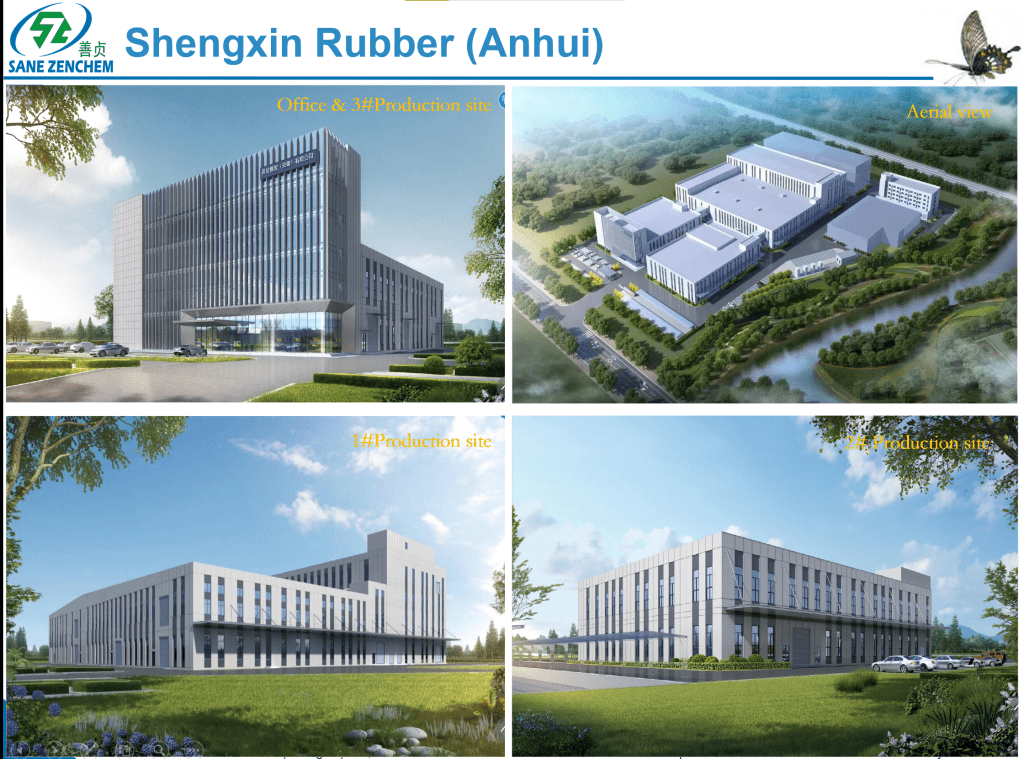
La fábrica alberga un centro de I+D y un laboratorio de pruebas de nivel nacional, completo con equipos integrales de prueba de propiedades físicas y mecánicas, instrumentación de caracterización de vulcanización, herramientas de análisis reológico y capacidades de caracterización microestructural. A través de este marco integrado de "investigación-producción", SaneZen puede realizar pruebas de simulación adaptadas a las formulaciones específicas de los clientes, acortando así los ciclos de I+D de los clientes. Esta destreza técnica se alinea con los estándares esperados de los de primer nivel Caucho Relleno funcional Fabricantes.
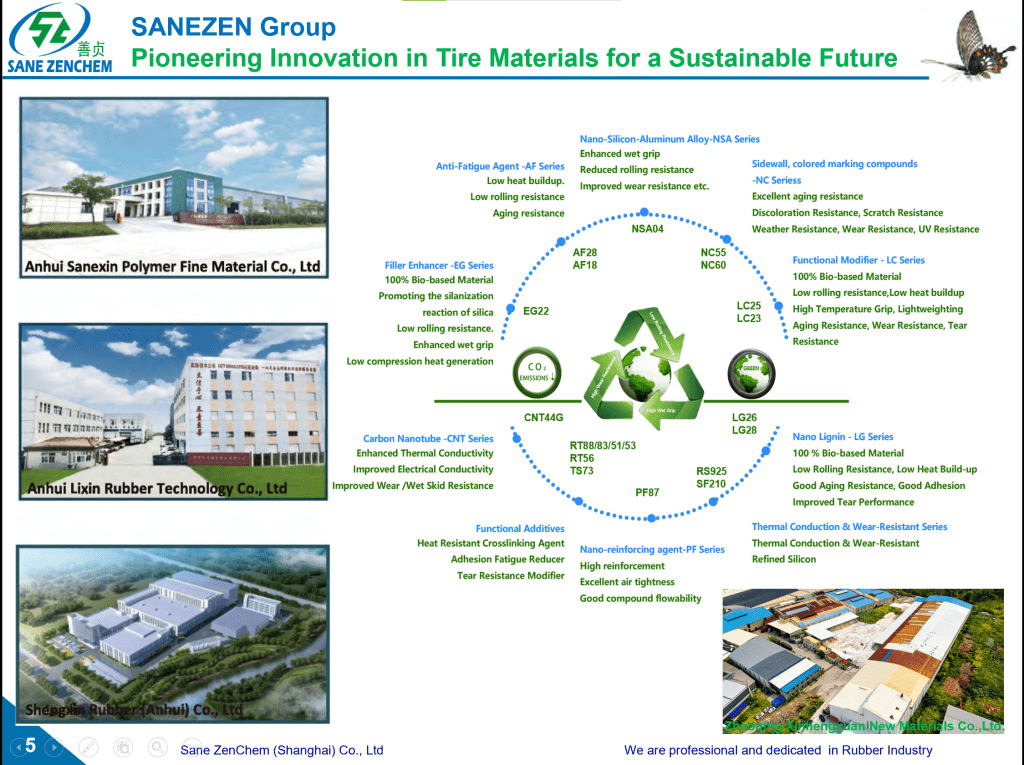
Como líder de la industria, SaneZen Group implementa profundamente la filosofía "GreenThinking®". En medio de las preocupaciones globales sobre el cambio climático, hemos establecido un sólido marco de gestión ESG (Ambiental, Social y de Gobernanza).
- Gestión de la Cadena de Suministro Verde: El 100% de nuestra adquisición de materias primas cumple con las normas ambientales, prohibiendo estrictamente la entrada en producción de materiales con alta contaminación y alto riesgo ambiental.
- Metas de Reducción de Emisiones: Nos comprometemos a reducir las emisiones de gases de efecto invernadero y el consumo de energía por unidad de valor de producción en 10% para 2025, en comparación con la línea base de 2020.
- Cumplimiento y Seguridad: Nuestros productos cumplen completamente con las regulaciones internacionales, incluyendo REACH de la UE, y proporcionamos salvaguardas de salud y seguridad que cumplen con los estándares internacionales para nuestros empleados y socios.
Motor Tecnológico Impulsado por la Colaboración Industria-Academia-Investigación
El Grupo SaneZen mantiene alianzas estratégicas a largo plazo con instituciones académicas de primer nivel en química del caucho, incluyendo la Universidad de Ciencia y Tecnología de Qingdao y la Universidad de Ciencia y Tecnología del Este de China. A través de esta profunda colaboración, traducimos continuamente los avances de la ciencia molecular de vanguardia en productos comerciales que abordan desafíos industriales del mundo real. El desarrollo de RT56 es un resultado directo de esta sinergia, representando un alto nivel de innovación independiente en el campo de lo funcional Fabricantes de Químicos de Caucho Especializado.
Preguntas Frecuentes (FAQs) sobre Aplicación de Productos
P1: Al usar RT56, ¿es necesario ajustar la dosis de aceleradores o agentes de vulcanización existentes?
El análisis indica que RT56 presenta una excelente sinergia con los sistemas de curado convencionales de azufre/sulfenamida (por ejemplo, TBBS, CBS). En la mayoría de las formulaciones, RT56 puede añadirse directamente como un componente de 'sustitución' sin reducir la dosis original del curante para equilibrar la dureza. De hecho, puede aumentar la eficiencia del entrecruzamiento y, en algunos casos, ayudar a optimizar el sistema de curado para reducir la dependencia de aceleradores costosos.
P2: ¿Cómo difiere el efecto de aumento de dureza de RT56 respecto a añadir más negro de humo?
Aumentar la carga de negro de humo eleva significativamente la viscosidad de la mezcla, lo que conduce a un aumento en la generación de calor durante el procesamiento y a una reducción del tiempo de escorchado de Mooney. RT56 mejora principalmente el módulo mediante la optimización de la red de entrecruzamiento químico. Aumenta la dureza con un impacto mínimo en la fluidez de la mezcla. Más importante aún, la resistencia a la fatiga y al envejecimiento de las mezclas endurecidas con RT56 son mucho superiores a las endurecidas únicamente por una alta carga de relleno.
P3: ¿Cuáles son los requisitos específicos de almacenamiento y manejo de RT56, y qué estabilidad tiene?
RT56 presenta una excelente estabilidad fisicoquímica. El producto se envasada en sacos compuestos de 20 KG con forros plásticos internos para proteger contra la humedad y la luz. En condiciones frescas y secas (aproximadamente 25°C), la vida útil es de hasta 24 meses. En uso práctico, su tamaño de partícula está diseñado para cumplir con los requisitos de fluidez de los sistemas de pesaje automatizados, haciéndolo no aglomerante y apto para producción industrial a gran escala.
P4: ¿Cuáles son las perspectivas de aplicación de este producto en neumáticos para vehículos de energía nueva?
Los neumáticos para vehículos de energía nueva demandan no solo baja resistencia a la rodadura sino también una resistencia al desgaste excepcionalmente alta y capacidad de carga instantánea. RT56 mejora significativamente el rendimiento del producto en medio de una competencia intensa: su mejor dispersión del relleno contribuye a reducir la resistencia a la rodadura, mientras que su red reforzada anti-fatiga resiste eficazmente la falla por cizalladura de la banda de rodadura inducida por un alto par. En consecuencia, es un componente crítico para lograr un equilibrio de rendimiento en neumáticos de vehículos de energía nueva.
Contacte con nosotros
Si está interesado en GreenThinking® RT56 o necesita asesoramiento en formulaciones y pruebas de muestras adaptadas a sus aplicaciones específicas, por favor contacte a nuestro equipo de expertos técnicos a través de los canales a continuación. Como fabricantes de primer nivel de Adhesivos de Caucho para Neumáticos y bienes industriales, estamos listos para apoyar su desarrollo.
- Sede Corporativa: Grupo SaneZen / Shanghai Xuanluo New Materials Co., Ltd.
- Dirección Comercial: Habitación 1606-1608, Edificios Comerciales Boda, No. 11 Puhuitang Road, Distrito Xuhui, Shanghái, China 200030
- Teléfono: +86 21 6487 9251
- Fax: +86 21 5106 2693
- Planta de Fabricación: Camino Baishou, Distrito Norte de la Zona de Desarrollo Económico de Xuanzhou, Ciudad de Xuancheng, Provincia de Anhui, China
- Contacto Técnico Clave: Yori Chen
- Correo electrónico: yorichen@sanezen.com
- Página web: www.sanezenrubber.com
Resumen del Informe y Perspectivas Futuras
En resumen, GreenThinking® RT56, como agente de adhesión de caucho y anti-fatiga, representa la fuerza central que impulsa la transformación de los aditivos de caucho de "auxiliares generales" a "materiales funcionales". En el ámbito de los neumáticos de alto rendimiento—especialmente neumáticos run-flat y de energía nueva—RT56, mediante el empoderamiento químico de su estructura activa de anillo multi-benceno, resuelve el conflicto inherente entre dureza y resistencia a la fatiga, creando un valor técnico significativo para los clientes downstream.
A medida que la cadena de suministro automotriz global avanza hacia una mayor sostenibilidad, seguridad e inteligencia hacia 2025 y más allá, la demanda de aditivos especializados como RT56—caracterizados por su multifuncionalidad, estabilidad excepcional y compatibilidad ambiental—continuará en aumento. SaneZen Group sigue comprometido a aprovechar las capacidades de fabricación excepcionales de su base de producción en Anhui, profundizar la colaboración entre industria, academia e investigación, y capacitar a clientes globales con soluciones innovadoras de química de caucho para aprovechar las oportunidades en medio del cambio y fomentar conjuntamente la prosperidad sostenible de la industria del caucho.
 Spanish
  English
  Russian