
What this page answers
Most debonding complaints arrive as a rubber problem and turn out to be an interface problem. The rubber is fine. The wire or the cord is fine. What failed was the thin region between them, and that region is built by the cure system, not by the rubber alone.
This page covers three bonding chemistries used across the same family of parts: a reactive metal salt resin for peroxide cured compounds, a physical and chemical promoter for fibre reinforcement, and a chemical promoter that competes with resorcinol formaldehyde resin for metal adhesion. It sets out the measured pull out numbers in a nitrile compound and in a sulphur cured hose compound, the dosage response in each, and the cases where each one stops working. Every number comes from the two trial programmes we ran and from product data sheets, and the parts of the story that are not measured are marked as such.
Why adhesion fails at the interface rather than in the rubber
A brass plated steel wire bonds to rubber through a layer a few tens of nanometres thick, built from copper sulphide and zinc sulphide when sulphur, copper and rubber meet under heat. That layer is not a coating that was applied. It is a reaction product, and it grows and changes for as long as the part is hot. Everything that goes wrong with wire adhesion can be described in those terms.
If the cure is too short, or the sulphur does not reach the interface, the sulphide layer does not form and the bond never exists. If the cure runs long, or the part is aged at temperature, the layer keeps growing until it becomes a brittle film that fractures under load, which is why adhesion can fall after aging even though the rubber itself has not changed much. If the compound is under-dispersed, the cure chemicals are not where the interface is, because the agglomerates holding them sit somewhere else.
For a fibre cord the chemistry is different and the requirement is stricter. Polyester, nylon and aramid do not react with sulphur on their own, so the bond has to be built from resin that wets the cord, penetrates the filaments and then crosslinks into the rubber. Resorcinol with a formaldehyde donor and a silica surface, the system the industry calls RFS, has done that job for fifty years. It also releases formaldehyde during cure, and that is the reason a resorcinol formaldehyde free bonding system is now a purchasing requirement in several markets rather than a preference.
Both cases share a structure. Adhesion is not a property of the rubber. It is a property of an interphase that has to be created during cure and then has to survive service. Reading a bonding problem correctly means asking which of those two stages failed.
Two chemistries, and why the difference decides the choice
The industry splits bonding agents into physical and chemical types, and the split is real. A rubber to fibre adhesion promoter of the physical type raises the tack and the wetting of the compound, so the cord is penetrated by rubber rather than sitting in a void, and mechanical keying does the rest. A chemical type reacts at the cord surface and forms a bridge that mechanical keying cannot produce. Most commercial products are mixtures, and the useful question is which mechanism carries the load in your part.
The table below is the practical version of that question.
| Tipo | How the bond is made | Works when | Fails when |
| Physical promoter | Raises tack and wetting, penetrates the cord, mechanical keying | Fibre cord, high cord density, low resin content compound | Metal cord, or any interface that needs a chemical bridge |
| Resorcinol formaldehyde (RFS) | Resorcinol reacts with a methylene donor and condenses at the cord surface | Sulphur cured compounds with silica, brass and textile cord | Peroxide cure, formaldehyde restrictions, over-cure |
| Cobalt salt | Catalyses the brass to sulphide reaction | Sulphur cured compounds on brass plated wire | Peroxide cure, and it accelerates rubber aging |
| Reactive metal salt resin | Forms ionic crosslinks and a resin interphase that carries stress across the boundary | Peroxide cure, and sulphur cure where the metal salt can still react | Systems with no peroxide and no available metal ion |
| Chemical promoter replacing RF | Reactive hydrocarbon and non-metal complex that participates in the resin condensation | Metal and textile cord in sulphur cure, where RF has to be reduced | Compounds where the RF level is already very low |
A metal salt adhesion promoter for rubber is the group that surprises people. Zinc methacrylate and zinc dimethacrylate are not tackifiers. They dissolve into the compound during mixing, then polymerise into ionic clusters during cure, and those clusters carry stress across the rubber to metal boundary in a way that a resin cannot. That mechanism does not need sulphur, which is why the same chemistry appears in both cure systems.
What the peroxide route does differently
A peroxide cure builds carbon to carbon bonds. The peroxide splits into alkoxy radicals when heated, those radicals take hydrogen from the polymer chain or add to a double bond, and two adjacent radicals combine into a direct C-C link. There is no sulphur in the bridge and therefore no polysulphide to decompose later, which is why peroxide cured compounds hold their properties at temperature better than sulphur cured ones.
The cost of that route is adhesion. A C-C network does not react with brass, so a peroxide cured rubber adhesion promoter has to supply the interfacial chemistry that sulphur would otherwise provide. A rubber to brass plated steel wire adhesion requirement in a peroxide system is therefore a formulation question, not a cure question: you cannot fix it by adding sulphur without losing the heat resistance you chose peroxide for.
This is where the reactive acrylic metal salt resin does its work. It participates in the peroxide cure as a co-agent, so the network forms with ionic clusters distributed through it, and the resin fraction migrates to the interface and forms an interphase the compound can bond to. The practical consequence is that rubber to metal adhesion in a peroxide cure system improves without changing the peroxide, the temperature or the cycle. The data sheet for this grade positions the steel cord pull out gain at 35 to 60 percent across conventional formulations, which is a wider range than the two trials below produced, and the reason for the gap is worth understanding before the figure is quoted.
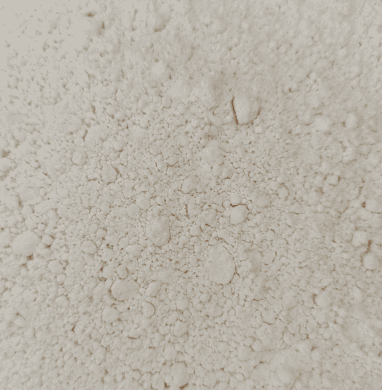
Figure 1. The reactive metal salt resin as supplied, a white powder added in the first mixing stage.
Measured in a nitrile compound: adhesion, and what it did to everything else
The trial below is a nitrile compound for a wire reinforced part, cured with 3.5 phr of 40 percent DCP, with Trim/S as the co-agent. It is the usual way to screen an adhesion promoter for NBR compound, because nitrile is the polymer most of these wire reinforced parts are built on. Four formulations were compared: the blank, zinc methacrylate alone at 3.2 phr, zinc methacrylate plus the reactive metal salt resin at 3.2 phr each, and a conventional system built on cobalt salt with resorcinol and an adhesion promoter resin.
| Material, phr | Blank | ZMMA 3.2 | ZMMA + CB10 | Cobalt + RF |
| NBR 3360 | 100 | 100 | 100 | 100 |
| Carbon black N234 | 20 | 20 | 20 | 20 |
| Carbon black N774 | 20 | 20 | 20 | 20 |
| Zinc oxide | 8 | 8 | 8 | 8 |
| Stearic acid | 0.5 | 0.5 | 0.5 | 0.5 |
| Precipitated silica PT702 | 10 | 10 | 10 | 10 |
| Plasticiser Sanepar 756 | 2 | 2 | 2 | 2 |
| Antioxidante RD | 1 | 1 | 1 | 1 |
| Trim/S co-agent | 3.5 | 3.5 | 3.5 | 3.5 |
| DCP 40 percent | 3.5 | 3.5 | 3.5 | 3.5 |
| Cobalt salt CN20.5 | – | – | – | 0.5 |
| Resorcinol | – | – | – | 1 |
| RA65 adhesion promoter | – | – | – | 2.4 |
| Zinc methacrylate ZMMA | – | 3.2 | 3.2 | – |
| Reactive metal salt resin CB10 | – | – | 3.2 | – |
| Total | 168.5 | 171.7 | 174.9 | 172.4 |
The adhesion result is measured here as steel cord pull out force. The source table does not state the unit, so read the numbers as relative values and convert them against your own test record before quoting them in a specification.
| Propiedad | Blank | ZMMA 3.2 | ZMMA + CB10 | Cobalt + RF |
| Modulus at 10 percent, MPa | 1.6 | 1.7 | 1.7 | 1.3 |
| Modulus at 50 percent, MPa | 4.4 | 5.8 | 3.9 | 2.8 |
| Modulus at 100 percent, MPa | 10.3 | 14.7 | 8.6 | 5.9 |
| Resistencia a la tracción, MPa | 24.7 | 24.9 | 24.9 | 25.1 |
| Elongation at break, percent | 189 | 151 | 261 | 298 |
| Resistencia al desgarro | 20 | 21 | 31 | 30 |
| Ítems de prueba | 83 | 82 | 82 | 80 |
| Steel cord pull out, unaged | 56 | 218 | 421 | 141 |
| Steel cord pull out, after 100 C for 168 h | 40 | 151 | 522 | 182 |
Three things in this table are worth more than the headline number.
The first is that the stiffest compound did not give the strongest bond. Zinc methacrylate alone raised the modulus at 100 percent elongation from 10.3 to 14.7 MPa and cut elongation from 189 percent to 151 percent, a much tighter network, and still reached 218. Adding the resin on top of it produced a softer and far more extensible compound, 8.6 MPa and 261 percent, and reached 421. Bond strength tracked the extensibility of the interphase rather than the stiffness of the bulk.
The second is that the conventional cobalt and resorcinol system was the weakest of the three promoted formulations in this compound, at 141. Cobalt works by catalysing the brass to sulphide reaction, and this compound has no sulphur in the cure. A resorcinol formaldehyde resin also needs a methylene donor and a sulphur cure to condense usefully. Neither mechanism had what it needed, which is the clearest illustration of why cure system and bonding chemistry have to be selected together.
The third is the ageing column. Every formulation lost adhesion except the two that contained the resin, which gained. Gains after ageing are not what a simple model predicts, and there are two ordinary explanations: the oven exposure continued a reaction that the press cycle had not finished, or the pull out test scattered. Both are worth checking against the raw record before the aged figures are used in a claim.
Measured in a sulphur cured hose compound: two promoters against a traditional one
The second programme is a high pressure hose inner compound on a sulphur cure, bonded to brass coated steel wire and tested by H pull out. This is the application where a high pressure hose rubber bonding agent earns its place, because the part is thick, the wire density is high and the cure is long enough for reversion to matter.
| Material, phr | Level |
| NV7030 | 90 |
| Butadiene rubber | 10 |
| Zinc oxide | 4 |
| Magnesium oxide | 4 |
| Stearic acid | 1 |
| Antioxidant | 2 |
| Light calcium carbonate | 53 |
| Carbon black N660 | 40 |
| Reinforcing agent | 40 |
| Plasticiser | 15 |
| Red iron oxide | 10 |
| Azufre | 2.2 |
| Acelerador CZ | 1 |
| Promoter | Dosage, phr | H pull out force, N |
| Reactive metal salt resin CB10 | 3.5 | 141 |
| Reactive metal salt resin CB10 | 4.0 | 147 |
| Reactive metal salt resin CB10 | 5.0 | 152 |
| Chemical promoter BD59J | 3.5 | 151 |
| Chemical promoter BD59J | 4.0 | 153 |
| Chemical promoter BD59J | 5.0 | 153 |
| Traditional bonding agent LG768 | 6.0 | 126 |
The comparison that matters is not the peak, it is the dosage at which the peak arrives. Used as a steel cord adhesion promoter for rubber, BD59J reached 151 N at 3.5 phr, which is 19.8 percent above the traditional agent at 6.0 phr, using 42 percent less material. Two more phr bought 2 N. The dosage response flattens at about 4 phr, so the useful question is not how much more can be added but whether 4 phr is enough in your compound.
The metal salt resin behaves differently. It climbed from 141 to 152 across the same range, which is a straight line rather than a curve, and it did so in a sulphur cure even though its data sheet is written for peroxide systems. That is consistent with the ionic mechanism not depending on sulphur, but it is not the same as being positioned for that use, and it should be verified rather than assumed.
For anyone asking why rubber debonds from brass coated wire in a high pressure hose, the three candidates are visible in this data. Under-dosage is one. The plateau is another, and it is the one that gets missed, because a compound that was optimised at 3.5 phr and then dosed at 6 phr for insurance has changed its cure, its hardness and its cost without gaining adhesion. The third is cure length: a hose cures for a long time at temperature, the sulphide layer keeps growing, and a bond that was good at 20 minutes is not the same bond at 60.
Where each grade sits, and what it is not for
The BD series splits along the same line as the mechanism table earlier. BD54 leads with physical action and is positioned for fibre reinforcement, and it is the grade normally proposed as a rubber to textile cord adhesion additive.
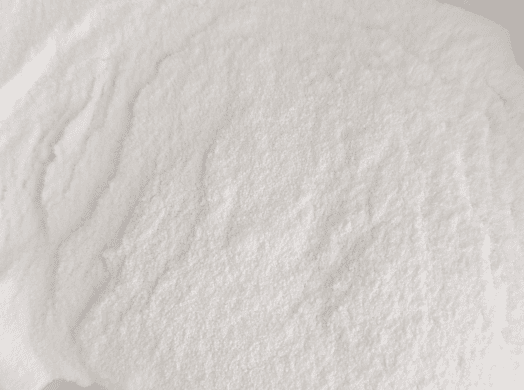
Figure 2. The fibre grade, a white to pale powder, used at 3 to 7 phr for textile cord and dipped fabric.
BD59J leads with chemical action and is positioned for metal reinforcement, and it is the one designed to displace resorcinol formaldehyde. Neither grade is single purpose: BD54 is also sold as a bonding agent for conveyor belt compound, where the cord bundle is dense and penetration is the limiting step.
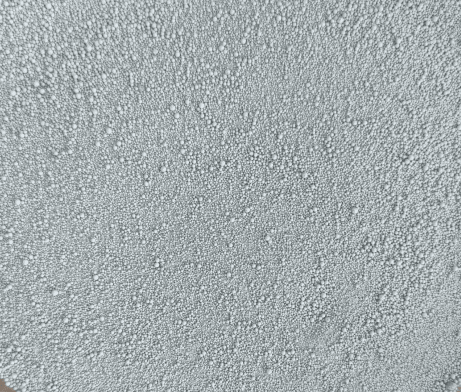
Figure 3. The metal grade, grey granules, used at 3 to 7 phr and positioned as a replacement for resorcinol formaldehyde resin.
| Artículo | BD54 | BD59J |
| Mecanismo | Physical wetting and tack, with a chemical contribution | Chemical condensation, with a physical contribution |
| Refuerzo | Fibre cord, dipped fabric, textile | Metal, and textile as a secondary use |
| Apariencia | White to pale red or pale yellow powder | Grey granules |
| Loss on ignition at 750 C, percent | 38.29 | 2.72 |
| Loss on heating at 105 C, percent | 2.69 | 0.11 |
| pH, 5 percent solution | 6.97 | 9.06 |
| Dosage range, phr | 3 to 7 (data sheet states 1 to 7) | 3 to 7 |
| Reported H pull out gain | 15 to 25 percent | Replaces RF at 5 phr for 3 phr RF |
| Embalaje | 20 kg per bag | 25 kg per bag |
The gain figure for BD54 is reported as 15 to 20 percent in one place and 15 to 25 percent in another within our own literature, and the difference should be resolved against the original trial before either number goes into a quotation. The replacement ratio for BD59J is clearer: half replacement is 3 phr for 1.5 phr of RF, and full replacement is 5 phr for 3 phr of RF.
That ratio is the whole commercial argument for a chemical promoter in this class. Resorcinol and its methylene donor are priced and regulated as a pair, and the pair is what a customer is trying to reduce. Replacing 3 phr of RF with 5 phr of a mineral based promoter changes the cost line and removes formaldehyde from the process at the same time. It is also why the question “how much cobalt salt can I take out” and the question “how much resorcinol can I take out” have different answers. Cobalt is a catalyst and can be reduced gradually. Resorcinol is a reactant, and it comes out in steps.
Dosage, addition point, and the side effects nobody mentions
| Producto | Addition point | Dosage, phr | What changes besides adhesion |
| CB10 reactive metal salt resin | First mixing stage, with the fillers | 3 to 5 | Modulus and hardness rise; cure behaviour changes, so re-verify the cycle |
| BD54 | First stage, with the small chemicals | 3 to 7, 2.5 used in some fibre compounds | Mixing efficiency improves; compound heat build up falls |
| BD59J | First stage, with the small chemicals | 3 to 7 | Scorch and cure both shift; porosity falls |
Adding a bonding agent in the first stage is not a convenience. These materials have to be dispersed into the compound before the cure system is present, otherwise they react in the wrong place. A promoter added with the sulphur in the final stage will do something, but what it does is unpredictable.
The cure shift is the second thing to plan for. Any additive that participates in the network changes the rheometer curve, and a compound running at 22 minutes T90 will not be at 22 minutes after 3 phr of a metal salt is added. Run the rheometer to full plateau with and without the additive before a production cycle is fixed.
Failure analysis: what debonding looks like on the shop floor
| Symptom | Usual cause | What to check |
| Bond good on a test slab, poor on the production part | Section thickness changes the thermal history, so the interface sees a different time at temperature | Cure a slab at the production thickness and cut it, then pull the wire from the centre |
| Adhesion acceptable at time zero, falls after oven ageing | The sulphide layer kept growing into a brittle film, or the interphase lost its ionic clusters | Compare pull out before and after ageing as a retention rate, not as absolute values |
| Wire pulls out clean with no rubber attached | No interfacial reaction at all, which points at the cure system rather than the promoter | Confirm sulphur or peroxide actually reached the interface: check dispersion and cure state |
| Rubber tears away leaving a uniform layer on the wire | The bond is stronger than the rubber, which is a compound strength problem, not an adhesion problem | Measure tear strength and modulus, then reduce promoter dosage rather than increase it |
| Adhesion varies between batches with the same formulation | Promoter weighed into the final stage, or dispersion of the promoter itself is poor | Check the addition point and the dispersion of the white filler fraction |
| Debonding only at the ends of a hose or belt | End effects, cord wicking and moisture ingress rather than a bulk adhesion failure | Check cord moisture before calendering and the cut end condition |
The fourth row is the one that costs money. A compound whose rubber tears before the bond does is already bonded well enough, and adding more promoter makes the compound stiffer, which moves the failure back to the interface. Adhesion numbers have no meaning without the failure mode attached to them.
How to compare two bonding agents at equal loading
The comparison most suppliers present is their product against nothing. The comparison that decides a purchase is their product against the incumbent, at the same dosage, in the same compound, with the same cure.
Four rules make that comparison usable. Keep the dosage equal, because a promoter at 6 phr against one at 3 phr is a different experiment. Keep the cure equal, because a promoter that changes T90 changes the state of cure and therefore the bond. Report retention as well as absolute values, since adhesion retention after heat aging rubber is the number that predicts field life. And record the failure mode, because a cohesive failure in the rubber and an interfacial failure are not the same result even when the force is the same.
An H pull out test rubber to cord result is only comparable when the embedment depth, the pull rate and the specimen geometry are the same. The standards normally used for this property are ASTM D1871 and ASTM D4776 for steel and textile cord, and GB/T 2942 for the textile version. Our source tables do not state which was used, so confirm the method against the original record before quoting a figure to a customer.
Cost deserves one honest paragraph. A bonding agent at 3 to 5 phr is 2 to 3 percent of a compound, and the relevant comparison is cost per kilogram of compound against the cost of one debonded batch, one rejected hose, or one field failure. Against that, the difference between two promoters at equal performance is small. The decision should be made on the dosage at which the response plateaus and on whether the promoter brings a second benefit, such as lower compound heat build up or lower porosity, that the incumbent does not.
What this data does not show
Two gaps belong in the article rather than in a footnote.
The nitrile trial did not include the reactive metal salt resin on its own. Every result for it is in combination with zinc methacrylate, so the 421 figure belongs to the pair and not to the resin alone. If your compound already contains zinc methacrylate, that is directly relevant. If it does not, the result is an indication and not a prediction.
The hose trial measured one compound on one cure. Dosage response depends on filler loading, cure length and wire coating, and the plateau at 4 phr in this compound will not be at 4 phr in every compound. Treat it as a shape, not as a number.
Preguntas frecuentes
How to improve rubber to metal adhesion in a peroxide cure system
Supply the interfacial chemistry that sulphur would have supplied. A peroxide cure builds carbon to carbon bonds that do not react with brass, so a reactive metal salt resin added at 3 to 5 phr in the first mixing stage is the usual route. In the nitrile trial here, zinc methacrylate at 3.2 phr plus the resin at 3.2 phr took pull out force from 56 to 421 on the source scale, against 141 for a conventional cobalt and resorcinol system in the same compound.
Why does adhesion drop after heat aging in a sulphur cured compound
Because the copper sulphide layer at the interface keeps growing while the part is hot. A layer that is a few tens of nanometres thick and coherent becomes thicker and more brittle, and it fractures before the rubber does. The second cause is reversion in the rubber next to the interface, which changes how stress reaches the bond. Both show up as a retention loss rather than as a low initial value, which is why aged pull out has to be measured.
How to replace resorcinol formaldehyde resin in a rubber compound
Replace it in steps and re-measure at each step. The ratio used in our hose work is 3 phr of BD59J for 1.5 phr of RF as a half replacement, and 5 phr for 3 phr as a full replacement. Because the promoter also carries a physical contribution, the compound’s tack and green strength should be checked as well as the cured bond, and the cure time should be re-established, since the resin and the replacement do not have the same effect on scorch.
Adhesion promoter dosage for brass coated steel cord in rubber
Start at 3.5 phr and map the response rather than jumping to the top of the range. In the hose compound here, BD59J went from 151 N at 3.5 phr to 153 N at 4.0 phr and stayed at 153 N at 5.0 phr, so the plateau arrived early. The reactive metal salt resin rose from 141 to 152 over the same range without flattening. Two different shapes, two different dosage decisions.
How to run an H pull out test on a rubber to cord bond
Embed a single cord in a block of the compound, cure it in the production cycle, and pull the cord out at a controlled rate while recording peak force. The result depends on embedment depth, pull rate and specimen geometry, so it is only comparable between laboratories that use the same method. ASTM D1871, ASTM D4776 and GB/T 2942 are the methods normally cited. Report the failure mode with the force.
Why does rubber debond from brass coated wire in a high pressure hose
Three reasons account for most cases. The promoter is under-dosed, so the interfacial reaction is incomplete. The promoter is over-dosed, which stiffens the compound and moves the failure to the interface without adding force. Or the cure is long enough that the sulphide layer becomes brittle, which is why thick hose sections show the problem before thin ones. Check the failure mode first: clean wire means no reaction, rubber on the wire means the compound is the limit.
How to raise steel cord pull out force without changing the cure system
Add a promoter that works inside the existing cure rather than one that alters it. A reactive metal salt resin participates in a peroxide cure as a co-agent, and the same material functioned in a sulphur cure in our hose trial, so neither route requires a new accelerator package. The dosage and the addition point change; the cure chemistry does not. The cycle still has to be re-verified, because the network is different.
Difference between physical and chemical adhesion promoters in rubber
A physical promoter raises tack and wetting so the cord is penetrated by rubber, and the bond is mechanical. A chemical promoter reacts at the cord surface and forms a bridge that mechanical keying cannot produce. Physical types suit fibre cord, where penetration is the limiting step. Chemical types suit metal, where a reaction is required. Most products combine both, and the useful question is which one is carrying the load in your part.
How to keep adhesion after 100 C aging in a nitrile compound
Protect the interphase rather than the bulk. In the nitrile trial, the formulation containing the reactive metal salt resin went from 421 to 522 after 168 hours at 100 C, while zinc methacrylate alone fell from 218 to 151 and the conventional system went from 141 to 182. The mechanism that helped was the ionic cluster network, which does not decompose at that temperature the way a sulphide layer does. Verify on your own cure, and check whether the gain is a post-cure effect.
Adhesion promoter for rubber to polyester cord in a V belt
Polyester does not react with sulphur, so a rubber bonding agent for V belt compound has to work by penetration and resin condensation. BD54 is the grade positioned for that, at 3 to 7 phr in the first stage, with a reported H pull out gain of 15 to 25 percent. Because the cord is the weak path in a V belt, also check cord moisture and the dip system before attributing a debond to the compound.
How much cobalt salt can be removed from a rubber bonding system
Cobalt is a catalyst for the brass to sulphide reaction, so it can be reduced in steps while pull out is monitored, rather than removed in one change. The limit arrives when the sulphide layer stops forming fast enough for the cure length. In a peroxide compound the answer is different: cobalt has no sulphur to catalyse, which is why the conventional cobalt system in our nitrile trial reached only 141 against 421 for the metal salt route.
Why does a bond fail at the interface in an engine mount
Because the mount sees dynamic load, oil and heat at the same time, and the interface is where all three concentrate. Heat grows the sulphide layer, oil swells the rubber next to it, and dynamic load fatigues the boundary. A promoter that keeps the network intact near the interface helps, and so does a compound that does not harden out of specification. Check whether the failure is at the bond or in the rubber a millimetre away, because the two need different answers.
How to choose a bonding agent for a fibre reinforced conveyor belt
Choose on penetration first and adhesion second. A belt cover compound has to wet a dense cord bundle, so a promoter with a strong physical component at 3 to 7 phr is the starting point, and the reported gain for BD54 in that role is 15 to 25 percent. Then check the compound’s heat build up, because a belt runs continuously and a promoter that reduces internal heat is worth more than one that adds two points of pull out.
Zinc methacrylate versus zinc dimethacrylate in peroxide cured rubber
Both are metal salts that form ionic clusters in a peroxide cure, and the difference is the number of methacrylate groups per zinc ion, which changes how much ionic crosslinking is possible at a given weight. Zinc dimethacrylate carries two, zinc methacrylate carries one, so equal weights are not equal molar additions. In practice the choice is made on hardness and modulus targets, and the dosage then has to be set by trial rather than by converting one to the other.
How to evaluate an adhesion promoter at equal loading in your own compound
Fix the compound, fix the cure, and change one variable at a time. Run the incumbent and the candidate at the same phr, pull out both unaged and after the ageing condition your part sees, record the failure mode, and express the result as retention as well as absolute force. Then run the candidate at half and double dosage to see where the response flattens. That four point map tells you more than any single comparison table.
Soporte técnico
Adhesion work is compound specific, and the numbers on this page come from two compounds out of many. If your part is a hose, a belt, a mount or a roller and the question is which promoter to start with, send the current formulation and the pull out result you are getting. If the failure is interfacial we will say so and suggest a dosage to test. If the rubber is tearing before the bond, we will say that instead, and a promoter will not be the answer.
Why Choose Us
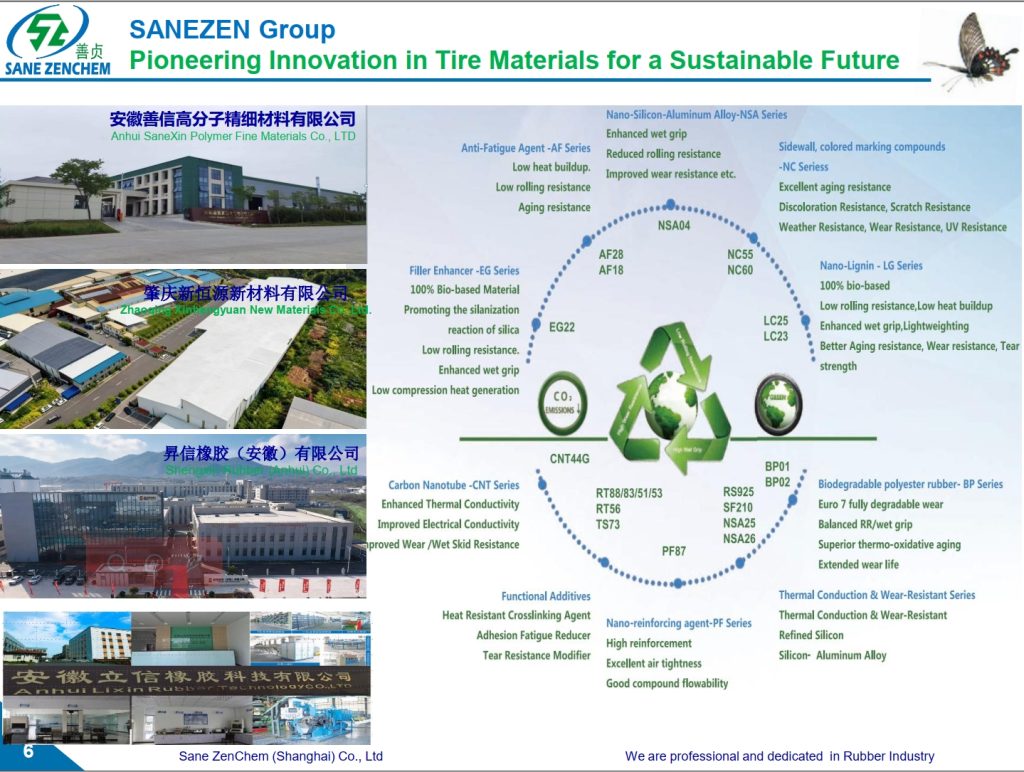
Choosing a functional filler supplier is not only about purchasing a mineral powder. It is about selecting a technical partner that understands polymer compounding, physical failure mechanisms, and long-term product performance. As a leading specialty functional filler and performance additives manufacturer, we bring decades of compounding expertise to every customer collaboration.
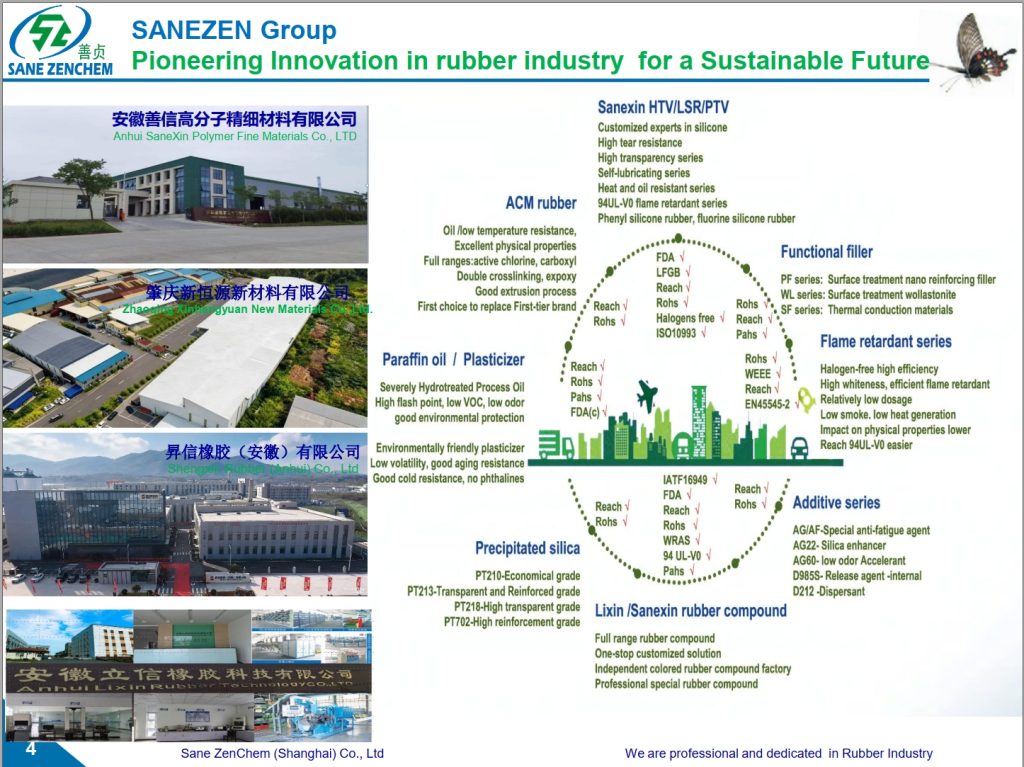
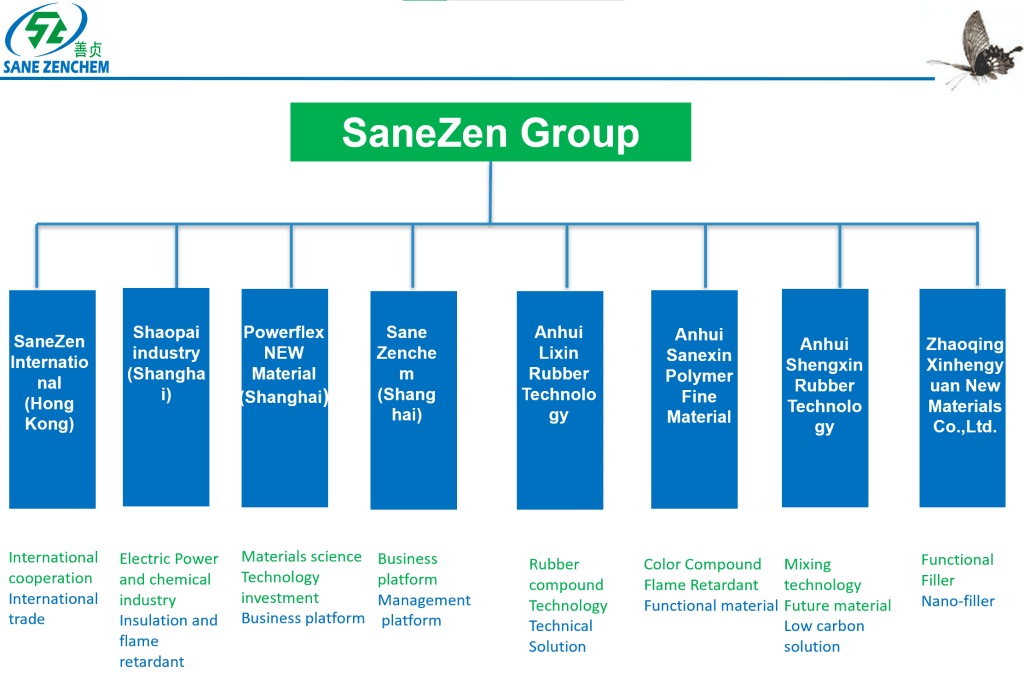
SaneZenChem operates five manufacturing facilities specialising in:
• Rubber Compounds
• Silicone Rubber Compounds
• Specialty Functional Fillers
• Flame Retardants
• Polymer Performance Additives
Because we formulate and manufacture rubber and silicone compounds ourselves, every specialty product we develop originates from solving real production challenges rather than laboratory concepts alone. This application-driven approach allows us to deliver practical solutions that create measurable improvements in customer products – from eliminating processing viscosity spikes and preventing micro cracking, to ensuring high dielectric strength in harsh electrical environments. Our unique dual position as both a direct compounder and a premier specialty functional filler manufacturer means we are uniquely equipped to support rubber, epoxy, and electrical insulation manufacturers in achieving longer service life, processing efficiency, and ultimate reliability.
Póngase en contacto con
Dirección de la planta:
Camino Baishou, Distrito Norte de la Zona de Desarrollo Económico de Xuan Zhou
Xuan Cheng City, Anhui Province, China
Dirección Comercial:
Room 503, Building 1, Huixin International Edifice, No. 150 Puhuitang Road, Xuhui District, Shanghai, China 200030
Tel: +86 21 6487 9251
Correo electrónico: yorichen@sanezen.com / kevenwang@sanezen.com
Página web: www.sanezenrubber.com
When you compare a rubber adhesion promoter manufacturer China with any other supplier, the useful questions are the same three: what ageing standard was used, were the unaged reference values supplied so retention can be calculated, and was the comparison made at equal loading. A supplier that can answer all three is telling you something a sample book cannot.
 Spanish
 English
 Russian