
Against the backdrop of the rubber industry’s continuous pursuit of high performance, long service life, and environmental sustainability, vulcanization reversion and thermal aging have remained key bottlenecks limiting the performance enhancement of rubber products, especially those used in dynamic applications such as tires and shock absorbers. Traditional vulcanization systems are prone to polysulfide bond breakage under over-cure or high-temperature conditions, leading to a decrease in crosslink density, degradation of mechanical properties, and consequently, compromised product durability and safety. The industry has been actively seeking novel additives that can improve both the thermal stability and dynamic performance of rubber. This is precisely the research direction for high performance rubber additive manufacturers.
GreenThinking® RT88 (hereinafter referred to as RT88) emerges as an innovative rubber heat stabilizer, crosslinking agent, and anti reversion agent. It not only participates in forming a thermodynamically stable carbon-sulfur crosslinked network, effectively inhibiting vulcanization reversion, but also significantly enhances the dynamic fatigue resistance and thermal-oxidative aging stability of rubber, making it particularly suitable for natural and synthetic rubber systems. This article will systematically elaborate on the technical principles, performance characteristics, experimental data, and practical application prospects of RT88, providing solutions for improving rubber heat aging resistance, to offer new pathways for the greening and high-performance development of the rubber industry.
1. Introduction: Challenges in the Rubber Industry and the Positioning of RT88
Rubber, as a highly elastic material, is widely used in tires, vibration damping, sealing, and transmission. The core of its performance lies in the three-dimensional crosslinked network formed during vulcanization. Although traditional sulfur vulcanization systems are cost-effective and mature in process technology, the polysulfide bonds they form have poor thermal stability. Under sustained high temperatures or dynamic stress, these bonds are prone to breakage and rearrangement, leading to the phenomenon of “vulcanization reversion.” This manifests as a decrease in rubber hardness and modulus, an increase in compression set, and ultimately, premature product failure.
Especially in applications such as automotive tires, engineering machinery shock absorbers, and high-temperature conveyor belts, rubber components are subjected to prolonged high temperatures, high strain, and dynamic loads, placing extremely high demands on heat resistance, fatigue resistance, and durability. Furthermore, with increasingly stringent global environmental regulations and the push for “dual carbon” goals, reducing tire compound rolling resistance to save fuel and reduce carbon emissions has become a significant development direction for the rubber industry, addressing how to improve rubber heat resistance in tires.
In this context, rubber additives possessing the combined characteristics of “heat resistance, reversion resistance, low heat build-up, and high durability” are urgently needed. RT88 is precisely a multifunctional, composite rubber additive developed to address this need. It can participate in the crosslinking reaction as part of the vulcanization system to enhance network stability, or be used alone as an anti-reversion agent for natural rubber compounds to compensate for performance loss due to reversion, providing new chemical tools for designing high-performance, long-life rubber products. As a specialty rubber additive designed for harsh operating conditions, RT88 is particularly suitable for demanding applications such as TBR (Truck and Bus Radial) tires and serves as an excellent natural rubber heat stability additive.
2. Mechanism of Action and Technical Features of RT88
2.1 Constructing a Stable, Flexible Crosslinked Network
RT88 effectively participates in the formation of carbon-sulfur crosslinks during vulcanization. Its uniqueness lies in promoting the formation of a hybrid crosslinked structure that combines the thermal stability of mono- and disulfide bonds with the flexibility of polysulfide bonds. This “balanced rigidity and flexibility” network architecture makes the vulcanizate less prone to bond breakage and rearrangement at high temperatures, thereby maintaining stable crosslink density and mechanical properties.
2.2 Compensating for Polysulfide Bond Breakage and Inhibiting Vulcanization Reversion
As a key component of a “Compensatory Cure System,” RT88 can provide new crosslinking sites or stabilize the existing network when polysulfide bonds break due to thermal or mechanical action, compensating for the loss in crosslink density caused by sulfur reversion. This mechanism is particularly useful for overcure conditions or processes requiring secondary vulcanization (e.g., high-temperature molding), significantly extending the optimal cure time window and improving process stability. Thus, it is an effective rubber anti-reversion heat stabilizer, functioning as a rubber anti reversion agent for tire manufacturing.
2.3 Significantly Enhancing Resistance to Thermal-Oxidative Aging
Experiments show that rubber with RT88 exhibits superior performance in hardness change, tensile strength retention, and elongation change after hot air aging compared to control samples. For instance, after aging at 100°C for 72 hours, tensile strength retention improved from -24.9% to -15.5%, and elongation change improved from -37.9% to -24.7%. This indicates that RT88 not only delays the thermal degradation of the crosslinked network but also protects the rubber polymer chains from oxidative attack to some extent, acting as a rubber thermal oxidative aging protection agent and providing robust rubber heat aging resistance improvement solutions. For formulators seeking a natural rubber heat stability additive or solutions on how to improve rubber heat resistance in tires, RT88 offers a reliable, performance-verified option.
2.4 Reducing Dynamic Heat Build-up and Improving Fatigue Performance
In dynamic applications like shock absorbers, RT88 reduces dynamic stiffness (by 3.4%) and the dynamic-to-static stiffness ratio (by 10.1%), while increasing static stiffness (by 6.9%). This characteristic of becoming “softer dynamically and harder statically” helps reduce internal friction heat generation under cyclic loading, minimizes heat accumulation, thereby delaying fatigue cracking and extending service life. A 16.5% reduction in the creep index further confirms its improved resistance to permanent set. This essentially improves rubber dynamic stiffness vibration damping properties, exemplifying an excellent rubber additive for dynamic stiffness control and serving as an additive to improve rubber fatigue resistance in motor mounts.
2.5 Assisting in Reducing Rolling Resistance and Enhancing Interfacial Adhesion
In tire compounds, RT88 helps reduce tire rolling resistance by optimizing the crosslink structure and reducing hysteresis loss, which is significant for improving vehicle fuel economy and aligns with the goal to reduce rubber rolling resistance tire compound. Simultaneously, it acts as a rubber metal adhesion improvement additive, effectively enhancing the adhesion between rubber and metal cords (such as steel wires), thereby strengthening the structural integrity and durability of tires under high-speed and high-load conditions. It provides an effective additive solution to the common industry challenge of how to improve rubber to steel cord bonding in tires.
3. Experimental Validation: Performance of RT88 in Shock-Absorbing Rubber
To systematically evaluate the practical effects of RT88, a comparative experiment was conducted based on a typical shock-absorbing rubber formulation (see Table 1 for details). This experiment simulated the development process of a heat resistant rubber formula for shock absorbers.
Table 1: Experimental Formula Comparison (Unit: phr)
Table 1: Experimental Formula Comparison (Dosage Unit: phr)
| No. | Raw Material Name & Specification | Производитель | Formula 1 – Blank | Formula 2 – RT88 |
| 1 | Natural Rubber 3L | – | 100 | 100 |
| 2 | Сера | – | 1.8 | 1.8 |
| 3 | Zinc Oxide | – | 5 | 5 |
| 4 | Stearic Acid | – | 1 | 1 |
| 5 | Accelerator CZ | – | 1.3 | 1.3 |
| 6 | Carbon Black N774 | – | 70 | 70 |
| 7 | Парафиновое масло | – | 5 | 5 |
| 8 | Antioxidant 4010NA | – | 2 | 2 |
| 9 | Antioxidant RD | – | 1 | 1 |
| 10 | Paraffin Wax | – | 1 | 1 |
| 11 | RT88 (Heat & Reversion Resistant Agent) | Powerflex | 0 | 0.8 |
| Всего | 188.1 | 188.9 |
3.1 Basic Physico-Mechanical Properties
From the conventional property tests of the vulcanizates (see Table 2), it can be observed that after adding 0.8 phr RT88:
- The hardness remains essentially unchanged (64 Shore A), indicating no adverse effect on the stiffness of the compound.
- The tensile strength shows a slight decrease (23.1 MPa → 22.7 MPa) but is still maintained at a high level.
- The 100% modulus experiences a small increase (3.64 MPa → 3.91 MPa), demonstrating enhanced effectiveness of the crosslinked network.
- The compression set (160℃×12 min) increases from 54% to 58.5%. This marginal increase may result from fine-tuning the rigidity of the crosslinked network and is considered acceptable within the context of the significant improvements observed in dynamic properties.
Table 2: Comparison of Basic Vulcanizate Properties (Test Standards: ASTM/GB)
Table 2: Comparison of Basic Vulcanizate Properties (Test Standards: ASTM/GB)
| Предмет испытания | Единица | Formula 1 – Blank | Formula 2 – RT88 |
| Твердость (по Шору A) | – | 64 | 64 |
| Прочность на разрыв | МПа | 23.1 | 22.7 |
| Удлинение при разрыве | % | 488 | 474 |
| Modulus at 100% Elongation | МПа | 3.64 | 3.91 |
| Удельная плотность | г/см³ | 1.158 | 1.17 |
| Compression Set (160℃×12 min) | % | 54 | 58.5 |
3.2 Hot Air Aging Performance
Aging performance is central to evaluating rubber heat resistance. After aging at 70°C for 72 hours:
- The RT88 compound exhibits a smaller increase in hardness, a higher tensile strength retention rate (-3.2% vs -5.8%), and a significantly improved elongation at break retention rate (-7.6% vs -17.4%).
- Under the more severe aging condition of 100℃×72 hours, the advantages are further amplified: the tensile strength retention rate improves by nearly 10 percentage points, and the elongation at break retention rate improves by over 13 percentage points. This fully demonstrates the excellent effectiveness of RT88 in enhancing the long-term thermal stability of rubber.
3.3 Dynamic Mechanical and Fatigue Performance
The core function of shock-absorbing rubber is to absorb and dissipate energy under dynamic loads. Tests showed:
- Dynamic stiffness decreases by 3.4%: This indicates that the compound becomes “softer” during vibration, allowing it to better accommodate deformation and reduce the force transmitted to the system.
- Static stiffness increases by 6.9%: This ensures sufficient rigidity under static load support, maintaining structural stability.
- Dynamic-to-static stiffness ratio decreases by 10.1%: This is a key indicator for evaluating damping performance. A lower ratio typically signifies better vibration isolation efficiency and lower dynamic heat generation.
- Creep index decreases by 16.5%: This indicates enhanced resistance to permanent set and improved dimensional stability.
- Natural frequency decreases by 4.8%: This helps avoid resonance frequencies, improving the operational smoothness of the system.
These comprehensive improvements indicate that RT88 can significantly enhance the durability and reliability of rubber products under dynamic operating conditions. Particularly in improving rubber fatigue resistance in motor mounts, RT88 demonstrates its potential as a specialized additive to improve rubber fatigue resistance in motor mounts and contributes to improving rubber dynamic stiffness vibration damping.
3.4 Metal Bonding Performance
In rubber-to-metal bonding tests, the addition of RT88 did not negatively affect bond strength, indicating good compatibility with common bonding systems (e.g., resorcinol-formaldehyde-latex systems, cobalt salt systems). It may even indirectly enhance interfacial performance by improving the bulk strength of the rubber. This makes it an ideal rubber metal adhesion improvement additive for applications requiring improved rubber to steel cord bonding in tires.
4. Application Process and Recommended Dosage
RT88 is a granular or powdered solid that disperses easily during rubber mixing. It is recommended to add it in the final stage of mixing along with sulfur and accelerators to prevent premature reaction affecting dispersion and scorch time.
Recommended dosage:
- When used as an anti-reversion agent in conjunction with sulfur/accelerator systems: 0.5 – 3.0 phr. This dosage range can be adjusted based on the specific rubber type, vulcanization system, and performance requirements. In vibration-damping rubber formulations, 0.8 phr demonstrates significant effects.
- When used as a standalone crosslinking agent (in sulfur-free systems): The dosage should be increased to approximately 7.0 phr to provide sufficient crosslinking sites.
RT88 is suitable for conventional mixing equipment like open mills and internal mixers. It exhibits good compatibility with common rubber raw materials (e.g., NR, SBR, BR, NBR), fillers, oils, and antioxidants, requiring no changes to existing production processes. This allows for its convenient integration into existing tire manufacturing processes as an анти reversion agent for tire manufacturing, meeting the needs of tire additive manufacturers in China and globally.
5. Application Field Outlook
Based on its performance characteristics, RT88 has broad application prospects in the following fields:
1.Tire Industry: Used in tread, sidewall, and apex compounds to enhance anti-reversion capability, act as a tire rolling resistance reduction additive, and improve steel cord adhesion, thereby increasing tire fuel economy, high-speed durability, and service life. Innovative tire additive manufacturers, including leading tire additive manufacturers in China, are focusing on such technologies to produce specialty rubber additives for TBR tires.

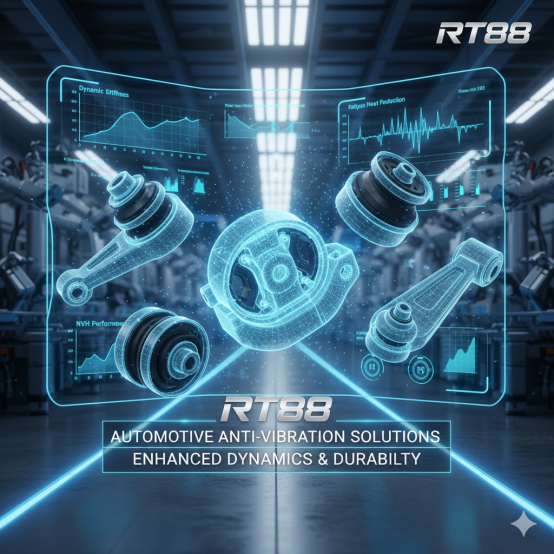
2.Automotive Vibration Damping Components: Such as engine mounts, suspensions, and bushings, by improving rubber dynamic stiffness vibration damping, to reduce fatigue heat build-up and enhance NVH (Noise, Vibration, and Harshness) performance and component life, utilizing it as a rubber additive for dynamic stiffness control.
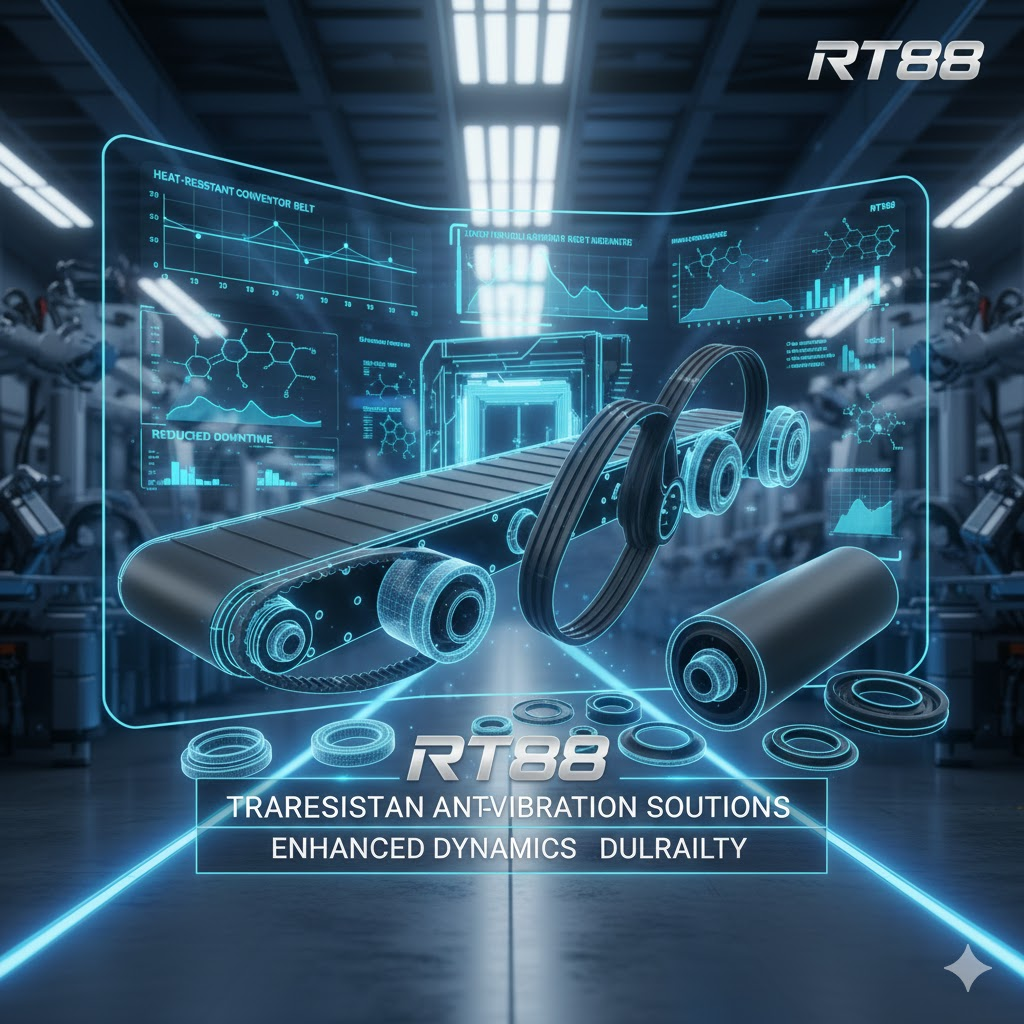
3.Industrial Rubber Products: Including heat-resistant conveyor belts, transmission belts, seals, and rubber rollers, maintaining performance stability under high-temperature or dynamic conditions and reducing downtime for replacement. For instance, as a rubber anti aging agent for conveyor belts, it can significantly extend service life. It also acts as a high temperature rubber sealant performance enhancer.
4.Other High-Performance Rubber Products: Such as bridge bearings, building isolation pads, and high-speed rail under-sleeper pads, where requirements for aging resistance and fatigue resistance are extremely high. In these fields, a high-temperature rubber sealant performance enhancer like RT88 is key to ensuring long-term reliability.
6. Conclusion and Outlook
GreenThinking® RT88, as a multifunctional rubber additive, successfully achieves an excellent balance between improving rubber thermal stability, inhibiting vulcanization reversion, enhancing dynamic fatigue performance, and reducing tire rolling resistance through its unique chemical mechanism. Experimental data fully confirms that while leaving conventional properties largely unaffected, it significantly improves the thermal-oxidative aging performance and durability of rubber products, especially those used dynamically, serving as a versatile rubber additive to reduce tire rolling resistance.
In today’s era where the rubber industry is moving towards greener, more efficient, and longer-lasting operations, products like RT88, representing a new generation of “GreenThinking,” not only provide specific solutions for improving rubber heat aging resistance but also embody the scientific development philosophy of precise material performance control through molecular design. In the future, as RT88 finds deeper application and validation in more rubber systems and end products, it is expected to become an indispensable key component in high-performance rubber formulations, contributing significantly to advancing technological progress and sustainable development across the industry. For global, and particularly for tire and rubber product manufacturers in China, collaborating with innovative high performance rubber additive manufacturers and adopting such высокая performance specialty rubber additives is a crucial strategy for maintaining a competitive edge.
 English
  Español
  Русский