
What this page answers
Natural rubber parts rarely fail because the service temperature was too high on its own. They fail because the vulcanisation that formed the network kept running after it should have stopped, or because the network that was formed contained crosslinks that break down at the temperature the part actually sees. This page looks at a sulphur based curing additive used with natural rubber and blends, sets out the mechanism of reversion and what a compensating crosslink does about it, and presents the measured results in several applications: an anti-vibration compound at 0.8 phr, a non-pneumatic hollow tyre compound at 1.5 phr, and a wiper blade compound at 1.5 phr. It also sets out where the case is strong, where it is not, and the two properties that should be measured before any dosage is fixed. The commercial question behind it is whether heat resistance can be bought without changing the cure system, and the answer depends on the property you are protecting.
Why reversion is a cure problem, not a service problem
Sulphur vulcanisation builds a network of crosslinks between polymer chains. Those crosslinks are not all the same. The ones with several sulphur atoms in the bridge are flexible and give the compound its elongation and its fatigue life. The ones with one or two sulphur atoms are stiffer and more thermally stable. A well designed cure produces a mixture, and the mixture is what gives natural rubber its useful balance of strength and fatigue resistance.
The mixture is not stable at high temperature. Above a certain temperature, and with enough time, the polysulphidic bridges lose sulphur atoms. The network that is left has fewer crosslinks and, in some cases, the sulphur redistributes into cyclic structures that provide no crosslinking at all. Crosslink density falls, the modulus falls, and the part that comes out of the press is softer than the part that went in.
That process is reversion, and it produces three field symptoms that are usually reported as three separate problems.
A cure curve that turns over. The torque rises to a maximum and then falls. In a compound with poor reversion resistance the fall can be substantial, and it means the state of cure is time dependent in the wrong direction. A press operator extending the cycle to be safe makes the part worse rather than better.
Thick parts that are cured unevenly. A thick section sees a temperature gradient. The core reaches cure temperature later and stays hot longer. If the compound reverts, the core is under-cured relative to the surface or is reverted relative to it, and the two zones have different properties. This is the reason reversion shows up in heavy sections and in parts with metal inserts first.
Aged parts that harden or soften unpredictably. After service at elevated temperature, some compounds keep stiffening as oxidation continues and others soften as the network continues to break down. Which one happens depends on whether the reversion was completed in the press.
There is a fourth consequence that matters for any part bonded to metal or reinforcing cord. The network at the interface is part of the bond. A network that loses crosslink density is a network that transfers stress to the bond differently, and a bond that was adequate at time zero can become the weak point later.
Two paths are available. Change the cure system, which means changing the accelerator, the sulphur level, the temperature or the time, and accepting the effect on every other property and on the line rate. Or add something that participates in the network and compensates for the loss. This page is about the second path, which is the practical form of a rubber additive for over cure protection and the reason the additive is dosed with the sulphur and accelerators rather than at the start of the mix.
What a compensating crosslink does
The mechanism has three parts, and it is worth keeping them separate when reading data.
It participates in forming carbon sulphur crosslinks. The additive enters the network during vulcanisation and forms bridges that combine the thermal stability of mono and disulphide bonds with the flexibility of polysulphide bonds. The result is a network that retains elongation while being more stable at temperature, which is the combination a single sulphur level cannot produce on its own.
It compensates for lost polysulphide bonds. As the polysulphide bridges lose sulphur under heat, the additive continues to build stable bridges into the network. Crosslink density is maintained rather than being allowed to fall, and the practical expression is a cure curve that flattens instead of turning over.
It changes the thermal stability of the network. Because the bridges that are formed are thermodynamically stable at the temperatures involved, the vulcanisate holds its mechanical properties better under over-cure and high temperature cure conditions, and the property retention after aging is better for the same reason.
Three limitations belong with the mechanism, because a supplier who does not state them is not describing a real product. The additive works through the cure system, so it has to be added where the cure system is added, which is the final mixing stage, and it cannot be used to rescue a compound that is already badly designed. It changes cure behaviour, so the cure cycle has to be re-verified rather than assumed. And it does not make a compound resistant to a temperature its base polymer cannot survive, so the base polymer and the antioxidant package still set the ceiling. Specifying an anti reversion agent for NR compound is therefore a network project as much as an additive purchase.
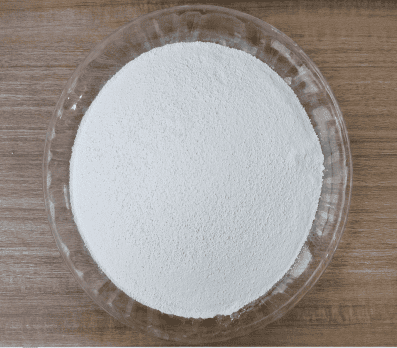
Measured in an anti-vibration compound at 0.8 phr
The reference for this work is a natural rubber shock absorber compound. RT88 was added at 0.8 phr in the final mixing stage; nothing else was changed.
| Материал | Blank | With RT88 |
| Natural rubber 3L, phr | 100 | 100 |
| Sulphur, phr | 1.8 | 1.8 |
| Zinc oxide, phr | 5 | 5 |
| Stearic acid, phr | 1 | 1 |
| Accelerator CZ, phr | 1.3 | 1.3 |
| Carbon black N774, phr | 70 | 70 |
| Paraffin oil, phr | 5 | 5 |
| Antioxidant 4010NA, phr | 2 | 2 |
| Antioxidant RD, phr | 1 | 1 |
| Paraffin wax, phr | 1 | 1 |
| RT88, phr | none | 0.8 |
| Total, phr | 188.1 | 188.9 |
Cure characteristics were measured at 160 °C for 6 minutes, and physical properties were taken on the same day.
| Недвижимость | Blank | With RT88 |
| Твердость, Шор А | 64 | 64 |
| Прочность на разрыв, МПа | 23.1 | 22.74 |
| Elongation at break, % | 488 | 474 |
| 100% modulus, MPa | 3.64 | 3.91 |
| Specific gravity, g/cm³ | 1.158 | 1.170 |
| Compression set at 160 °C × 12 min, % | 54.0 | 58.5 |
Read the unaged block honestly, because it is not a one sided result. Hardness is unchanged, tensile strength is 1.6% lower, elongation is 2.9% lower and the modulus at 100 percent elongation is 7.4% higher, which together describe a slightly tighter network. Compression set measured at cure temperature was worse, 58.5% against 54.0%. That is an unfavourable number and it belongs in the article rather than in a footnote.
The picture changes after aging, and the direction of change is the reason the additive is used.
| After hot air aging at 70 °C × 72 h | Blank | With RT88 |
| Твердость, Шор А | 68 | 67 |
| Hardness change, points | +4 | +3 |
| Прочность на разрыв, МПа | 21.75 | 22.01 |
| Tensile strength change, % | −5.8 | −3.2 |
| Elongation at break, % | 403 | 438 |
| Elongation change, % | −17.4 | −7.6 |
| Compression set at 70 °C × 24 h, % | 18.09 | 16.09 |
The compound with RT88 lost 3.2% of its tensile strength against 5.8% for the blank, and it lost 7.6% of its elongation against 17.4%. Compression set at 70 °C for 24 hours improved from 18.09% to 16.09%. The unaged elongation was slightly lower and the aged elongation was 35 percentage points higher, which is the signature of a network that holds together rather than one that starts stronger.
A second set of samples was tested after six days at room temperature, which is closer to how a production part is actually evaluated.
| After six days, then hot air aging at 100 °C × 72 h | Blank | With RT88 |
| Твердость, Шор А | 71 | 69 |
| Hardness change, points | +6 | +5 |
| Прочность на разрыв, МПа | 16.3 | 18.5 |
| Tensile strength change, % | −24.9 | −15.5 |
| Elongation at break, % | 251 | 293 |
| Elongation change, % | −37.9 | −24.7 |
This is the table that matters most in the set. At 100 °C the two compounds separate by 9.4 percentage points on tensile retention and 13.2 points on elongation retention. Both compounds degrade, and the one with RT88 degrades substantially less. A rubber heat resistance additive supplier should be asked for exactly this comparison, at the temperature the part actually sees, rather than for an unaged property table.
| [ IMAGE PLACEHOLDER 2 / lab ] 此处留白放图ALT TEXT: Rubber testing laboratory with rheometer, aging oven and dynamic test equipmentCAPTION: Figure 2. In house test equipment used for cure, aging and dynamic property measurement.FILE: images/RT88-02-rubber-testing-laboratory.jpgHTML: <img src="”images/RT88-02-rubber-testing-laboratory.jpg”" alt="”Rubber" testing laboratory with rheometer, aging oven and dynamic test equipment”>图片建议:实验室 / 动态测试设备图(沿用同款实验室图)。 |
The dynamic result: stiffness, creep and adhesion
An anti-vibration part is judged on dynamic behaviour, and the dynamic test on the same compound produced the most interesting numbers in the study.
| Dynamic property | Blank | With RT88 | Изменение |
| Dynamic stiffness Kd, kN/mm | 0.61 | 0.59 | −3.3% |
| Static stiffness Ks, kN/mm | 0.41 | 0.44 | +7.3% |
| Dynamic to static stiffness ratio Kd/Ks | 1.49 | 1.34 | −10.1% |
| Natural frequency, Hz | 12.5 | 11.9 | −4.8% |
| Creep index | 4.83 | 4.52 | −6.4% |
| Адгезия к металлу | 6.54 | 6.56 | essentially unchanged |
The ratio of dynamic to static stiffness is the number a chassis engineer cares about in a mount, because it describes how much stiffer the part behaves when it is being excited than when it is being loaded slowly. A 10.1% reduction in that ratio is a behavioural change, and lower is normally the direction the application wants. Static stiffness rose 7.3% while dynamic stiffness fell 3.3%, and the two movements together produced the ratio change. Natural frequency fell 4.8%, which follows from the stiffness change and matters for isolating a specific vibration frequency rather than for strength.
The creep index fell 6.4% on the measured values. The presentation that accompanies this data states a 16.5% creep index reduction, and the two figures do not agree. The measured values in the source workbook are 4.83 and 4.52, which is a 6.4% reduction. Both the lower figure and the stated figure describe an improvement, and the discrepancy should be resolved against the original test record before either number is published.
Adhesion to metal was 6.54 before and 6.56 after, which is no change within measurement variation. That matters in the opposite direction from the stiffness result: a curing additive that improved stiffness behaviour at the cost of the bond would be a poor trade, and in this compound it did not.
Where the mechanism shows up: a non-pneumatic hollow tyre
A hollow tyre is a good second case because the failure mode is mechanical and the industry complaint is specific.
| Материал | фраза | ||
| Натуральный каучук | 60 | ||
| Butadiene rubber | 30 | ||
| SBR, low styrene | 10 | ||
| Carbon black N330 | 30 | ||
| Кремнезем | 30 | ||
| RT88 | 1.5 | ||
| Result | Without RT88 | With 1.5 phr RT88 | |
| Flex life | 100,000 cycles | over 300,000 cycles | |
| Heat build-up index | 24 | 22 | |
| Aging change rate after 100 °C × 72 h | reference | improved by 20 to 30% | |
The flex life movement from 100,000 cycles to more than 300,000 cycles is the largest single effect in this data set, and it is consistent with the mechanism: a network that retains its flexible bridges keeps its fatigue resistance, and a network that has lost them cracks earlier. Heat build-up fell from 24 to 22, which is a small absolute change in index terms and a real one in a part that runs continuously. The aged change rate improved by 20 to 30%, which is stated as a range because it varied between the properties measured.
Two cautions on this table. The flex life figures are reported as thousand-cycle bands rather than as exact counts, so the result should be read as a step change in service life rather than as a precise ratio. And the formulation differs from the anti-vibration reference in base polymers, fillers and cure system, so the two data sets support the mechanism in two different compounds rather than proving that the effect size transfers between compounds.
A third case: wiper blade rubber and chlorination
Wiper blade strips are natural rubber, and after moulding they are surface treated to make them slide quietly and to prepare them for assembly. The treatment is harsh.
| Process step | Состояние |
| Chlorination bath | 30% hydrochloric acid plus calcium hypochlorite at 40% content |
| Customer bath recipe per 400 kg water | 1.2 kg hydrochloric acid plus 1.63 kg calcium hypochlorite |
| Immersion | 46 °C for 30 minutes, strips tumbled in a roller surrounded by solution |
| Rinsing | clean water for 30 minutes at ambient temperature |
| Pre-drying | about 10 minutes |
| Coating | aqueous graphite emulsion with adhesive by spraying, or molybdenum disulphide by roller |
| Curing and cutting | as per existing process |
The failure mode is internal attack. The chlorinating solution penetrates the rubber, the network is attacked below the surface, and the part develops fine cracks a few days after treatment. The cracks are not visible immediately, which is why the process is controlled by flexing the strips a few days later and looking for them.
With RT88 added at 1.5 phr, the compound resisted internal attack during chlorination, the aged properties held better, the tested service life and durability improved, and the finished strip produced less noise against glass. An anti reversion agent for wiper blade rubber is therefore being asked to do two jobs in this process, one at cure and one in the bath. This is also an application where the requirement is unusual: the part is not hot in service, and the reason the additive helps is that the network it builds resists chemical attack as well as heat. Not every part needs that, and it is worth checking whether the benefit here comes from crosslink density or from the specific chemistry before assuming the result transfers to a different chemical exposure.
Failure analysis: what reversion looks like in a plant
| Symptom on the shop floor | Usual cause | What to check |
| Torque curve turns over and falls during the rheometer run | Polysulphide bridges decomposing faster than they are replaced | Run the rheometer to the full cycle, not to the plateau. A compound that never plateaus cannot be cured to a defined state. |
| Thick section softer than the surface, or hard and brittle at the core | Temperature gradient plus reversion, so the two zones finished in different states of cure | Cure a test slab at the actual section thickness and cut it. A surface property measurement will not show this. |
| Part passes at time zero and fails at 100 °C aging by a wide margin | Network retained flexibility at room temperature and lost it under heat | Compare aged retention rates, not aged absolute values. −15.5% against −24.9% tensile and −24.7% against −37.9% elongation after 100 °C for 72 hours separated the two compounds here. |
| Bond to metal or cord fails before the rubber does | The network around the interface lost crosslink density, so the stress path through the bond changed | Pull test before and after aging. In the reference compound, adhesion measured 6.54 and 6.56, so the additive itself did not damage the bond. |
| Cure cycle extended to be safe and the part gets worse | Reversion is time dependent, so a longer cycle reduces the state of cure rather than increasing it | Verify the cure curve before changing the cycle. |
| Compression set at cure temperature worse after the additive was introduced | The network is tighter at short times, which shows up as higher set at the cure temperature itself | This was measured here: 58.5% against 54.0%. Check compression set at the service temperature as well, where the result reversed, 16.09% against 18.09%. |
The compression set point deserves emphasis because it is the one place in this data set where the additive made a measured value worse. Compression set at 160 °C for 12 minutes rose from 54.0% to 58.5%, while compression set at 70 °C for 24 hours improved from 18.09% to 16.09%. The two measurements are asking different questions. The first is close to the cure temperature and reflects the state of the network as it was formed. The second is closer to a service condition and reflects how the network behaves afterwards. If your specification only has the first kind of measurement in it, the additive will look unfavourable.
Which compounds benefit, and which do not
The case is strongest where a natural rubber or natural rubber blend compound has to hold mechanical properties through elevated temperature aging, and where the cure cycle or the section thickness makes reversion likely. That covers anti-vibration parts, tyres and tyre components, conveyor and transmission belting, wiper blades, rubber rollers and engine mounts.
The case is also strong where a part is bonded to metal or to reinforcing cord and the bond has to survive aging, because the additive does not take anything away from the bond in the reference compound, and a network that holds its crosslink density transfers load more predictably. A rubber additive to improve rubber to steel cord adhesion is usually proposed as a bonding promoter, and the result here is the milder and more useful version of that claim: the additive does not damage a bond that is already adequate, while fixing the network around it. For a tyre or a tracked component, that difference matters, because a bond failure and a rubber failure look the same in the field and are diagnosed differently.
A crosslinking agent for natural rubber supplier is also asked, reasonably, what happens in a blend. The anti-vibration reference is 100 phr of natural rubber, and the hollow tyre compound is a blend of natural rubber, butadiene rubber and low styrene SBR at a 60 to 30 to 10 ratio, so the two data sets cover both cases. Both improved, which is consistent with the mechanism acting on the sulphur network rather than on a specific polymer.
The case is weaker in three situations. Where the part sees no significant thermal load and no over-cure risk, the benefit will be small and hard to measure. Where the compound is highly unsaturated and already designed with an efficient vulcanisation system, the network may already be dominated by stable short bridges and there will be little left to compensate for. And where the governing requirement is compression set at the cure temperature itself, the reference data here shows the number moving the wrong way, so a different solution is needed.
Dosage follows from the same logic. With sulphur and accelerators the recommended range is 0.5 to 3.0 phr, and it is added in the final mixing stage with the sulphur and accelerators. Used without sulphur, the dosage has to rise to 7.0 phr, which changes the economics and the cure behaviour substantially and should be treated as a different formulation project rather than a dosage change.
How to compare two options properly
Four measurements decide whether a heat resistance additive is doing anything, and none of them is the unaged tensile strength.
The aged retention rate at the real service temperature. Take the ratio of aged to unaged for tensile strength and elongation, at the temperature and time the part will actually see. In the reference compound that measurement separated the two formulations by 9.4 and 13.2 percentage points at 100 °C for 72 hours.
The cure curve shape, run to completion. A curve that plateaus indicates a network that has stopped changing. A curve that turns over indicates one that has not, and the amount of the fall is a direct measure of the reversion the additive is there to prevent.
The dynamic to static stiffness ratio, where the part is a dynamic part. A 10.1% reduction was measured here, from 1.49 to 1.34. For a static part this measurement is unnecessary.
Compression set at two temperatures, the cure temperature and the service temperature, because they can move in opposite directions and a specification that contains only one of them will give a misleading answer.
An anti reversion agent manufacturer should be able to supply these four measurements in a single table. A heat resistant crosslinking agent China supplier or one anywhere else should be held to the same standard, and the useful question is not what the additive is but which of the four measurements it moves in your compound.
Cost and the honest limitation of this data set
The supplied data for this additive does not include a reversion torque curve measured to the point where the network begins to break down. The anti-reversion claim is supported indirectly, through the aged property retention at 70 °C and 100 °C, through the dynamic stiffness behaviour, and through a flex life improvement from 100,000 cycles to more than 300,000 cycles in a hollow tyre compound. That is a consistent body of evidence and it is not the same as a direct reversion measurement. If reversion suppression is the primary requirement in your project, ask for a torque curve run past the plateau in your own compound and treat that as the first trial result.
On cost, the additive is used at 0.5 to 3.0 phr in a sulphur system, which is a low addition level for a property that changes aged retention and flex life by the amounts shown. The relevant comparison is not cost per kilogram against the rubber, it is cost per kilogram of compound against the cost of the failures it prevents: a mount that hardens out of specification in service, a hollow tyre that cracks at 100,000 cycles, a wiper strip that cracks after chlorination, or a belt that loses its mechanical properties in a hot press. A 0.8 phr addition is 0.4% of a compound that totals 188.9 phr, and it is being asked to change how that compound behaves in year three.

Часто задаваемые вопросы
How to stop reversion in natural rubber at high cure temperature
Either change the cure system or add something that compensates for the network loss, and the second route is the one that leaves the rest of the formulation alone. A compensating crosslinking additive at 0.5 to 3.0 phr added with the sulphur and accelerators in the final mixing stage forms stable bridges while the flexible polysulphide bridges are being lost. In the reference natural rubber compound, 0.8 phr changed the aged retention after 100 °C for 72 hours from −24.9% to −15.5% on tensile strength and from −37.9% to −24.7% on elongation. Confirm the effect in your own cure cycle, because the additive changes cure behaviour and the cycle has to be re-verified.
Why does NR lose crosslink density during over cure
Because the polysulphide bridges in a sulphur vulcanised network are not thermally stable at cure temperature. Over time at temperature they lose sulphur atoms, the number of load bearing crosslinks falls, and some of the sulphur redistributes into cyclic structures that do not crosslink at all. The visible consequence is a torque curve that rises to a maximum and then falls. Thick sections are affected first because the core stays hot longer, which is why reversion often appears as a surface to core property difference rather than as a uniformly soft part.
How to keep tensile strength after 100 C aging in natural rubber
Measure the retention rate rather than the absolute value, and select on the aged result rather than the unaged one. In the reference compound tested after six days and then aged at 100 °C for 72 hours, the unaged tensile strength was similar in both formulations and the retention differed by 9.4 percentage points, 15.5% loss against 24.9%. Elongation retention differed by 13.2 points. A compound that starts 1.6% weaker and ends 13% stronger is the better choice for a part that has to survive a hot service life.
Anti reversion agent dosage with a sulfur curing system
The recommended range is 0.5 to 3.0 phr when used with sulphur and accelerators, added in the final mixing stage. Used on its own without sulphur the dosage rises to 7.0 phr, which changes the cure behaviour and the economics enough that it should be treated as a separate formulation rather than a dosage adjustment. Start at the lower end of the range and establish the cure cycle in your own compound, because the additive participates in the network and therefore changes the cure curve.
How to reduce dynamic to static stiffness ratio in anti vibration rubber
Change the network so that it is stiffer under slow load and softer under dynamic excitation, which is what the measured data shows for this additive. In the reference anti-vibration compound the dynamic stiffness fell 3.3% and the static stiffness rose 7.3%, and the ratio fell 10.1% from 1.49 to 1.34. Natural frequency fell 4.8% from 12.5 to 11.9 Hz. If the application is frequency sensitive rather than stiffness sensitive, recheck the isolation frequency after the change, because both the ratio and the frequency move together.
How to improve flex fatigue life of non pneumatic tire rubber
Retain the flexible part of the network, because fatigue cracks initiate where the network has already lost its ability to distribute strain. In a hollow tyre compound on a natural rubber, butadiene rubber and low styrene SBR base with 1.5 phr of the additive, flex life moved from 100,000 cycles to over 300,000 cycles, heat build-up fell from 24 to 22 on the index used, and the change rate after 100 °C for 72 hours improved by 20 to 30%. The flex life figures are reported in bands, so read the result as a step change in service life rather than a precise multiple.
Rubber additive for wiper blade chlorination resistance
The requirement in this application is resistance to chemical attack rather than resistance to heat. Wiper strips are treated in a bath of 30% hydrochloric acid with calcium hypochlorite at 46 °C for 30 minutes, and the failure mode is internal cracking that becomes visible only a few days later when the strip is flexed. At 1.5 phr the additive reduced internal attack during chlorination, improved aged properties, extended the tested service life and reduced operating noise. Confirm the benefit against your own bath recipe and treatment time before changing a production compound.
How to raise heat resistance without changing the cure system
Use an additive that participates in the network rather than one that changes the curing chemistry, and add it in the final mixing stage with the sulphur and accelerators. In the reference compound nothing else was changed: the sulphur level, the accelerator, the fillers, the plasticiser and the antioxidants were identical between the two formulations, and only 0.8 phr of the additive was added. The cure behaviour still changed, so the cycle should be re-verified, but the formulation did not have to be rebuilt.
Anti reversion agent for conveyor belt and transmission belt
Belts are a strong candidate because they run hot, they are thick, and they are continuously flexed. The three failure routes that matter in a belt are loss of mechanical properties after heat aging, fatigue cracking and, where the belt is reinforced, loss of adhesion to the cord. The measured data supports all three directions: aged retention improved, flex life improved markedly in a comparable dynamically loaded compound, and adhesion to metal was unchanged at 6.54 against 6.56. Confirm at the actual belt thickness, because reversion is a section thickness effect as much as a temperature effect.
How to compare anti reversion agents by aged property retention
Use retention rates at the real service temperature, not absolute values at a convenient one. Take the ratio of aged to unaged for tensile strength and elongation, and run the aging at the temperature the part will see. In the reference compound, aging at 70 °C for 72 hours separated the formulations by 2.6 and 9.8 percentage points, and aging at 100 °C for 72 hours separated them by 9.4 and 13.2 points. The size of the difference grows with temperature, which is why a low temperature comparison can make a marginal additive look adequate.
Does the additive change the cure cycle
Yes, and it should be verified rather than assumed. Because the additive participates in forming crosslinks it changes the cure behaviour, which is also why it is added with the sulphur and accelerators rather than at the start of mixing. In the reference compound the unaged modulus at 100 percent elongation rose from 3.64 to 3.91 MPa, which describes a tighter network at the same cure condition. Run a rheometer comparison to full plateau with and without the additive before fixing a production cycle.
Is compression set affected
Yes, and in two directions depending on the measurement temperature. In the reference compound, compression set at 160 °C for 12 minutes rose from 54.0% to 58.5%, while compression set at 70 °C for 24 hours fell from 18.09% to 16.09%. A specification that contains only the first measurement will make the additive look unfavourable, and a specification that contains only the second will overstate the benefit. Include both, and state the temperature and compression ratio for each.
Does the additive affect adhesion to metal or steel cord
In the reference anti-vibration compound it did not. Adhesion to metal measured 6.54 without the additive and 6.56 with it, which is within measurement variation. This matters for engine mounts, bushes and tyres, because a curing additive that improved heat resistance while weakening the bond would be a poor trade. Confirm on your own bonding system, since adhesion results depend on the bonding agent and the cure cycle as well as on the rubber network.
What properties does the additive not improve
It does not change the temperature ceiling of the base polymer, so it will not make a general purpose natural rubber compound behave like a high temperature polymer. It does not replace the antioxidant package. It does not fix a compound whose cure system is wrong to begin with. And it worsened compression set measured at cure temperature in the reference compound. It is a network additive, so treat it as a way to protect a network that is otherwise sound rather than as a way to rebuild a formulation that is not.
What standards apply to the source data
Hardness testing in the source data follows [ASTM D2240 / GB/T 531.1], tensile properties follow [ASTM D412 / GB/T 528], specific gravity follows [GB/T 533 / ASTM D792], heat aging follows [ASTM D573], and compression set follows [GB/T 7759 / ASTM D395]. Please confirm the applicable edition and the specimen geometry before quoting a standard in a purchase specification. Dynamic stiffness, natural frequency and creep index were measured on the relevant test rigs and their test conditions are not stated in the source material, so those numbers should be carried with the caveat that the rig conditions need confirmation.
Technical support and resources
Where the data comes from. The cure characteristics and physical property results are from a natural rubber 3L shock absorber compound cured at 160 °C for 6 minutes, with duplicate samples also tested after six days at room temperature. Aging was carried out in a hot air oven at 70 °C for 72 hours and at 100 °C for 72 hours. The dynamic properties were measured on the same compound. The hollow tyre results are from a separate compound on a natural rubber, butadiene rubber and low styrene SBR base at 1.5 phr. The wiper blade results are from a production process description rather than a laboratory programme. Every number is a measured value from those sources.
Three points need confirmation before publication. First, the creep index reduction is stated as 16.5% in the accompanying presentation while the source workbook gives 4.83 falling to 4.52, which is 6.4%. Please reconcile these against the original test record. Second, packaging appears as 20 kg per bag in the product data sheet and 25 kg per bag in the brochure. Please confirm which is current. Third, the additive grades used in the hollow tyre and wiper blade work are described in the source material as anti-fatigue and heat resistant agents respectively; confirm that the same grade is intended in both cases before the two results are presented side by side.
A heat resistance decision depends on the base polymer, the cure system, the section thickness and the service temperature profile. For a comparison protocol matched to a specific compound, or for a reversion curve measured past the plateau on your own formulation, technical support is available through the contact below.
The heat resistant crosslinking and anti-reversion additive discussed on this page is supplied as the GreenThinking® RT88 series.
Why Choose Us
Choosing a functional filler supplier is not only about purchasing a mineral powder. It is about selecting a technical partner that understands polymer compounding, physical failure mechanisms, and long-term product performance. As a leading specialty functional filler and performance additives manufacturer, we bring decades of compounding expertise to every customer collaboration.
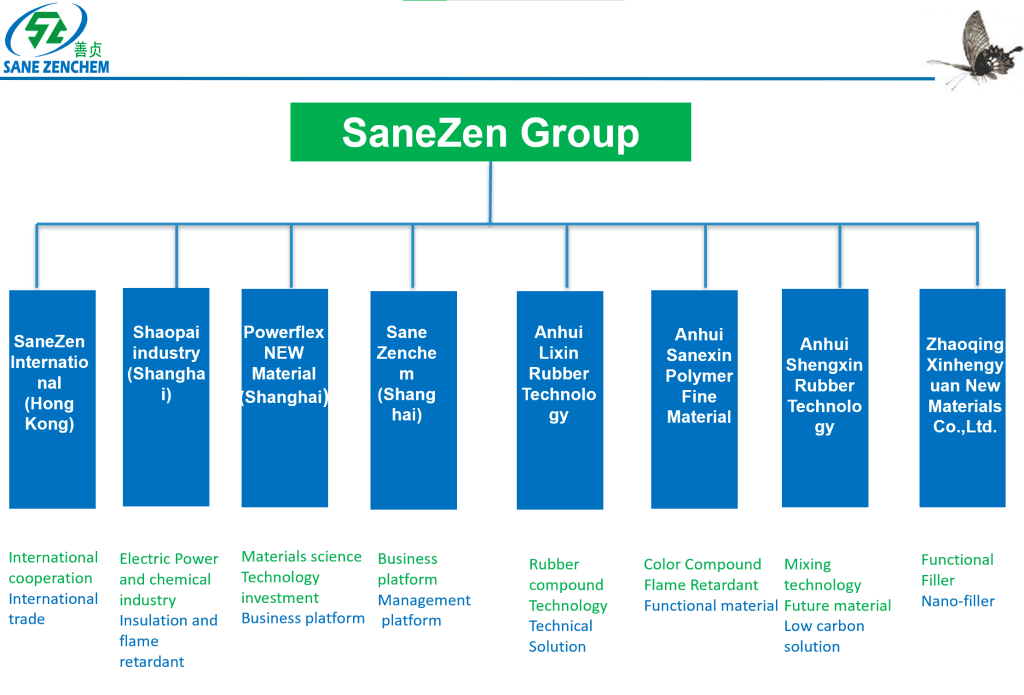
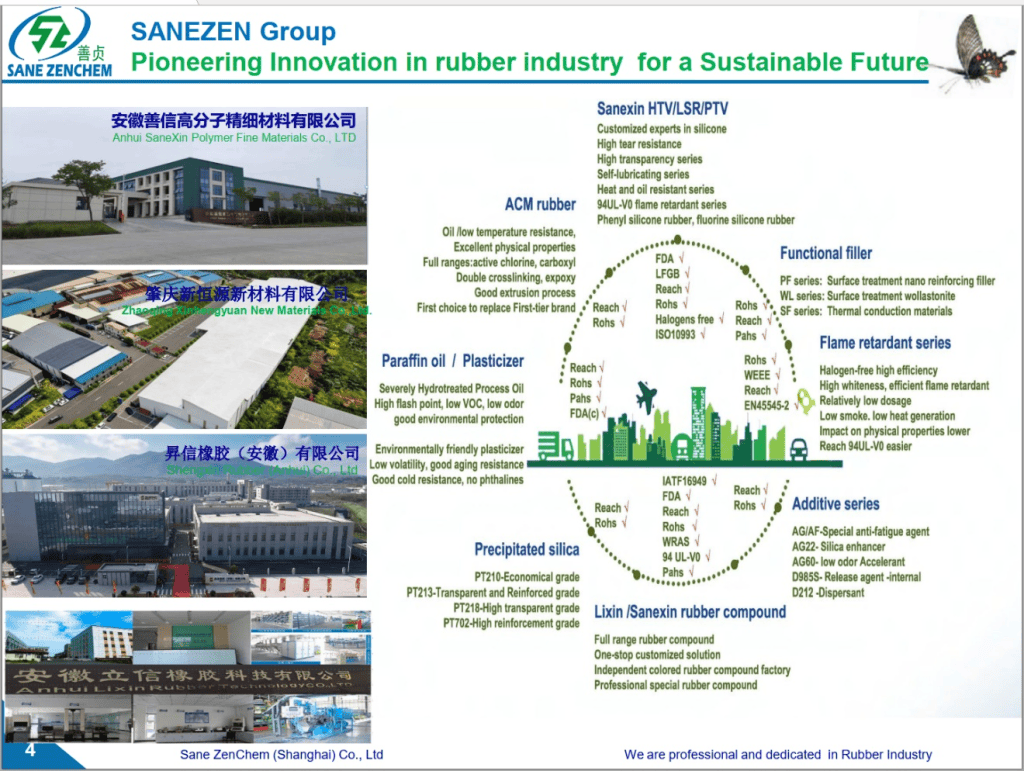
SaneZenChem operates five manufacturing facilities specialising in:
• Rubber Compounds
• Silicone Rubber Compounds
• Specialty Functional Fillers
• Flame Retardants
• Polymer Performance Additives
Because we formulate and manufacture rubber and silicone compounds ourselves, every specialty product we develop originates from solving real production challenges rather than laboratory concepts alone. This application-driven approach allows us to deliver practical solutions that create measurable improvements in customer products – from eliminating processing viscosity spikes and preventing micro cracking, to ensuring high dielectric strength in harsh electrical environments. Our unique dual position as both a direct compounder and a premier specialty functional filler manufacturer means we are uniquely equipped to support rubber, epoxy, and electrical insulation manufacturers in achieving longer service life, processing efficiency, and ultimate reliability.
Связаться с
Адрес завода:
ул. Байшоу, Северный район зоны экономического развития Сюаньчжоу
Xuan Cheng City, Anhui Province, China
Коммерческий адрес:
Room 503, Building 1, Huixin International Edifice, No. 150 Puhuitang Road, Xuhui District, Shanghai, China 200030
Тел.: +86 21 6487 9251
Электронная почта: yorichen@sanezen.com / kevenwang@sanezen.com
Веб-сайт: www.sanezenrubber.com
When you compare a rubber adhesion promoter manufacturer China with any other supplier, the useful questions are the same three: what ageing standard was used, were the unaged reference values supplied so retention can be calculated, and was the comparison made at equal loading. A supplier that can answer all three is telling you something a sample book cannot.
 Russian
  English
  Spanish