
Under dynamic operating conditions, rubber damping products commonly face core technical bottlenecks such as high dynamic heat generation, undesirable dynamic-to-static stiffness ratio (Kd/Ks), susceptibility to reversion, and insufficient fatigue life. These issues severely limit the performance limits and long-term service reliability of damping components. This article focuses on Anti-Fatigue Agent AF27, developed by the SANEZEN Group, a leading rubber chemicals manufacturer in China and rubber chemicals supplier China. AF27 is a specialized high-performance additive for natural rubber carbon black system. Through its unique dual-functional group molecular design, AF27 constructs a robust chemical “bridge” between the ends of rubber molecular chains and the active surfaces of carbon black particles, achieving fundamental optimization at the composite interface level. This paper systematically explains the coupling mechanism of AF27 and, based on detailed comparative experimental data, quantitatively analyzes its exceptional effects as a key material to improve dynamic properties of rubber, including significantly reducing the dynamic-to-static stiffness ratio (by approximately 20%), effectively decreasing dynamic heat buildup, substantially improving elastic recovery, and markedly enhancing thermal aging stability and anti-reversion capability. The research demonstrates that AF27 provides a validated and effective technical pathway for developing natural rubber damping products with high damping, long life, and high reliability, offering solutions for natural rubber in heavy duty damping.
I. Introduction: Performance Bottlenecks and Technical Needs of Damping Rubber
Rubber damping products, serving as the “soft connection” and core energy dissipation element in mechanical systems, are widely used in industrial equipment, rail transportation, automotive engineering, precision instruments, and other fields. Their core functions are to absorb impact kinetic energy, isolate vibration transmission, and reduce structural noise, directly impacting equipment operational smoothness, ride comfort, structural safety, and service life.
Under dynamic cyclic loading, the internal energy dissipation mechanism of rubber composite materials (especially systems reinforced with carbon black) is particularly crucial. This dissipation primarily originates from the internal friction of rubber molecular chain segment movement and, more significantly, the “adhesion-slip” effect between rubber molecular chains and carbon black filler particles. The continuous dissipation of energy converts into heat, causing a sharp temperature rise within the component. High temperature triggers two serious consequences: first, it accelerates the material’s thermo-oxidative aging process; second, it induces the “reversion” phenomenon of the vulcanization network—where crosslinks (especially polysulfide bonds) break, leading to a decrease in crosslink density. This manifests macroscopically as modulus decay, hardness decrease, increased permanent set, and ultimately, failure of the damping function.
Natural rubber (NR), due to its excellent resilience, high mechanical strength, and good processability, is the preferred matrix material for high-performance damping products. However, its unsaturated molecular backbone structure also makes it more sensitive to heat and oxygen, exhibiting inherent tendencies for “high hysteresis loss” and “easy reversion.“ This contradiction limits the performance potential and service life of NR-based damping products under harsh dynamic environments, highlighting the need for effective additives to prevent rubber reversion.
Therefore, there is an urgent need in the industry for innovative technologies that can significantly reduce its dynamic heat generation, optimize the matching of dynamic and static stiffness, and fundamentally enhance its thermal stability and anti-fatigue performance while preserving the highly elastic nature of NR. Anti-Fatigue Agent AF27 is the innovative result born to address this series of challenges. It is not a traditional processing aid or a simple plasticizer, but a functionally designed material based on precise molecular engineering, aimed at revolutionizing the dynamic mechanical behavior of natural rubber/carbon black composite systems through interfacial engineering. It serves as a premier anti fatigue agent for natural rubber compounds and a powerful additive to improve damping performance of natural rubber.
II. Mechanism of Action of AF27: From Molecular Coupling to Performance Enhancement
2.1 Structural Characteristics and Active Sites on Carbon Black Surface
To understand the efficacy of AF27, one must first recognize its target—the surface complexity of carbon black. Carbon black is not an inert filler; its surface is a combination of graphitic microcrystals (sp² hybridized) and amorphous carbon (sp³ hybridized). At the edges of microcrystals, defect sites, and around slit-shaped cavities, there are abundant oxygen-containing functional groups, such as carboxyl (-COOH), phenolic hydroxyl (-OH), quinone (=O), lactone groups, etc. (as shown in Figure 1). These areas are the primary source of surface chemical activity, known as “highly active sites.” However, in furnace carbon black, the total concentration of such active sites occupies only 5-20% of the surface area. During conventional mixing, rubber molecular chains mainly bind to these sites through weaker physical adsorption (van der Waals forces), a bond that is neither stable nor uniform.
2.2 Rubber-Filler Weak Interface: The Root Cause of Dynamic Energy Loss
Under dynamic deformation, rubber molecular chains connected only by physical adsorption are prone to reciprocating “slip” on the carbon black surface. Each adsorption-desorption and slip cycle is accompanied by irreversible energy loss, i.e., hysteresis loss. This loss directly converts into heat, constituting a major source of high dynamic heat generation in compounds, while also contributing to higher rolling resistance (for tires) or poorer energy absorption efficiency (for damping parts). The dynamic mechanical temperature spectrum in Figure 2 clearly shows that the loss factor (tanδ) of carbon black-filled compounds in the ambient temperature and above range is typically significantly higher than that of silica-filled compounds, which is direct evidence of the weak interface slip mechanism. This underscores the challenge of how to lower hysteresis loss in rubber compounds.
2.3 Dual-Functional Group Coupling Mechanism of AF27
The molecular structure of Anti-Fatigue Agent AF27 is ingeniously designed as a reactive “dual-headed” architecture, acting like an efficient molecular bridge connecting rubber and carbon black.
- One End (Y End): This end contains disulfide, polysulfide, or other reactive groups capable of reacting with unsaturated bonds. These groups can undergo chemical reactions with terminal groups of natural rubber molecular chains or active points (like aldehyde groups C=O) generated on the backbone due to processing or aging, forming stable covalent bonds. This process achieves “chemical capping” and “targeted modification” of rubber molecular chains.
- The Other End (X End): This end is rich in strong polar functional groups like hydroxyl (-OH), amino (-NH₂), etc. These groups can tightly and firmly anchor onto the oxygen-containing active sites on the carbon black surface (e.g., -OH reacting with carbon black carboxyl groups to form ester bonds) through various interaction modes (including covalent bonds, hydrogen bonds, ionic bonds, etc.).
Core Action: Through this “one bridge, dual anchors” mechanism, AF27 constructs a strong, stable chemical bonding bridge between rubber molecular chains and carbon black particles, completely replacing the originally weak and unstable physical adsorption interface.
2.4 Microstructural Optimization and Correlation with Macroscopic Performance
The coupling at the molecular level triggers a series of positive changes in the composite’s microstructure, directly mapping to a comprehensive improvement in macroscopic performance:
- Promotes Uniform Carbon Black Dispersion: AF27 molecules anchored on the carbon black surface act like a “shell” with excellent compatibility with rubber, significantly increasing steric hindrance between particles, effectively breaking down carbon black secondary agglomerates, and promoting highly uniform, nano-level dispersion within the rubber matrix.
- Strengthens Interfacial Bonding, Reduces Molecular Chain Slip: The powerful chemical bonding bridge multiplies the binding force between rubber chains and the carbon black surface. During dynamic deformation, molecular chain slip is greatly suppressed, and the resulting hysteresis loss and heat generation are substantially reduced.
- Reduces Free Chain Ends, Decreases Ineffective Internal Friction: By chemically bonding to the ends of rubber molecular chains, the number of free, chain ends in the system that do not contribute to the effective elastic network is reduced. The relaxation movement of these free ends during deformation is a source of internal friction, and their reduction further lowers dynamic heat generation.
- Delays Polysulfide Bond Thermal Degradation, Inhibits Reversion: The structural properties of AF27 allow it to participate in the formation and stabilization of the vulcanization network. It can effectively slow down the rate at which polysulfide bonds within the crosslinked network break due to thermo-oxidative effects during subsequent use, thereby significantly improving the thermal stability of the vulcanizate and inhibiting the occurrence of reversion, functioning as an anti reversion agent for natural rubber.
III. Improvement of Key Performance in Damping Rubber by AF27: Experimental Data Validation
3.1 Overview of Experimental Design
To objectively evaluate the efficacy of AF27, a rigorous comparative experiment was designed. A typical natural rubber-based damping product formulation was used as the base formulation (control sample). Under the condition of keeping all raw materials and process parameters unchanged, 1.2~1.5 phr of AF27 was added during the mixing stage to obtain the comparative formulation. All performance tests were conducted under identical conditions.
3.2 Core Performance Breakthrough: Significant Reduction in Dynamic-to-Static Stiffness Ratio (Kd/Ks)
The dynamic-to-static stiffness ratio is a core indicator for evaluating the dynamic damping characteristics of damping elements. An ideal damping material should provide sufficient support stiffness under static conditions (high Ks) while exhibiting lower dynamic stiffness under dynamic impact (low Kd), i.e., possessing a low Kd/Ks value. This signifies excellent energy absorption and vibration isolation capabilities, directly addressing the need for improving rubber vibration damping performance and solving high dynamic stiffness in carbon black filled NR.
- Data Presentation: Multiple comparative experiment data consistently show that the addition of AF27 significantly reduces the dynamic-to-static stiffness ratio.
- In a test on an N330/N774 carbon black system (35phr), the Kd/Ks of the base formulation was 1.46; after adding 1.2 phr AF27, this value decreased to 1.34.
- In another test using N774 carbon black (70phr), the Kd/Ks of the base formulation was 1.49; after adding 1.0 phr AF27, this value decreased to 1.31.
- Comprehensive data indicates that AF27 can achieve a reduction of approximately 20% in the dynamic-to-static stiffness ratio.
- Mechanism Correlation and Performance Interpretation: This significant improvement is directly attributed to AF27’s optimization of carbon black dispersion and strengthening of interfacial bonding. Uniformly dispersed carbon black forms a more homogeneous and effective reinforcing network, avoiding local stress concentration. The strengthened interface ensures efficient stress transfer between filler and matrix, reducing the extra dynamic modulus contribution caused by interface slip and the “Payne effect.” This makes the product behave more “flexible” and “compliant” under dynamic conditions, significantly enhancing shock absorption efficiency. This makes AF27 an effective additive to reduce dynamic to static stiffness ratio and a key material to improve dynamic properties of rubber, providing ways to improve damping and reduce stiffness in rubber parts.
3.3 Reduction in Dynamic Heat Buildup and Hysteresis Loss
The reduction in dynamic heat generation is another key benefit brought by AF27, providing solutions for how to reduce heat buildup in natural rubber shock absorbers.
- Increase in Rebound Resilience: Rebound resilience is a direct indicator of elastic recovery capability and hysteresis loss. Experimental data shows that after adding AF27, the compound’s rebound resilience can significantly increase from 54% to 61% (under 160°C×12min curing conditions). The improvement in rebound intuitively proves the reduction in hysteresis loss and energy dissipation, demonstrating how to lower hysteresis loss in rubber compounds.
- Changes in Dynamic Modulus and Loss Factor: Dynamic Mechanical Analysis (DMA) shows that after adding AF27, the compound’s dynamic storage modulus (E’) and loss factor (tanδ) at 60°C typically show a decreasing trend. For example, E’ at 0°C decreased from 22.01 MPa to 17.67 MPa, and tanδ at 60°C decreased from 0.098 to 0.080. This indicates that the material’s rigidity at service temperature is more moderate while internal friction is lower, naturally leading to reduced heat generation.
3.4 Enhancement of Durability and Thermal Stability
AF27 effectively extends product life by inhibiting reversion and improving thermal aging performance. It acts as an anti reversion agent for natural rubber and contributes to improving thermal stability of vulcanized natural rubber.
- Retention Rate After Thermal Aging: After 100°C×72 hours of hot air aging, the compound with AF27 showed superior performance retention. For example, its tensile strength change rate was -22.10%, better than the control’s -24.90%; elongation at break change rate was -34.10%, better than the control’s -37.90%. This indicates that AF27 effectively slows down the performance degradation rate of the material at high temperatures.
- Reduction in Compression Set: Compression set is an important indicator for measuring the durability of rubber seals and damping parts. Tests showed that the addition of AF27 reduced the compression set under 70°C×24h conditions from 18.09% to 16.09%, demonstrating better elastic recovery capability and anti-stress relaxation performance.
- Indirect Proof of Anti-Reversion Effect: The improvement in post-aging performance retention and compression set both indirectly confirm AF27’s enhancement of the thermal stability of the vulcanization network, i.e., its excellent anti-reversion capability, making it an effective choice among additives to prevent rubber reversion.
3.5 Balanced Impact on Other Physical and Mechanical Properties
An excellent additive should enhance target performance without compromising the material’s basic mechanical attributes, contributing to overall natural rubber compound improvement.
- Key Physical and Mechanical Properties: Experimental data shows that after adding AF27, the compound’s hardness (Shore A) remains stable or changes only slightly; tensile strength and modulus (M100, M300) are maintained at original levels or slightly improved; elongation at break and tear strength also show no negative impact. This proves the precision of AF27’s action.
- Changes in Curing Characteristics: The addition of AF27 usually slightly promotes the curing process, manifested as potentially slightly shortened scorch time (T10) and optimum cure time (T90). This helps improve production efficiency but also suggests that fine-tuning of the curing system may be needed in actual formulations to achieve the best balance.
IV. Application Guidelines and Process Key Points
To ensure Anti-Fatigue Agent AF27 delivers maximum effectiveness in practical production applications, the following key principles must be adhered to:
- Target System: AF27 is specifically designed for natural rubber (NR) or compounds where natural rubber is the main component. The reactive group at one end of its molecule is tailored for the terminal structure of NR molecular chains, where its effect is most pronounced. It is primarily suitable for carbon black-filled dynamic products like damping and sealing components. It serves as an additive for Natural rubber shock absorber compound and more broadly as an additive for Natural rubber carbon black system.
- Recommended Dosage: Depending on product performance requirements, the recommended addition range is 1.0 — 1.8 phr (parts per hundred rubber). For products primarily aimed at optimizing damping performance (reducing dynamic-to-static stiffness ratio and heat generation), 1.2 — 1.5 phr is a validated and effective starting dosage.
- Addition Process: Critically important. AF27 must be added during mixing in the internal mixer, in the first stage (non-productive stage), together with the natural rubber raw gum, carbon black, and other main raw materials. This ensures it has ample opportunity under high temperature and high shear conditions to contact and react with NR molecular chains and the freshly fractured carbon black surface. Adding it later will not achieve effective chemical coupling, drastically reducing its effect.
- Formula Synergy: AF27 has good compatibility with conventional curing systems (accelerators, sulfur), antioxidants, plasticizers, etc. It is recommended that after introducing AF27, based on the minor adjustments to the curing curve and performance trends it brings, necessary fine-tuning of the original formula (especially the curing system) be performed to achieve overall performance optimization.
V. Conclusion
The successful application of Anti-Fatigue Agent AF27 represents an advanced technological pathway for addressing specific performance bottlenecks in rubber composite materials through precise molecular interface engineering. Its unique “dual-functional group coupling” mechanism can construct strong, stable chemical bridges between natural rubber molecular chain ends and carbon black active surfaces, thereby fundamentally reshaping the microstructure of the composite material from the source.
Systematic experimental data irrefutably proves that adding 1.2-1.5 phr of AF27 to a natural rubber/carbon black damping system can achieve:
- A reduction of approximately 20% in the dynamic-to-static stiffness ratio (Kd/Ks), greatly optimizing dynamic damping characteristics;
- Significant reduction in dynamic heat generation, with resilience improving by over 10%;
- Marked enhancement in thermal aging stability and compression set resistance;
- Achievement of the aforementioned performance leaps while keeping key mechanical properties like basic tensile strength and hardness unaffected.
Therefore, AF27 is an efficient, specific solution for natural rubber/carbon black systems, providing a solid, reliable, and validated material technology foundation for developing a new generation of high-performance, high-durability, high-reliability rubber damping products (such as high-end automotive mount bushings, rail transit damping pads, heavy-duty engineering machinery supports, etc.). It stands out among anti fatigue agents for natural rubber compounds and rubber chemicals for vibration damping applications, and is a proven additive to prevent reversion in natural rubber.
VI. About Us
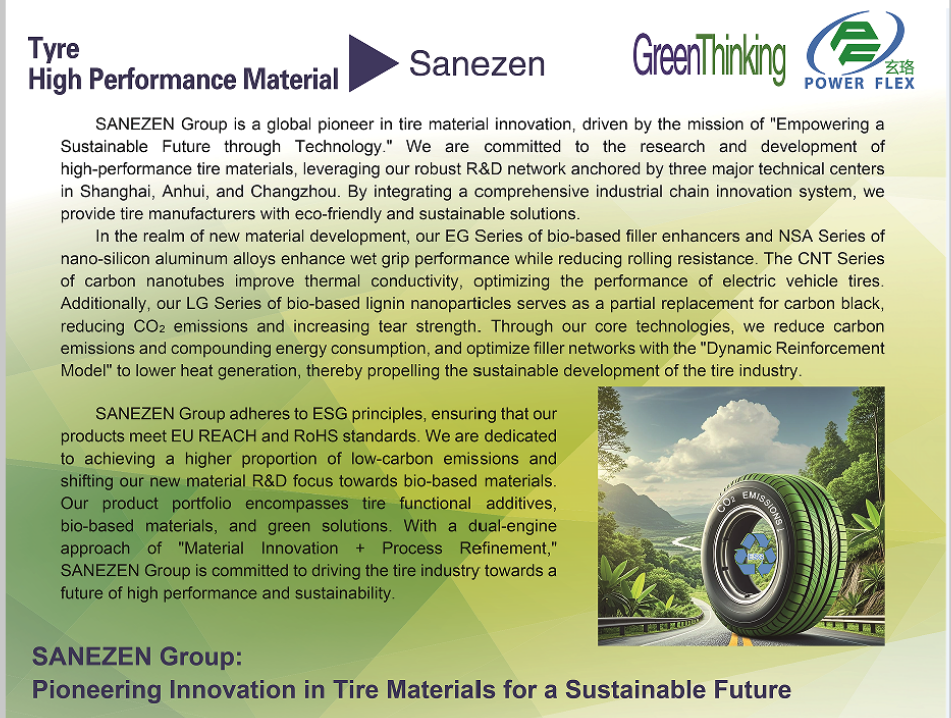
The anti-fatigue agent AF27 described in this article is meticulously developed by the R&D centers and production bases under the SANEZEN Group. As a global pioneer and a leading rubber chemicals manufacturer in China and rubber chemicals supplier China, SANEZEN Group is committed to the mission of “Empowering a Sustainable Future through Technology“, focusing on the research, development, and production of high-performance and sustainable rubber materials and functional additives.
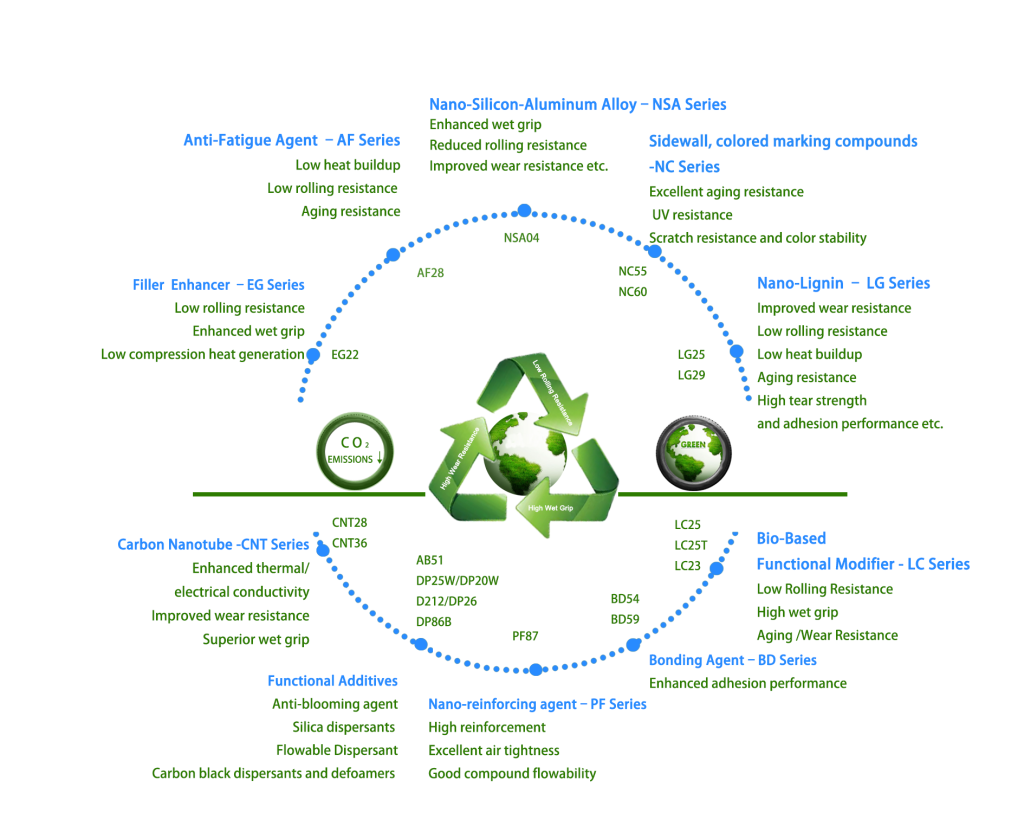
Anchored by three major technical centers in Shanghai, Anhui, and Changzhou, the Group has established a complete innovation industrial chain spanning from fundamental research to industrial application. We are dedicated to advancing the industry through materials science. Our product portfolio includes a series of specialty functional materials such as anti-fatigue agents, bio-based filler enhancers, nano-silicon-aluminum alloys, carbon nanotubes, aiming to provide customers with comprehensive solutions that enhance product performance and reduce environmental footprint.
Our modern facilities ensure consistent quality and stable supply from the laboratory to mass production. The Group strictly adheres to ESG principles, with products complying with international standards such as EU REACH and RoHS, and continuously promotes the decarbonization and greening of production processes.
Driven by the dual engines of “Material Innovation + Process Refinement”, SANEZEN Group is not only a supplier of advanced materials but also a steadfast partner in the sustainable development of the rubber industry. We look forward to collaborating with industry peers to explore the frontiers of materials science and propel the rubber and tire industry towards a higher-performance, more sustainable future.
SANEZEN Group – Driving Rubber Technology, Empowering a Sustainable Future
For more information about AF27 or other functional additives, or to explore potential cooperation, please feel free to contact us:
- Tel: +86 21 6487 9251
- Mobile/WhatsApp: +86 136 7164 1995 / +86 139 1804 7582
- Email: yorichen@sanezen.com
- Website: www.sanezenrubber.com
 English
  Spanish
  Russian