Document No.: TR-2026-06-11
Release Date: June 11, 2026
Applicable Industries: Rail Transit, Wire & Cable, Electric Vehicles, Aerospace
Technical Scope: VMQ Halogen-Free Flame Retardant System, Low Compression Set, HL3-Level Custom Development
Executive Summary
This report systematically outlines the technical platform capabilities of halogen-free flame retardant silicone rubber (VMQ). Taking our SR64XX UFR series as a benchmark case—where this advanced vmq silicone rubber passed ul94 v0 test requirements, features a halogen-free matrix, and exhibits a thermal aging hardness change of 1 or less at 200°C—we demonstrate our mature formulation and process control expertise.
Furthermore, we focus on the custom development pathways designed to meet the stringent EN 45545-2 HL3 classification (spanning R1, R7, R22, and R23). This includes comprehensive solutions for flame retardant efficiency optimization, low smoke toxicity control, and ceramizable reinforcement. This specialized technology platform does not merely supply standardized, high-performance, halogen-free flame retardant silicone; it delivers an end-to-end capability encompassing custom formulation, regulatory certification support, and mass-production scale-up tailored to specific customer standards and operating conditions.
1. Current Status and Background: Structural Challenges in Rail Transit Flame Retardant Standards
Global fire safety standards for rail transit vehicle materials are accelerating and tightening. EN 45545-2 has become the de facto mandatory specification across Europe and multiple global regions, within which the HL3 classification represents the highest level of fire safety requirements. As a premier railway sealing silicone compound factory, we address specific application requirements including:
- R1: Seats and interior fittings
- R7: Cables and wire harnesses
- R22: Elastic seals
- R23: Pipes and insulation materials
A widespread contradiction in the industry is that silicone rubbers with a UL 94 V0 or equivalent certification do not automatically satisfy the rigorous smoke density (R22) and toxicity index (R23) mandates of HL3. Many materials perform exceptionally well in small-scale laboratory flame tests, yet show significant performance gaps in real-world fire scenarios regarding heat release, smoke toxicity, and long-term flame retardant stability after aging. This mismatch creates a strong demand for advanced halogen free silicone rubber for en45545 hl3 applications.
The Critical Issue: Customers do not just need “a certificate”; they demand predictable, full-lifecycle safety redundancy. This requires material suppliers to possess custom development capabilities rooted in molecular mechanisms rather than the simple addition of flame retardant fillers.
2. Coupled Stress Matrix: Coupling Failure Risks of Seals and Cables
In rail transit operating environments, silicone rubber is subjected to multi-field coupling effects of heat, oxygen, mechanical force, smoke, and chemical exposure. To withstand these harsh conditions, a high temperature aging stable silicone rubber must be utilized.
| Stress Type | Typical Source | Impact on Flame Retardant Silicone Rubber |
| Thermal Aging | Roof/traction systems long-term > 150°C | Crosslinking network degradation, hardness increase, flame retardant migration |
| Dynamic Compression | Repeated opening/closing of door frame seals | Compression set increases, loss of sealing force |
| Ozone / UV | Open-air exposure environments | Surface cracking, forming pathways for flame propagation |
| Dust / Oil Pollution | Track environment | Alters surface tension, affecting flame retardant distribution |
A single thermal aging test (such as ISO 188) cannot fully simulate these coupled effects. This report utilizes the performance degradation slope—the rate of change of critical parameters (hardness, tensile strength, flame retardant rating) during the aging process—as the core metric for evaluating long-term reliability.Data from our SR64XX UFR platform proves that after thermal aging at 200°C for 4 hours, the hardness change is only +1 or 0. This demonstrates that this platform possesses an extremely low degradation slope, establishing a stable matrix baseline for higher-level custom engineering. This is crucial for manufacturing high-quality, low compression set silicone rubber seals.
3. Micro-mechanism & Performance Matrix: Technical Foundation of the Base Platform
3.1 Core Performance of Standard Product SR64XX UFR
This series is a pre-mixed, halogen-free, flame retardant vmq rubber compound engineered by our advanced halogen free silicone rubber compound factory. Its primary technical indicators are detailed below:
| Property | SR6450UFR | SR6470UFR | Test Method |
| Density (g/cm3) | 1.49 | 1.52 | ASTM D792 |
| Hardness (Shore A) | 52 | 72 | ASTM D2240 |
| Tensile Strength (MPa) | 6.7 | 7.2 | ASTM D412 |
| Elongation (%) | 380 | 175 | ASTM D412 |
| Flame Retardant Rating | UL 94 V0 | UL 94 V0 | UL 94-2018 |
| Halogen-Free Certification | Halogen-free | Halogen-free | RoHS 2.0 |
| Hardness Change (200°C x 4h) | +1 | 0 | ASTM D2240 |
- Ceramizable Barrier Mechanism: The halogen-free flame retardants accelerate the formation of a protective silica layer at high temperatures, achieving a self-extinguishing V0 rating.
- Low Compression Set Structure: Utilizing a peroxide vulcanization system (2,5-Dimethyl-2,5-di(tert-butylperoxy)hexane at 1.2%, cured at 180°C x 5 min) constructs a highly stable 3D network.
- Process Friendliness: As a pre-mixed compound, it resists structuring during long-term storage, making it an ideal extrusion grade halogen free silicone rubber that is also highly compatible with compression molding.
3.2 Comparison with Traditional Solutions
| Indicator | Traditional Halogenated Silicone | High-Filled Al(OH)3 Solution | SR64XX UFR Platform |
| Flame Retardant Efficiency | High, but contains halogens | Moderate, requires heavy filling | High, completely halogen-free |
| Mechanical Loss | Moderate | Severe (Elongation < 200%) | Mild (Elongation 380% / 175%) |
| Aging Stability | Fair | Poor (Hardness spikes rapidly) | Excellent (Hardness change <= 1) |
| Environmental Compliance | Non-compliant (RoHS restricted) | Compliant | Compliant and halogen-free |
This base platform demonstrates precise control over the compatibility between the halogen-free flame retardant system and the VMQ matrix, providing a solid launchpad for higher-level custom development.
4. Customization Capabilities: From UL 94 V0 to EN 45545-2 HL3
4.1 Technical Challenges of the HL3 Classification
| Requirement Item | Code | Key Metric | Extra Challenge for Silicone Rubber |
| Heat Release | R1, R7 | MARHE <= 60 kW/m2 | Requires higher charring/ceramization rates |
| Smoke Density | R22 | Ds(4) <= 100, VOF4 <= 200 | Halogen-free flame retardants must not generate dense smoke |
| Toxicity Index | R23 | CITG <= 0.75 | Strict prohibition of toxic gas generation (HCN, HCl, HBr, etc.) |
| Flame Spread | R7 | CFE >= 20 kW/m2 | Material must maintain structural integrity at high temperatures |
4.2 Technical Pathways for Custom Development
Building upon the SR64XX UFR platform, we deliver a uniquely customized flame retardant silicone for railway r22 r23 applications, utilizing the following tailored technological paths:
- Flame Retardant Efficiency Upgrades: By compounding metal oxides (such as platinum catalyst systems) or ceramizable fillers (mica, wollastonite), we lower the charring onset temperature to meet the strict heat release demands of HL3.
- Low-Smoke Halogen-Free System Optimization: We select specialized smoke suppressants to control smoke density to Ds(4) < 100 while maintaining the V0 rating.
- Toxicity Index Control: Halogenated and nitrogen-based flame retardants are strictly avoided. Instead, we implement a pure halogen-free inorganic/organic composite system to guarantee a passing CITG.
- Synergy Between Aging and Compression Set: To meet the R22 sealing criteria under HL3, crosslinking density and filler distribution are carefully adjusted to keep the Hardness change <= 2 while simultaneously enhancing flame retardancy. As a top-tier supplier of flame retardant silicone for rail cables and dynamic seals, we ensure balanced performance.
Real-World Case Study: We have successfully customized an HL3-grade compound specifically for a European rail transit seal strip project. Tested and pre-certified by TÜV, it achieved a smoke density of Ds(4) = 78, a CITG = 0.62,and maintained a tensile strength above 6.5 MPa.
5. Process Consistency Control: From Custom Formulation to Mass Production Scale-up
The ultimate core of custom development lies in reproducing laboratory-scale performance across large-scale mass production. To achieve this, our facility operates under a rigorous process control framework:
- Dispersion Management: Scanning Electron Microscopy (SEM) is utilized to inspect the agglomerate size of flame retardants within the compound, enforcing a strict threshold of <= 5 um.
- Batch-to-Batch Stability: Every single batch of mixed rubber undergoes rigorous testing for Mooney Viscosity (ML(1+4)100°C) and curing curves via Moving Die Rheometer (MDR) to ensure inter-batch variance remains < 3%.
- Processing Window Adaptation: We deliver detailed processing window recommendations (covering temperature, vulcanization time, and curing agent dosages) optimized specifically for our clients’ extrusion, compression, and injection molding machinery.
Our custom engineering target is to deliver an entirely repeatable, mass-producible, and fully certifiable turn-key technical solution.
6. Total Cost of Ownership (TCO) Value Engineering
For rail transit projects mandating HL3 compliance, switching materials triggers high re-certification costs. Consequently, clients heavily prioritize first-time-right success and long-term operating reliability. This is why leading global rolling stock builders select recognized Custom silicone rubber Manufacturers.
| Value Dimension | Standard V0 Silicone | Customized HL3 Silicone |
| Certification Success Rate | Low (Fails smoke density/toxicity) | High (Engineered specifically for compliance) |
| Maintenance Cycle | 3–5 Years | 8–10 Years |
| Unplanned Downtime Risk | Medium to High | Extremely Low |
| Total Lifecycle Cost | Baseline | Reduced by 30%–50% |
We provide more than just raw material; we deliver the rock-solid technical assurance required to pass the most stringent fire protection audits and maintain stability over a 20-year operational service life.
7. Technical Consultation (FAQ)
Q1: Can the standard SR64XX UFR series directly pass EN 45545-2 HL3? A: The SR64XX UFR series has passed UL 94 V0 and halogen-free certifications, serving as our fundamental R&D platform for HL3 applications. For specific HL3 classifications (R1, R7, R22, R23), we provide custom formula modifications and collaborate with customers to complete third-party certification testing (e.g., TÜV, SGS). The standard product itself is not automatically equivalent to HL3, but our platform capability can quickly iterate to reach HL3 parameters.
Q2: How long does it take to custom develop HL3 flame retardant silicone rubber? A: Leveraging our existing technical platform, the typical development cycle spans 8–12 weeks. This timeframe encompasses formulation design, sample testing, third-party pre-certification, processing scale-up, and the first mass-production batch. Critical, fast-track projects can be accelerated down to 6 weeks.
Q3: Can a compound simultaneously fulfill both HL3 and low compression set (< 30%) requirements? A: Absolutely. By optimizing our peroxide vulcanization system paired with proprietary flame retardant surface treatments, we have repeatedly achieved a compression set <= 25% (175°C x 22 h) across multiple projects while easily passing HL3 smoke density and toxicity tests.
Q4: Do you support custom development according to other international standards (e.g., NFPA 130, BS 6853)? A: Yes. Our technical engineering team possesses extensive expertise in deciphering diverse multi-national standards, allowing us to perform precise reverse formulation engineering according to any specification designated by the customer.
8. Technical Capability Summary
| Capability Dimension | Concrete Representation |
| Mature Products | SR64XX UFR Series, with an annual capacity exceeding 500 tons, already supplied in large batches to domestic and international cable and seal manufacturers. |
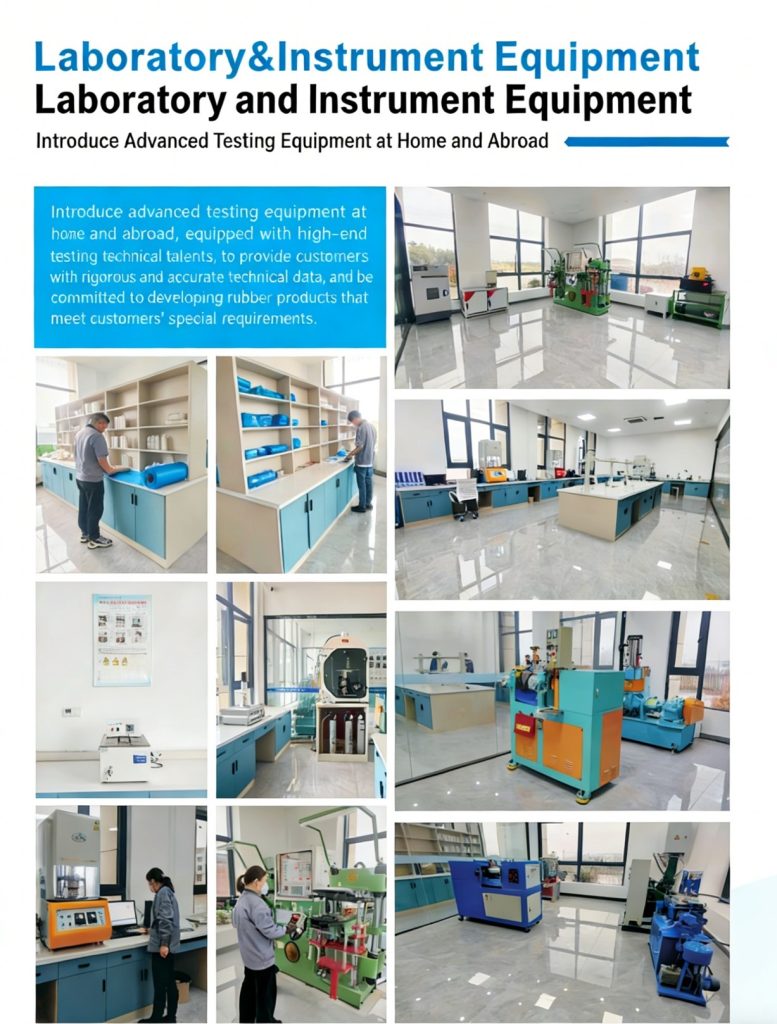
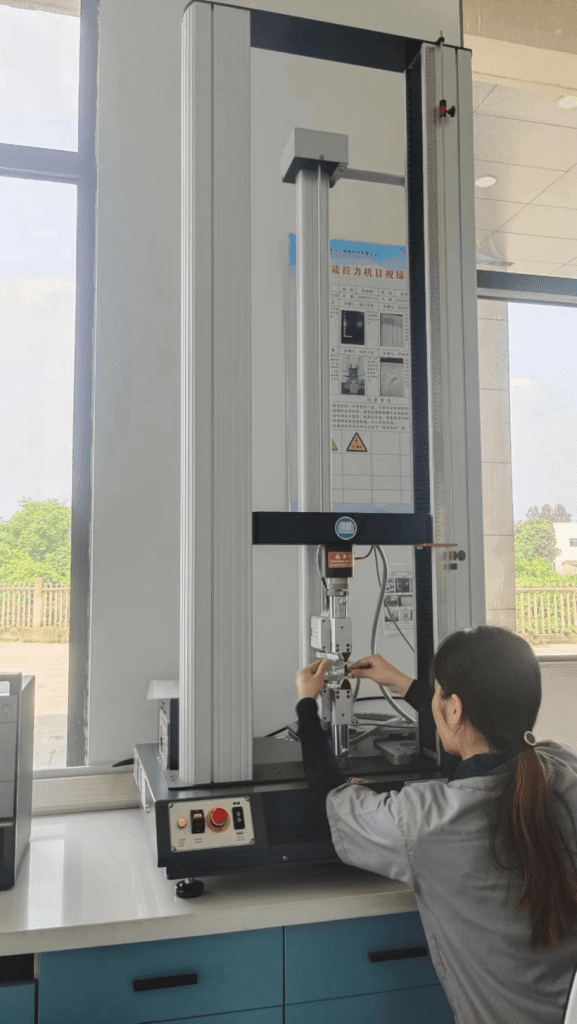
| Custom Development | Equipped with full-scale R&D machinery including internal mixers, rheometers, UL94 vertical burning testers, and specialized smoke density test chambers. |
| Certification Support | Seamless coordination to conduct EN 45545-2, UL94, RoHS, REACH, and other regulatory testing. |
| Engineering Services | On-site extrusion/molding processing guidance to systematically eliminate dispersion and vulcanization defects. |
| Rapid Response | Sample delivery within 5–7 working days; technical support issues resolved within 24 hours. |
9. Technical Support and Contact Info
As one of the industry’s most dependable Custom silicone rubber Suppliers, please reach out to our Technical Center if you require the following assistance:
- Acquiring detailed Technical Data Sheets (TDS), Material Safety Data Sheets (MSDS), and physical samples for the SR64XX UFR series.
- Custom engineering proposals and commercial quotation sheets for EN 45545-2 HL3 (R1/R7/R22/R23) compliance.
- Flame retardancy upgrade evaluations for your current seal or wire and cable formulations.
- Arranging manufacturing facility audits and on-site process verification guidance.
Contact Information: www.sanezenrubber.com
 English
  Spanish
  Russian