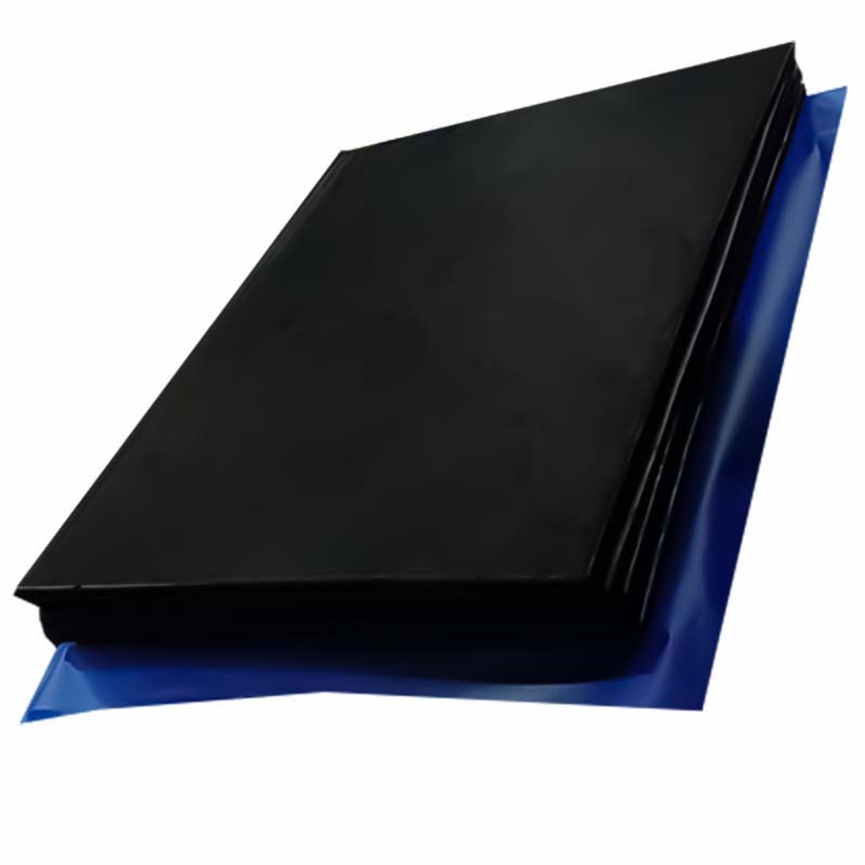
Sourcing EPDM rubber compound from China makes sense for manufacturers who need reliable annual supply at competitive pricing. The production capacity is there, the supplier base is mature, and the pricing structure rewards volume commitments. What matters is knowing how to structure these agreements so they actually deliver the cost efficiency and material consistency your operations depend on.
Why China Remains the Default Source for Bulk EPDM Procurement
China’s rubber compound manufacturing sector has scaled to a point where few alternatives match its combination of capacity, pricing flexibility, and formulation capability. For buyers placing annual orders, this translates into access to suppliers who can absorb volume fluctuations, maintain inventory buffers, and adjust formulations without the lead time penalties common in smaller markets.
The practical advantage shows up in negotiations. Suppliers operating at scale have room to structure pricing tiers that reward commitment. A 12-month agreement with quarterly releases typically unlocks better per-kilogram rates than spot purchasing, even when raw material costs shift mid-contract. The key is understanding which cost components are genuinely variable (feedstock, energy) and which are fixed (tooling, quality systems), then negotiating terms that reflect that distinction.
Market demand for EPDM continues to climb across automotive sealing, roofing membranes, and industrial hose applications. This sustained demand keeps production lines running efficiently, which in turn supports the pricing stability that annual agreements depend on.
What Actually Drives EPDM Volume Pricing in Long-Term Contracts
Volume pricing for EPDM compounds is not a simple discount curve. The numbers reflect a supplier’s cost structure, capacity utilization, and risk tolerance for locking in rates over 12 months or longer.
Raw material costs, primarily ethylene, propylene, and diene monomers, fluctuate with petrochemical markets. Suppliers who maintain strategic inventory can buffer these swings, but that buffer has limits. Contracts that include raw material adjustment clauses (tied to published indices) tend to offer lower base pricing because the supplier is not pricing in worst-case scenarios.
Production efficiency matters more than most buyers realize. A supplier running dedicated lines for your formulation can achieve lower per-unit costs than one switching between compounds. This is where consolidating your EPDM orders with a single qualified supplier pays off, not just in pricing, but in consistency.
Logistics costs are the third leg. Shipping rubber compounds internationally involves container optimization, port handling, and customs clearance. Suppliers with established export operations have negotiated freight rates and documentation workflows that reduce landed costs. Asking about their typical shipping routes and transit times reveals whether their logistics are genuinely optimized or just adequate.
How Supplier Qualification Protects Your Annual Supply Investment
Locking in annual pricing with an unqualified supplier is a false economy. The real cost of quality failures, whether rejected batches, production line stoppages, or warranty claims, dwarfs any savings from aggressive pricing negotiations.
Qualification starts with documentation. ISO 9001 certification is baseline; ISO/TS 16949 (now IATF 16949) matters for automotive applications. Beyond certifications, request recent audit reports and corrective action histories. A supplier who shares these openly is signaling confidence in their systems.
Technical data sheets should specify hardness (Shore A), tensile strength, elongation at break, compression set, and specific gravity at minimum. For critical applications, ask for aging data (heat, ozone, UV exposure) and fluid resistance test results. These parameters define whether the compound will perform in your application, not just pass incoming inspection.
On-site audits remain the gold standard for high-value annual agreements. Observing mixing operations, testing protocols, and storage conditions reveals more than any document review. If travel is not feasible, video audits with real-time facility walkthroughs have become an accepted alternative.
When Custom EPDM Formulations Make Sense for Your Application
Standard EPDM grades cover a wide range of applications, but they are compromises by design. If your product faces specific environmental stresses, temperature extremes, or regulatory requirements, custom formulation often delivers better performance at comparable or lower total cost.
Automotive sealing applications illustrate this well. A standard EPDM compound might meet basic temperature and compression set requirements, but a formulation optimized for your specific fluid exposure (brake fluid, transmission fluid, fuel blends) can extend seal life by 30% or more. That extended life reduces warranty costs and field failures, which justifies the development investment.
For construction sealing materials, UV and ozone resistance are the critical parameters. Standard compounds include protective additives, but the loading levels and additive chemistries vary. A formulation developed for your specific exposure conditions (coastal environments, high-altitude UV intensity, industrial pollution) will outperform generic alternatives.
The development process typically involves defining target specifications, producing trial batches, and validating performance through accelerated aging tests. Expect 8 to 12 weeks for straightforward modifications, longer for novel requirements. If your volumes justify the investment, the resulting formulation becomes a competitive advantage that competitors cannot easily replicate.

What Lead Times to Expect for Large Volume EPDM Orders
Production lead times for bulk EPDM orders from China typically run 4 to 8 weeks from order confirmation to shipment. The range depends on formulation complexity, current production schedules, and whether your compound requires dedicated mixing runs.
Standard formulations with established production history ship faster. Custom compounds or modified grades require scheduling into the production queue, which adds time. Suppliers who maintain safety stock of common formulations can often ship partial quantities within 2 weeks while the balance is produced.
Ocean freight from major Chinese ports to North American or European destinations adds 3 to 5 weeks depending on routing and port congestion. Air freight is available for urgent requirements but typically costs 8 to 10 times more per kilogram, making it practical only for small quantities or production emergencies.
The practical implication for annual supply planning is maintaining 6 to 10 weeks of inventory coverage, depending on your consumption variability and tolerance for stockouts. Suppliers who offer consignment inventory or bonded warehouse arrangements in destination markets can reduce this buffer requirement.
How Contract Structure Affects Your Total Cost of Ownership
The contract terms matter as much as the unit price. A well-structured annual agreement protects both parties and creates incentives for the supplier to prioritize your orders.
Pricing mechanisms fall into three categories: fixed price (maximum predictability, higher base cost), index-linked (lower base cost, exposure to raw material volatility), and hybrid (fixed base with adjustment bands). The right choice depends on your organization’s risk tolerance and budgeting requirements.
Volume commitments should include flexibility bands, typically plus or minus 15% to 20% from forecast. Rigid commitments that penalize under-consumption create problems when demand shifts. Suppliers who insist on take-or-pay terms without flexibility are signaling capacity constraints or financial pressure.
Quality specifications belong in the contract, not just in technical discussions. Define acceptance criteria, testing methods, and dispute resolution procedures. Include provisions for batch rejection, replacement timelines, and cost allocation for quality failures.
Payment terms affect your working capital and the supplier’s willingness to prioritize your orders. Standard terms range from 30% deposit with balance against shipping documents to net 60 days for established relationships. Letters of credit add cost but reduce risk for both parties in new relationships.
If your annual EPDM requirements exceed 50 metric tons and you are evaluating supply options, it is worth discussing formulation specifications and pricing structures before committing to a supplier.
Evaluating Logistics Capability Before Signing Annual Agreements
A supplier’s logistics capability directly affects your inventory costs and production reliability. Asking the right questions during qualification reveals whether their systems can support your supply chain requirements.
Export documentation experience matters. Suppliers who regularly ship to your destination market understand the specific documentation requirements, tariff classifications, and regulatory certifications needed. Inexperienced exporters create customs delays and compliance risks.
Container optimization affects freight costs significantly. A supplier who understands how to maximize container utilization (palletizing, stacking, weight distribution) reduces your per-kilogram shipping costs. Ask about their typical container configurations and whether they consolidate shipments for smaller orders.
Transit time reliability is more important than average transit time. A supplier who consistently delivers in 35 days is more valuable than one who averages 30 days but occasionally takes 50. Request shipping history data for their recent exports to your region.
Communication protocols during shipment determine how quickly you learn about delays. Suppliers who provide proactive updates, tracking visibility, and responsive problem resolution reduce the management overhead of international procurement.
Building a Supplier Relationship That Delivers Year Over Year
Annual supply agreements work best when both parties treat them as the foundation for an ongoing relationship rather than a one-time transaction. The suppliers who deliver consistent value over multiple contract cycles are those who understand your business well enough to anticipate needs and solve problems proactively.
Regular business reviews, quarterly at minimum, keep both parties aligned on performance, upcoming requirements, and market conditions. These conversations surface issues before they become problems and identify opportunities for process improvements or cost reductions.
Technical collaboration deepens over time. A supplier who understands your application requirements can suggest formulation improvements, alert you to relevant material developments, and help troubleshoot field issues. This knowledge transfer has real value that extends beyond the contract price.
Contingency planning protects both parties. Discuss scenarios like raw material shortages, production disruptions, or demand spikes. Suppliers who have thought through these scenarios and have mitigation strategies in place are more reliable partners than those who assume everything will go smoothly.
To discuss your annual EPDM requirements and explore supply options, contact Sane Zenchem at yorichen@sanezen.com or +86 136 7164 1995.
Frequently Asked Questions About EPDM Rubber Compound Supply
How long does it take to receive large EPDM orders from China?
Production typically requires 4 to 8 weeks depending on formulation complexity and current schedules. Add 3 to 5 weeks for ocean freight to most destinations. Total lead time from order to delivery runs 7 to 13 weeks for standard formulations. Custom compounds may require additional development time before production begins.
What quality systems should an annual EPDM supplier have in place?
ISO 9001 certification is the baseline requirement. Automotive applications typically require IATF 16949 certification. Beyond certifications, look for documented incoming material testing, in-process controls, and final product verification. Request recent audit reports and ask about their corrective action process for quality issues. Suppliers who maintain statistical process control data and can demonstrate batch-to-batch consistency are better positioned for annual supply relationships.
Is it possible to get EPDM formulations modified for specific performance requirements?
Yes, formulation modification is standard practice for suppliers with in-house compounding capability. The process involves defining target specifications, producing trial batches, and validating performance through testing. Development timelines range from 8 to 12 weeks for straightforward modifications. For annual supply agreements, custom formulations can be locked in with dedicated production scheduling and consistent pricing. Reach out to discuss your specific application requirements and we can evaluate whether a custom formulation makes sense for your volumes.
If you’re interested, you may want to read the following articles:
rubber heat resistance antireversion agent additive demanding rubber applications
acrylic rubber manufacturers china high performance sealing oil resistant solutions
thermally conductive wear resistant filler rubber
highperformance rubber antireversion agent enhanced tire shock absorber durability
 English
  Spanish
  Russian