
Introduction: When Coatings Face the Fiery Test – An Underestimated Failure Boundary
What happens to an ordinary powder coating under sustained temperatures exceeding 350°C? It may yellow, lose gloss, chalk, and ultimately peel from the substrate, losing all protective function. This is the long-standing nightmare for manufacturers of products like BBQ grills, industrial ovens, engine components, and fire-resistant cable trays – the premature failure of coatings at high temperature.
Traditional solutions often involve difficult trade-offs between temperature resistance and aesthetics, adhesion and flame retardancy. Increasing inorganic fillers may boost temperature resistance but leads to coating embrittlement and loss of adhesion and gloss. Enhancing resin crosslink density might improve adhesion, but causes rapid combustion and heavy smoke in flames.
The FR67RP Flame Retardant, launched by the Chemical Innovation Center of Sane Zenchem , is a groundbreaking product born to end this dilemma. It is not merely a simple flame-retardant filler but a multi-functional polymer additive with intelligent response characteristics. This article will delve into its unique mechanism and, through robust experimental data, demonstrate how FR67RP simultaneously addresses four core challenges: high-temperature adhesion, color stability, gloss retention, and flame retardation with low smoke, unlocking new high-temperature application scenarios for powder coatings. This positions FR67RP as the essential high temperature powder coating additive for extreme performance.
Chapter 1: In-Depth Analysis of Industry Pain Points – The “Quadruple Threat” of High-Temperature Environments to Coatings
1.1 Loss of Adhesion: “Parting Ways” Under Thermal Stress
The bond between a powder coating and a metal substrate relies on resin melt-flow, wetting, and the mechanical anchoring and physico-chemical bonding formed after curing. When the temperature rises sharply to levels far above the curing temperature (e.g., 350°C vs. 200°C):
- Coefficient of Thermal Expansion Mismatch: The different expansion amounts of resin and metal generate immense interfacial shear stress.
- Thermal Degradation of Polymer Chains: The resin backbone or crosslinking points begin to break, diminishing both cohesive strength and interfacial bond force.
- Negative Impact of Traditional Flame Retardants: Many flame retardants (e.g., certain hydroxides) may release water vapor during endothermic decomposition, forming micro-bubbles at the interface and further weakening adhesion.
Result: The coating blisters, bulges, and eventually peels off in large sheets, directly exposing the metal substrate to high temperatures or corrosive environments. Manufacturers thus seek a solution for powder coating peeling off at high temperature.
1.2 Collapse of Color and Gloss: The Instant Evaporation of Aesthetic Value
Thermo-oxidative aging of polymers at high temperatures directly manifests in appearance:
- Yellowing: Oxidation of unsaturated bonds or amine-based curing agents in the resin forms chromophores.
- Loss of Gloss: Microscopic roughness and chalking on the coating surface due to polymer degradation cause diffuse light reflection.
- Color Difference: Inadequate heat resistance of the pigment itself, or reactions with degradation products, lead to color change.
Result: After high-temperature use or subsequent high-temperature processes, the product’s appearance becomes dull, aged, and inconsistent in color, severely damaging product quality perception and brand value. This creates a need for a powder coating additive to keep color stable and a solution for powder coating color fading in heat.
1.3 The Disconnect Between Flame Retardancy and Temperature Resistance: The Difficulty of Combining Safety and Durability
A common misconception in the market is that a coating with good flame retardancy is inherently heat-resistant. This is not true:
- Gas-Phase Flame Retardant Mechanism: Many flame retardants work by decomposing upon heat to generate radical inhibitors that interrupt the combustion chain, but contribute little to the long-term structural integrity of the coating matrix at high temperatures.
- Char Layer Protection Limits: Some flame retardants promote char formation, but if the char is loose and poorly adhered to the substrate, it easily flakes off under hot airflow, offering only brief protection.
Result: A coating might pass a short-term flame retardancy test but fail during long-term high-temperature use, creating a “false sense of security.” This highlights the demand for a high performance flame retardant for powder coatings that unifies these properties.
Chapter 2: FR67RP – A Synergistic Solution Based on the “In-Situ Construction of an Inorganic Skeleton” Mechanism
The design philosophy of FR67RP transcends simple physical blending or a single flame-retardant function. Its core is a specially surface-modified and functionalized composite capable of a controlled multi-stage response during powder coating curing and subsequent high-temperature exposure.
Stage 1: Uniform Dispersion and Preliminary Interaction During Curing
At the curing temperature of 200°C, the organic carrier part of FR67RP is compatible with the resin system, ensuring molecular-level uniform dispersion within the coating. Simultaneously, its active components begin establishing preliminary chemical links with the resin and curing agent, laying the groundwork for subsequent reactions.
Stage 2: “Intelligent Transformation” and “Skeleton Construction” Upon High-Temperature Exposure
When the coating encounters temperatures above 300°C, FR67RP enters its core action window:
- Catalysis-Conversion Mechanism: Specific components in FR67RP catalyze the directed, rapid degradation of the organic polymer components in the coating. Unlike random degradation causing chalking, this catalytic reaction tends to steer polymer decomposition towards the formation of graphitized structures or rigid aromatic ring structures.
- Inorganic Network Formation: Concurrently, FR67RP itself decomposes, releasing active ingredients that undergo in-situ reactions with the fragments from polymer degradation and other inorganic fillers in the coating (like barium sulfate, titanium dioxide). This forms a dense, robust ceramic-like silicon-aluminum-phosphorus composite inorganic network within the coating, especially in the coating-metal interface region.
Stage 3: Synergistic Play of Multiple Protective Effects
- Physical Anchoring Layer: The newly formed inorganic network forms strong chemical bonds (e.g., P-O-Fe bonds) with the oxidized metal substrate, filling micro-defects within the coating. It anchors the coating to the substrate like “rebar,” resisting thermal stress, effectively acting as a high heat resistant coating filler.
- Thermal Barrier and Flame Retardant Layer: This inorganic layer has low thermal conductivity, effectively blocking heat transfer to the substrate and deeper coating layers. It is non-combustible and blocks oxygen, providing excellent condensed-phase flame retardancy, contributing to a thermal barrier powder coating.
- Optical Stabilization Layer: This dense inorganic material covers pigment particle surfaces, shielding them from contact with hot air and polymer degradation products, thereby locking in color. Its micro-smoothness is optimized to maintain a degree of light reflectivity, achieving a controllable gloss retention rate (10-40%), resulting in an elegant, durable matte finish. This makes it a prime heat resistant coating additive.
Chapter 3: Data Evidence – A Leap in Performance Under Nine Formulation Match-Ups
The following data comes from systematic comparative experiments: using a standard formulation without FR67RP as the baseline, different proportions of FR67RP were added. All panels were cured at 200°C and then subjected to a severe bake at 350°C for 2 hours, followed by testing of key properties.
3.1 Adhesion: A Qualitative Change from Peeling to Robustness
Experimental results show that the formulation with the optimized amount of FR67RP maintained Cross-cut Adhesion of Grade 0 or 1 (highest grades) even after the 350°C/2h bake. Control samples without FR67RP or with insufficient amounts showed severe adhesion loss to Grades 3-5, with some exhibiting complete coating delamination.
- Interpretation: This directly confirms the correctness of the “in-situ construction of an inorganic anchoring layer” theory. FR67RP does not add a separating layer between coating and metal but “grows” an enhanced bonding layer at the interface, bonding the two more firmly. It provides the powder coating high temperature resistance needed to prevent failure.
3.2 Color and Gloss: From Collapse to Stable Control
- Color Difference (ΔE): Panels containing FR67RP showed significantly lower ΔE values after baking compared to controls. For instance, in a dark-colored formulation, the control ΔE was >5 (visibly obvious), while the FR67RP panel ΔE was <2 (barely perceptible).
- Gloss Retention: FR67RP does not attempt to maintain the original high gloss. Instead, by forming a fine inorganic surface, it stabilizes gloss within a moderate matte range (e.g., 20-40 GU). After baking, the gloss decrease trend is gentle and stable, unlike the control where gloss plummets to single digits (<5 GU) accompanied by chalking.
- Interpretation: FR67RP offers an “elegant degradation” strategy. It acknowledges that organic coatings cannot remain completely unchanged under extreme heat but guides their transformation into a new, stable, aesthetically valuable inorganic-organic composite state, enabling controllable and predictable transformation of performance and appearance. This is the benefit of using a powder coating additive for high temperature.
3.3 Unification of Flame Retardancy and Temperature Resistance
Limit tests show that coatings containing FR67RP exhibit slow flame spread, self-extinguishment, and low smoke emission upon direct flame contact. More importantly, after flame retardancy testing, the coating maintains basic integrity and adhesion to the substrate, unlike becoming loose char residue.
- Interpretation: This indicates the flame retardant protection provided by FR67RP is “structural” and “lasting.” It endows the coating not with a temporary fire-resistant “overcoat” but with a durable fire-resistant “skeleton” throughout the coating matrix, exemplifying an extreme heat powder coating solution. It is particularly effective as a low smoke flame retardant for powder coating application.
3.4 Processing Friendliness
In standard powder coating processes (pre-mixing → extrusion → grinding → sieving), FR67RP demonstrates excellent compatibility. Its appropriate particle size distribution and surface treatment ensure no separation or screw seizure risk during high-speed mixing and melt extrusion, resulting in good powder flow and high deposition efficiency. This makes it a reliable product from any flame retardant supplier for powder coatings or flame retardant manufacturer for powder coatings.
Chapter 4: Expanding Application Scenarios – What Products Can Be Infused with This “Fire-Resistant Armor”?
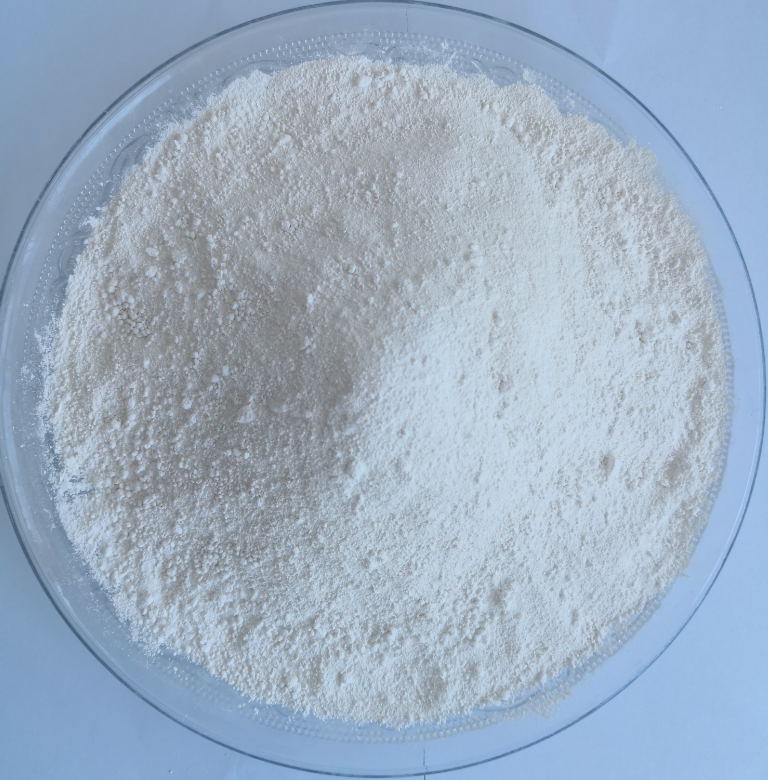
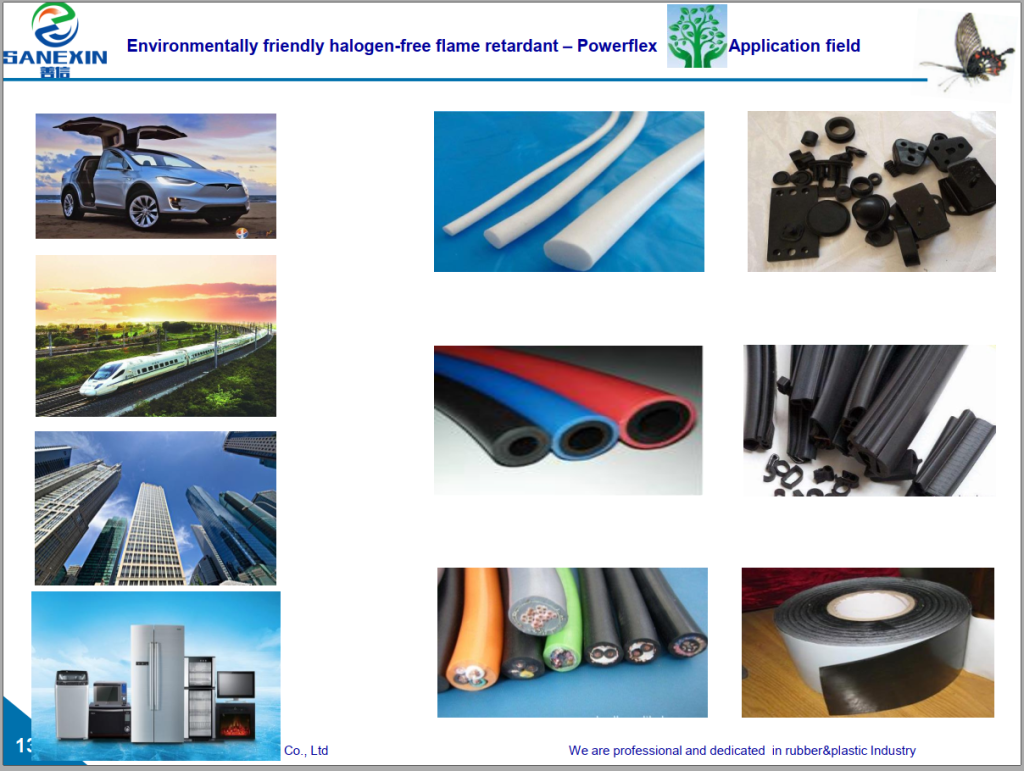
The application of FR67RP aims to unlock areas previously considered off-limits for powder coatings, meeting the need for a flame retardant for powder coatings in demanding uses:
- Outdoor High-Temperature Equipment: BBQ grills, charcoal ovens, chimney exteriors, gas water heater casings. Requirements: coating resistance to high temperatures, thermal cycling, and long-lasting color. This calls for a Flame Retardant for Heat Resistant BBQ Grill Powder Coatings.
- Industrial High-Temperature Environments: Ovens, drying tunnels, certain engine peripheral components, HVAC hot air ducts. Requirements: coating resistance to long-term thermal aging and excellent adhesion. Here, a Flame Retardant for Powder Coatings on Industrial Ovens and Dryers is critical.
- Fire Safety Components: Cable trays, fire-resistant ductwork, electrical control cabinets. Requirements: coatings that simultaneously meet strict flame retardancy standards (e.g., UL94, ASTM E84) and certain temperature resistance requirements, necessitating a specialized flame retardant coating for electrical cabinets.
- Components Requiring Subsequent High-Temperature Processing: Metal parts needing post-coating processes like welding or hot bending. FR67RP can protect the coating from complete destruction under local high heat, acting as a Flame retardant for high temperature powder coatings on metal parts.
Chapter 5: Partnering with FR67RP – The Four Major Benefits You Will Gain
- Transcending Specifications, Solving Root Problems: We deliver not just a bag of flame retardant, but a fundamental solution to “high-temperature coating system failure.” It addresses the core pain point of adhesion loss from the perspectives of interfacial chemistry and material phase change, answering how to improve powder coating adhesion in heat.
- Transcending Data, Offering Design Freedom: We provide a clear application data package (e.g., curves showing the effect of different addition levels on final matteness, color difference), helping you fine-tune formulations to design the final state of the coating under high temperature as if designing a material, rather than passively accepting performance decay.
- Transcending Single Function, Achieving Synergistic Effects: FR67RP is a multi-functional combination of flame retardant, adhesion promoter, thermal stabilizer, and gloss modifier. It simplifies formulations, reduces costs, and avoids the risk of interference between multiple additives. It is truly a powder coating additive that withstands over 350 degrees celsius.
- Transcending Supply, Establishing a Technical Alliance: The professional technical team at SaneZen Group provides full-process support from formulation adaptation and process parameter optimization to end-use validation. We grow together with our clients, pushing the temperature resistance boundary of your products to unprecedented heights.
Conclusion
As coating technology advances towards more extreme environmental applications, FR67RP represents a paradigm shift: from passively “resisting” high-temperature damage to actively “guiding” the coating to transform into a more stable and tougher new morphology under heat. It allows powder coatings to calmly face the test of fire, guarding product safety and preserving product beauty. For those seeking an additive to prevent powder coating from yellowing and enhance overall durability, FR67RP is the comprehensive answer.
SaneZen Group, empowering industrial progress through materials science, invites you to join hands to explore the infinite possibilities brought by FR67RP, delivering more durable, safer, and more beautiful products to thousands of households and into the heart of industry.
 English
  Español
  Русский