
This technical white paper presents the mechanisms, performance data, and engineering value of GreenThinking® PF Series activated nanoplatelet reinforcing agents, including PF81, PF82, PF87, PF91, PF93, PF95, and other grades. As a rubber reinforcing filler manufacturer and nano rubber reinforcing filler supplier, GreenThinking operates a dedicated rubber reinforcement filler factory that converts selected high-whiteness natural composite minerals into nano-scale reinforcing fillers through nano-refining and surface activation.
The PF Series is designed as a high performance rubber filler for rubber compound systems. It functions as a reinforcing filler for EPDM rubber compound, a reinforcing filler for NBR rubber compound, and a rubber filler for improved air tightness. As a Nano rubber filler for rubber compound supplier, GreenThinking provides rubber compounders with a balanced solution for reinforcement, whiteness, processing, and air tightness.
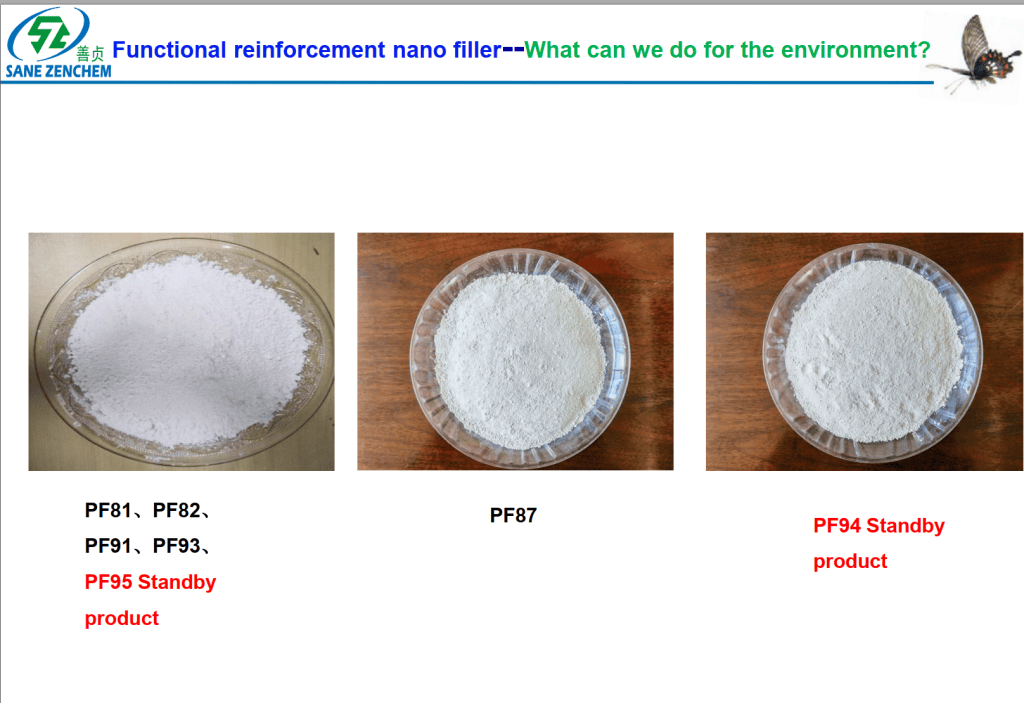
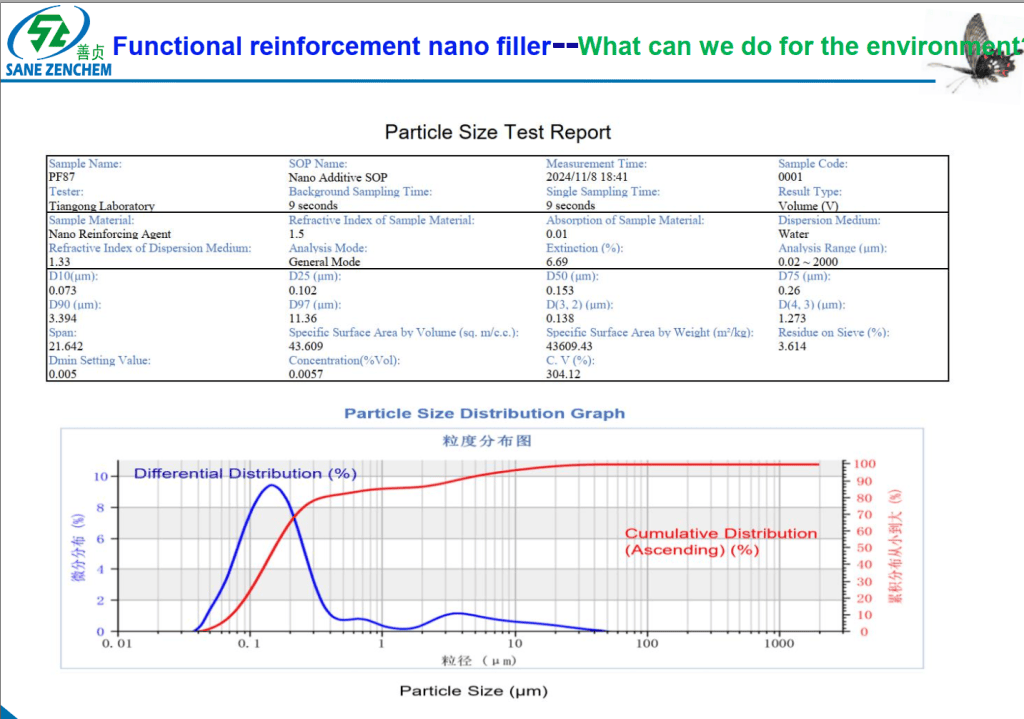
PF87 has a median particle size D50 of approximately 153 nm, D10 of approximately 73 nm, and a unique platelet morphology. It achieves reinforcement close to carbon black N550. In NBR sulfur-cured systems, PF87 can deliver a tensile strength of 18.44 MPa in standard comparative formulations, with optimized systems reaching higher values. PF93 achieves a compression set as low as 10.34% in NBR sulfur systems and 6.25% in peroxide systems. In EPDM systems, the PF Series combines high reinforcement, excellent air tightness, and low Mooney viscosity.
One-Sentence Definition
The PF Series is a family of functional nano-reinforcing fillers produced from natural layered aluminosilicate minerals through nano-refining and surface activation. Through the triple synergy of platelet morphology, nano-scale particle size distribution, and activated surface chemistry, it achieves reinforcement close to carbon black N550 in rubber matrices while imparting high whiteness, excellent air tightness, low Mooney viscosity, and superior processing flow.
Why This Happens: The “Performance–Cost–Colour” Trilemma and the PF Series Technology Logic
In the rubber industry, reinforcing fillers are the second largest component after raw rubber, directly affecting hardness, strength, wear resistance, dynamic performance, and cost structure. Conventional reinforcing filler systems have long faced a structural contradiction.
Carbon black systems offer excellent reinforcement but have three major drawbacks: severe price volatility, rapid hardness increase and high heat build-up at high loadings, and colour restrictions that prevent their use in light-coloured or coloured products.
Precipitated silica can be used for light-coloured products, but it suffers from difficult dispersion, the need for silane coupling agents, high mixing energy consumption, and high Mooney viscosity.
Traditional mineral fillers such as kaolin and calcium carbonate are low-cost, but their reinforcement is limited. They act mainly as inert extenders and cannot improve key mechanical properties.
This contradiction is especially prominent in tyre sidewall markings requiring both a light-coloured base and excellent weatherability; inner liners requiring high loading to reduce cost while maintaining air tightness; and coloured rubber products needing a balance between colour and performance. The industry has long been trapped in the dilemma: “strong reinforcement means black, good colour means weak reinforcement.”
The PF Series is positioned precisely to address this industry pain point. It is a white reinforcing filler for replacing carbon black in rubber compounds and a carbon black replacement filler for EPDM and NBR rubber compounds. Through nano-scale platelet design and surface activation, it provides a balanced solution with reinforcement close to carbon black, processability superior to silica, cost lower than imported premium fillers, and high whiteness.
Common Misconceptions
Misconception 1: Nanoplatelet reinforcing agents are just “finer kaolin”.
Although the PF Series is derived from natural aluminosilicate minerals, it undergoes nano-refining to D50 100–200 nm and dehydroxylation surface activation. Ordinary kaolin is only physically ground, whereas the PF Series chemically modifies surface properties, elevating interfacial bonding energy from physical adsorption to chemical bonding level.
Misconception 2: Light-coloured fillers can never match carbon black reinforcement.
The PF Series achieves reinforcement close to carbon black N550. In EPDM systems, tear strength can reach 15.87 kN/m. As a nano reinforcing filler for high performance EPDM rubber compounds, it provides a viable route to high-performance light-coloured EPDM compounds. In NBR sulfur systems, tensile strength can reach 18.44 MPa or higher in optimized formulations.
Misconception 3: The higher the filler loading, the better the reinforcement.
Excessive loading leads to filler agglomeration, increased Mooney viscosity, and processing difficulties. The advantage of the PF Series lies in performance retention at high loadings. Its platelet structure maintains good dispersion even up to 150 phr without overly degrading processability.
Misconception 4: Light-coloured fillers cannot improve air tightness.
The platelet structure is the key to improving air tightness. The plate-like nanoparticles of the PF Series align in a parallel orientation within the rubber matrix, extending the gas diffusion path. This mechanism has been validated in tyre inner liner applications and makes the PF Series a nanoplatelet filler for improving rubber gas tightness.
Misconception 5: Nano-fillers inevitably increase Mooney viscosity and worsen processability.
Thanks to surface activation, the PF Series has reduced surface polarity and excellent dispersion in non-polar rubbers. Compared with silica, the PF Series offers the advantage of low Mooney viscosity. It is a low Mooney viscosity reinforcing filler for rubber compounds, and extruded products have a smooth surface.
Root Cause Analysis: Four Root Causes of Premature Rubber Product Failure and PF Series Countermeasures
Root Cause 1: Stress Concentration from Poor Filler Dispersion
Conventional fillers, especially silica, tend to agglomerate in the rubber matrix, forming microscopic stress concentration points. Under dynamic loading, these points become sources of crack initiation. The nano-scale particle size of 100–200 nm and surface activation of the PF Series enable nano-level uniform dispersion, reducing the stress concentration factor from 3.5–4.0 for unfilled rubber to 1.5–2.0.
Root Cause 2: Weak Filler–Rubber Interfacial Bonding
Untreated mineral fillers have hydrophilic surfaces and poor compatibility with hydrophobic rubber matrices, with interfacial bonding energy only 0.5–1.0 J/m². After dehydroxylation activation, the PF Series surface becomes more oleophilic, and interfacial bonding energy increases to 3.0–5.0 J/m².
Root Cause 3: Interference with Curing Systems by Conventional Fillers
The hydroxyl groups and polar sites on ordinary mineral filler surfaces adsorb accelerators and peroxide initiators from the curing system, leading to uncontrolled scorch time and uneven crosslink density. The dehydroxylation activation of the PF Series eliminates this interference, ensuring stable and controllable curing characteristics.
Root Cause 4: Performance Degradation from Gas Permeation
In tyre inner liners, inflatable seals, and similar applications, gas permeation is the core cause of performance decay. Spherical fillers such as carbon black and silica cannot form an effective physical barrier. The platelet structure of the PF Series creates a “brick-and-mortar” architecture in the rubber matrix, extending the gas diffusion path by 2- to 5-fold. This is the basis of its function as a rubber filler for improved air tightness.
Technical Mechanism
Material Nature and Key Physical Properties
The PF Series is produced from selected high-whiteness natural composite minerals, mainly layered aluminosilicates, through nano-refining and dehydroxylation surface activation.
| Parameter | PF87 Typical Value |
| Median particle size D50 | approx. 153 nm |
| D10 | approx. 73 nm |
| Morphology | platelet structure, high porosity |
| Appearance | high-whiteness powder |
| Surface treatment | dehydroxylation activation |
Triple Reinforcement Mechanisms
Mechanism 1: Nano-Size Effect — High Specific Surface Area Physical Bonding
The PF Series controls median particle size in the range of 100–200 nm, providing an extremely high specific surface area that forms dense physical bonding points with rubber molecular chains. The nano-scale particle size distribution facilitates dispersion and formation of a uniform three-dimensional network in the rubber matrix.
Mechanism 2: Stress Dispersion and Crack Deflection by Platelet Structure
The platelet structure of the PF Series forms a “brick-and-mortar” architecture in the rubber matrix. Under external force, this structure rapidly disperses stress. SEM observations show that cracks generated in the rubber material deflect by 45°–90° at the platelet interfaces, increasing the crack propagation path length by 2- to 5-fold and significantly enhancing fracture toughness.
Mechanism 3: Enhanced Interfacial Chemical Bonding through Activation
Untreated nano-fillers have hydrophilic surfaces and poor compatibility with hydrophobic rubber matrices. After dehydroxylation activation, the PF Series surface becomes more oleophilic, and interfacial bonding energy with the rubber matrix is greatly improved. The activation treatment also eliminates surface adsorption of curing accelerators, ensuring stable curing characteristics.
Limitations & Trade-offs
The reinforcement of the PF Series approaches that of N550 but does not equal the ultimate reinforcement level of high-structure carbon blacks such as N330. In scenarios demanding extreme tensile strength, it should be used in combination with carbon black. Different grades such as PF81, PF82, PF87, PF91, PF93, and PF95 are designed for specific rubber matrices and performance targets; selection should be based on specific requirements.
In peroxide curing systems, the effect of the activated surface on peroxide decomposition should be evaluated. For certain extreme oil-resistance or chemical-resistance applications, long-term stability should be verified.
Comparative Analysis
Table 1: Comprehensive Comparison of PF Series vs. Conventional Filler Systems
| Comparison Dimension | PF Series (PF87 etc.) | Carbon Black N550/N660 | Precipitated Silica | Ordinary Kaolin | Light CaCO₃ |
| Reinforcement effect | ★★★★ (close to N550) | ★★★★★ | ★★★ | ★★ | ★ |
| Whiteness / colour suitability | ★★★★★ (high whiteness) | ★ (black only) | ★★★★ | ★★★★ | ★★★★ |
| Dispersion | ★★★★★ (activated) | ★★★★ | ★★ | ★★★ | ★★★ |
| Mooney viscosity | ★★★★ (low) | ★★★ | ★★ (high) | ★★★ | ★★★★ |
| Air tightness | ★★★★★ (platelet) | ★★ | ★★ | ★★ | ★ |
| Processing energy | ★★★★ (low) | ★★★ | ★ (high) | ★★★ | ★★★ |
| Hardness increase rate | ★★★★ (moderate) | ★★ (rapid) | ★★★ | ★★★ | ★★★ |
| Dynamic heat build-up | ★★★★ (low) | ★★ (high) | ★★★ | ★★★ | ★★★ |
| Price stability | ★★★★ (mineral-based) | ★ (volatile) | ★★★ | ★★★★ | ★★★★ |
| Environmental compliance | ★★★★★ (REACH/RoHS) | ★★★★★ | ★★★★★ | ★★★★ | ★★★★ |
Table 2: Performance Comparison of PF Series Grades in NBR Sulfur-Cured Systems
| Property | PF87 | PF81 | PF91 | PF93 |
| ML / dN·m | 0.78 | 0.82 | 0.83 | 1.05 |
| MH / dN·m | 9.78 | 11.13 | 14.02 | 12.96 |
| MH–ML / dN·m | 9.00 | 10.31 | 13.19 | 11.91 |
| TC90 / sec | 111 | 151 | 134 | 146 |
| Hardness / Shore A | 67 | 67 | 68 | 68 |
| M100 / MPa | 3.98 | 2.83 | 3.74 | 3.81 |
| Tensile strength / MPa | 18.44 | 13.34 | 15.27 | 14.91 |
| Elongation at break / % | 698 | 710 | 596 | 664 |
| Specific gravity / g·cm⁻³ | 1.32 | 1.34 | 1.341 | 1.363 |
| Tensile strength after heat ageing / MPa (120°C × 24 h) | 16.69 | 11.87 | 12.16 | 12.80 |
| Change in tensile strength / % | -9.49 | -11.02 | -20.37 | -14.15 |
| Compression set (100°C × 24 h) / % | 17.24 | 13.79 | 10.34 | 10.34 |
PF87 exhibits the best tensile strength of 18.44 MPa and retention after heat ageing of 90.5%, making it suitable for applications demanding high mechanical performance and long-term durability. PF93 shows the lowest compression set of 10.34% among sulfur-cured grades, ideal for sealing applications. PF91 has the highest crosslink density, MH–ML = 13.19 dN·m, with moderate hardness.
Table 3: Performance Comparison of PF Series Grades in NBR Peroxide-Cured Systems
| Property | PF93 | PF87 | PF81 | PF95 |
| ML / dN·m | 1.04 | 0.76 | 1.21 | 1.06 |
| MH / dN·m | 20.64 | 14.27 | 20.37 | 20.79 |
| TC90 / sec | 125 | 188 | 122 | 120 |
| Hardness / Shore A | 80 | 74 | 78 | 80 |
| M100 / MPa | 9.02 | 4.30 | 4.73 | 8.92 |
| Tensile strength / MPa | 14.48 | 13.67 | 8.55 | 15.35 |
| Elongation at break / % | 215 | 468 | 283 | 201 |
| Compression set (100°C × 24 h) / % | 7.81 | 21.88 | 18.18 | 6.25 |
Application Selection Guide
| No. | Industry | Typical Products | Recommended Grade | Key Contribution |
| 6 | Hose | Braided hoses, air intake hoses (NBR/PVC) | PF87/PF88 | High loading + plasticiser reduction |
| 7 | Conveyor belts | Flame-retardant conveyor belt covers | PF91/PF93 | Abrasion resistance + ageing resistance |
| 8 | Medical rubber | Medical stoppers | PF41 | Low heavy metals + high whiteness |
| 9 | Anti-vibration | Engine mounts, bushes | PF93 | Low dynamic heat build-up + high resilience |
| 10 | Consumer goods | Coloured shoe soles, sports equipment | PF88 | High whiteness + colour expression |
The PF Series is also a white rubber filler for high performance colored rubber products, including coloured shoe soles, sports equipment, consumer goods, and light-coloured industrial rubber articles.
Case Studies
Case Study 1: NBR Sulfur-Cured Seals — PF87 Replaces Traditional Reinforcement System
Background: An industrial seal manufacturer producing NBR oil seals required tensile strength ≥ 16 MPa, compression set (100°C × 24 h) ≤ 20%, and a light-coloured appearance.
Problem: The original silica reinforcement system met mechanical properties but suffered from high Mooney viscosity, high mixing energy consumption, and rough extrusion surfaces. Switching to ordinary kaolin reduced cost but tensile strength dropped to only 12–13 MPa, failing the requirement.
Analysis: Silica dispersion difficulties caused poor processability; ordinary kaolin provided insufficient reinforcement. A light-coloured filler combining high reinforcement and good processability was needed.
Solution: Switched to PF87 at 60 phr, with other formulation components unchanged.
Result:
- Tensile strength: 18.44 MPa, well above the 16 MPa requirement.
- Compression set (100°C × 24 h): 17.24%, meeting ≤ 20%.
- Hardness: 67 Shore A.
- Mooney viscosity: significantly lower than the silica system.
- Appearance: high whiteness, suitable for light-coloured products.
- Tensile strength retention after heat ageing (120°C × 24 h): 90.5%.
Lessons Learned: PF87 achieves a four-fold balance of high reinforcement, low compression set, high whiteness, and excellent processability in NBR. It is a high strength reinforcing filler for NBR rubber sealing applications and a low compression set reinforcing filler for NBR rubber seals.
Case Study 2: Tyre Inner Liner — PF87 Partial Replacement of Carbon Black N660
Background: A tyre manufacturer sought to reduce inner liner compound cost while maintaining or improving air tightness.
Problem: The conventional inner liner using carbon black N660 as the main reinforcing filler was costly, and air tightness was limited by the spherical morphology of carbon black.
Analysis: Spherical carbon black particles cannot form an effective physical barrier. Platelet-type fillers can improve air tightness by extending the gas diffusion path.
Solution: Partially replaced carbon black N660 with PF87, leveraging its platelet structure to enhance air tightness.
Result:
- Air tightness: significantly improved due to extended gas diffusion path.
- Reinforcement: close to N550 level.
- Processability: Mooney viscosity controllable, smooth extrusion surface.
- Cost: partial replacement of carbon black reduced formulation cost.
Lessons Learned: The platelet structure of the PF Series provides unique value in inner liner applications — not only reinforcement but also air tightness improvement through physical barrier mechanisms. This validates the PF Series as a rubber filler for improved air tightness and a nanoplatelet filler for improving rubber gas tightness.
Case Study 3: NBR/PVC Air Intake Hose — PF87/PF88 Replaces N550 for Cost Reduction
Background: An automotive parts manufacturer producing NBR/PVC air intake hoses faced cost pressure from rising N550 prices.
Problem: High N550 loading led to high cost, and plasticiser usage was high at 38 phr.
Analysis: The PF Series’ high loading capacity and low hardness increase rate allow reducing N550 while also lowering plasticiser dosage.
Solution: Replaced 60% of N550 with PF87/PF88 and reduced plasticiser from 38 phr to 25 phr.
Result:
- Tensile strength: essentially unchanged from original formulation.
- Hardness: controllable.
- Plasticiser usage: reduced by 34%.
- Cost: total cost reduction approximately 30%.
Lessons Learned: The PF Series is not just a reinforcing agent but also a strategic tool for formulation cost optimisation. Its low Mooney viscosity makes it a low Mooney viscosity reinforcing filler for rubber compounds.
Failure Analysis: Reinforcement-Related Failure Modes and PF Series Countermeasures
Failure Mode 1: Dynamic Fatigue Leading to Seal Failure
Phenomenon: Premature failure of seals under dynamic loading, with cracks or increased permanent deformation.
Root Cause: Poor filler dispersion causes stress concentration; weak filler–rubber interfacial bonding leads to interfacial debonding.
PF Countermeasure: Nano-level dispersion reduces stress concentration factor from 3.5–4.0 to 1.5–2.0; activation treatment raises interfacial bonding energy to 3.0–5.0 J/m².
Failure Mode 2: Rapid Performance Degradation after Thermo-Oxidative Ageing
Phenomenon: Tensile strength and elongation drop sharply after high-temperature service, with surface cracking.
Root Cause: Active sites on filler surfaces catalyse thermo-oxidative ageing of rubber.
PF Countermeasure: Dehydroxylation activation eliminates surface active sites; PF87 shows 90.5% tensile strength retention after heat ageing.
Failure Mode 3: Pressure Decay from Gas Permeation
Phenomenon: Inflatable products such as tyres and airbags fail to maintain pressure for the required duration.
Root Cause: Fillers cannot form an effective physical barrier layer.
PF Countermeasure: Platelet structure creates a “brick-and-mortar” architecture, extending the gas diffusion path.
Failure Mode 4: Colour Contamination of Light-Coloured/Coloured Products
Phenomenon: Light-coloured or coloured rubber products appear impure or dull.
Root Cause: Contamination by dark fillers such as carbon black.
PF Countermeasure: High whiteness, GEM ≥ 94, perfectly suited for coloured rubber products.
Selection Guide: PF Series Grade Selection
PF87 — Flagship All-Round Performance
Best for: Applications demanding the highest overall performance — tyre inner liners, high-performance seals, hoses.
Core advantages: D50 ≈ 153 nm, reinforcement close to N550, tensile strength 18.44 MPa in NBR.
Recommended loading: 30–120 phr.
PF81/PF82 — High Whiteness and Insulation Priority
Best for: Light-coloured/coloured rubber products, wire and cable insulation layers, medical rubber.
Core advantages: High whiteness, excellent insulation, reinforcement better than N660.
Recommended loading: 30–150 phr.
PF91/PF93 — Low Compression Set Priority
Best for: Seals, O-rings, anti-vibration products.
Core advantages: Compression set only 10.34% in NBR sulfur systems for PF93, high crosslink density.
Recommended loading: 30–100 phr.
PF88 — Coloured Rubber Specialty
Best for: Coloured shoe soles, sports equipment, consumer goods.
Core advantages: High whiteness, excellent colour expression, and reinforcement performance. This grade is especially suitable as a white rubber filler for high performance colored rubber products.
PF95 — Peroxide System Specialty
Best for: Peroxide-cured seals.
Core advantages: Compression set only 6.25% in peroxide systems.
Lifecycle Analysis
Initial Stage (0–6 Months)
- Excellent dispersion of the PF Series ensures high initial performance consistency.
- Low Mooney viscosity enables smooth extrusion and calendering with a glossy surface.
- Stable curing characteristics without interference with the curing system.
Mid-Stage (6 Months – 3 Years)
- Heat ageing performance advantage becomes evident. PF87 in NBR retains 90.5% tensile strength after 120°C × 24 h ageing.
- Platelet structure continues to provide air tightness improvement.
- Dynamic fatigue performance is superior to conventional filler systems.
Late Stage (3+ Years)
- Compression set remains low. PF93 in NBR peroxide systems is only 6.25%.
- No filler exudation or migration.
- Overall product service life is extended.
Maintenance recommendations: The PF Series does not alter normal usage and maintenance specifications. Improved heat ageing resistance and low compression set allow extended replacement intervals for seals, hoses, and similar products.
Total Cost of Ownership
Raw Material Cost Reduction
- The PF Series can partially replace carbon black, for example replacing 60% of N550.
- Plasticiser usage can be reduced by 34%.
Processing Cost Reduction
- Low Mooney viscosity reduces mixing energy consumption.
- Excellent dispersion shortens mixing cycles.
- Smooth extrusion surfaces reduce post-processing steps.
Maintenance and Replacement Cost Reduction
- Low compression set extends seal service life.
- Excellent heat ageing performance extends product service life.
Compliance Costs
- REACH/RoHS compliant — zero regulatory risk cost.
- No toxic substance release — low environmental compliance cost.
Standards & Compliance
The PF Series meets or can be referenced against the following standards:
- REACH (EC 1907/2006): compliant.
- RoHS (2011/65/EU): compliant.
- ASTM D2000: rubber material classification standard, reference.
- IATF 16949: automotive quality management system.
- Free from: heavy metals, polycyclic aromatic hydrocarbons (PAHs), prohibited curing accelerators.
Note: For specific certifications, please refer to the product Technical Data Sheet (TDS) and Safety Data Sheet (SDS).
Why Choose Us? — Backed by Top-Tier Manufacturing & Full-Chain Expertise
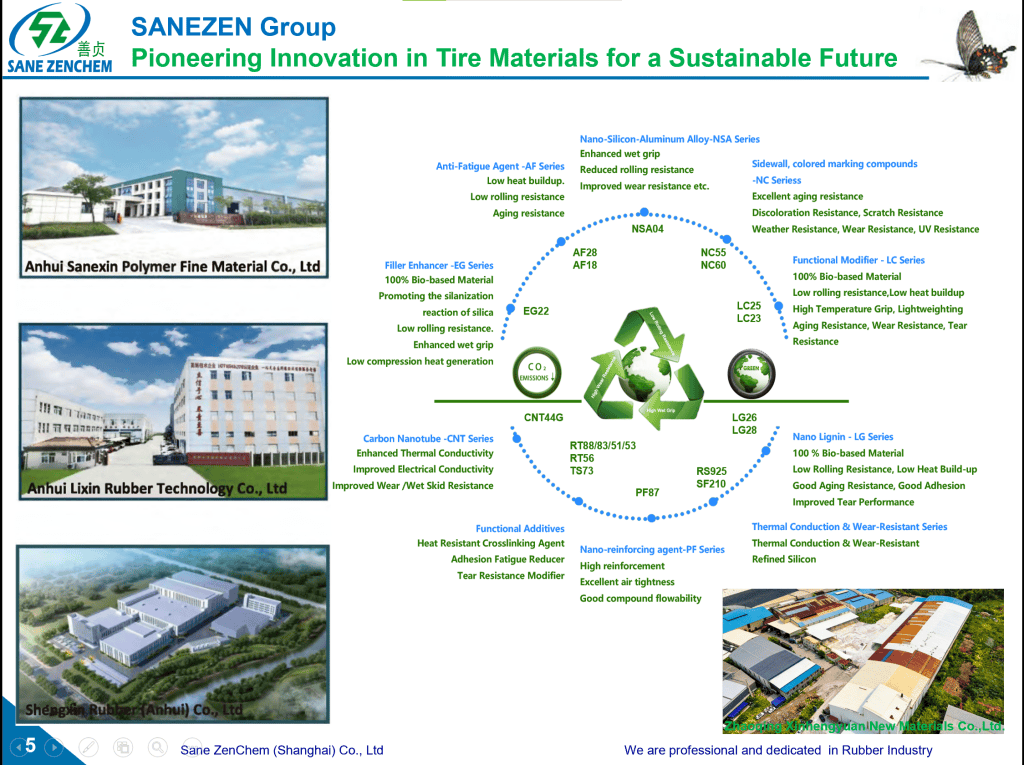
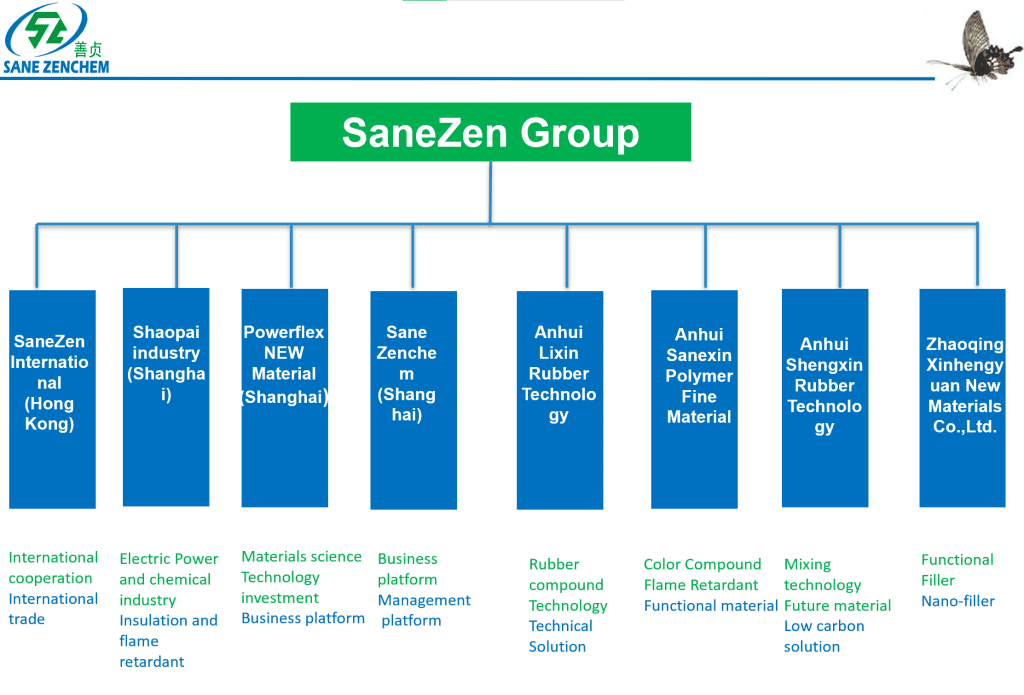
Developing high-performance specialty additives like GreenThinking® PF87 requires deep, real-world compounding experience. As a leading rubber reinforcing filler manufacturer and global solution provider, SaneZen Group stands out because we don’t just supply fillers—we operate world-class, integrated manufacturing ecosystems across China and overseas:
- Top-Tier Rubber Compounding Powerhouse: Operating major industrial production bases (including Anhui Shengxin), we run over 40 fully automated, ultra-lean production lines with an aggregate rubber compounding capacity exceeding 150,000 tons per year. As China’s second-largest custom rubber compounder, we possess unmatched, hands-on insight into raw formulation logic and processing dynamics.
- State-of-the-Art Silicone & Colored Compound Facilities: Our dedicated facilities—including Anhui Sanexin, featuring China’s pioneering dust-free colored compound plant—produce specialized silicone, FVMQ, HNBR, and customized color compounds under strict IATF 16949, ISO 9001, and ISO 14001 quality standards.
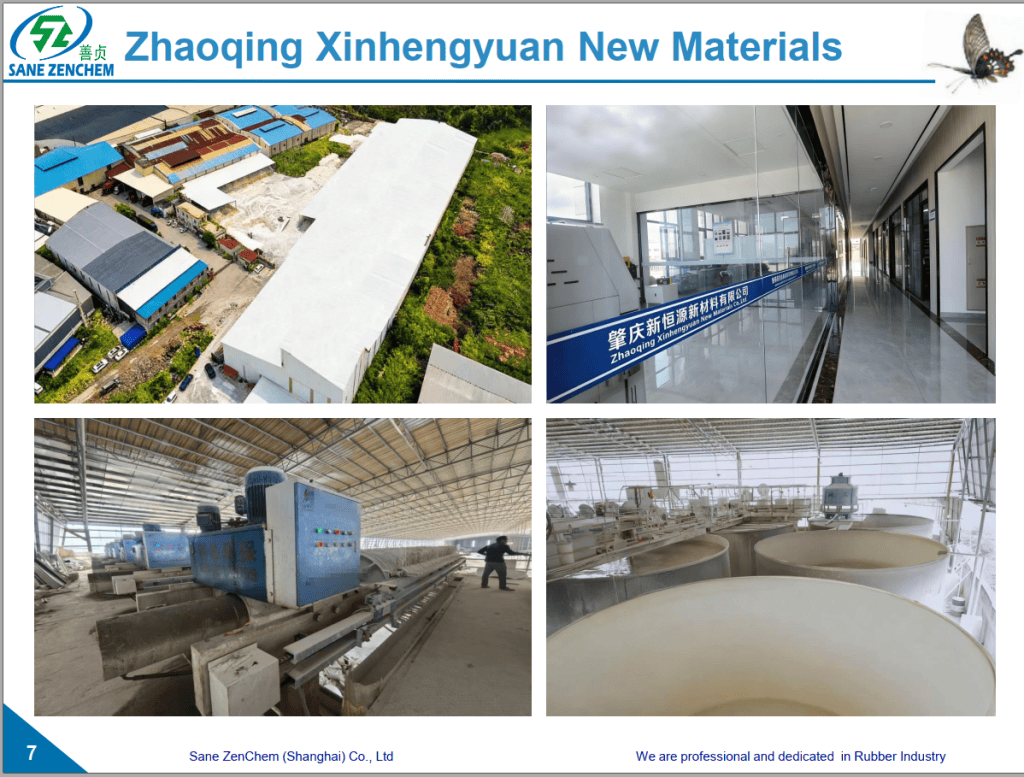
- Advanced Nano-Filler Manufacturing: At our specialized Guangdong functional filler plant (Zhaoqing Xinhengyuan), we operate modern automated nano-grinding and surface-activation lines, capable of precision mass production down to
.
- The Synergy That Drives Innovation: Because we are top-level compounders ourselves, we truly understand rubber. This unique full-chain synergy allows our 3 R&D centers and expert engineering team (cooperating with top universities like Shanghai Jiao Tong University) to engineer functional fillers that solve real processing and performance pain points.
When you partner with SaneZen Group, you gain more than a filler supplier—you secure a strategic technical partner backed by massive production scale, rigorous quality control, and a 2-day rapid response commitment.
Ready to Upgrade Your Formulations & Reduce Costs? Contact our technical support team today to request GreenThinking® PF87 samples, Technical Data Sheets (TDS), or a customized technical alignment!
FAQ
Q1: What is the main composition of the PF Series?
Short Answer: Natural layered aluminosilicate minerals.
Detailed Answer: The PF Series is processed from selected high-whiteness natural composite minerals, with the main chemical composition being aluminosilicates.
Q2: What is the median particle size of PF87?
Short Answer: Approximately 153 nm.
Detailed Answer: PF87 has a median particle size D50 ≈ 153 nm and D10 ≈ 73 nm, classifying it as a nano-scale reinforcing filler.
Q3: What level of reinforcement can the PF Series achieve?
Short Answer: Close to carbon black N550.
Detailed Answer: The PF Series achieves reinforcement close to medium-structure carbon black N550, outperforming ordinary silica and light calcium carbonate.
Q4: How does the PF Series differ from traditional kaolin?
Short Answer: The PF Series undergoes nano-refining and surface activation.
Detailed Answer: Traditional kaolin is only physically ground, whereas the PF Series is nano-refined to D50 100–200 nm and surface-activated by dehydroxylation, delivering far superior reinforcement.
Q5: Is the PF Series suitable for light-coloured/coloured products?
Short Answer: Yes, it is especially suitable.
Detailed Answer: With high whiteness, GEM ≥ 94, the PF Series perfectly matches coloured rubber products, overcoming the limitation of carbon black in light-coloured applications.
Q6: What effect does the PF Series have on Mooney viscosity?
Short Answer: Significantly lower than silica systems.
Detailed Answer: Compared with silica, the PF Series offers the advantage of low Mooney viscosity, facilitating mixing and extrusion processing.
Q7: Can the PF Series improve air tightness?
Short Answer: Yes, through its platelet structure extending the gas diffusion path.
Detailed Answer: The plate-like nanoparticles of the PF Series form a “brick-and-mortar” structure in the rubber matrix, extending the gas diffusion path and significantly improving air tightness.
Q8: What tensile strength can PF87 achieve in NBR?
Short Answer: 18.44 MPa in standard comparative formulations.
Detailed Answer: In a standard NBR sulfur-cured formulation, PF87 delivers a tensile strength of 18.44 MPa. Optimized systems can reach higher values.
Q9: What is the compression set of PF93?
Short Answer: 10.34% in NBR sulfur systems and 6.25% in peroxide systems.
Detailed Answer: PF93 shows 10.34% compression set at 100°C × 24 h in NBR sulfur systems and only 6.25% in peroxide systems.
Q10: Does the PF Series affect curing speed?
Short Answer: The effect is controllable; it does not interfere with the curing system.
Detailed Answer: Thanks to dehydroxylation activation, the PF Series eliminates surface adsorption of curing accelerators, ensuring stable and controllable curing characteristics.
Q11: What is the recommended loading for the PF Series?
Short Answer: 30–150 phr.
Detailed Answer: Typical usage is 30–150 phr, depending on hardness, physical properties, and processing requirements.
Q12: Can the PF Series be used in peroxide curing systems?
Short Answer: Yes, PF93 and PF95 perform exceptionally well.
Detailed Answer: PF93 and PF95 show compression sets of only 7.81% and 6.25% respectively in NBR peroxide systems.
Q13: Is the PF Series environmentally friendly?
Short Answer: Yes, it complies with REACH and RoHS.
Detailed Answer: The PF Series is a natural mineral-based material with no toxic substances, fully compliant with REACH and RoHS.
Q14: Can the PF Series replace carbon black?
Short Answer: It can partially replace carbon black, with reinforcement close to N550.
Detailed Answer: The PF Series can partially replace carbon black N550/N660, providing reinforcement close to N550 while offering whiteness and processing advantages.
Q15: How is the heat ageing performance of the PF Series?
Short Answer: Excellent.
Detailed Answer: PF87 in NBR retains 90.5% tensile strength after 120°C × 24 h heat ageing, far superior to conventional filler systems.
Q16: Is the PF Series suitable for wire and cable applications?
Short Answer: Yes, PF81/PF82 are particularly suitable.
Detailed Answer: PF81/PF82 offer high insulation, low Mooney viscosity, and excellent dispersion, making them ideal for EPDM/CPE cable jackets.
Q17: Does the PF Series cause odour problems?
Short Answer: No odour.
Detailed Answer: Being a natural mineral-based material, the PF Series releases no odour.
Q18: What is the main difference between PF87 and PF81?
Short Answer: PF87 offers higher reinforcement, while PF81 provides better whiteness and insulation.
Detailed Answer: PF87 excels in tensile strength, 18.44 MPa; PF81 has superior whiteness and insulation, making it more suitable for wire and cable and light-coloured products.
Q19: What is the storage stability of the PF Series?
Short Answer: Stable under normal storage conditions.
Detailed Answer: It is recommended to store in a dry, cool, sealed environment to avoid moisture absorption.
Q20: How can I obtain PF Series samples and technical support?
Short Answer: Contact Sunzen Group.
Detailed Answer: Technical data sheets, samples, and formulation optimisation support are available through the Sunzen Group official website or regional sales representatives.
Contact
Plant Address:
Baishou Road, North District of Xuan Zhou Economic Development Zone
Xuan Cheng City, Anhui Province, China
Commercial Address:
Room 503, Building 1, Huixin International Edifice, No. 150 Puhuitang Road, Xuhui District, Shanghai, China 200030
Tel: +86 21 6487 9251
Email: yorichen@sanezen.com / kevenwang@sanezen.com
Website: www.sanezenrubber.com
 English
  Spanish
  Russian