
What this page answers
Most flame retardant selection starts and ends with one number, the limiting oxygen index. That number is easy to compare and it is not the number that decides whether a part is usable. This page compares two intumescent flame retardant for rubber supplier grades from the same family, FR99RP and FR98RP, on the properties that show up on a production line and in a service life: tensile strength and elongation at the flame retardant loading, cure time, crosslink density, compression set, rebound and heat aging retention. It also sets out the three flame retardant mechanisms that make a phosphorus nitrogen system work, the four root causes of the strength loss compounders complain about, and the test protocol that separates a flame retardant that lasts from one that passes a test and then embrittles. The data comes from a multi-grade programme in EPDM at 70 and 50 Shore A and in NBR at 70 Shore A, plus a natural rubber moulding trial.
Why EPDM and NBR are the hard case
EPDM has a saturated backbone with unsaturation confined to the side chains. That structure is the reason it resists ozone, ultraviolet light, weather and hot air aging better than almost any general purpose rubber, and it is also the reason its limiting oxygen index sits around 18%. EPDM is a good candidate for outdoor and long life service and a poor candidate for fire on its own. NBR brings oil resistance instead of weather resistance and has the same problem in a different form: the polymer itself does not resist flame spread.
Two of the three constraints are familiar. Flame retardant efficiency pushes toward higher loading. Mechanical performance pushes back at high loading. The third constraint is the one that decides real projects, and it is regulatory: only halogenated systems reach a given rating at low loading, and halogenated systems are the ones under restriction.
| Route | Loading to reach UL94 V-0 | Effect on tensile strength | Effect on compression set | Regulatory position |
| Halogenated, often with antimony trioxide | 30 to 60 phr | Moderate | Moderate | Restricted under RoHS and REACH |
| Metal hydrate, ATH or MDH | 150 to 200 phr and above | Severe | Marked increase | Generally acceptable |
| Legacy phosphorus nitrogen intumescent | 100 to 150 phr | Moderate | Increase | Depends on the grade |
| FR99RP and FR98RP | 60 to 130 phr | Limited in the tested formulations | Low in the tested formulations | No PBB, no PBDE, no chlorine, no fluorine, no antimony trioxide |
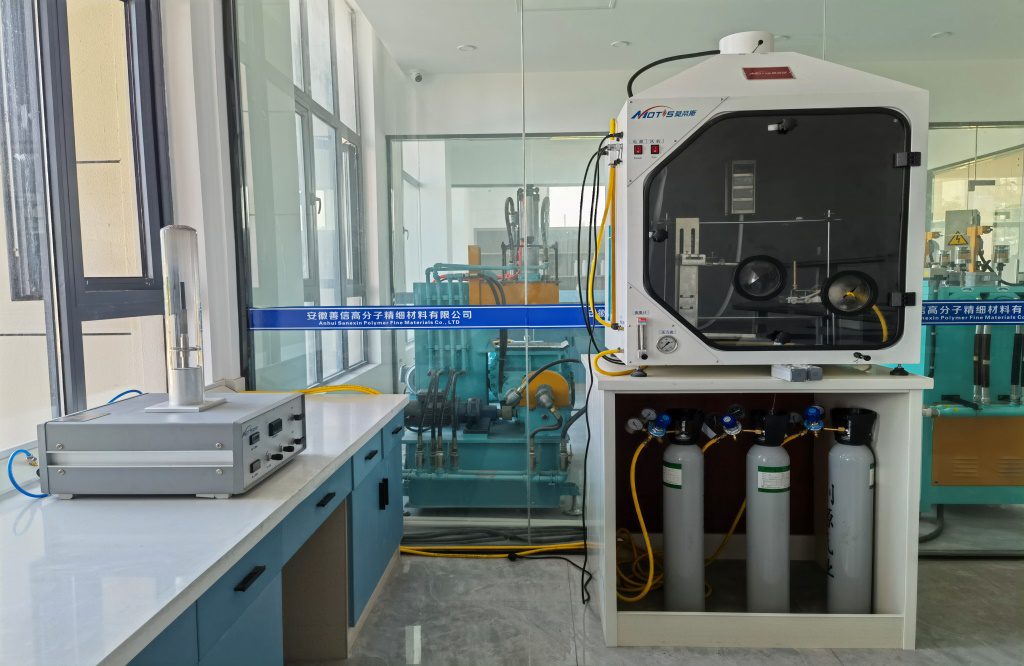
A fourth option deserves a mention because it is often proposed as a shortcut. Increasing the loading of an existing flame retardant until the rating is reached works, and it degrades every other property at the same time. The rating column stops being the constraint long before the other columns do.
Six misconceptions worth clearing before a trial
| Misconception | What the data shows |
| Halogen free means metal hydrate | Metal hydrates are halogen free and reach the rating only at very high loading. FR99RP is a phosphorus nitrogen intumescent system and reaches UL94 V-0 at 60 to 130 phr. |
| More flame retardant is always better | There is a threshold effect. In the EPDM 70 Shore A reference, 80 phr and 100 phr both reached V-0, and 100 phr gave the better overall balance. Above the threshold, dispersion degrades and the benefit stops. |
| A flame retardant always ruins compression set | In EPDM 70 Shore A, FR99RP at 100 phr gave 31.43% compression set at 120 °C for 24 h. That is a usable number for a seal, and it is the comparison that matters, not the presence of a filler. |
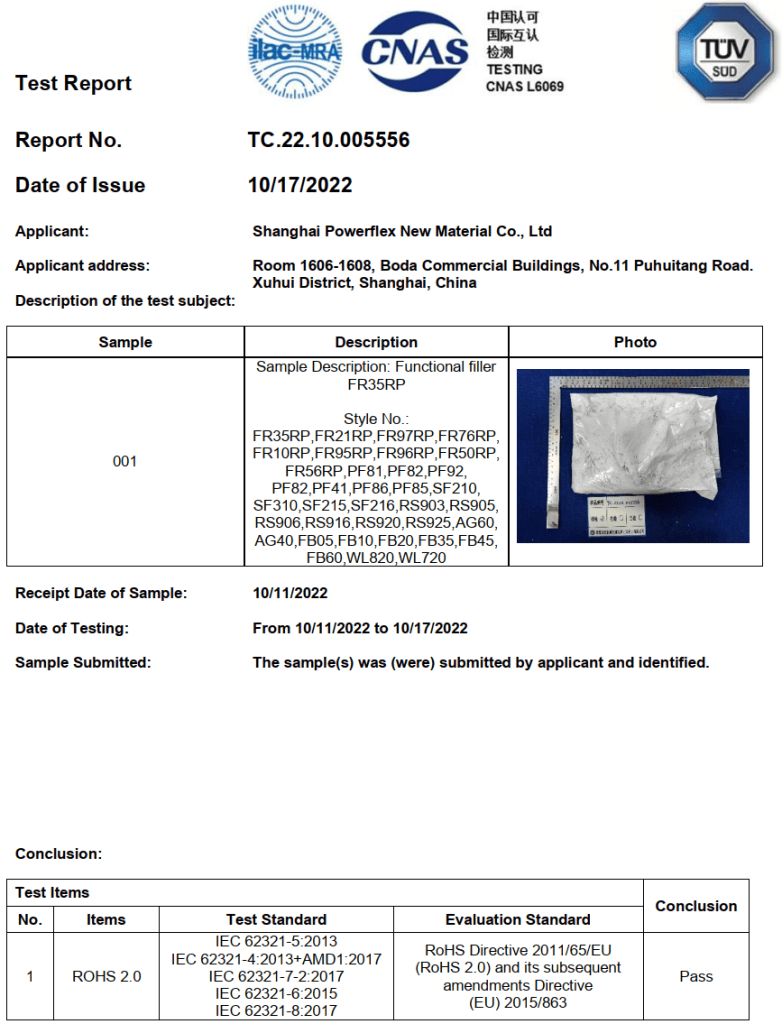
| Halogen free and compliant are the same claim | A halogen free grade can still contain a substance on the REACH candidate list. Compliance has to be tested. Both grades discussed here are supported by third party RoHS 2.0 and REACH SVHC screening. |
| A flame retardant has nothing to do with productivity | Cure time is the clearest difference between these two grades. In EPDM 70 Shore A, the optimum cure time was 221 seconds for one grade and 112 seconds for the other at the same 100 phr loading. |
| The highest LOI is the right choice | The grade with the higher LOI in the EPDM 70 Shore A programme also had 47% lower tensile strength, 68% higher compression set and 21% lower rebound. Section by section, the LOI advantage is real and it is not free. |
Where the strength loss actually comes from
When a compound loses tensile strength after a flame retardant is added, the loading is blamed first. Loading matters, and it is usually the second cause. Four mechanisms run in parallel.
Interface quality. Inorganic and polar flame retardants have limited compatibility with a non-polar rubber matrix. Where there is no bonding at the interface, the particle behaves as a discontinuity, and cyclic strain concentrates there. Surface activation treatment is the answer, and it is the reason two grades with the same loading can behave differently.
Acidity against the cure system. Some phosphorus nitrogen grades, ammonium polyphosphate among them, are mildly acidic and interfere with accelerator activity. The visible symptoms are an abnormal scorch time and a lower difference between maximum and minimum torque, which is a lower crosslink density. In the EPDM 70 Shore A programme, the difference between maximum and minimum torque was 10.18 lbf·in for one grade and 13.58 lbf·in for the other at identical loading.
Decomposition products that catalyse oxidation. A flame retardant that releases reactive species during cure or during service accelerates thermal oxidative aging. It shows up as a steady rise in hardness and a sharp fall in elongation after aging, which is a different failure from simple loading dilution and needs a different answer.
Char structure. An intumescent system is only as good as the residue it leaves. A loose, strongly swollen char insulates less well and produces more smoke than a compact, coherent one. This is a mechanism difference between grades, not a dosage difference.
How an intumescent phosphorus nitrogen system works
An intumescent flame retardant for rubber supplier is selling three mechanisms that act at once, and it helps to keep them separate when reading data.
Condensed phase char formation. On heating, the phosphorus component decomposes to phosphoric acid and polyphosphoric acid. These are strong dehydrating agents and they catalyse dehydration, crosslinking and carbonisation at the surface of the rubber. The nitrogen component decomposes in parallel and releases non-flammable gases that expand the char into a porous shell. That shell does three things: it cuts off the oxygen supply, it reduces heat radiated back into the substrate, and it blocks the small combustible fragments that would otherwise feed the flame.
Gas phase radical capture. Phosphorus containing radicals released during decomposition react with the H· and OH· species that propagate the chain reaction, and the reaction terminates with stable molecular products.
Endothermic dilution. The decomposition is endothermic, so it absorbs heat from the burning zone, and the water vapour and carbon dioxide released dilute the combustible gas mixture.
The three mechanisms explain why the rating is achievable at moderate loading, and they also explain the limitation. Char quality depends on how the flame retardant is distributed, so dispersion is a flame performance variable as well as a mechanical one.
FR99RP and FR98RP in EPDM at 70 Shore A
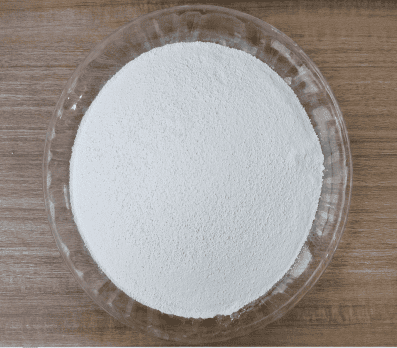
Both grades are supplied as white powders, both are halogen free, and both reach UL94 V-0 in this reference compound. The table below is the whole argument.
| Property | FR98RP at 80 phr | FR99RP at 80 phr | FR98RP at 100 phr | FR99RP at 100 phr |
| ML, lbf·in | 0.92 | 0.91 | 1.09 | 1.04 |
| MH, lbf·in | 11.18 | 12.55 | 11.27 | 14.62 |
| MH minus ML, lbf·in | 10.26 | 11.65 | 10.18 | 13.58 |
| TS2, seconds | 59 | 41 | 63 | 41 |
| TC90, seconds | 207 | 96 | 221 | 112 |
| Hardness, Shore A | 74 | 74 | 74 | 76 |
| Tensile strength, MPa | 7.63 | 9.26 | 6.35 | 9.32 |
| Elongation at break, % | 406 | 421 | 417 | 497 |
| 100% modulus, MPa | 2.64 | 2.77 | 2.59 | 2.69 |
| Specific gravity, g/cm³ | 1.221 | 1.238 | 1.241 | 1.242 |
| UL94 vertical burn | V-0 | V-0 | V-0 | V-0 |
| Limiting oxygen index, % | not measured | not measured | 42.3 | 35.4 |
| Char behaviour on burning | strong swelling, heavy smoke | compact coherent char | strong swelling, heavy smoke | compact coherent char |
| Hardness after 100 °C × 70 h, Shore A | not measured | not measured | 83 | 79 |
| Hardness change, points | not measured | not measured | +5 | +3 |
| Tensile strength after aging, MPa | not measured | not measured | 5.87 | 8.99 |
| Tensile strength change, % | not measured | not measured | −7.56 | −3.54 |
| Elongation after aging, % | not measured | not measured | 275 | 406 |
| Elongation change, % | not measured | not measured | −34.05 | −18.31 |
| Compression set, 120 °C × 24 h, % | not measured | not measured | 52.94 | 31.43 |
| Rebound resilience, % | not measured | not measured | 37 | 47 |
Read the 100 phr columns against each other. Every entry in the table is a UL94 V0 flame retardant rubber compound, so the rating row carries no information. Everything that separates the two grades is in the rows below it.
Crosslink density moves in the direction the mechanism predicts. MH minus ML rises from 10.18 to 13.58 lbf·in, which is 33% higher, and the scorch time shortens from 63 to 41 seconds while the optimum cure time falls from 221 to 112 seconds. A compound that cures in half the time and reaches a higher state of cure is a different product on the shop floor, and that difference comes from how much the flame retardant interferes with the accelerator system rather than from the loading.
Compression set is where the argument becomes commercial. 31.43% against 52.94% at 120 °C for 24 h decides whether the part can be used as a seal. Rebound resilience moves the same way, 47% against 37%, which matters for any part that has to return after deflection.
Heat aging is the longest term difference. After 100 °C for 70 hours the higher LOI grade had lost 34.05% of its elongation and sat at 275%, while the other grade retained 406% and lost 18.31%. A part that has lost a third of its elongation at 100 °C will embrittle and crack earlier in a hot application whatever its flame rating says.
The one column that favours FR98RP is the limiting oxygen index, 42.3% against 35.4%. That is a real advantage in a controlled oxygen environment and it is the reason a flame retardant for EPDM rubber supplier with two grades in the same family is more useful than one with a single option. Ask which of these two profiles matches your specification before asking for a price.
The same comparison at 50 Shore A and in NBR
A softer compound changes the balance because the filler takes a larger share of the modulus.
| Property | FR98RP at 100 phr, EPDM 50 Shore A | FR99RP at 100 phr, EPDM 50 Shore A |
| Hardness, Shore A | 67 | 67 |
| Tensile strength, MPa | 8.03 | 9.31 |
| Elongation at break, % | 550 | 553 |
| 100% modulus, MPa | 1.75 | 1.85 |
| MH minus ML, lbf·in | 8.40 | 9.31 |
| TC90, seconds | 199 | 131 |
| UL94 vertical burn | V-0 | V-0 |
| Limiting oxygen index, % | 41.5 | 30.5 |
| Rebound resilience, % | 44 | 51 |
In a polar rubber the picture shifts again, and this is where a flame retardant for NBR rubber compound has to be selected on data rather than on family name.
| Property | FR98RP at 100 phr, NBR 70 Shore A | FR99RP at 100 phr, NBR 70 Shore A |
| Hardness, Shore A | 75 | 76 |
| Tensile strength, MPa | 9.43 | 9.23 |
| Elongation at break, % | 522 | 455 |
| 100% modulus, MPa | 2.55 | 2.94 |
| MH minus ML, lbf·in | 8.45 | 12.53 |
| TC90, seconds | 79 | 94 |
| UL94 vertical burn | V-0 | V-0 |
| Limiting oxygen index, % | 37.8 | 32.6 |
| Rebound resilience, % | 24 | 33 |
NBR is the interesting case because the two grades trade places on different properties. FR98RP gives higher elongation and a lower modulus, which suits a part that has to flex. FR99RP gives 48% higher crosslink density and 38% higher rebound, which suits a part that has to seal and recover. Tensile strength is within 2%. In NBR, FR99RP also cures more slowly than FR98RP, 94 seconds against 79, which is the opposite of the EPDM result. That reversal is worth remembering: the interaction with the cure system is formulation specific and cannot be read off a datasheet.
Where the high oxygen index route wins: natural rubber
The comparison above is not an argument that one grade is better everywhere. In a 45 Shore A natural rubber moulding compound, FR98RP reaches UL94 V-0 at 45 phr on a 2 mm specimen, with self-extinguishing behaviour after the flame is removed.
| Property in NR at 45 Shore A, 45 phr | Range across tested samples |
| Tensile strength, MPa | 8.45 to 11.81 |
| Elongation at break, % | 427 to 497 |
| 100% modulus, MPa | 1.8 to 1.9 |
| 300% modulus, MPa | 5.3 to 5.8 |
Two things are worth taking from that table. First, a rating of V-0 at 45 phr is a low loading for a halogen free system, and low loading is what preserves the mechanical properties. Second, the elongation range shows that the grade does not plasticise the compound or destroy the elastic network at that loading, which is the failure mode most often reported when a flame retardant is introduced into a natural rubber compound.
Natural rubber has a different failure profile from EPDM in flame retardant service, because the unsaturation in the backbone makes it more reactive in both cure and oxidation. Where a part is mostly natural rubber and the priority is the highest achievable fire performance at moderate loading, the higher LOI grade is the reasonable starting point. Where the part is EPDM or NBR and the priority is retention of mechanical properties, compression set and cure economics, the lower LOI grade with the compact char is the reasonable starting point.
Choosing between the two grades
Use FR99RP when the compound is EPDM, NBR, NR, SBR, CR, IIR or ACM and the specification has more than one requirement in it: a rating plus compression set, or a rating plus heat aging retention, or a rating plus cure time. It is also the grade to start with where the part is extruded or moulded on an existing cycle that cannot be lengthened, because the cure time result is the largest single difference in the data above.
Use FR98RP when the limiting oxygen index is the governing requirement, or when the part is a highly unsaturated rubber where the softer, higher elongation vulcanisate is what the application needs, or where the specification calls out a minimum LOI that the other grade does not meet.
Consider a metal hydrate system instead when the only requirement is a modest improvement in flame behaviour at the lowest possible raw material cost and there is no requirement on compression set or strength retention. Consider a halogenated system only after checking the export and compliance position for the finished part, since the restriction usually applies at the assembly level rather than at the compound level.
Use the same test protocol for the two grades anyway, because the ordering is formulation specific and a halogen free flame retardant supplier China or in Europe is held to the same evidence standard. Ask for colour data taken over time, aged retention on the same compound, and a cure comparison run with the flame retardant in and out. Those three items separate a supplier who has run the experiments from one who has read the datasheet.
Two process checks belong in any trial. Dispersion, because the char formation is a surface and interface phenomenon and agglomerates create both a mechanical defect and a localised flame performance defect. And the cure profile, because a 100 second shift in optimum cure time changes the line rate and, if not re-verified, can change the state of cure as well.
Failure modes and what causes them
| Symptom | Usual cause | What to do |
| Seal loses its seal after 80 to 120 °C service | Flame retardant interfered with the crosslink network, so the elastic recovery is incomplete | Check MH minus ML against the unfilled reference. In the EPDM 70 Shore A programme the better grade gave 13.58 lbf·in against 10.18 lbf·in at the same loading. |
| Surface cracking and a sharp drop in elongation after hot air aging | Decomposition products catalysed oxidation rather than simple dilution | Compare elongation retention, not absolute elongation. 18.31% loss against 34.05% after 100 °C for 70 hours separated the two grades. |
| Heavy smoke and glowing drips during the burn test | The char is loose and breaks up instead of insulating | Move to a grade that forms a compact, coherent char and verify dispersion, since an agglomerate produces localised loose char. |
| Cure takes far longer than the unfilled compound | Acidic flame retardant interfering with accelerator activity | Re-run the rheometer with the flame retardant in and out. A 49% reduction in optimum cure time between two grades at identical loading is achievable. |
| Flame retardant migrates to the surface and contaminates the part it touches | Poor compatibility and low molecular weight fraction | Use a surface activated grade and validate with a short term migration or extraction check on the finished part. |
| Rating reached in the laboratory but not on the production line | Dispersion differs between a laboratory mill and a production mixer | Validate dispersion at production scale before writing the specification. |
The total cost of ownership argument
Flame retardant cost is normally quoted per kilogram, and per kilogram is the least informative of the four terms that matter.
Material cost per part. Work in cost per unit volume and include density. In the EPDM 70 Shore A programme the density range across the four compounds was 1.221 to 1.242 g/cm³, which is a 1.7% weight difference. On a part moulded in millions, a small density difference is a real number.
Processing cost. This is the term that is usually ignored and it is the largest one here. An optimum cure time of 112 seconds against 221 seconds at the same loading is a press cycle difference, and press time is the constraint in most moulding shops. Lower mixing energy and better flow add to the same account.
Cost of failure in service. A seal that takes a permanent set at 120 °C, or a jacket that embrittles at 100 °C, produces a claim in year three rather than a rejection at inspection. The relevant comparison is the aged property retention, not the unaged certificate.
Compliance cost. A flame retardant that is restricted in a target market creates a design change for the whole assembly, not just for the compound. Confirming the compliance position at the design stage is cheaper than discovering it at the export stage.
A low smoke halogen free flame retardant manufacturer that can present smoke and heat release data alongside the rating, and a halogen free flame retardant manufacturer that will discuss the cure-time consequence of its own product, are both doing the more useful job. A flame retardant for railway rubber parts supplier and a flame retardant for railway rubber parts supplier working on metro interiors are held to a higher smoke standard than a general industrial supplier, and that is where the char structure difference becomes a purchasing criterion rather than a technical curiosity.
Applications
The two grades are specified where a rating, a mechanical property set and a compliance requirement have to hold at the same time.
| Application area | Typical parts | Governing requirement |
| Rail and metro interiors | Seals, floor coverings, buffer pads, cable ducts | Rating plus low smoke, and the smoke requirement usually decides the grade |
| Electric vehicles | Battery pack seals, high voltage cable jackets, connector seals | Rating plus high temperature aging and insulation |
| Wire and cable | EPDM and NBR insulation and jackets | Rating plus flexibility and extrusion quality |
| Industrial and oil field | Oil resistant seals and gaskets, conveyor belting | Rating plus oil resistance and compression set |
| Electronics and appliances | Seals, grommets, plug shrouds | Rating plus dimensional stability |
| Construction | Fire stop profiles, expansion joint seals | Rating plus weather resistance and compression recovery |
A low smoke flame retardant for railway and metro seals has an additional constraint that general industry does not, because the smoke requirement in an enclosed carriage is often tighter than the flame requirement. A halogen free flame retardant for EV battery pack seals has the opposite emphasis, where thermal stability over service life matters more than the smoke numbers. A halogen free flame retardant for cable jacket EPDM compound has to satisfy the extrusion and surface quality requirement as well, which is where dispersion control stops being a laboratory topic.
FAQ
How to achieve UL94 V0 in EPDM without losing tensile strength
Reach the rating at the lowest loading that holds it with margin, then verify the state of cure. In the EPDM 70 Shore A reference, 100 phr of FR99RP delivered UL94 V-0 with 9.32 MPa tensile strength and 497% elongation, and the same loading of FR98RP delivered UL94 V-0 with 6.35 MPa and 417%. The rating was identical and the tensile strength differed by 47%. Loading is the obvious lever and the grade is the larger one.
FR99RP vs FR98RP which halogen free flame retardant to choose
Choose on the property that governs your specification, because the two grades are optimised for different ones. FR99RP gives the higher crosslink density, the shorter cure time, the lower compression set and the better heat aging retention in EPDM and NBR. FR98RP gives the higher limiting oxygen index in every matrix tested and a softer, higher elongation vulcanisate in NBR and NR. If your specification has a compression set limit or a cure time limit, start with FR99RP. If it has an LOI floor or a flexibility requirement, start with FR98RP.
How to reduce compression set in flame retardant EPDM
Protect the crosslink network rather than reducing the loading. Compression set in a flame retardant compound rises when the additive interferes with the cure or when the flame retardant phase carries load that the rubber network should carry. In the EPDM 70 Shore A programme, 31.43% at 120 °C for 24 h was achieved at 100 phr with a compound whose MH minus ML was 13.58 lbf·in, against 52.94% in a compound whose MH minus ML was 10.18 lbf·in at the same loading. Check the torque difference before changing the loading.
Flame retardant that does not slow down the cure in EPDM
Test the candidate in your own cure system, because the interaction is grade specific and matrix specific. In the EPDM 70 Shore A reference, one grade cured in 112 seconds at 100 phr and the other in 221 seconds, a difference of roughly half. In NBR at 70 Shore A the order reversed and the faster grade in EPDM was the slower one. A surface treatment that deactivates the acidic sites on the flame retardant particle is the mechanism that limits the interference, so ask the supplier what the surface treatment is rather than what the loading is.
Low smoke flame retardant for railway and metro seals
Smoke density and char structure decide this application, not the flame rating. An intumescent system that forms a compact, coherent char produces less smoke than one that swells strongly and breaks up. Compare grades on smoke data taken at the same loading and in the same compound, and confirm the governing rail standard for the vehicle category you are supplying, since the hazard level required differs between interior and exterior parts.
Halogen free flame retardant for EV battery pack seals
The governing properties are thermal stability through service life, compression set and insulation, with the flame rating as the entry condition. EPDM is the usual base polymer because of its aging resistance. Start from the compression set requirement at the maximum continuous service temperature, then set the flame retardant loading to reach the rating with margin, then confirm that the aged elongation retention is adequate. The exchange between these three is the design problem, and it is a data problem rather than a chemistry problem.
How to stop flame retardant from lowering crosslink density in NBR
Select on the torque difference and treat a low value as a disqualifying result rather than a cost of doing business. In NBR at 70 Shore A and 100 phr loading, the two grades gave 8.45 and 12.53 lbf·in for MH minus ML, a 48% difference. The higher figure came with 33% rebound against 24%, which is the difference between a seal that recovers and one that leaks after a few thermal cycles. If neither grade reaches your crosslink density target, the cure system is the next place to look, since an under-cured network usually identifies itself in the same measurement.
High oxygen index flame retardant for rubber without strength loss
LOI and strength retention pull against each other within a family, and the size of the trade-off depends on the grade. The higher LOI grade in the EPDM 70 Shore A programme reached 42.3% with 6.35 MPa tensile strength; the lower one reached 35.4% with 9.32 MPa. If your specification has both an LOI floor and a strength floor, the productive step is to establish how much LOI margin the fire test actually requires, because the test is usually passed with less margin than the specification demands.
Halogen free flame retardant for cable jacket EPDM compound
Cable jackets add extrusion quality and insulation to the flame requirement. Both grades in the comparison are supplied as white powders with a surface treatment and a flake structure, which supports smooth extrusion and dimensional stability, and both give the insulation level expected from a mineral filled system rather than a conductive one. Validate dispersion at production scale, since surface defects in an extruded jacket are usually a dispersion symptom rather than a formulation symptom.
Flame retardant for NBR oil seals with high rebound
Rebound and compression set are the properties that decide this application, and both are crosslink density indicators. In NBR at 70 Shore A, the same flame retardant family delivered 24% rebound in one grade and 33% in another at the same 100 phr loading, with nearly identical tensile strength. Rebound is the more sensitive measurement of the two, so it is worth including in the trial even if it is not on the drawing.
What loading should be used to reach UL94 V-0
The general range for this family is 60 to 130 phr according to hardness, required physical properties, grade and processing. Two practical rules from the same data: adding 6 to 8 phr raises hardness by roughly one Shore A, and adding 3 to 5 phr raises the limiting oxygen index by roughly one unit. Establish the minimum loading that reaches the rating with margin rather than the loading that produces the lowest single number.
Is the rating reached at 80 phr or is 100 phr required
In the EPDM 70 Shore A reference both 80 phr and 100 phr reached UL94 V-0, and the 100 phr compounds had the better overall property balance. The rating alone does not distinguish them. If your part thickness or geometry differs from the test specimen, the loading that holds the rating with margin will differ as well, so the answer is a trial result rather than a datasheet value.
Does a flame retardant change the compound density
Yes, and it needs to be accounted for in costing. In the EPDM 70 Shore A programme the density moved from 1.221 to 1.242 g/cm³ across the four compounds, and in a separate higher hardness reference the density range was wider. Cost per part, not cost per kilogram, is the correct basis for a high loading additive.
How should a flame retardant trial be designed
Three measurements. Cure behaviour with the flame retardant in and out, because the accelerator interaction is the largest single variable. Mechanical properties before and after aging, expressed as retention rates rather than absolute values. And dispersion, validated at production scale. A fourth measurement is worth adding when the part is a seal: compression set at the real service temperature, not at a convenient one.
What standards apply to these compounds
Mechanical and cure testing in the source data follows the usual rubber standards, including [参考标准,如 ASTM D412 / GB/T 528 for tensile properties], [ASTM D2240 / GB/T 531.1 for hardness], [ASTM D5289 for cure characteristics], [ASTM D395 / GB/T 7759 for compression set], [ASTM D573 for heat aging] and [ASTM D792 / GB/T 533 for density]. Flame testing follows [GB/T 2408 / IEC 60695-11-10 for vertical burning] and limiting oxygen index follows [GB/T 10707 / ISO 4589]. Rail interior applications are governed by [EN 45545-2] or [DIN 5510-2] depending on the vehicle category. Please confirm the applicable edition and specimen size before writing them into a purchase specification.
Technical support and resources
Where the data comes from. The EPDM 70 Shore A and 50 Shore A and the NBR 70 Shore A comparisons are from a multi-grade programme in standard reference compounds, with cure characteristics measured by moving die rheometer and aging carried out in a hot air oven. The natural rubber figures are from a 45 Shore A moulding compound tested at 45 phr loading on a 2 mm specimen. Every number in the tables is a measured value from those programmes. No property has been extrapolated or estimated.
Two points need confirmation before publication. First, the limiting oxygen index of FR98RP appears as 42.3% in the EPDM 70 Shore A programme and as 32.5% in an older reference compound used in the product data sheet. The difference comes from the base polymer and test conditions rather than from the flame retardant, but the two figures should not be quoted side by side without explanation. Second, the third party RoHS 2.0 and REACH SVHC reports currently on file list a series of FR and PF grades in their sample description and do not name FR99RP or FR98RP individually. Please confirm with the testing laboratory whether these two grades are covered by the same report or require a separate test before the certificate is published alongside the article.
A flame retardant decision depends on the base polymer, the loading, the cure system, the part thickness and the governing requirement, which may be rating, smoke, heat release, compression set or mechanical retention. For a comparison protocol matched to a specific compound, or for smoke, heat release and aging data on your own formulation, technical support is available through the contact below.
The halogen free intumescent flame retardant grades discussed on this page are supplied as the GreenThinking® FR series, including FR99RP and FR98RP.
SaneZen Group
Shanghai Xuanluo New Materials Co., Ltd.
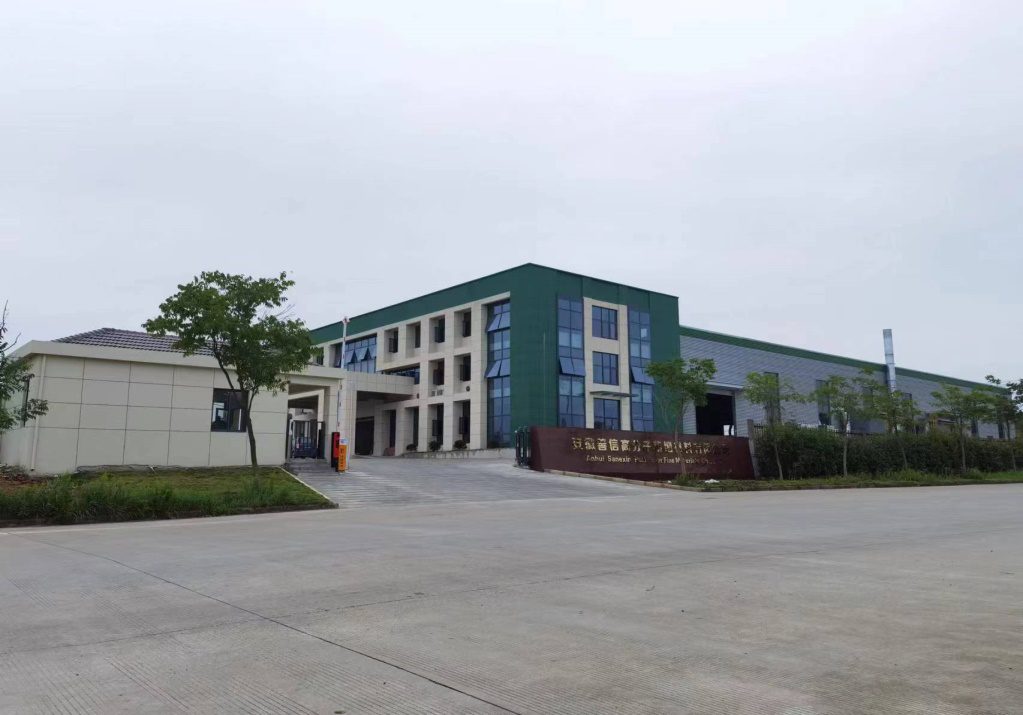
Factory: No. 22 Meizigang Road, North Zone, Economic Development Zone, Xuanzhou District, Anhui Province, China
Business: Room 1606-1608, Boda Business Building, No. 11 Puhuitang Road, Xuhui District, Shanghai, China 200030
Tel/WahtsApp : +86- 136 7164 1995
Email : yorichen@sanezen.com
Website: www.sanezenrubber.com
 English
  Spanish
  Russian