
What this page answers
Almost every halogen-free flame retardant on the market can reach UL94 V-0 in an EPDM compound if you add enough of it. That is why V-0 is a poor way to choose one. The number that decides whether the project works is what the flame retardant does to everything else: cure time, tensile strength, elongation, compression set, resilience and the colour of the smoke.
This page compares two halogen free flame retardant for rubber grades at 80 and 100 phr in an EPDM 70 Shore A compound, at 100 phr in an EPDM 50 Shore A compound and at 100 phr in an NBR 70 Shore A compound. Both reach V-0 in every compound tested. Their measured differences in cure, mechanical properties, heat ageing, compression set and oxygen index are large enough to decide a specification, and in two of the three compounds the grade with the higher oxygen index is the one that loses on every other property.
Why the flame retardant question is really a loading question
A flame retardant for EPDM compound is used at 80 to 100 parts per hundred rubber, sometimes more. That is not an additive dose. It is 25 to 38 percent of the compound by weight, which makes the flame retardant a co-equal ingredient with the polymer rather than a trace component.
The arithmetic explains why the choice is so consequential. In the EPDM 70 Shore A formulation below, the compound totals 289.25 phr with 100 phr of flame retardant, so the flame retardant is 34.6 percent of the weight. At 80 phr the total is 269.25 phr and the share is 29.7 percent. In the NBR formulation at 100 phr, the total is 264.25 phr and the flame retardant is 37.8 percent of the compound.
When a third of the compound is one ingredient, its density, its cure behaviour and its interaction with the accelerator package stop being secondary effects. A 5 percent difference in the cure time of a flame retardant is a 5 percent difference in press output. A 10 point difference in compression set is the difference between a seal that passes and one that does not.
That is also why the price per kilogram of flame retardant is a poor basis for comparison. The relevant number is the cost per kilogram of compound at equal loading, and then the effect of that loading on scrap, cycle time and rejects.
What a halogen-free system does instead of a halogen
A brominated flame retardant works in the gas phase. It releases hydrogen bromide, which reacts with the H and OH radicals that propagate the flame, and the chain reaction stops. That is efficient, and it is the reason brominated systems historically dominated the market. It is also why they produce dense, corrosive, toxic smoke: the halogen leaves the material as hydrogen halide.
A halogen-free composite works differently, and there are four mechanisms in play at once.
It decomposes endothermically, absorbing heat and releasing water and carbon dioxide, which cools the surface and dilutes the flammable gases. It forms a char layer that insulates the underlying polymer from heat and blocks oxygen. It expands into a porous structure, which is the intumescent flame retardant for rubber behaviour, and that structure is why an intumescent system can pass a vertical burn test at a lower oxygen index than an additive that relies on gas phase inhibition. And its decomposition products interact with the polymer to promote a ceramic or carbonaceous residue rather than a powdery ash, which is the ceramic forming flame retardant effect that matters for a cable.
Understanding which of those four is doing the work in a given product explains the differences in the data below. A product that relies on expansion and char has to be loaded heavily, and heavy loading is what costs physical properties. A product that also acts in the gas phase can be used at a lower loading, and lower loading is why it preserves physical properties but produces more smoke.
The three compounds used here
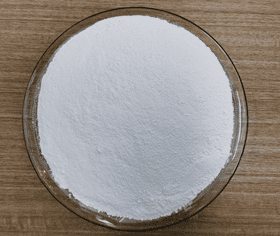
All three formulations were run with the same flame retardant pair: FR98RP, which is positioned on flame retardant efficiency and oxygen index, and FR99RP, which is positioned on physical properties and cure.
| Material, phr | EPDM 70 Shore A | EPDM 50 Shore A | NBR 70 Shore A |
| KEP350 | 50 | 40 | – |
| TER 4038 | 50 | 60 | – |
| NBR 3350 | – | – | 100 |
| CZ500R carbon black | 40 | 40 | 40 |
| Precipitated calcium carbonate | 20 | – | – |
| Flame retardant, FR98RP or FR99RP | 80 or 100 | 100 | 100 |
| Paraffinic oil 6030 | 15 | 35 | – |
| Plasticiser IATBC | – | – | 10 |
| Zinc oxide | 6 | 6 | 5 |
| Stearic acid | 1.5 | 1.5 | 1.0 (OSTA) |
| PEG 4000 | 2 | 2 | 1 |
| Antioxidant RD | – | – | 1.5 |
| Antioxidant 4010NA | – | – | 1.0 |
| L-24 | 1 | 1 | – |
| L-12 | – | – | 1 |
| Sulphur S-80 | 1.25 | 1.25 | 0.75 |
| Accelerator EP-33 | 2.5 | 2.5 | – |
| Accelerator TMTD | – | – | 1.5 |
| Accelerator CZ | – | – | 1.5 |
Cure was measured at 180 C for 5 minutes, physical properties were cured at 175 C for 6 minutes in the EPDM compounds and 5 minutes in the NBR compound, ageing was 70 hours at 100 C, and compression set was 24 hours at 120 C.
The cure data: the largest single difference
| EPDM 70 Shore A | FR98RP 80 | FR99RP 80 | FR98RP 100 | FR99RP 100 |
| ML, lbf-in | 0.92 | 0.90 | 1.09 | 1.04 |
| MH, lbf-in | 11.18 | 12.55 | 11.27 | 14.62 |
| MH minus ML, lbf-in | 10.26 | 11.65 | 10.18 | 13.58 |
| TS2, seconds | 59 | 41 | 63 | 41 |
| TC10, seconds | 50 | 35 | 51 | 36 |
| TC90, seconds | 207 | 96 | 221 | 112 |
This table is the strongest argument in the data set, and it has nothing to do with flame retardancy.
At 80 phr, TC90 is 207 seconds with FR98RP and 96 seconds with FR99RP. At 100 phr it is 221 seconds against 112. The compound with FR99RP cures in a little over half the time, and its state of cure is higher, with MH minus ML at 13.58 against 10.18 in the 100 phr comparison, a 33 percent difference in crosslink development.
For a moulder this is a line rate change. A cycle of 221 seconds becomes 112 seconds, which on a three minute cycle is most of the available capacity. For a compounder it is a warning: a flame retardant for EPDM compound that depresses the cure state will force you to add accelerator, and adding accelerator to compensate changes scorch, which changes the whole balance.
The scorch figures move the other way. TS2 with FR99RP is 41 seconds against 59 to 63 with FR98RP, so the faster curing product is also the one with the shorter safety window. That is normal: a cure system that starts earlier finishes earlier. The practical consequence is that the FR99RP compound needs a shorter injection or transfer time, not a longer one.
Physical properties before ageing
| EPDM 70 Shore A | FR98RP 80 | FR99RP 80 | FR98RP 100 | FR99RP 100 |
| Hardness, Shore A | 74 | 74 | 78 | 76 |
| Tensile strength, MPa | 7.63 | 9.26 | 6.35 | 9.32 |
| Elongation at break, percent | 406 | 421 | 417 | 497 |
| Modulus at 100 percent, MPa | 2.64 | 2.77 | 2.59 | 2.69 |
| Specific gravity, g/cm3 | 1.220 | 1.238 | 1.241 | 1.242 |
| UL94 vertical burn | V-0 | V-0 | V-0 | V-0 |
The tensile strength column is the one to look at. At 80 phr, 9.26 against 7.63 MPa is a 21 percent advantage. At 100 phr, 9.32 against 6.35 MPa is a 47 percent advantage, because the FR98RP compound loses strength as loading rises while the FR99RP compound holds it.
That behaviour is worth explaining, because it is the opposite of what most buyers expect. Higher filler loading normally reduces tensile strength in a simple filled system. Here the FR98RP compound follows that rule, dropping from 7.63 to 6.35 MPa between 80 and 100 phr, while the FR99RP compound rises slightly from 9.26 to 9.32. The difference is that one of the two products interferes with the cure and the other does not: a compound with a depressed cure state cannot develop the same network at the same loading, so the strength loss is a cure effect dressed up as a filler effect.
Both products reach V-0 at every loading tested. That is the point of the title. A UL94 V0 flame retardant rubber is not a rare product; it is the entry condition for this market, and both grades met it at every loading tested. The vertical burn test does not separate them.
The number that does separate them: oxygen index
| Compound | FR98RP oxygen index, percent | FR99RP oxygen index, percent |
| EPDM 70 Shore A, 100 phr | 42.3 | 35.4 |
| EPDM 50 Shore A, 100 phr | 41.5 | 30.5 |
| NBR 70 Shore A, 100 phr | 37.8 | 32.6 |
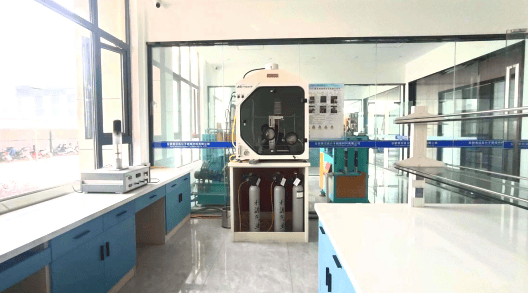
Figure 2. The oxygen index apparatus used for the limiting oxygen index measurements in this article.
This is where FR98RP wins clearly, and where the selection decision actually turns.
The limiting oxygen index flame retardant behaviour is what FR98RP is designed for: 42.3 percent in EPDM 70 Shore A is a high figure, and it holds at 41.5 in the softer compound. A material with an oxygen index above 27 is generally regarded as self-extinguishing, and above 32 is comfortable for most cable and rail specifications.
FR99RP is at 35.4 in the EPDM 70 Shore A compound, which is still well above the self-extinguishing threshold, but falls to 30.5 in the 50 Shore A compound. That is a narrow margin, and a customer writing an oxygen index specification of 32 minimum would reject it.
The important qualification is that oxygen index and V-0 measure different things, and a part can pass one and fail the other. Oxygen index is the minimum oxygen concentration at which a small specimen will sustain burning in a candle-like configuration. UL94 V-0 is a vertical burn on a specimen, and it judges afterflame time, afterglow and whether burning material drips and ignites a cotton pad below. A char-forming system can pass V-0 at a lower oxygen index because the char prevents the melt drip that fails the test, while a system with a higher oxygen index can still fail V-0 if it drips.
So the honest reading is this. FR98RP is the grade to choose when oxygen index is a specification line, which happens most often in cable and in rail. FR99RP is the grade to choose when the part has to keep its physical properties, its cure time and its compression set, and the flame test it must pass is V-0. Choosing FR98RP for a seal because it has a higher oxygen index, and then discovering that the seal no longer seals, is the most common mistake in this category.
Ageing, compression set and what the part does after a year
| EPDM 70 Shore A, 100 phr | FR98RP | FR99RP |
| Hardness after 70 h at 100 C, Shore A | 83 | 79 |
| Hardness change, points | +5 | +3 |
| Tensile strength after ageing, MPa | 5.87 | 8.99 |
| Tensile strength change, percent | -7.56 | -3.54 |
| Elongation after ageing, percent | 275 | 406 |
| Elongation change, percent | -34.05 | -18.31 |
| Compression set, 24 h at 120 C, percent | 52.94 | 31.43 |
| Resilience, percent | 37 | 47 |
Compression set at 120 C is the column that decides this comparison for a sealing application. 52.94 percent against 31.43 percent is not a marginal difference, it is the difference between a gasket that returns and one that stays flat.
The elongation retention gap is also large: 34 percent loss against 18 percent, at the same ageing condition. Combined with a hardness rise of 5 points against 3, the picture is that the FR98RP compound continues to cure and embrittle while the FR99RP compound stabilises. That is consistent with a cure system that was already under-developed before ageing, and it is the same mechanism that produced the lower tensile strength in the previous table.
Resilience at 37 against 47 percent matters for a dynamic part and for heat build-up. A low resilience compound converts deformation into heat, which in a thick section is the start of a thermal problem rather than a mechanical one.
The softer compound and the nitrile compound
The EPDM 50 Shore A comparison tests the same pair at a lower hardness with more oil, which is where a flame retardant’s interference with the cure is usually more visible.
| EPDM 50 Shore A, 100 phr | FR98RP | FR99RP |
| MH minus ML, lbf-in | 8.40 | 9.31 |
| TC90, seconds | 199 | 131 |
| Hardness, Shore A | 67 | 67 |
| Tensile strength, MPa | 8.03 | 9.31 |
| Elongation at break, percent | 550 | 553 |
| Specific gravity, g/cm3 | 1.166 | 1.189 |
| Oxygen index, percent | 41.5 | 30.5 |
| Resilience, percent | 44 | 51 |
The pattern holds: the FR99RP compound cures 34 percent faster, is 16 percent stronger in tension and 7 points more resilient, and gives up 11 points of oxygen index to get there.
The NBR compound is the one where the two products behave differently from the EPDM case, and it is worth reporting honestly because it does not fit the simple story.
| NBR 70 Shore A, 100 phr | FR98RP | FR99RP |
| ML, lbf-in | 1.03 | 0.70 |
| MH, lbf-in | 9.48 | 13.23 |
| MH minus ML, lbf-in | 8.45 | 12.53 |
| TS2, seconds | 41 | 38 |
| TC90, seconds | 79 | 94 |
| Hardness, Shore A | 75 | 76 |
| Tensile strength, MPa | 9.23 | 9.43 |
| Elongation at break, percent | 522 | 455 |
| Modulus at 100 percent, MPa | 2.55 | 2.94 |
| Specific gravity, g/cm3 | 1.280 | 1.312 |
| Oxygen index, percent | 37.8 | 32.6 |
| Resilience, percent | 24 | 33 |
In nitrile, the cure time reverses: FR98RP cures faster, at 79 seconds against 94. The state of cure is still higher with FR99RP, at 12.53 against 8.45, and the tensile strengths are close. But FR99RP gives up 67 points of elongation and gains half a point of tensile, so it is a stiffer compound rather than a stronger one.
The lesson from the nitrile data is that a flame retardant cannot be characterised once and applied everywhere. A flame retardant for NBR compound has to be evaluated in nitrile, because the accelerator package, the plasticiser and the polymer polarity all change the interaction. Anyone quoting a flame retardant performance figure without naming the polymer is quoting a number that applies to one compound.
Smoke, char and what the fire actually looks like
The combustion difference between the two products was recorded during the burn tests, and it matters as much as the numbers.
The FR98RP vulcanisate intumesces strongly, swelling into a bulky char and producing a significant quantity of soot. The FR99RP vulcanisate forms a more compact, ceramic-like char with less soot.
For a low smoke flame retardant additive, the second behaviour is what a tunnel, a rail vehicle or an enclosed cable tray needs, because smoke density and smoke toxicity are what injure people before the flame reaches them. That is the reason the rail standard assesses smoke and heat release rather than burn time alone, and the reason a flame retardant for rail transit rubber is not selected on V-0.
The intumescent behaviour is not a defect. In a thick section, a swollen char layer is an effective thermal barrier, and FR98RP’s higher oxygen index comes partly from that mechanism. The trade is that intumescence produces more soot and a less coherent residue, which is acceptable in a cable gland and not acceptable in a rail interior panel.
Where each grade belongs
| Requirement | FR98RP | FR99RP |
| UL94 V-0 in EPDM at 80 to 100 phr | Yes | Yes |
| Oxygen index above 40 in EPDM | Yes | No |
| Short cure cycle | No | Yes |
| Tensile strength above 9 MPa at 100 phr | No | Yes |
| Compression set below 35 percent at 120 C | No | Yes |
| Low smoke and coherent char | No | Yes |
| Thick section thermal barrier | Yes | No |
| Cable jacket where LOI is specified | Yes | Only above 35 |
| Seal or gasket where set is specified | No | Yes |
| NBR fuel hose cover | Acceptable | Acceptable, stiffer |
A flame retardant for cable sheath compound is usually the FR98RP case, because cable specifications frequently carry an oxygen index line and because a cable jacket is not a sealing part, so compression set does not matter. A flame retardant for conveyor belt rubber is closer to the FR99RP case, because a belt cover has to keep its tensile strength and its flex life, and the flame requirement is usually a drum friction or a small scale burn rather than a high oxygen index.
Dosage, and the two ways to get it wrong
| Item | Guidance from this work |
| Loading in EPDM 70 Shore A | 80 phr reached V-0; 100 phr was also tested |
| Loading in EPDM 50 Shore A | 100 phr tested |
| Loading in NBR 70 Shore A | 100 phr tested |
| Effect of raising loading with FR98RP | Cure state falls, tensile strength falls, hardness rises |
| Effect of raising loading with FR99RP | Cure state rises slightly, tensile holds, density rises |
| Density penalty | 1.22 to 1.24 g/cm3 in EPDM, so weight per part rises with loading |
There is no universal flame retardant dosage in rubber compound that can be quoted without the polymer, the thickness and the test, and a supplier who offers one is quoting the loading that worked in their own trial. The table above is a set of observations from four compounds, not a recommendation for a fifth.
The first way to get it wrong is to specify the loading from a data sheet rather than from a burn test on the actual part. V-0 depends on specimen thickness and on the part geometry, so a compound that passes at 3 mm may fail at 1.5 mm at the same loading. The loading has to be verified on the thinnest section in the part.
The second is to raise the loading to fix a failing test. With FR98RP, more loading makes the cure worse, which lowers the crosslink density, which in some geometries makes the burn behaviour worse rather than better. If a compound fails V-0 at 80 phr, the answer is usually the other product rather than 100 phr of the same one.
Failure analysis: what a flame retardant problem looks like
| Symptom | Usual cause | What to check |
| V-0 passes on a plaque, fails on the part | Thickness and geometry differ from the test specimen | Test the thinnest section, not a standard plaque |
| Cure time has doubled since the FR was introduced | The FR is depressing the cure state | Compare MH minus ML against the unfilled compound |
| Tensile strength falls as loading rises | Cure interference rather than a filler effect | Check MH minus ML before changing the polymer |
| Parts stick in the mould and tear at ejection | Hardness rise and lower elongation at high loading | Reduce loading, or increase the mould temperature gradually |
| White bloom on the surface of a black part | Incompatible fraction of the FR migrating | Check storage and cure temperature, then the FR dispersion |
| Smoke is dense and black even though V-0 passes | Gas phase mechanism rather than char formation | This is the FR98RP behaviour; move to a char forming grade if smoke is specified |
| Compression set fails after the FR was added | Cure state and resilience both fell | Compare resilience and compression set before and after |
The fifth row is the one that surprises people, because a flame retardant is a fine powder at 30 percent loading and dispersion is not automatic. A flame retardant for rubber that is not dispersed is both a bloom risk and a flame risk, since the undispersed agglomerate protects a volume of polymer that has no flame retardant in it at all.
Regulations, and how to read a compliance claim
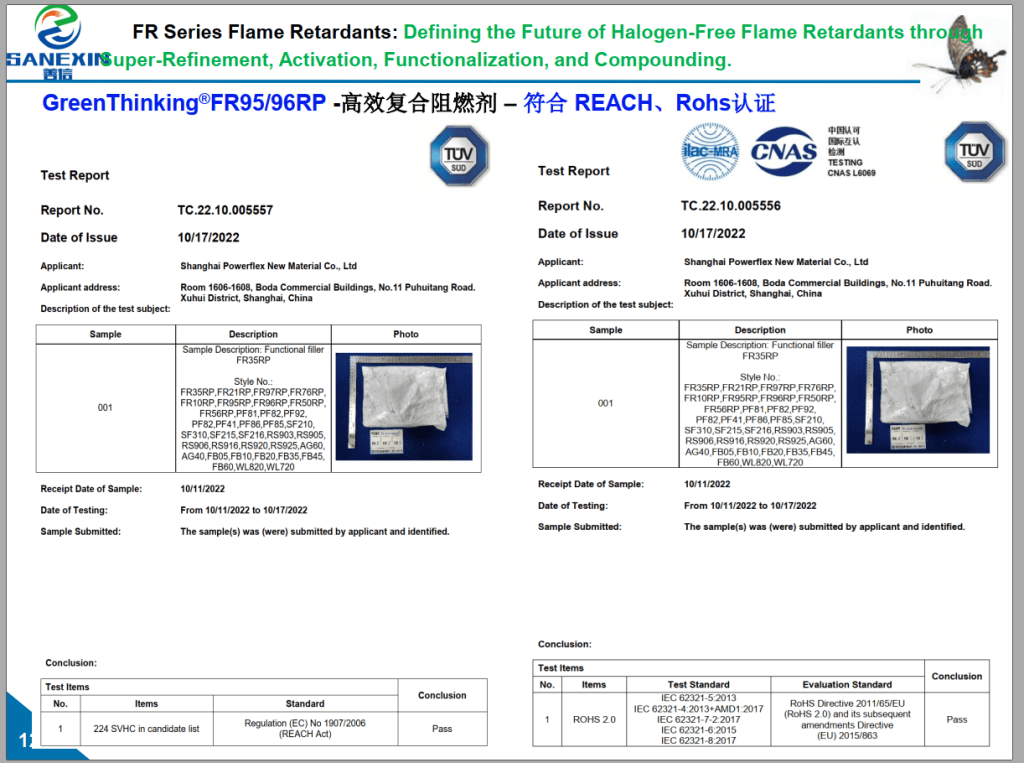
A non halogen flame retardant China supplier is usually asked for three documents: a RoHS declaration, a REACH SVHC statement, and a test report for the flame performance in the customer’s compound. The first two are about the substance, the third is about the part, and they are not interchangeable.
The FR series discussed here is stated as free from polybrominated biphenyls, polybrominated diphenyl ethers, chlorine, fluorine and antimony trioxide, and as compliant with the EU RoHS and WEEE directives and with REACH. Mature EPDM formulations built on the series have passed UL certification according to our own documentation.
For rail work, the relevant framework is EN 45545, which classifies a part by requirement level R1 to R23 depending on the vehicle category and the part location, and assesses smoke density, smoke toxicity and heat release together. A material cannot be declared EN 45545 compliant in the abstract; the classification belongs to the part. That is why the useful question to a flame retardant rubber compound supplier is not “is it EN 45545 approved” but “which R classification did the part achieve, at what thickness, in which test laboratory”.
One more regulatory point deserves a line, because it is the reason the whole category exists. Antimony trioxide is classified as a substance of concern in several jurisdictions and is also a listed declarable substance in the automotive GADSL list, which means a part containing it has to be declared. A flame retardant replacing antimony trioxide is therefore often a compliance project rather than a performance project, and in that case the requirement is to match the existing flame performance at the existing loading, not to improve it.
Cost, per kilogram of compound
A flame retardant at 100 phr is roughly a third of the compound, so the cost calculation is simple and often done wrong.
The first term is the cost of the flame retardant itself, multiplied by its loading. The second term is the effect on density, because a denser compound makes more expensive parts per unit volume. The third term, which usually dominates, is the effect on cycle time: a cure that takes 221 seconds instead of 112 seconds costs more per part than the difference in flame retardant price will ever recover.
That is why the FR99RP case is easier to justify commercially than its lower oxygen index suggests. If the part is a seal, a gasket or a belt cover, the cure time and the compression set are the cost drivers, and the oxygen index is a specification line that either passes or does not. If the part is a cable jacket with an oxygen index line at 40, the FR98RP case is the one that passes, and the slower cure is the price of the specification.
FAQ
How to reach UL94 V0 in an EPDM compound
Load a halogen-free composite at 80 to 100 phr and confirm the rating on the thinnest section of the actual part. Both grades in this comparison reached V-0 at 80 and 100 phr in an EPDM 70 Shore A compound, so V-0 is not the hard part. The hard part is keeping the cure state, the tensile strength and the compression set while doing it.
Why does a flame retardant slow down cure
Because a mineral filler at 30 percent of the compound adsorbs accelerators and dilutes the rubber phase, and because the filler surface can immobilise part of the cure system. The measurable symptom is a fall in MH minus ML for the same accelerator level. In the EPDM 70 Shore A compound here, FR98RP gave 10.18 lbf-in at 100 phr against 13.58 for FR99RP, a 33 percent difference in crosslink development.
How much flame retardant to add to EPDM
Start at 80 phr and test the part, not a plaque. In this work 80 phr reached V-0 in an EPDM 70 Shore A compound, and 100 phr was also tested to show the direction of the property change. Above 100 phr the density and the hardness penalty grow faster than the flame benefit, and the cure state falls further with a gas phase product.
Difference between LOI and UL94 V0
LOI is the minimum oxygen concentration at which a small specimen sustains candle-like burning. UL94 V-0 is a vertical burn test that judges afterflame time, afterglow and whether drips ignite a cotton pad. A char-forming material can pass V-0 at a lower LOI than a gas phase material, and a high LOI material can still fail V-0 by dripping.
Why does a brominated flame retardant produce black smoke
Because it works in the gas phase by releasing hydrogen halide, and the halogen leaves the material as corrosive, toxic smoke. Incomplete combustion of the polymer also produces carbon particles, and the aromatic content of the compound adds to it. The alternative is a char-forming halogen-free system, which keeps more of the carbon in the residue instead of in the plume.
How to keep compression set when adding flame retardant
Choose the grade that does not depress the cure state, and check compression set at the service temperature rather than at a single standard condition. In this work compression set at 120 C for 24 hours was 52.94 percent with FR98RP against 31.43 percent with FR99RP, at the same 100 phr loading in the same compound.
Flame retardant for a cable jacket compound
Choose on oxygen index first, because cable specifications usually carry an LOI line and the jacket is not a sealing part. FR98RP at 42.3 percent in EPDM 70 Shore A is the grade for that requirement. Accept the slower cure and the lower tensile strength, and do not use the cable grade for a gasket.
How to replace antimony trioxide in a rubber compound
Match the existing flame performance at the existing loading before optimising anything else. Antimony trioxide is a synergist, so it is usually paired with a halogen donor, and removing it means removing the whole system rather than one ingredient. Expect to re-verify V-0 on the part, because the mechanism of the replacement is different from the mechanism being replaced.
Why does a flame retardant reduce tensile strength
Partly because it dilutes the rubber, and partly because it depresses the cure state. The two are separable: if tensile strength falls as loading rises while MH minus ML also falls, the dominant effect is cure interference, and changing to a product that does not interfere recovers most of the loss. In this comparison the FR99RP compound held 9.32 MPa at 100 phr where the FR98RP compound fell to 6.35 MPa.
What is an intumescent char and why it matters
It is a swollen, porous carbonaceous layer that forms on the surface during burning and insulates the polymer underneath from heat and oxygen. It matters because it is what allows a material to pass a vertical burn test at a moderate oxygen index, and because it is the mechanism that produces the soot and the bulky residue that some applications cannot accept.
Flame retardant for NBR fuel hose cover
Evaluate it in nitrile rather than transposing an EPDM result. In the NBR 70 Shore A compound here the cure time reversed: FR98RP cured in 79 seconds against 94 for FR99RP, the opposite of the EPDM result. Both reached V-0, with oxygen index at 37.8 and 32.6 percent respectively.
How to test flame retardancy of a rubber compound
Test the finished part geometry, at the thinnest section, and report the specimen thickness with the result. A plaque result is a screening result. For cable and rail, add smoke density and toxicity because a V-0 rating says nothing about either.
How to choose between ATH and a composite flame retardant
Aluminium hydroxide is cheap and works by endothermic decomposition and water release, but it has to be loaded at 150 phr or more, which destroys most physical properties. A composite at 80 to 100 phr does the same job with less property loss, at a higher price per kilogram. Compare them on cost per kilogram of compound at equal flame performance, not on price per kilogram of additive.
What does EN 45545 require for rubber parts
It classifies the part, not the material, by requirement level depending on the vehicle category and the location of the part, and assesses smoke density, smoke toxicity and heat release. Ask a supplier for the R classification achieved, the thickness tested and the laboratory, because a material level claim does not transfer to a new part geometry.
How to keep flame retardant from blooming
Disperse it properly, cure it fully, and do not overload it. A bloom is an ingredient present above its solubility limit, and at 30 percent loading a flame retardant is well past that limit, so the dispersion quality and the cure state are what keep it in place. If a bloom appears after storage rather than after cure, check the storage temperature before changing the formulation.
Technical support
Flame retardant selection is a four variable problem: the polymer, the loading, the thickness of the part and the test the part has to pass. Send us the polymer, the current formulation, the test and the thickness, and we will tell you which of the two mechanisms your specification is actually asking for. If the answer is that you need a high oxygen index and a low compression set at the same time, the honest answer is that no single loading delivers both.
Why Work With SaneZenChem?
What Makes SaneZen Different from Other Flame Retardant Suppliers?
Choosing a functional filler supplier is not merely about purchasing a mineral powder. It means selecting a technology partner that understands polymer compounding, physical failure mechanisms, and long term product performance.
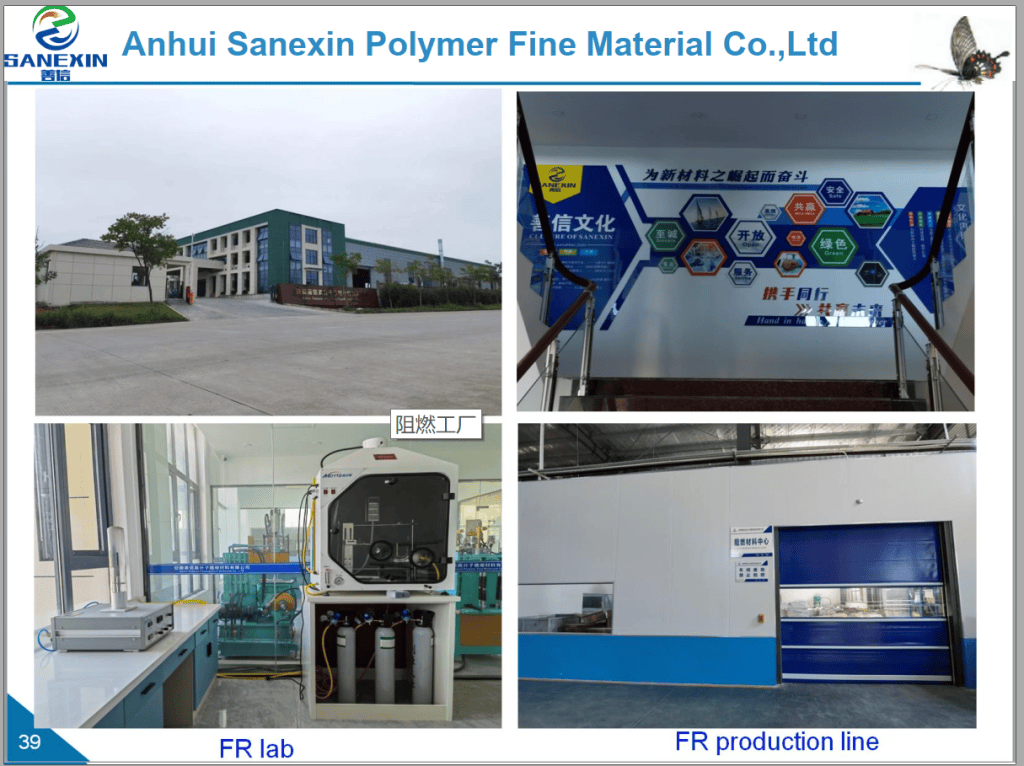
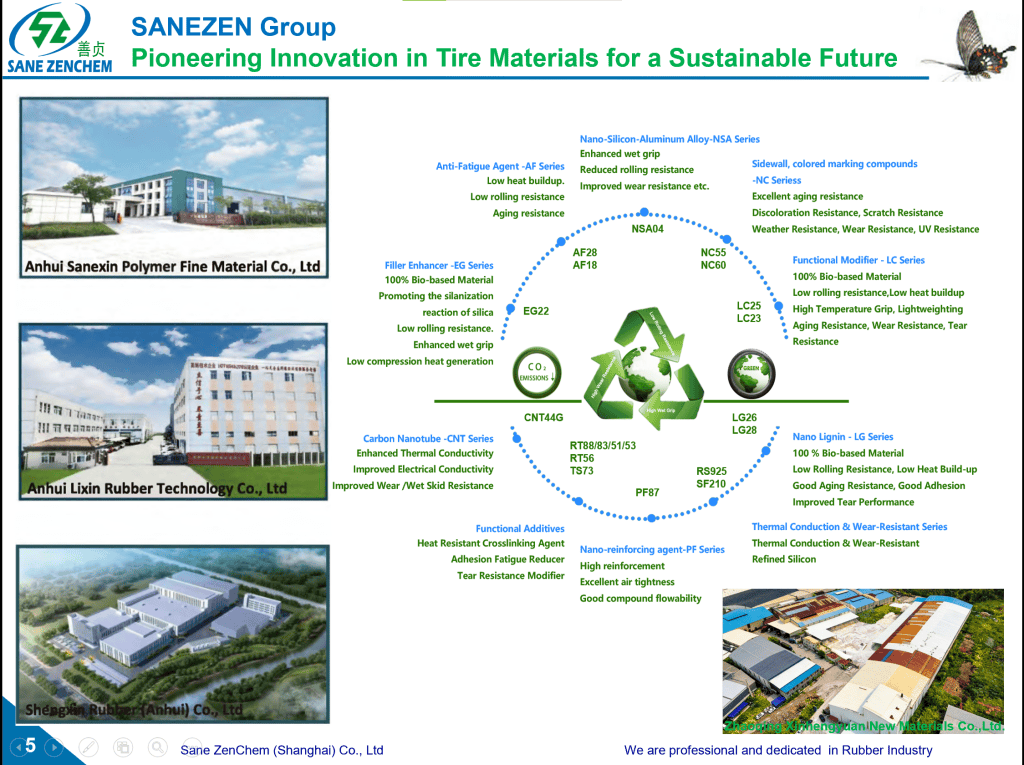
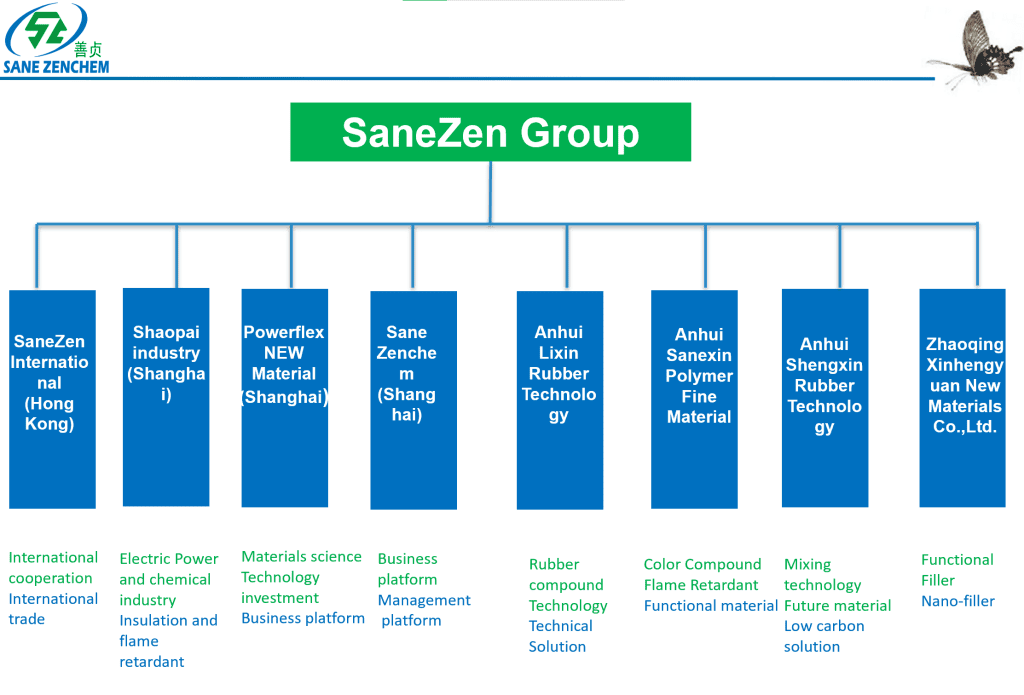
SaneZen (SaneZenChem) is precisely such a partner – we are not only a high performance halogen free flame retardant factory, but also a specialty chemical supplier with practical compounding experience in rubber and silicone rubber production. We are a rubber flame retardant additive manufacture that produces and validates its own products, a UL94 V0 halogen free flame retardant supplier with proven V 0 formulations, and a low smoke flame retardant manufacturer dedicated to real fire safety.
8.1 Dual Identity: We Are Both a Compounder and a Flame Retardant Manufacturer
SaneZen operates five major manufacturing divisions:
- Rubber compounds
- Silicone rubber compounds
- Specialty functional fillers
- High efficiency environmentally friendly flame retardants
- Polymer performance additives
What Does This Dual Identity Mean for You?
Because SaneZen itself continuously produces and develops rubber and silicone rubber products, our flame retardant products – including the GreenThinking® FR series – originate from solving real production issues, rather than remaining merely at the laboratory concept stage.
This application driven R&D approach enables us to develop practical solutions that deliver measurable improvements in customer products – from eliminating viscosity spikes during processing and preventing micro crack formation, to ensuring high dielectric strength in demanding electrical environments.
8.3 FR Series – Born from Production Practice
The development of FR series was no accident. During SaneZen’s own rubber compounding production, the R&D team had long faced a core challenge: how to enable EPDM, NBR, and other rubber products to consistently achieve a UL94 V0 flame retardant rating without sacrificing processing efficiency and mechanical properties?
Conventional halogen free flame retardant solutions typically meant:
- Substantially higher mixing energy consumption
- Significantly prolonged curing times
- Drastic reductions in tensile strength and rebound resilience
- Rough product surfaces and unstable dimensions
- High batch to batch performance variability
It was precisely these real, frontline, persistent production pain points that drove the R&D direction of FR series – not pursuing excellence in a single metric (such as LOI value), but rather pursuing optimal balance of overall performance.
Contact
Plant address: No. 6, Xinqing Road, North Economic Development Zone, Xuanzhou District, Xuancheng City, Anhui Province, China
Commercial address: Room 1606-1608, Boda Commercial Building, No. 11 Puhuitang Road, Xuhui District, Shanghai, China 200030
Tel: +86 21 6487 9251
Email: yorichen@sanezen.com
Website: www.sanezenrubber.com
The flame retardants discussed on this page are supplied as the GreenThinking FR series by SaneZenChem, a flame retardant rubber compound supplier working with cable, rail, conveyor, automotive and general rubber producers.
is done.
 English
 Spanish
 Russian