Introduction: Challenges and Technological Breakthroughs in Rubber Materials
In the modern rubber industry, tires and anti-vibration components face increasingly stringent performance requirements. Tires must balance rolling resistance, wear resistance, and wet grip—the so-called “magic triangle” of performance. Anti-vibration components must maintain stable dynamic mechanical properties across a wide temperature and frequency range while ensuring long-term durability. As a leading rubber additive manufacturer with deep expertise, Shanghai Powerflex New Material Co., Ltd. addresses these challenges by developing advanced solutions that serve as a reliable tire compound additive and beyond.
Natural rubber (NR), with its excellent mechanical properties and low hysteresis, is the material of choice for these high-end applications. However, NR still generates significant heat under dynamic load and is susceptible to reversion during prolonged service, leading to degradation of the crosslink network and a decline in physical properties. Addressing these issues from a material science perspective has been a long-standing pursuit for rubber compound formulators. Understanding how to reduce heat generation in tire belt compound is a critical question, and our research provides effective answers.
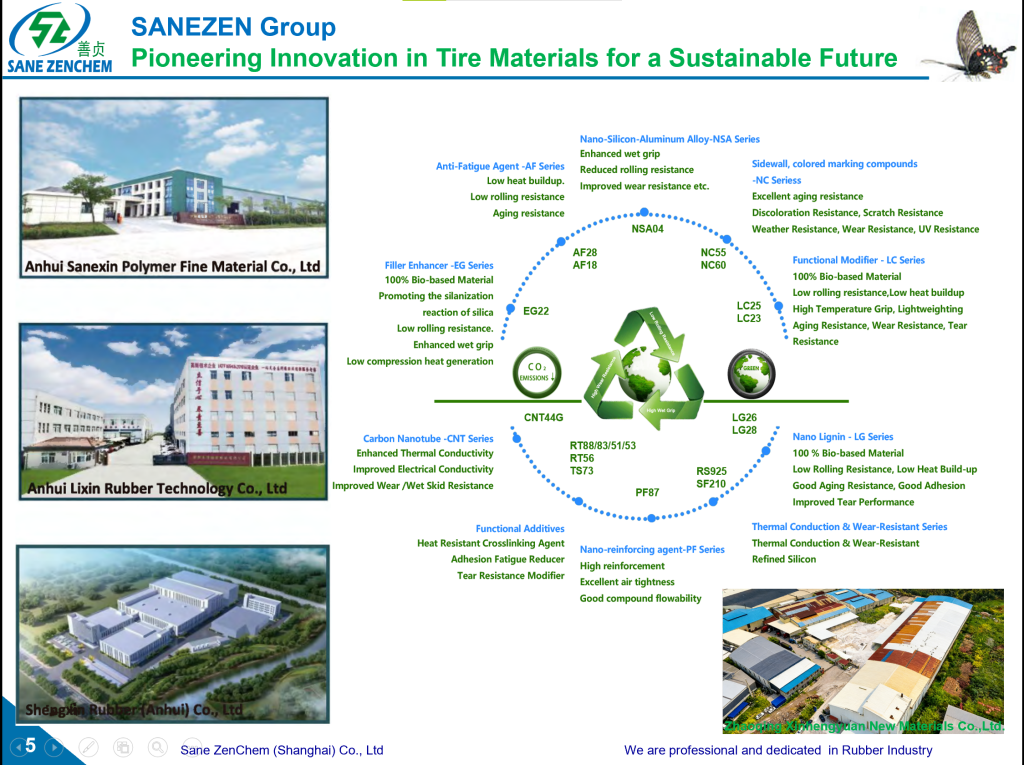
Shanghai Powerflex New Material Co., Ltd. (a Sanezen Group company), leveraging its profound understanding of rubber compounding and mixing technology, has successfully developed two high-performance anti-fatigue agents: AF27 and AF28. These products exemplify the capabilities of Special Rubber chemical Manufacturers who prioritize innovation and quality. This article provides an in-depth analysis of the technical advantages and application value of these two products from multiple dimensions, including molecular structure design, mechanism of action, experimental validation, and application case studies.
I. Molecular Design and Mechanism of Action: From Chain-End Modification to Interface Enhancement
1.1 Molecular Structure Characteristics of Hydrazide Compounds
The core components of AF27 and AF28 are hydrazide compounds, whose molecular structure features a highly reactive hydrazide group (-CONHNH₂). This group exhibits two key characteristics:
- Reactivity with Rubber Molecular Chain Ends: The chain ends of natural rubber molecules contain active groups such as aldehydes. The hydrazide group can undergo condensation reactions with these groups, grafting functional molecular segments onto the rubber chain. This makes AF27 and AF28 effective as a natural rubber compound additive that enhances the base polymer’s performance.
- Strong Interaction with Carbon Black Surfaces: The hydrazide group can form hydrogen bonds or chemical bonds with oxygen-containing functional groups (e.g., carboxyl, quinone groups) on the carbon black surface, enhancing the rubber-filler interface bonding.
1.2 Mechanism of Molecular Chain End Modification
In traditional rubber reinforcement systems, carbon black bonds to rubber through physical adsorption, which is prone to “dewetting” under dynamic load, leading to increased hysteresis loss. The mechanism of AF27/AF28 is as follows:
- Stage 1: During mixing, AF27/AF28 molecules are uniformly dispersed in the rubber matrix as a specialized rubber compounding chemical.
- Stage 2: The hydrazide groups react with the aldehyde groups at the chain ends of natural rubber molecules, grafting functional segments onto the rubber chains.
- Stage 3: The hydrazide groups form strong interactions with functional groups on the carbon black surface, creating a “rubber-additive-carbon black” ternary coupling structure.
- Stage 4: This coupling structure significantly reduces the number of free chain ends, thereby decreasing friction and heat generation between molecular chains. This is a prime example of a rubber additive to reduce rolling resistance through molecular engineering.
1.3 Mechanism of Reversion Inhibition
Reversion refers to the phenomenon where polysulfidic bonds in the vulcanizate break and the crosslink network degrades under high temperature or prolonged service conditions. Its macroscopic manifestations include decreased physical properties and increased permanent set.
AF27/AF28 inhibit reversion through the following mechanisms:
- Stabilization of Polysulfidic Bonds: Hydrazine compounds can form complexes with zinc oxide. These complexes can stabilize the polysulfidic bonds in the vulcanizate, reducing their thermal decomposition rate. This action positions them as an effective anti reversion agent for nr based rubber compounds.
- Crosslink Network Compensation: Under high-temperature conditions, some broken polysulfidic bonds can reform into crosslinked structures with the participation of additive molecules.
- Retardation of Thermal-Oxidative Aging: The hydrazide group possesses some capacity for capturing free radicals, which can delay the chain reactions during thermal-oxidative aging.
II. Application of AF28 in Tires: From Laboratory to Industrial Validation
2.1 Technical Challenges of Tire Belt Compounds
The belt is a critical load-bearing component in radial tires. Its main functions include:
- Tightening the carcass to increase tire rigidity.
- Reducing tire deformation to improve the contact patch.
- Providing a cushioning effect to enhance comfort.
In service, the belt, especially its edges, experiences significant shear stress and generates substantial heat. Located in the shoulder area, heat dissipation from the belt is slow. Prolonged exposure to high temperatures leads to thermal aging of the compound, reduced tensile strength, decreased adhesion to steel cord, and ultimately issues like belt edge separation and shoulder separation, severely impacting tire durability and safety. Formulators constantly seek how to extend tire service life with anti fatigue agent to overcome these issues.
2.2 Small-Scale Mixing Experiments: Performance Comparison with Different Dosages
The research team at Qingdao Doublestar Tire Industry Co., Ltd. systematically evaluated the application effect of AF28 in belt compounds. Base formula (phr): NR 100, Carbon Black N660 59, Insoluble Sulfur OT-20 3.2, Accelerator TBBS 0.8, Others 7.3. AF28 was added at 0, 0.5, 1, 1.5, and 2 phr to the base formula, designated as compounds 1#-5#. The goal was to demonstrate AF28’s capability as an additive to improve tire endurance performance and as a low rolling resistance tire tread additive in relevant applications.
2.2.1 Vulcanization Characteristics Analysis
| Property | 1# | 2# (0.5 phr) | 3# (1.0 phr) | 4# (1.5 phr) | 5# (2.0 phr) |
| Mooney Viscosity ML(1+4)100℃ | 65 | 76 | 83 | 88 | 90 |
| Mooney Scorch Time t5 (127℃)/min | 22.06 | 24.36 | 23.10 | 20.62 | 19.71 |
| FL (dN·m) | 2.1 | 2.5 | 2.8 | 3.0 | 3.2 |
| Fmax (dN·m) | 18.5 | 19.2 | 20.1 | 20.8 | 20.5 |
| Fmax-FL (dN·m) | 16.4 | 16.7 | 17.3 | 17.8 | 17.3 |
Data Analysis:
- Mooney viscosity increases significantly with AF28 dosage, indicating increased bound rubber content and enhanced rubber-carbon black interaction.
- Fmax-FL (an indicator of crosslink density) peaks at 1.5 phr and then slightly decreases, suggesting an optimal dosage range.
- Scorch time is prolonged at low dosages but shortened at high dosages, providing reference for production process adjustments.
2.2.2 Physical and Mechanical Properties
| Property | 1# | 2# | 3# | 4# | 5# |
| Shore A Hardness / deg | 59 | 60 | 61 | 62 | 61 |
| Modulus at 100% Elongation / MPa | 3.2 | 3.5 | 3.8 | 3.8 | 3.5 |
| Modulus at 300% Elongation / MPa | 14.0 | 14.8 | 15.7 | 15.6 | 14.8 |
| Tensile Strength / MPa | 21.7 | 21.2 | 22.2 | 21.5 | 21.3 |
| Elongation at Break / % | 437 | 413 | 420 | 404 | 415 |
| Tear Strength / (kN·m⁻¹) | 50 | 47 | 44 | 44 | 46 |
Data Analysis:
- Modulus increases significantly with AF28 addition, indicating increased compound rigidity, which is beneficial for improving steel cord pull-out force and addressing the need to improve rubber to steel cord adhesion strength.
- Tensile strength is optimal at 1 phr, suggesting that an appropriate amount of AF28 optimizes the crosslink network structure.
- Tear strength decreases slightly, possibly due to increased crosslink density, but remains within an acceptable range.
2.2.3 Dynamic Mechanical Properties
| Property | 1# | 2# | 3# | 4# | 5# |
| Tg / ℃ | -45.16 | -44.10 | -44.55 | -44.36 | -44.23 |
| tanδ at 60℃ | 0.057 | 0.047 | 0.051 | 0.046 | 0.043 |
| Rebound Resilience / % | 61 | 62 | 62 | 64 | 65 |
| Compression Heat Buildup / ℃ | 18.47 | 18.19 | 18.07 | 16.39 | 17.58 |
Data Analysis:
- tanδ at 60℃ (an indicator of rolling resistance) decreases with increasing AF28 dosage, with a maximum reduction of 24.6%. This confirms AF28 as a highly effective rubber chemical to reduce hysteresis loss.
- Compression heat buildup is lowest at 1.5 phr, with a reduction of 11.3%, making AF28 suitable for formulating a low heat build up rubber compound for tires.
- Rebound resilience increases, indicating reduced hysteresis loss.
2.3 Large-Scale Mixing Experiments: Industrial Validation
Based on the small-scale experiment results, 1 phr AF28 was selected for large-scale mixing validation and compared with the production compound.
2.3.1 Vulcanization Characteristics
| Property | Production Compound | Test Compound |
| Mooney Viscosity ML(1+4)100℃ | 83 | 85 |
| Mooney Scorch Time t5 (127℃)/min | 20.31 | 20.15 |
| FL/(dN·m) | 3.1 | 3.5 |
| Fmax/(dN·m) | 28.5 | 27.7 |
| Fmax-FL/(dN·m) | 25.4 | 24.2 |
2.3.2 Adhesion Properties to Steel Cord
| Property | Production Compound | Test Compound |
| Initial Adhesion (Minimum Value) / N | 350 | 401 |
| Initial Adhesion (Average Value) / N | 416 | 448 |
| Adhesion After Aging (Minimum Value) / N | 335 | 413 |
| Adhesion After Aging (Average Value) / N | 399 | 438 |
Mechanism Analysis: The addition of AF28 enhances the adhesion strength between rubber and steel cord. This is attributed to its ability to stabilize polysulfidic bonds within the interfacial layer. In the Cu₂S layer formed at the adhesion interface, sulfur atoms interact with sulfur bonds in the rubber, forming a Cu₂S-Sy-rubber structure. The hydrazide compound, in conjunction with zinc oxide, stabilizes the S-S bonds near the interface, allowing for uniform stress distribution and improved adhesion strength. These results highlight AF28’s value as an additive to reduce rolling resistance in passenger car tires while also improving durability.
2.3.3 Finished Tire Performance
| Property | Production Tire | Test Tire | Enterprise Standard |
| High-Speed Performance Test Time / min | 95 | 101 | ≥80 |
| Endurance Test Total Time / h | 115 | 128 | ≥53.5 |
The test tire showed high-speed performance comparable to the production tire and a 12.5% improvement in endurance performance. X-ray, dynamic balance, and uniformity tests showed no abnormalities. This demonstrates the effectiveness of AF28 as an anti fatigue agent for natural rubber compounds in demanding tire applications.
III. Application of AF27 in Anti-Vibration Components: Reducing Dynamic-to-Static Stiffness Ratio
3.1 Technical Requirements for Anti-Vibration Components
Key performance indicators for anti-vibration components (e.g., engine mounts, rail pads, equipment isolators) include:
- Dynamic-to-Static Stiffness Ratio (Kd/Ks): A lower ratio indicates better vibration isolation effectiveness.
- Dynamic Heat Generation: Lower heat generation leads to longer service life.
- Aging Resistance: Retention of performance during long-term service.
3.2 Mechanism of Action of AF27
AF27, like AF28, is a hydrazide compound but with slight molecular structural differences that make it more suitable for anti-vibration applications:
- Milder Chain-End Modification: Has a lesser impact on crosslink density.
- More Balanced Interface Enhancement: Improves rigidity while maintaining good elasticity.
- Optimization of Dynamic-to-Static Stiffness Ratio: Reduces dynamic stiffness by modulating the loss factor. This positions AF27 as a unique rubber additive to reduce dynamic stiffness ratio.
3.3 Application Effect Comparison
In an NR/N330/N774 system with the addition of 1.2 phr AF27, the test results were as follows:
| Property | Without AF27 | With AF27 | Change Rate |
| Static Stiffness Ks / N·mm⁻¹ | 107 | 114 | +6.5% |
| Dynamic Stiffness Kd / N·mm⁻¹ | 156 | 153 | -1.9% |
| Dynamic-to-Static Stiffness Ratio Kd/Ks | 1.46 | 1.34 | -8.2% |
Result Analysis:
- AF27 slightly increases static stiffness, which can be beneficial for load-bearing capacity.
- Dynamic stiffness decreases slightly, reducing transmissibility under dynamic load.
- The dynamic-to-static stiffness ratio is significantly reduced, indicating improved vibration isolation performance. This confirms AF27’s role as a valuable rubber additive to reduce dynamic stiffness ratio for anti-vibration applications.
IV. Differentiated Application Guide for AF27 and AF28
| Feature | AF27 | AF28 |
| Molecular Design Feature | Mild chain-end modifier | Potent interface coupling agent |
| Effect on Crosslink Density | Minor | Moderate |
| Modulus Enhancement | +5-10% | +10-15% |
| Effect on Tensile Strength | Largely unchanged | Optimal at 1 phr |
| Effect on tanδ at 60℃ | -5-10% | -15-25% |
| Effect on Compression Heat Buildup | -5-8% | -10-20% |
| Effect on Kd/Ks Ratio | -8-12% | -3-5% |
| Effect on Adhesion Strength | Moderate improvement | Significant improvement |
| Recommended Applications | Anti-vibration mounts, rail pads, industrial rubber goods | Tire belts, treads, power transmission belts |
| Recommended Dosage Range | 1.0-1.8 phr | 1.0-1.6 phr |
Both AF27 and AF28 are products developed by leading Special Rubber chemical Manufacturers China, ensuring high quality and consistency.
V. Customer Value: From Performance Enhancement to Total Cost Optimization
5.1 Technical Value
- Performance Breakthrough: Overcomes limitations of traditional reinforcement systems, achieving a combination of low heat generation, high resilience, and aging resistance. As a result, they serve as an exceptional rubber anti fatigue agent for demanding applications.
- Formula Simplification: Reduces the need for multiple additive combinations, simplifying the compounding system.
- Process Stability: Controlled impact on scorch time, suitable for industrial production.
5.2 Economic Value
- Extended Service Life: Tire endurance improved by 12.5%, service life of anti-vibration components extended by 20-30%. This directly addresses how to extend tire service life with anti fatigue agent.
- Reduced Energy Consumption: Lower rolling resistance contributes to improved fuel efficiency.
- Reduced Rework: Anti-reversion characteristics lower the scrap rate.
5.3 Environmental Value
- Nitrosamine-Free: Compliant with EU REACH and RoHS regulations.
- Low Carbon Emissions: Reduced rolling resistance lowers CO₂ emissions.
- Resource Conservation: Extended product life reduces resource consumption.
VI. Our Comprehensive Advantage: Full Industry Chain Capability from Formulation to Mixing
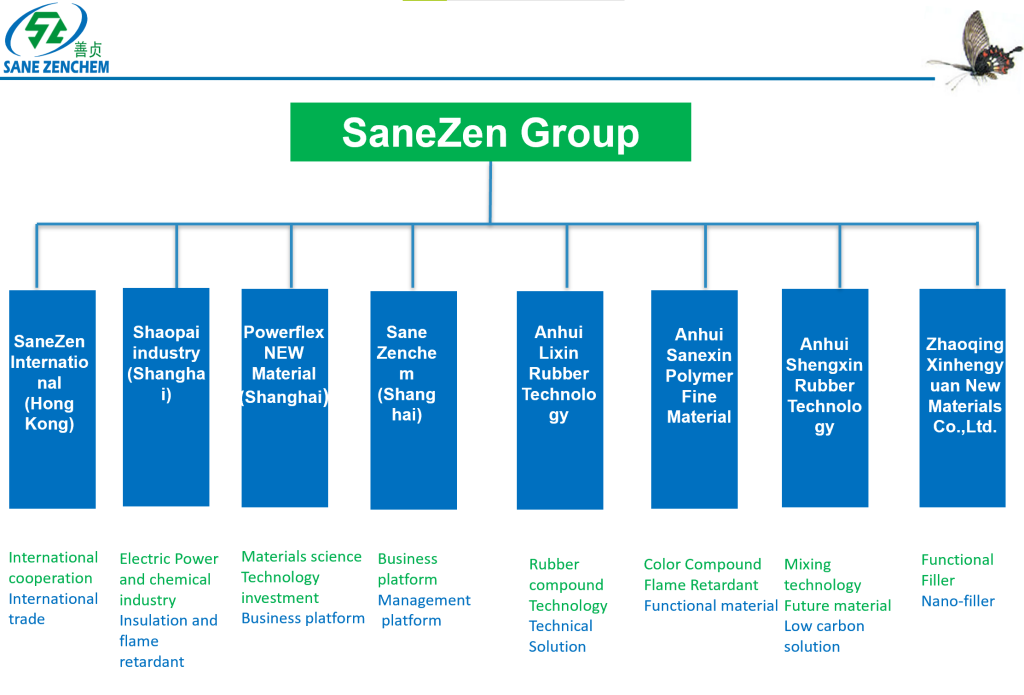
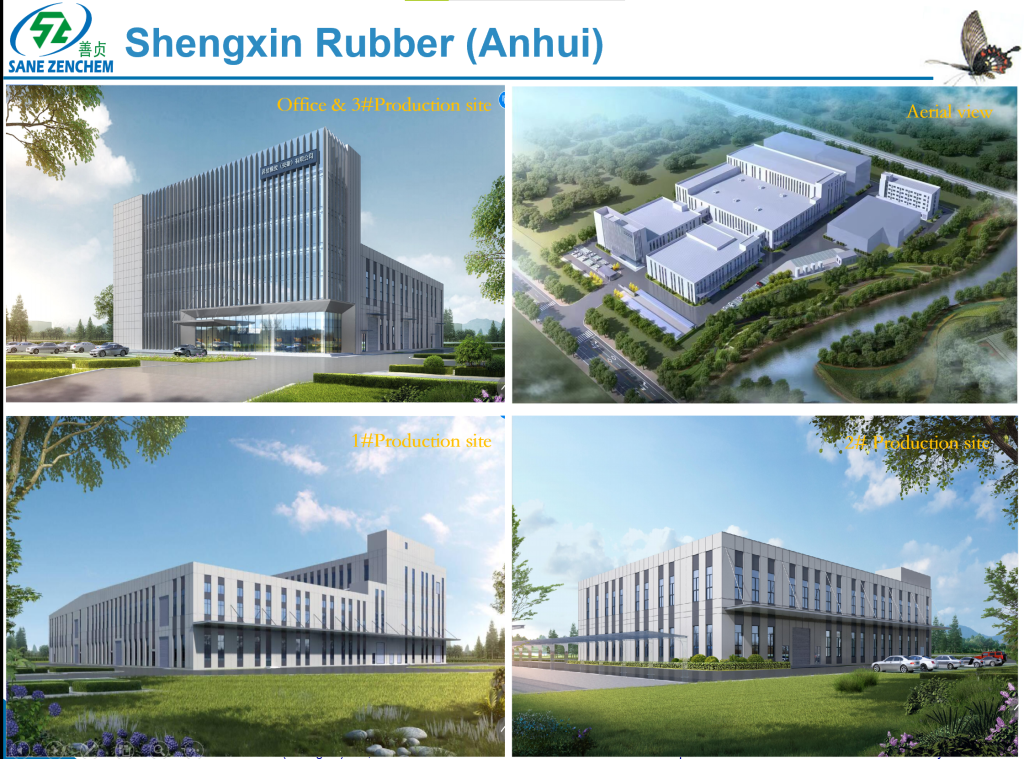
Sanezen Group’s subsidiary, Shengxin Rubber (Anhui) Co., Ltd. , is a leading high-end rubber mixing compound manufacturer in China, possessing the following core advantages:
6.1 Scale Advantages
- One of China’s largest mixing compound factories for high-end seals and engineering machinery applications.
- Phase 1: 18 fully automatic mixing lines, with a total planned capacity of 23 lines.
- Annual production capacity exceeds 100,000 tons.
- Includes four specialized mixing workshops: Drop-Dump Mixing, Tilt-Dump Mixing, Specialty Rubber Mixing, and High Environmental Standard Mixing.
6.2 Technical Advantages
- National Level Rubber Mixing Laboratory
- Equipped with advanced mixers like BB-1600IM and XM270.
- Features Alpha Technologies PREMIER series rheometers and Mooney viscometers.
- Includes Netzsch EPLEXOR 500N Dynamic Mechanical Analyzer.
- Equipped with GABOMETER 4000 Compression Heat Buildup Tester.
- Full-process MES Control System
- Digital control from raw material weighing to mixing.
- Every batch is traceable, ensuring industry-leading quality consistency.
- Real-time monitoring of mixing parameters guarantees process uniformity.
6.3 Product Advantages
- Comprehensive Range of Rubber Materials
- Fluoroelastomer (FKM/F FKM), Acrylate Rubber (ACM), Hydrogenated Nitrile Butadiene Rubber (HNBR)
- Epichlorohydrin Rubber (ECO), Nitrile Butadiene Rubber (NBR), Ethylene Acrylate Rubber (AEM)
- Polychloroprene Rubber (CR), Natural Rubber (NR), Ethylene Propylene Diene Monomer (EPDM)
- One-Stop Solution Provider
- From formulation design to custom mixing compound.
- From functional additives to finished product testing.
- From laboratory samples to bulk supply.
6.4 Core Strength: Understanding Formulation is Key to Development
We are more than just an additive supplier; we are a service provider for rubber material solutions. It is precisely because we own our mixing compound factory and handle complex formulation systems daily that we deeply understand:
- What kind of additives truly solve problems.
- How to balance performance and cost.
- How to maintain stability in industrial production.
- How to extract common principles from formulation case studies.
This R&D philosophy, “from practice, for practice,” ensures that our developed products like AF27 and AF28 offer greater practical value and create tangible benefits for our customers. As a trusted Rubber additive Manufacturers and Rubber compound additive manufacturer, we are dedicated to continuous innovation.
VII. Frequently Asked Questions (FAQ)
Q1: Can AF27 and AF28 be used in synthetic rubber systems?
A: AF27 and AF28 are primarily designed for natural rubber, as their mechanism relies on the reaction with aldehyde groups at the chain ends of NR molecules. They are most effective in compounds where NR is the major component (>70%). For synthetic rubbers like SBR or BR, due to different chain-end structures, their reactivity is lower, and they are not recommended for standalone use. However, they can be used in combination with silane coupling agents in NR/SBR/BR blends, where partial effectiveness can still be achieved. This versatility makes them a valuable rubber compounding chemical in hybrid systems.
Q2: Will the addition of AF27/AF28 change the curing rate? How should the accelerator system be adjusted?
A: AF28 at certain dosages (<1.5 phr) can slightly accelerate the curing rate, shortening t90 by 5-10%. AF27 has a minor effect on the curing rate. It is recommended to maintain the original accelerator system for initial trials and make fine-tuned adjustments based on actual rheometer test results. Typically, major formula adjustments are unnecessary. For precise control over scorch safety, scorch inhibitors like CTP can be used in conjunction.
Q3: Will AF27/AF28 affect the low-temperature performance of the compound?
A: Based on DMA test results, the addition of AF27/AF28 leads to a slight increase in Tg (approximately 1-2°C), but its impact on practical low-temperature performance is limited. For applications with critical low-temperature requirements (e.g., winter tires, outdoor vibration isolators), it is advisable to consider the Tg change during formulation design. Low-temperature performance can be balanced by adjusting the plasticizer system or blending with a small amount of BR.
Q4: How to choose the optimal dosage for AF27 and AF28?
A: The optimal dosage depends on the specific application requirements:
- Tire Belt: 1.0 phr recommended for the best balance of adhesion strength, heat generation, and cost. This helps enhance belt compound performance in radial tires.
- Tire Tread: 1.0-1.5 phr recommended; higher dosages yield lower rolling resistance, but wear resistance changes should be monitored.
- Anti-vibration Components: 1.2-1.5 phr recommended for most significant optimization of the dynamic-to-static stiffness ratio.
- High Load-Bearing Products: 1.5-1.8 phr recommended for maximum modulus enhancement.
It is recommended to conduct a dosage gradient study (e.g., 0.5, 1.0, 1.5, 2.0 phr) during new product development to determine the optimal level.
Q5: What is the storage stability of AF27/AF28? Are there special storage requirements?
A: AF27/AF28 exhibit good storage stability under normal, dry, ambient conditions, with a shelf life of 2 years. Store in a cool, dry, and dark place, avoiding moisture and high temperatures. After opening, use promptly and reseal tightly if not fully used. They are compatible with other common rubber chemicals (e.g., accelerators, antidegradants) and can be managed using standard storage practices.
VIII. Conclusion
AF27 and AF28, as a new generation of hydrazide-based anti-fatigue agents, achieve significant improvements in the dynamic mechanical properties of rubber products through a dual mechanism involving natural rubber chain-end modification and rubber-filler interface enhancement. Developed by leading Rubber additive Manufacturers China, these products represent the forefront of Special Rubber chemical Manufacturers innovation.
- AF28 demonstrates excellent effectiveness in tire applications by reducing rolling resistance, lowering heat generation, and improving adhesion strength, resulting in a 12.5% increase in finished tire endurance performance. It serves as a premier tire compound additive and additive to reduce rolling resistance in passenger car tires.
- AF27 effectively reduces the dynamic-to-static stiffness ratio in anti-vibration components, enhancing vibration isolation effectiveness and service life.
- Both products feature reversion inhibition and improved thermal stability, making them suitable for upgrading the performance of high-end rubber products. As a rubber anti fatigue agent, they offer proven benefits for extending product life.
With its comprehensive industry chain advantage, spanning from functional additives to mixing compounds, Sanezen Group provides customers with comprehensive technical support—from formulation design to product customization—helping them gain a competitive edge in the market. Whether you need a natural rubber compound additive or a rubber additive to reduce rolling resistance, our team is ready to assist.
IX. Contact Us
For more information about AF27, AF28, and our other high-performance rubber chemicals, or to discuss how we can help optimize your rubber compounds, please contact us. As a reliable Rubber additive Manufacturers and Rubber compound additive manufacturer, we look forward to partnering with you.
Shanghai Powerflex New Material Co., Ltd. (A Sanezen Company)
Website: www.sanezenrubber.com
WhatsApp: +86 136 7164 1995
Commercial Address:
Room 1606, Boda Commercial Building, No. 11 Puhuitang Road, Xuhui District, Shanghai, China 200030
Tel: 021 6487 9251
Mobile: 136 7164 1995
Email: yorichen@sanezen.com
Factory Address:
Anhui province Xucheng City
Rubber Solution Provider
If you are looking for functional rubber materials that can enhance product performance and reduce overall costs, please contact us. We look forward to partnering with you for a winning future!
 English
  Spanish
  Russian