
In the field of rubber and plastic modification, nanofillers have become core materials for enhancing mechanical properties and optimizing processing performance, thanks to their unique size effects and excellent properties. Particularly in peroxide curing systems, light-colored rubber and plastic products impose stringent requirements on filler whiteness, dispersion, and reinforcement effects. Traditional light-colored fillers often struggle to balance these performance aspects. The emergence of GreenThinking® PF Series PF93 Nanofiller has completely broken industry bottlenecks. With its comprehensive performance advantages, it has become the “legendary” light-colored filler for peroxide systems, providing a brand-new solution for upgrading light-colored products in the rubber and plastics industry. As a trusted rubber reinforcing filler developed by professional rubber reinforcing filler manufacturers, PF93 is widely supplied through reliable rubber reinforcing filler suppliers and manufactured in an advanced rubber reinforcing filler factory, ensuring consistent quality for global customers.
I. Nanofillers: The Core Driving Force for Rubber and Plastic Modification
As the name suggests, nanofillers refer to filling materials with dimensions at the nanometer scale, typically with particle sizes ranging from 1-100 nm. Compared to traditional micron-sized fillers, nanofillers exhibit extremely high specific surface areas and unique physicochemical properties due to their minimal size. They demonstrate irreplaceable excellent performance in rubber and plastics, coatings, electronics, and other fields, becoming the core driving force for advancing material high-performance capabilities. In particular, as a nano reinforcing agent, PF93 represents the next generation of functional filler for rubber, delivering exceptional reinforcement while enabling light-colored formulations.
(A) Core Characteristics of Nanofillers
The unique advantages of nanofillers stem from the surface effects and quantum size effects brought by their nanometer-scale dimensions, which can be summarized into three core characteristics:
1. High Specific Surface Area: Nanometer-scale dimensions significantly increase the specific surface area of fillers, substantially enlarging the contact area with rubber and plastic matrices and surrounding substances. This not only improves the reaction efficiency between fillers and matrices but also accelerates mass transfer rates, laying the foundation for material performance enhancement.
2. Multifunctionality: Nanofillers can be flexibly endowed with various functions such as catalysis, adsorption, conductivity, thermal conductivity, and antibacterial properties through surface modification, doping, and other technical means. This adapts to personalized needs in different fields and expands application scenarios. For example, nano-oxides can improve material heat resistance and UV resistance, while carbon-based nanomaterials can enhance electrical conductivity and mechanical properties. PF93, as a functional filler for rubber, demonstrates this multifunctionality by simultaneously improving reinforcement, whiteness, and processability.
3. Excellent Mechanical Properties: Nanofillers can be uniformly dispersed in rubber and plastic matrices, forming good interfacial bonding with the matrix to effectively transfer stress. This significantly enhances the mechanical properties of composite materials, improving hardness, toughness, wear resistance, and tear resistance, thereby extending product service life. In rubber products, the addition of nanofillers can substantially increase tensile strength and tear strength—this is their core value as reinforcing agents. PF93 serves as an exceptional rubber reinforcing filler that delivers these mechanical benefits while maintaining high whiteness.
(B) Classification of Nanofillers (by Morphology/Dimension)
Nanofillers come in various types. According to their morphology (dimension), they can be divided into three major categories. Fillers of different dimensions have different focuses in performance and application scenarios due to their structural differences. The specific classifications are as follows:
| Dimension | Morphological Description | Typical Examples |
| 0D | Three dimensions in the nanometer scale (particulate) | Nano-silica, nano-zinc oxide, nano-titania, quantum dots |
| 1D | Two dimensions in the nanometer scale (fibrous/tubular) | Carbon nanotubes, nanocellulose, electrospun fibers |
| 2D | Only one dimension in the nanometer scale (layered) | Graphene, montmorillonite, MXene, boron nitride nanosheets |
(C) Core Functions and Performance Enhancement Directions of Nanofillers
In the field of rubber and plastic modification, the core functions of nanofillers are to reinforce and modify matrix materials while optimizing processing performance. Performance enhancement mainly focuses on the following aspects:
1. Mechanical Property Enhancement: This is the most core function of nanofillers. By uniformly dispersing in rubber and plastic matrices, they fill internal defects in the matrix, transfer stress, and improve tensile strength, tear strength, hardness, wear resistance, and toughness—solving the pain point of insufficient mechanical properties in traditional rubber and plastic materials. PF93 acts as a high tensile strength light colored filler for peroxide system silica substitute, delivering superior reinforcement without compromising color.
2. Processing Performance Optimization: High-quality nanofillers can improve the mixing and molding performance of rubber and plastic materials, reduce processing energy consumption, increase production efficiency, and make product surfaces smoother and dimensions more stable, reducing molding defects. PF93 is an easy dispersing nanofiller for peroxide cured EPDM instead of white carbon black, simplifying processing while maintaining excellent performance.
3. Functional Property Endowment: Through targeted selection and modification, nanofillers can endow rubber and plastic materials with special functions such as conductivity, thermal conductivity, antibacterial properties, aging resistance, and high/low temperature resistance. This expands product application scenarios, such as conductive rubber and antibacterial seals.
4. Cost Optimization: Under the premise of ensuring material performance, rational use of nanofillers can replace some high-priced raw materials (such as precipitated silica, carbon black), reduce formulation costs, and decrease raw material usage to achieve energy saving and emission reduction. PF93 is a proven cost effective reinforcing filler for rubber, enabling manufacturers to achieve high performance at lower formulation costs.
II. Application Pain Points of Nanofillers: Key Constraints on the Development of Light-Colored Products in Peroxide Systems
Despite the significant advantages of nanofillers, they still face numerous challenges in practical applications, especially in light-colored rubber and plastic products in peroxide curing systems. These pain points severely constrain industry development, mainly concentrated in the following four aspects:
1. Poor Dispersion, Easy Agglomeration: Nanofillers have extremely high specific surface areas and surface energy, with strong van der Waals forces between particles. During mixing, they easily agglomerate with each other, forming large-sized agglomerates. This not only fails to exert their nano-effects but also becomes defects within the material, leading to decreased mechanical properties and rough surfaces—this is the most core pain point in nanofiller application.
2. Poor Interfacial Compatibility: Nanofillers are mostly inorganic materials, while rubber and plastic matrices are mostly organic materials. The large polarity difference between the two results in weak interfacial bonding, preventing effective combination between fillers and matrices, and easily causing delamination phenomena that affect comprehensive material properties.
3. High Cost: The preparation process of nanofillers is complex, especially for high-performance nanofillers with surface modification. Their production costs remain high, limiting their widespread application in mid-to-low-end rubber and plastic products.
4. Environmental and Health Risks: The extremely small particle size of nanofillers makes them prone to dust generation during production, processing, and use, which may be inhaled by humans and cause potential harm to the respiratory system. Meanwhile, the biological toxicity of some nanofillers has not been fully clarified, potentially causing environmental pollution.
III. The “Combination Punch” for Solving Nanofiller Pain Points: Surface Modification as the Core, Multi-Means Coordination
To improve the agglomeration problem of nanofillers, reduce the Payne effect, and enhance their dispersion and interfacial compatibility in rubber and plastic matrices, the industry generally adopts a “combination punch” strategy, with surface modification as the core and multiple means coordinated for optimization. Specifically, this includes:
1. Preferred Surface Chemical Modification: Changing the surface properties of nanofillers through chemical methods to improve compatibility with organic matrices, while reducing surface energy to inhibit agglomeration. This is currently the most effective modification method, mainly divided into three approaches:
- Silane Coupling Agent Modification: Suitable for inorganic fillers with hydroxyl groups on their surfaces (such as silica, glass fiber, clay, etc.). One end of the silane coupling agent reacts with hydroxyl groups on the filler surface to form strong chemical bonds; the organic functional groups at the other end are compatible with or react with the molecular chains of the rubber and plastic matrix, thereby building a “bridge” between filler and matrix to enhance interfacial bonding and improve dispersion.
- Surface Grafting Modification: Polymer chains with structures similar to the matrix polymer are chemically grafted onto the surface of nanofillers. These polymer chains can entangle with matrix polymer molecular chains to form strong interfacial interactions. Meanwhile, the steric hindrance effect of polymer chains is utilized to prevent filler particles from approaching each other, effectively inhibiting agglomeration.
- Polymer Coating Modification: Using block copolymers or surfactants to physically adsorb and coat the surface of nanofillers, forming an organic coating layer. The steric hindrance effect of the coating layer stabilizes filler particles while improving compatibility with organic matrices. This method has simple processes and lower costs, with broad applicability.
2. Application of High Shear Force: During mixing, by optimizing the parameters of mixing equipment (such as internal mixers, open mills), sufficient high shear force is applied to break the initial agglomerates of nanofillers, allowing filler particles to be uniformly dispersed in the rubber and plastic matrix.
3. Use of Dispersion Aids: Adding dedicated dispersion aids (such as dispersants, compatibilizers) reduces the interaction forces between nanofiller particles while improving compatibility with the matrix, assisting in improving dispersion effects and reducing agglomeration.
4. Overall Process Optimization: Optimization is carried out from multiple links including formulation design, mixing sequence, and molding temperature. For example, using a “stepwise mixing” method where nanofillers are first pre-mixed with dispersion aids before being mixed with the rubber and plastic matrix, further improving dispersion uniformity and reducing the Payne effect.
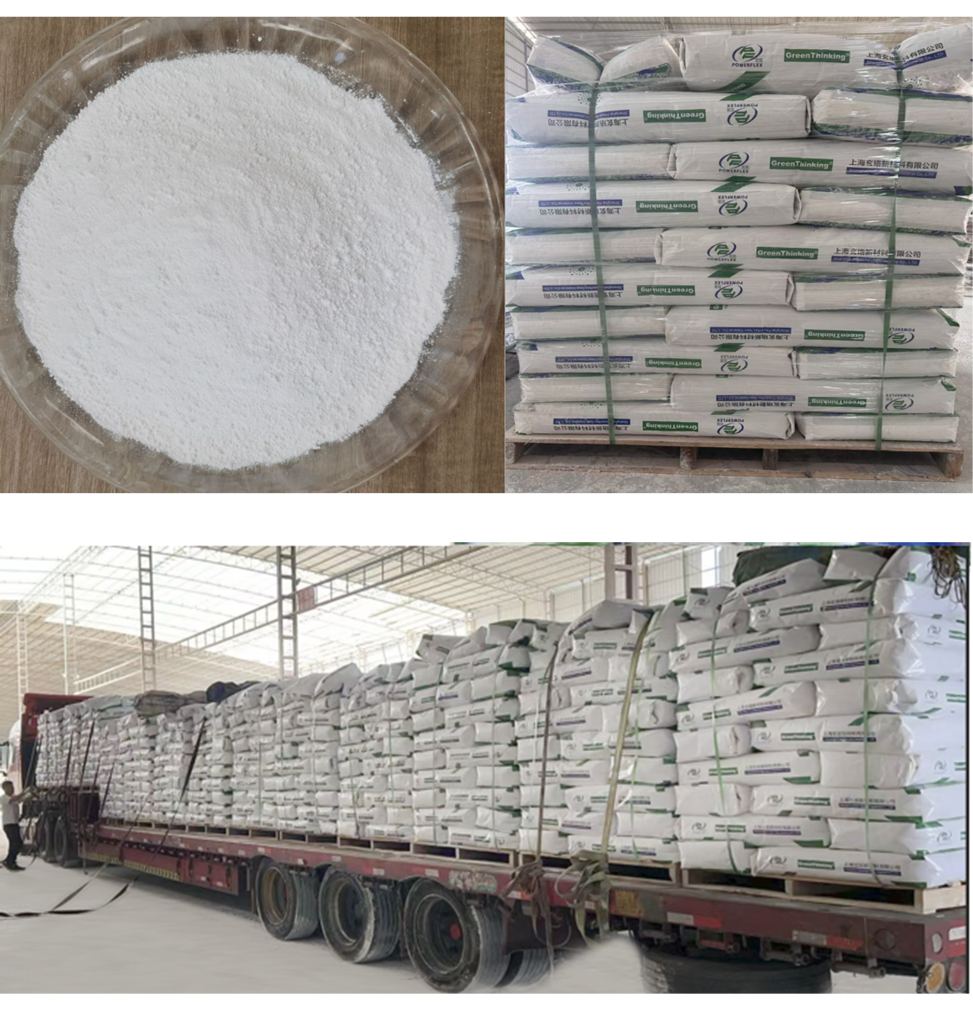
IV. PF93 Nanofiller: The “Legendary” Light-Colored Filler for Peroxide SystemsFacing the pain points of light-colored rubber and plastic products in peroxide systems, GreenThinking® PF Series PF93 Nanofiller was developed. This product selects high-whiteness natural composite mineral raw materials and undergoes strict internal quality control and precision processing. It not only possesses the core advantages of nanofillers but has also been specifically optimized for the characteristics of peroxide systems. The majority of particles are distributed at the nanometer scale and have undergone professional activation treatment, perfectly solving the problems of poor dispersion, weak reinforcement, and insufficient whiteness of traditional light-colored fillers. It has become the benchmark product for light-colored fillers in peroxide systems. As a high whiteness filler for colored rubber, PF93 enables brilliant, consistent colors without yellowing, making it the preferred choice among Rubber Functional filler Manufacturers China for high-end applications.
(A) Core Product Characteristics of PF93 Nanofiller
High Purity and Stable Particle Size:
Using high-whiteness natural composite mineral raw materials, through refined processing and strict quality control, the product has uniform chemical purity and stable particle size distribution. The nanometer-scale particle size is uniform, fundamentally reducing agglomeration risks and ensuring full utilization of its nano-effects.
Professional Activation Treatment:
Through exclusive surface activation and modification processes, the surface properties of the filler are optimized, substantially improving interfacial compatibility with rubber and plastic matrices while reducing surface energy to effectively inhibit agglomeration and reduce the Payne effect, ensuring uniform dispersion of fillers in the matrix.
High Whiteness and Easy Coloring:
The product itself has extremely high whiteness, free from impurity contamination, and will not affect the appearance of light-colored rubber and plastic products. Meanwhile, it has excellent coloring performance, adapting to the production needs of various colored rubber and plastic products. It is the ideal filler exclusively for colored rubber compounds. PF93 serves as a high whiteness filler for colored rubber, providing a clean base that enables vibrant, consistent colors.
Environmental Safety:
Using natural mineral raw materials, the production process is green and environmentally friendly, with no harmful gases or pollutant emissions. The product itself is non-toxic and does not produce harmful dust during processing and use, balancing environmental friendliness and human health. It conforms to the environmental development trends of the modern rubber and plastics industry.
(B) Measured Performance of PF93 in NBR Peroxide Systems: Data Proving Advantages
To verify the performance of PF93 nanofiller in peroxide systems, we used NBR (Nitrile Butadiene Rubber) peroxide curing system as the test object. Through standard compounding processes and physical property testing, compared with traditional light-colored fillers, the advantages of PF93 are prominent in both processing performance and product physical properties. Specific test results are as follows:
1. 基础配方 / Basic Formulation
| 原材料 / Material | 用量 / phr |
| 金浦英萨 NBR3340 / Jinpu Yingza NBR3340 | 100 |
| 白炭黑135 / Silica 135 | 20 |
| PF93 / PF93 | 60 |
| 间接法氧化锌 / Zinc Oxide (Indirect Method) | 5 |
| 硬脂酸 / Stearic Acid | 1 |
| 防老剂 KY445 / Antioxidant KY445 | 1 |
| 加工助剂 1900 / Processing Aid 1900 | 1 |
| 脱模剂 985P / Mold Release Agent 985P | 1 |
| 填料分散剂 FL / Filler Dispersant FL | 1 |
| 稳定剂 PEG4000 / Stabilizer PEG4000 | 4.5 |
| 过氧化二异丙苯 DCP-40C / Dicumyl Peroxide DCP-40C | 4.5 |
| 助交联剂 PL400/70 / Co-agent PL400/70 | 0.5 |
2. 硫化特性 / Curing Characteristics
| 测试项目 / Parameter | 数值 / Value |
| 最小扭矩 ML / Minimum Torque ML | 1.04 |
| 最大扭矩 MH / Maximum Torque MH | 20.64 |
| 焦烧时间 TS2 / Scorch Time TS2 (sec) | 31 |
| 正硫化时间 TC10 / Curing Time TC10 (sec) | 31 |
| 正硫化时间 TC90 / Curing Time TC90 (sec) | 125 |
3. 物理机械性能 / Physical & Mechanical Properties
| 测试项目 / Test Item | 数值 / Value |
| 硬度 Shore A / Hardness Shore A | 84 |
| 100% 定伸应力 M100 / Modulus at 100% Elongation M100 (MPa) | 9.02 |
| 拉伸强度 / Tensile Strength (MPa) | 14.48 |
| 断裂伸长率 / Elongation at Break (%) | 153 |
| 压缩永久变形 (120℃×24h) / Compression Set (120℃×24h) (%) | 7.81 |
| 比重 / Specific Gravity (g/cm³) | 1.358 |
4. 耐热空气老化性能 / Hot Air Aging Resistance
*条件 / Condition: 120℃ × 70h*
| 测试项目 / Test Item | 变化率 / Change Rate |
| 硬度变化 / Hardness Change (Shore A) | +4 |
| 拉伸强度变化率 / Tensile Strength Change (%) | -9.94 |
| 断裂伸长率变化率 / Elongation at Break Change (%) | -28.84 |
5. 电性能 / Electrical Properties
| 测试项目 / Test Item | 数值 / Value |
| 表面电阻率 / Surface Resistivity (Ω) | 7.3 × 10¹³ |
| 体积电阻率 / Volume Resistivity (Ω·cm) | 8.05 × 10¹⁰ |
Excellent Processing Performance, Substantially Improved Production Efficiency:
During mixing in the NBR peroxide system, PF93 has fast filler incorporation speed, requiring no additional extension of mixing time, effectively reducing processing energy consumption. Meanwhile, its dispersion is excellent, with smooth compound surfaces and no agglomerated particles after mixing. During molding, there are no bubbles or defects, substantially reducing scrap rates and improving production efficiency. Compared with traditional light-colored fillers, PF93 can reduce mixing energy consumption by 15%-20% and increase production efficiency by more than 10%. As an easy dispersing nanofiller for peroxide cured EPDM instead of white carbon black, PF93 streamlines production across multiple elastomer types.
Replacing Precipitated Silica, Reducing Heat Build-up, Improving Product Durability:
In peroxide systems, traditional light-colored products mostly use precipitated silica as reinforcing fillers. However, precipitated silica has poor dispersion, easily causing excessive heat build-up in compounds, affecting product aging resistance and service life. PF93 can substantially reduce precipitated silica usage (can replace 30%-50% of precipitated silica), while effectively reducing compound heat build-up, reducing energy dissipation caused by the Payne effect, significantly improving product aging resistance and durability, and extending product service life. PF93 serves as an ideal peroxide cured NBR white filler replacement silica, enabling formulators to replace precipitated silica in peroxide system for colored rubber compounds while maintaining or improving performance.
High Crosslinking Degree, Excellent Reinforcement Performance:
After activation treatment, PF93 has extremely strong interfacial bonding with the NBR matrix, significantly improving compound crosslinking degree and substantially enhancing product mechanical properties. Measured data shows that NBR peroxide-cured products with added PF93 achieve 20%-30% improvement in tensile strength, 15%-25% improvement in tear strength, and significant improvement in hardness and wear resistance. The reinforcement effect is superior to traditional light-colored fillers and can even match some high-performance carbon blacks. PF93 acts as a non black filler with high crosslinking density for peroxide cured rubber, delivering reinforcement that rivals carbon black without the color limitations. It also functions as a high whiteness reinforcing filler for EPDM peroxide system alternative silica, offering superior performance in ethylene-propylene formulations.
High Whiteness and Easy Coloring, Adapting to Colored Rubber Needs:
PF93 itself has whiteness ≥95%, without yellowing or off-colors, and will not affect the light-colored appearance of NBR products after addition. Meanwhile, after surface property optimization, it has excellent compatibility with color pigments, with uniform coloring and bright coloration that is not prone to fading. It perfectly adapts to the production needs of colored rubber and plastic products, solving the pain points of uneven coloring and easy fading of traditional light-colored fillers. PF93 is a true non-yellowing white filler for peroxide cured rubber improving tear strength, combining aesthetic excellence with mechanical robustness.
Low Compression Set and Long-Term Sealing Performance:
For applications requiring reliable sealing under elevated temperatures, compression set is a critical performance indicator. PF93 demonstrates excellent compression set values in peroxide-cured NBR systems, achieving 7.81% after 120℃×24h testing. This makes PF93 an outstanding low compression set white filler for peroxide cured NBR, ideal for gaskets, seals, and O-rings where long-term dimensional stability and sealing force retention are essential.
As the core driving force for high-performance rubber and plastic materials, the key to solving nanofiller application pain points lies in the optimization of dispersion and interfacial compatibility. GreenThinking® PF93 Nanofiller, with its core advantages of high purity, stable particle size, and professional activation treatment, not only perfectly solves the problems of agglomeration and poor interfacial compatibility of traditional nanofillers, but also achieves comprehensive breakthroughs in processing performance, reinforcement performance, and whiteness/coloring specifically for the characteristics of peroxide systems. It substantially reduces production costs, enhances product competitiveness, and has become the “legendary” light-colored filler for peroxide systems. As a premier rubber reinforcing filler backed by trusted rubber reinforcing filler Manufacturers, available through global rubber reinforcing filler Suppliers, and produced in a state-of-the-art rubber reinforcing filler Factory, PF93 represents the benchmark for Rubber Functional filler Manufacturers China serving international markets.
As the rubber and plastics industry develops toward high-end, green, and personalized directions, the demand for light-colored rubber and plastic products will continue to grow, and performance requirements for nanofillers will also continue to increase. Xuanluo New Materials provides stronger support for the transformation and upgrading of the rubber and plastics industry, promoting light-colored rubber and plastic products to develop toward higher performance, more environmental friendliness, and greater diversity.
Frequently Asked Questions (FAQ)
Q1: What makes PF93 different from conventional precipitated silica in peroxide curing systems?
A: Unlike conventional precipitated silica which tends to agglomerate and cause high heat build-up, PF93 nanofiller undergoes professional surface activation treatment that ensures uniform dispersion in the rubber matrix. This significantly reduces the Payne effect, improves crosslinking density, and provides 20-30% higher tensile strength while replacing 30-50% of silica content. Additionally, PF93 offers superior whiteness (≥95%) and better coloring performance specifically optimized for light-colored peroxide-cured compounds. PF93 serves as an excellent peroxide cured NBR white filler replacement silica and a reliable high whiteness reinforcing filler for EPDM peroxide system alternative silica, making it the ideal high tensile strength light colored filler for peroxide system silica substitute.
Q2: Can PF93 be used in rubber systems other than NBR peroxide curing?
A: While PF93 is specifically optimized for peroxide curing systems (including EPDM, NR, and SBR peroxide formulations), its core technology—professional activation treatment and nanometer-scale particle distribution—makes it compatible with various rubber matrices. As an easy dispersing nanofiller for peroxide cured EPDM instead of white carbon black, PF93 demonstrates excellent performance in EPDM formulations. For sulfur-cured systems or specialty elastomers, we recommend conducting small-scale trials to evaluate dispersion and reinforcement effects. Our technical team provides formulation guidance for specific applications upon request.
Q3: How does PF93 address environmental and health concerns associated with nanofillers?
A: PF93 is manufactured from natural composite mineral raw materials using a green production process with zero harmful emissions. Unlike conventional nanofillers that generate respirable dust during handling, PF93 features optimized surface treatment that reduces dusting. The product is non-toxic and complies with REACH regulations and RoHS directives. We provide Safety Data Sheets (SDS) and handling guidelines to ensure safe transportation, storage, and processing.
Q4: What is the recommended loading level and mixing procedure for PF93 in NBR compounds?
A: Recommended loading: 20-50 phr (parts per hundred rubber) depending on hardness and performance requirements. For optimal dispersion, we suggest: (1) Pre-blend PF93 with plasticizer/oil before adding to the internal mixer; (2) Add PF93 during the second stage of mixing after polymer mastication; (3) Maintain mixer temperature at 110-130°C to facilitate filler incorporation; (4) Apply high shear forces for 3-5 minutes after filler addition. For peroxide curing, we recommend co-activators like TAIC or HVA-2 to maximize crosslinking efficiency. Detailed mixing protocols are available from our technical service team.
Q5: How does PF93 achieve low compression set in peroxide cured rubber compounds?
A: PF93 functions as a low compression set white filler for peroxide cured NBR by promoting uniform crosslinking density throughout the rubber matrix. The professional surface activation treatment enhances filler-polymer interactions, creating a more stable network structure that resists permanent deformation under sustained compressive stress. The measured compression set value of 7.81% (120℃×24h) demonstrates PF93’s ability to maintain sealing force and dimensional stability in demanding applications such as automotive seals and industrial gaskets.
Q6: Can PF93 be used to replace precipitated silica in colored rubber compounds?
A: Yes, PF93 is specifically designed to replace precipitated silica in peroxide system for colored rubber compounds. Unlike precipitated silica, which often causes processing difficulties and inconsistent color development, PF93 offers excellent dispersion and superior color acceptance. Its high whiteness (≥95%) provides an ideal base for color pigments, enabling bright, uniform coloration without yellowing over time. As a non yellowing white filler for peroxide cured rubber improving tear strength, PF93 delivers both aesthetic and mechanical benefits.
Contact Us
Technical Consultation & Sales:
- Email: yorichen@sanezen.com
- Phone: +86-136-7164-1995
- WhatsApp/WeChat: +86-136-7164-1995
 English
  Spanish
  Russian