
What this page covers
Tire sidewall color rubber looks like a simple product. You want a white or colored layer on a black sidewall, so you add pigment and extrude it. Then the marking goes yellow in service, or the surface picks up scratches that make it unreadable, or the colored strip separates from the black compound it was co-extruded with.
NC55 is an NR-based white color rubber compound developed for tire sidewall marking and sidewall pattern applications. This page covers what the compound has to do, the measured property data, where it goes wrong, and how to evaluate a supplier. The numbers come from the supplied technical data sheet.
If you are specifying a sidewall marking compound, the performance data, the co-extrusion section and the supplier questions are the parts worth your time.
What tire sidewall color rubber actually is
Tire sidewall color rubber is a pre-compounded rubber material that provides stable colored markings or patterns while still meeting the mechanical, aging and processing requirements of a sidewall.
That definition matters because it rules out the obvious approach. A color compound is not a black sidewall recipe with pigment stirred in at the end. The colored layer sits on the outside of the tire, carries the branding and the size markings, and has to survive the same flexing, heat and weather that the sidewall does. If it is formulated as a decoration, it will behave like one.
Buyers searching for tire sidewall colored rubber and tire sidewall color rubber are usually looking for the same thing, and the two terms get used interchangeably in tenders. Both come down to a compound that keeps its appearance and its mechanical properties over the tire’s life.
Why sidewall color rubber is not the same as ordinary colored rubber
Color alone does not decide whether a compound belongs on a sidewall. A tire sidewall takes a specific combination of exposures:
- UV radiation
- Direct sunlight
- Temperature cycling
- Water and humidity
- Mechanical rubbing
- Scratching
- Continuous flexing in service
- Long-term aging
Working through that list explains why the formulation is hard. A compound can look excellent on the day it is extruded and still be the wrong material, because the appearance of a white marking degrades gradually rather than failing at once. It dulls, then yellows, then can no longer be read.
At the same time the colored layer has to deform with the sidewall. If it is too stiff it cracks at the boundary between the colored and black compound. If it is too soft it abrades and loses the detail of the lettering.
So sidewall color rubber belongs in the functional compound category. Treating it as a coloring material is the single most common cause of problems that show up two years later in the field.

Common misconceptions
Misconception 1: the most important property is whiteness.
Whiteness matters, but keeping it is harder than achieving it. The compound has to hold its appearance after heat, sunlight and oxygen have had time to work on it. An initial whiteness measurement tells you almost nothing about that.
Misconception 2: color rubber can be formulated the way industrial colored rubber is.
Industrial colored rubber usually sits on a static part. A sidewall is a moving, flexing surface that is also exposed to weather. The formulation has to protect appearance and rubber performance at the same time, and those two goals pull in different directions.
Misconception 3: scratch resistance is a cosmetic issue.
On a sidewall marking, a scratch is not cosmetic. It is the mechanism by which the marking stops being legible. Shipping, handling, mounting and road contact all create contact events that the surface has to absorb.
Misconception 4: UV resistance and aging resistance are the same property.
They overlap but they are not identical. UV exposure, thermal aging and oxidation attack the material through different routes and at different rates. A compound can be strong against one and weak against another, which is why a weathering test and a heat aging test are both needed.
Misconception 5: better color means better application performance.
A compound with excellent initial color but poor scorch safety or poor mechanical strength is not suitable for production, however good it looks in a sample book. Processing behaviour is part of the product, not a separate topic.
Root cause analysis: why sidewall markings deteriorate
Five mechanisms account for most field complaints.
UV exposure. Sustained sunlight drives polymer degradation and color change. On a white marking, the visible result is yellowing, and it is usually the first complaint a tire manufacturer receives.
Thermal aging. Heat accelerates chemical aging and contributes to both discoloration and loss of mechanical properties. The sidewall runs cooler than the tread, but it still sees elevated temperatures for years.
Mechanical abrasion. Sidewalls contact other surfaces during transport, storage, mounting and service. Each contact event removes a little material and creates a scratch.
Repeated flexing. The colored layer has to move with the rubber underneath it. When the two layers have different stiffness, the interface becomes the weak point and a crack starts there.
Processing instability. A colored compound with insufficient scorch safety produces defects during extrusion or co-extrusion. This one is worth separating from the rest, because it is a factory problem rather than a service problem, and it is entirely preventable at the formulation stage.
What a good compound has to do at once
A high-performance tire sidewall color rubber compound has to deliver five things in the same material.
Color stability. It should retain its appearance under heat and sunlight.
Rubber integrity. The colored layer must hold enough tensile strength and elongation to survive repeated flexing without cracking.
Surface durability. Wear and scratch resistance keep the marking visible for the life of the tire.
Processing stability. The compound needs a usable processing window for extrusion and co-extrusion.
Environmental resistance. The formulation should hold up under weathering and UV exposure.
NC55 is an NR-based composite rubber built around exactly this multi-property requirement. According to its technical data sheet it is used primarily for tire sidewall marking, either co-extruded with a black NR sidewall compound or applied in sidewall pattern areas.
NC55 key performance data
Test condition: cured at 160 °C × 30 min.
| Property | Specification | Typical value |
| Shore A hardness | 55 ± 3 | 54 |
| 300% modulus | ≥3.5 MPa | 3.21 MPa |
| Tensile strength | ≥12 MPa | 13.58 MPa |
| Elongation at break | ≥550% | 721% |
| Specific gravity | 1.27-1.33 g/cm³ | 1.318 g/cm³ |
| Mooney ML(1+4) @125 °C | 37-45 | 39.6 |
| Scorch T5 @125 °C | 16-26 min | 19.42 min |
| TC30 | 250-380 s | 305 s |
| TC90 | 600-780 s | 622 s |
Read the tensile strength and elongation together. 13.58 MPa with 721% elongation is a lot of deformation capability for an NR-based compound, and it is the reason the colored layer can follow the sidewall through flexing instead of cracking away from it.
The Mooney and scorch numbers describe the processing window. Mooney ML(1+4) of 39.6 sits in the middle of the 37 to 45 band, and scorch T5 of 19.42 minutes is comfortably inside the 16 to 26 minute specification. In production terms, that is a compound that can be extruded and co-extruded without racing the cure.
Comparison: what actually matters in sidewall color rubber
| Performance dimension | Basic color compound | Tire sidewall color rubber |
| Initial color | Important | Essential |
| UV resistance | Sometimes required | Critical |
| Weather resistance | Moderate | Critical |
| Scratch resistance | Optional | Important |
| Wear resistance | Application dependent | Important |
| Tensile strength | General requirement | Required |
| Elongation | General requirement | Important for flexing |
| Scorch safety | Required | Critical for extrusion and co-extrusion |
| Aging resistance | General requirement | Critical |
| Surface appearance | Important | Important |
The pattern in this table is the whole argument. In a basic color compound, most of these rows are optional or application dependent. On a sidewall, the same rows become critical, and they become critical together. That is why a compound that performs well in one column does not automatically perform well in the other.
Why co-extrusion is the hard part
One of the main applications of NC55 is co-extrusion with a black natural rubber sidewall compound, which creates an interface problem rather than a color problem.
The colored material has to maintain stable extrusion, consistent thickness, good surface appearance, compatibility with the adjacent black layer, and enough flexibility to move with the tire in service.
Any weather resistant colored rubber for tire sidewall co-extrusion has to be judged as part of the whole sidewall construction. Evaluated on its own, a compound can pass every test and still fail in the finished tire, because the failure happens at the boundary between the two materials rather than inside either one.
The practical implication is a specification change. When you qualify a sidewall marking compound, include the interface. A high adhesion color rubber for sidewall co-extrusion process should be assessed on adhesion to the adjacent black compound and on thickness consistency, not only on its own tensile data.
Color migration and the non-migrating requirement
Color migration is the failure that catches people out because it appears late. Pigments and other mobile ingredients move from the colored layer into the black compound, or the other way round, and the boundary between the two loses definition. On a white sidewall the result is a grey halo around the marking that no amount of cleaning removes.
Non migrating colored rubber compound for tire sidewall extrusion addresses this at the formulation stage. The requirement is not simply that a pigment is lightfast, but that it stays where it was put. The same logic applies to non staining color rubber for white tire sidewalls: the compound must not transfer onto contact surfaces or discolor the material it touches.
If you are evaluating a white sidewall compound, ask for a migration test rather than a whiteness test. Whiteness is a starting point; migration resistance is what decides how the marking looks after two years.
Scratch and wear resistance
Surface durability is what keeps a marking readable. The marking on a sidewall has no protective cover, so every contact event works directly on it.
A scratch resistant color rubber supplier should be able to show you abrasion and surface damage data, not just color measurements. The relevant comparison is not “how white is it” but “how does the surface look after a defined abrasion cycle”. Where the application involves lettering, consider a scratch resistant NR color rubber compound for sidewall marking rather than a generic color compound, because the NR base gives the flexibility the marking needs.
Where NC55 is used
NC55 is designed for tire-related applications:
- Tire sidewall marking
- White sidewall markings
- Sidewall pattern areas
- Co-extruded colored sidewall structures
- Decorative sidewall rubber elements
- Tire identification markings
- Colored sidewall design elements
- Patterned rubber sidewalls
- Premium tire appearance applications
- Specialty tire visual differentiation
The supplied data sheet identifies tire sidewall marking and sidewall pattern applications as the primary uses. Within these, two requirements recur. Where lettering or size markings are involved, the compound has to be a high durability white rubber compound for tire sidewall lettering, because the detail has to survive abrasion. Where sidewall patterns are molded in, ozone and UV resistant color rubber for tire sidewall patterns is the relevant profile, since those areas are usually the most exposed part of the sidewall.
“Factory can produce colored rubber tire marking” is a claim any compounder can make. What separates suppliers is whether the marking still reads after two years outdoors, and that comes from the property set rather than from the shade.
Environmental and processing performance
The NC55 data sheet identifies the compound’s environmental performance as suitable for relevant environmental certifications such as RoHS and REACH.
It also describes safe scorch time and good processability. For a tire manufacturer this matters more than it sounds, because color stability by itself does not guarantee stable production. A compound that produces good-looking samples but extrudes inconsistently will fail in a plant, not in a laboratory.
A commercially useful compound has to deliver reproducible mixing, extrusion and curing behaviour. The scorch and Mooney figures in the performance table are what you check to establish that, and they are the first thing to verify when a supplier changes.
Manufacturing: why dedicated colored rubber production matters
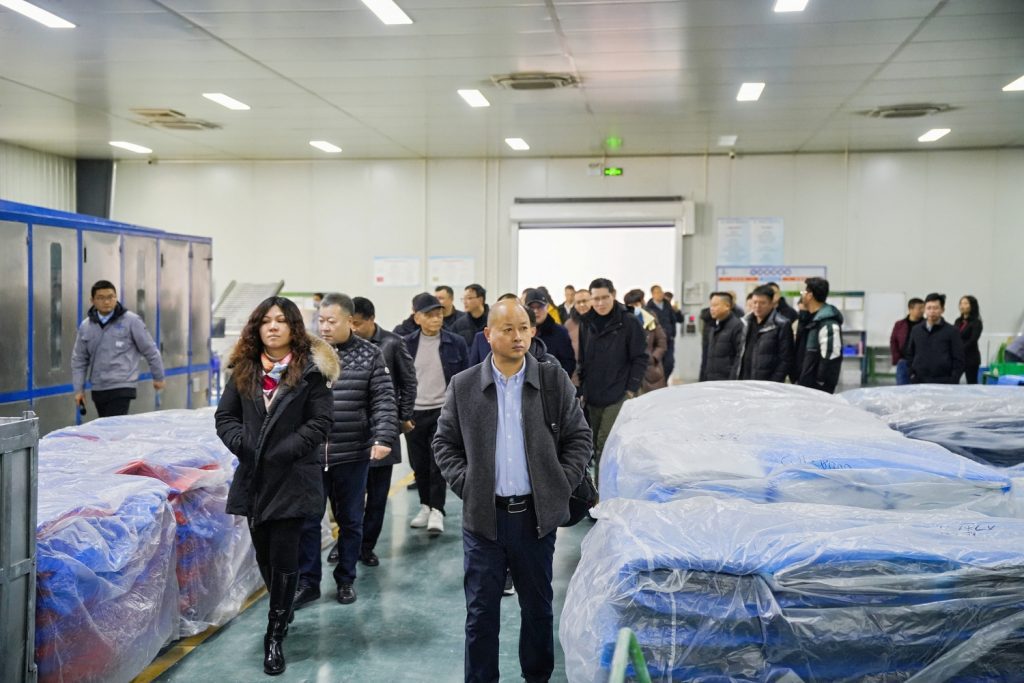
Contamination is the defining problem in colored rubber. Small amounts of unwanted pigment, dark rubber from a previous batch, or residue from a black compound are enough to shift a white compound off its color target. A shared production line makes this worse.
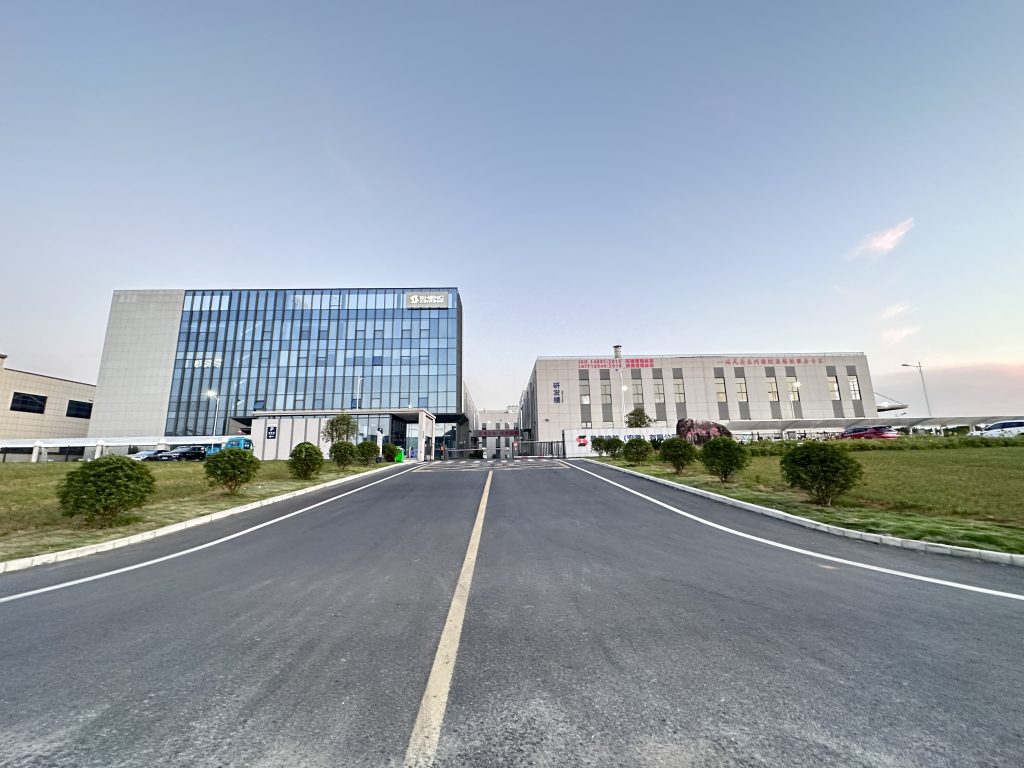
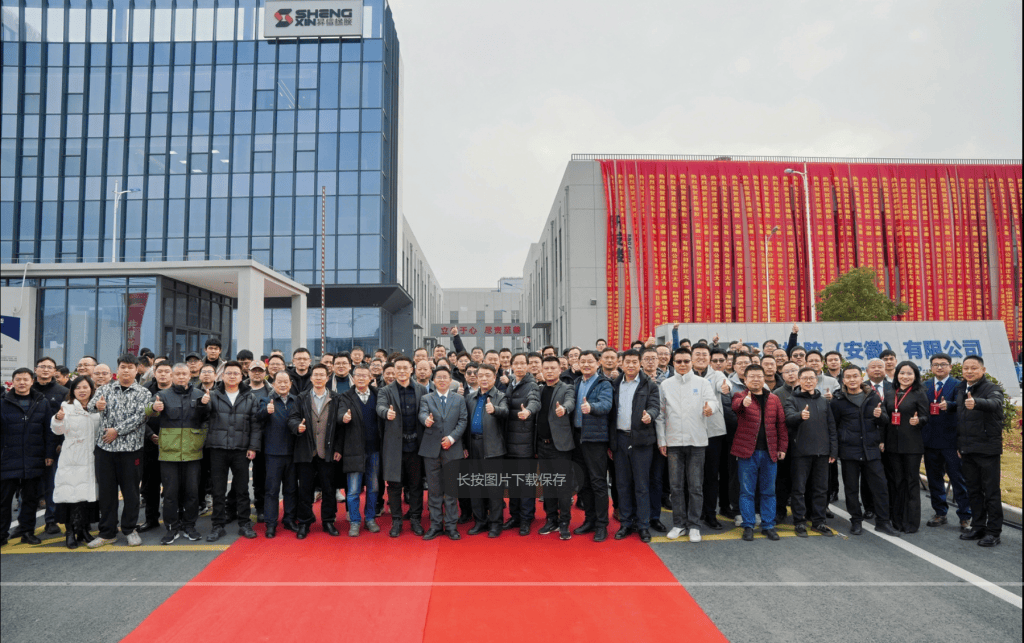
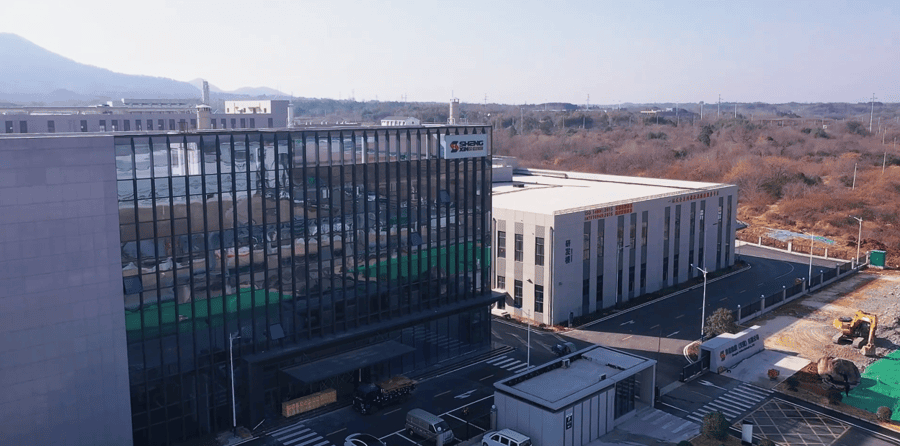
SaneZen operates Anhui Sanexin Polymer Fine Material as an independent colored rubber manufacturing operation. The company presentation describes Sanexin as a dedicated colored compound factory with a full range of color rubber compounds and more than 50,000 formulations.
This manufacturing model is what allows color rubber to be developed as a complete formulation rather than as pigment added to a generic rubber compound. Being an NR based color rubber manufacturer with dedicated lines is a different business from blending pigment into whatever is already in the mixer, and the difference shows up in batch-to-batch color consistency.


How to choose a supplier
Most of the differences between suppliers are invisible in a sample book. When you evaluate a custom color rubber compound for tire sidewall marking supplier, ask for the things a sample book cannot show you.
Ask a white tire sidewall rubber manufacturer for aged color data rather than initial whiteness. The useful test is color change after heat and UV exposure, at the thickness you actually use.
Search terms such as UV resistant sidewall rubber manufacturer China and weather resistant color rubber factory China only become useful once you ask the same question of both: under what weathering conditions was the claim measured, and did the test include humidity. Time, irradiance and humidity all change the answer, and none of them appear in a headline result.
Ask any UV resistant color rubber compound manufacturer for tires to supply the aged adhesion data at the interface with the black compound, because that is where co-extruded sidewalls actually fail.
And ask for the production consistency data. Scorch time and Mooney viscosity across consecutive batches tell you more about whether the compound will run in your plant than any single laboratory result.
Evaluation checklist
A practical qualification program covers four groups.
Appearance: initial color, color consistency between batches, and color change after aging.
Mechanical: tensile strength, elongation, modulus and hardness.
Durability: abrasion, scratch resistance, UV exposure, heat aging and weathering.
Processing: Mooney viscosity, scorch time, cure characteristics and extruded surface appearance.
Then add the application checks: co-extrusion compatibility, adhesion to the sidewall compound, thickness consistency, and the appearance of the finished tire.
Running all four groups is what prevents the most common selection error, which is choosing a compound on the strength of its initial color alone.
FAQ
How to prevent color migration in tire sidewall rubber compounds?
Fix it in the formulation rather than in process control. Migration happens when pigments or mobile ingredients move between the colored layer and the adjacent black compound, so the compound has to be designed with non-migrating colorants and with a cure system that does not encourage diffusion across the interface. Non migrating colored rubber compound for tire sidewall extrusion is a formulation requirement, not a finishing step, which means it has to be verified by a migration test on the finished two-layer construction rather than on the colored compound alone.
What rubber compound is best for UV resistant tire sidewall marking?
One that combines a stable base polymer with non-migrating colorants and a cure system that gives a wide processing window. NC55 is an NR-based compound built for this: 13.58 MPa tensile strength, 721% elongation and a scorch T5 of 19.42 minutes at 125 °C. The elongation is the part that matters for UV-exposed markings, because it is what lets the colored layer flex with the sidewall instead of developing the surface cracks that weathering then widens.
How to improve adhesion between black and colored rubber in sidewall co-extrusion?
Treat the interface as a designed part of the construction. Control the thickness of the colored layer, match the cure rates of the two compounds so they crosslink at compatible rates, and verify adhesion on the finished co-extruded profile. A high adhesion color rubber for sidewall co-extrusion process has to be qualified against the specific black compound it will sit next to, because adhesion is a property of the pair rather than of either single compound.
Which color rubber compound withstands long-term outdoor weathering for tires?
The one whose weathering data covers the full exposure profile of the application, including UV, heat and humidity together. Since weathering resistance depends on the colorant system as much as the polymer, the answer differs between white, colored and pattern applications. For pattern areas, which are usually the most exposed part of a sidewall, ozone and UV resistant color rubber for tire sidewall patterns is the relevant specification rather than a general weathering claim.
What is NC55?
NC55 is an NR-based white color rubber compound developed by SaneZen for tire sidewall marking and sidewall pattern applications. It is designed to be co-extruded with a black NR sidewall compound or used in sidewall pattern areas, and it is supplied with a defined processing window rather than as a pigment masterbatch.
What are NC55’s typical properties?
Cured at 160 °C × 30 min: Shore A hardness 54 (specification 55 ± 3), tensile strength 13.58 MPa (specification ≥12 MPa), elongation at break 721% (specification ≥550%), specific gravity 1.318 g/cm³ (specification 1.27 to 1.33), Mooney ML(1+4) at 125 °C 39.6 (specification 37 to 45), scorch T5 at 125 °C 19.42 min (specification 16 to 26 min), TC30 305 s and TC90 622 s.
Why does elongation matter so much for a sidewall marking?
Because the marking sits on a flexing surface. A colored layer that cannot stretch with the sidewall will crack at the interface or craze on the surface, and once a crack opens, weathering and abrasion finish the job. 721% elongation at break gives the layer the movement it needs before anything reaches its limit.
Can NC55 be used with a standard black sidewall compound?
Yes. It is designed to be co-extruded with black NR sidewall compound, and the data sheet identifies this as one of its primary uses. The practical requirement is to qualify the pair, not just the NC55 layer, because the interface is where co-extruded sidewalls fail.
Does color rubber need a different cure system from black rubber?
It needs a controlled one. Scorch safety is the critical parameter, because extrusion and co-extrusion happen before the compound cures. NC55 has a scorch T5 of 19.42 minutes at 125 °C, which gives the extrusion line room to work. Verify the cure match with the adjacent black compound when the two are co-extruded.
What are the common causes of sidewall marking failure?
Yellowing from UV exposure, discoloration from thermal aging, loss of legibility through abrasion and scratching, cracking at the interface between colored and black layers, and extrusion defects caused by insufficient scorch safety. Only the last one is a manufacturing problem, which makes it the cheapest to fix.
How should a sidewall marking compound be tested?
Four groups: appearance (initial color, batch consistency, color change after aging), mechanical (tensile, elongation, modulus, hardness), durability (abrasion, scratch, UV, heat aging, weathering) and processing (Mooney, scorch, cure characteristics, extruded appearance). Then add co-extrusion compatibility, adhesion to the sidewall compound and thickness consistency.
Is scratch resistance really necessary?
On a plain decorative layer, no. On a sidewall marking that carries branding, size and safety information, yes, because a scratch is how the marking stops being readable. Any scratch resistant color rubber supplier should be able to show abrasion and surface damage data for the specific product.
Is NC55 suitable for colored sidewalls as well as white?
The data sheet describes NC55 as a white color rubber compound for sidewall marking and pattern applications. Colored variants and pattern designs are supplied through the same dedicated colored rubber operation, so the same qualification approach applies: check the aged color and the interface, not just the shade.
What environmental compliance does NC55 carry?
The data sheet identifies its environmental performance as suitable for relevant environmental certifications such as RoHS and REACH. Request the current declaration for the specific grade before you finalize a specification.
Why does dedicated colored rubber manufacturing matter?
Because contamination is the dominant cause of color inconsistency. A dedicated colored compound factory avoids cross-contamination from black compounds and previous batches, which is what makes batch-to-batch color control achievable. SaneZen operates Anhui Sanexin Polymer Fine Material as an independent colored rubber operation for this reason.
About the data on this page
The property values in this article come from the supplied NC55 technical data sheet, with the test condition of 160 °C × 30 min curing as stated. Text on environmental certifications, the dedicated colored rubber manufacturing operation and the number of formulations reflects the company presentation supplied with the product documentation. Statements about failure mechanisms and evaluation practice are engineering guidance rather than test results, and should be confirmed in your own compound and process before changing production.
Contact
SaneZen Group / Sane ZenChem (Shanghai) Co., Ltd
Tel: +86 21 6487 9251
Fax: +86 21 5106 2693
Email: yorichen@sanezen.com
Website: www.sanezenrubber.com
If you are specifying a sidewall marking compound
Send us the black sidewall compound you are running alongside it, the color target, and the thickness of the colored layer you need. The interface between the two compounds is where most sidewall marking problems start, and it cannot be assessed from the colored compound alone.
We can tell you whether NC55 is likely to suit your construction, or whether your case needs a different base polymer or colorant system, before you commit to a trial.
 English
  Spanish
  Russian