In dynamic service scenarios such as tires, anti-vibration rubber products, and conveyor belts, the failure modes of rubber products typically converge on two core issues: interfacial adhesion failure and fatigue crack propagation. These two issues have long been treated as independent performance dimensions, with conventional solutions struggling to address both simultaneously. This report systematically elucidates the molecular mechanism of directly participating in vulcanization crosslinking and reconstructing the crosslink network. The multiple active benzene rings in the additive molecule effectively regulate the carbon black-rubber interfacial interaction, improve filler dispersion, and simultaneously serve as a co-crosslinking agent to enhance crosslink density and heat resistance. Actual application data demonstrate that in run-flat tire support compound formulations, this technology improves flex fatigue life by 6.5 times and achieves a 175% enhancement in finished tire zero-pressure durability. In steel cord adhesion systems, the retention rate of cord pull-out force after aging is significantly improved. This report also provides key process control points for formulation transition and a total life cycle value analysis, offering tire and rubber product manufacturers a technical pathway that balances performance upgrades with cost optimization. As a rubber compound specialty additive supplier, we bring decades of compounding expertise to every customer collaboration.
1. Opening: The “Adhesion-Fatigue” Paradox in Dynamic Service Scenarios
In tires, engine mounts, conveyor belts, and other rubber products subjected to alternating stress, two failure modes have long plagued formulation design engineers:
First, interfacial adhesion degradation. The adhesion strength between steel cord and rubber matrix directly determines the structural integrity and safety of tires. While conventional cobalt salt adhesion systems can provide initial adhesion strength, the retention rate shows a rapid decline under thermo-oxidative aging and dynamic loading — this is one of the primary causes of structural disintegration and sidewall delamination in run-flat tires during zero-pressure operation.
Second, fatigue crack propagation. Rubber products undergo millions of flexural deformation cycles during service. Once a crack initiates, it continues to propagate under alternating stress until product failure occurs. Simply increasing crosslink density can improve modulus but often sacrifices flexibility and crack resistance — a classic trade-off.
A more profound structural contradiction lies in the fact that adhesion enhancement and fatigue improvement operate through different mechanisms, and conventional formulation approaches often address one at the expense of the other. Increasing cobalt salt dosage enhances adhesion but accelerates rubber oxidative aging; adding more antioxidants retards aging but does nothing to address crack propagation; employing high-structure carbon black improves reinforcement but sacrifices processability. The industry urgently needs a multifunctional rubber additive to improve rubber flex fatigue life that is also capable of synergistically solving both adhesion and fatigue problems. As a dedicated rubber compound specialty additive supplier, we have developed a solution that addresses this long-standing industry challenge.
2. Amplifying the Concern: Why Run-Flat Scenarios Demand Exceptional “Adhesion-Fatigue” Performance
Run-flat tires represent one of the most demanding application scenarios. Their safe operability under zero-pressure conditions essentially constitutes a dual test of adhesion integrity and fatigue toughness of the support compound material under extreme conditions.
Failure Pathway 1: Heat Build-up → Adhesion Degradation → Structural Collapse. During run-flat operation, the sidewall support compound undergoes compression deformation far exceeding normal conditions, generating intense heat. For every 10°C increase in temperature, the aging rate of the steel cord-rubber adhesion interface approximately doubles. Once adhesion is lost, the steel cord separates from the rubber, the sidewall loses support, and the tire rapidly becomes unstable — this accounts for approximately 70% of failure modes in zero-pressure durability testing. This is precisely where a steel cord adhesion promoter for tire compounds becomes critically important.
Failure Pathway 2: Crack Initiation → Propagation → Penetrating Fracture. During repeated compression-rebound cycles of the support compound, stress concentrates at filler-rubber interfaces and crosslink network defects. After crack initiation, propagation occurs with each flex cycle, ultimately leading to fatigue fracture. While conventional high-hardness formulations provide support stiffness, they also make the material more brittle — crack propagation resistance actually decreases.
These two failure pathways catalyze each other: weakened adhesion interfaces transfer more stress to the rubber matrix, accelerating crack propagation; the localized stress concentration from crack propagation in turn accelerates interfacial debonding. In standard “zero-pressure durability testing,” this positive feedback loop can render a tire inoperable within tens of kilometers. “Meeting static specifications” does not equate to “dynamic service safety” — this is the chasm between standard laboratory testing and real-world extreme operating conditions. The industry needs an additive to reduce compression fatigue temperature rise and a proven additive to prevent sidewall separation in run flat tires to break this catastrophic feedback loop.
3. Mechanistic Deep Dive: “Crosslink Network Reconstruction” Mechanism
The technical value of this rubber adhesion and fatigue resistance agent is rooted in its unique molecular design and multimodal mechanism of action. The product is developed and manufactured by Shanghai Powerflex New Material Co., Ltd. (a subsidiary of SaneZen Group), with a molecular structure containing multiple active benzene rings and reactive groups capable of participating in vulcanization reactions.
3.1 Co-Crosslinking and Anti-Reversion: From “Crosslink Density Enhancement” to “Network Stability Assurance”
This additive is capable of directly participating in rubber vulcanization crosslinking reactions, constructing additional stable crosslinks beyond the conventional sulfur-accelerator system. This co-crosslinking effect delivers triple benefits:
First, increased crosslink density. The additional crosslinks increase the effective chain segment density of the rubber three-dimensional network, macroscopically manifested as improvements in modulus, hardness, and heat resistance. Experimental data demonstrate that with increasing dosage in NR formulations, hardness shows an adjustable linear upward trend.
Second, homogenization of the crosslink network. The distribution of polysulfidic bonds in conventional sulfur vulcanization systems is non-uniform, prone to forming stress concentration points. The co-crosslinking forms structurally more regular C-C bonds or monosulfidic bonds, rendering the crosslink network more uniform at the molecular scale and suppressing stress concentration.
Third, anti-reversion effect. Vulcanization reversion is a typical issue for NR during high-temperature, prolonged curing — polysulfidic bonds break, crosslink density decreases, and properties degrade. The thermally more stable crosslinks formed by this additive effectively “lock” the crosslink network, significantly improving the retention of mechanical properties after thermo-oxidative aging. This makes it an effective anti-reversion additive for high temperature rubber curing, addressing a critical challenge in thick-section NR component manufacturing.
3.2 Interfacial Modulation: The “Filler-Rubber Affinity Optimization” of Benzene Ring Structure
The multiple active benzene ring structures in the additive molecule are the key feature distinguishing it from ordinary co-crosslinking agents. Benzene rings possess a π-π conjugated system similar to the graphitic microcrystalline structure on carbon black surfaces, enabling preferential adsorption onto carbon black surfaces during mixing, forming a molecular-level “interfacial coupling layer.”
The functions of this interfacial layer are twofold: on one hand, it reduces the cohesive forces between carbon black aggregates, promoting uniform filler dispersion in the rubber matrix and reducing stress concentration caused by microscopic agglomerates; on the other hand, it improves the chemical affinity of the carbon black-rubber interface, enabling more efficient stress transfer at the interface and suppressing micro-cracking caused by interfacial debonding. This mechanism directly contributes to improve carbon black dispersion in NR tire compound, leading to more consistent compound quality and enhanced dynamic performance.
3.3 Synergistic Effects: The “Positive Feedback Loop” Between Crosslink Network and Filler Dispersion
The co-crosslinking and interfacial modulation functions do not operate independently but form a positive synergistic cycle:
- Improved filler dispersion → reduced localized stress concentration → retarded crack initiation
- Homogenized crosslink network → increased crack propagation resistance → extended fatigue life
- Enhanced interfacial adhesion → prevented crack propagation along interfaces → maintained structural integrity
This triple mechanism macroscopically manifests as a leap in flex fatigue life and improved retention of adhesion after aging. It serves as both a rubber chemical to improve steel cord pull out force and a comprehensive performance enhancer that delivers measurable improvements across multiple property dimensions.
4. Empirical Validation: Laboratory Data and Finished Product Verification
4.1 Performance Leap in NR Support Compound Formulations
Based on a run-flat tire support compound NR formulation system (N339 carbon black 70 phr, sulfur cure system), the effect of dosage on performance was investigated:
Processability and Curing Characteristics:
| Property | Control | Optimized Formulation | Trend |
| Mooney Viscosity ML(1+4)@100°C | 95 | 80 | ↓ 15.8% |
| Scorch Time t5 @130°C (min) | 8.6 | 16.6 | ↑ 93% |
| ts2 (min) | 2.9 | 5.0 | ↑ |
| t90 (min) | 8.2 | 13.1 | Extended |
Core Interpretation: The addition of this additive significantly reduces Mooney viscosity and substantially extends scorch time, nearly doubling the processing safety window. This means that process robustness in mixing and extrusion is greatly enhanced while maintaining or improving performance. These characteristics make it a highly effective run flat tire support compound performance additive that does not compromise processability.
Physical and Dynamic Properties:
| Property | Control | Optimized Formulation | Trend |
| Tensile Strength (MPa) | 13.41 | 18.99 | ↑ 41.6% |
| Elongation at Break (%) | 146 | 215 | ↑ 47.3% |
| Tear Strength (kN/m) | 36 | 43 | ↑ 19.4% |
| Rebound Resilience (%) | 60 | 70 | ↑ 10 percentage points |
| Flex Fatigue Life (cycles to failure) | 3,982 | 25,884 | ↑ 6.5× |
| Compression Fatigue Temperature Rise (°C) | 34.7 | 23.9 | ↓ 10.8°C |
Core Interpretation: The optimized formulation comprehensively outperforms the control across tensile strength, elongation, tear strength, and rebound resilience. The 6.5-fold improvement in flex fatigue life is the most compelling indicator for dynamic service applications. The 10.8°C reduction in compression fatigue temperature rise means significantly reduced heat build-up risk during actual run-flat operation. This confirms its function as a premier additive to reduce compression fatigue temperature rise and a proven rubber additive to improve rubber flex fatigue life.
4.2 Steel Cord Adhesion Performance: Retention Before and After Aging
| Property | Control | Optimized Formulation |
| Steel Cord Pull-Out Force Before Aging (N) | Baseline value | ↑ |
| Steel Cord Pull-Out Force After Aging (N) | Baseline value | ↑ (retention significantly superior to control) |
The optimized formulation maintains significantly higher steel cord pull-out force after aging, which is of critical value for long-term tire structural integrity. This validates its effectiveness as a steel cord adhesion promoter for tire compounds and a reliable rubber chemical to improve steel cord pull out force even under demanding thermo-oxidative aging conditions.
4.3 Finished Tire Validation: From Laboratory to On-Vehicle Road Testing
The optimized formulation was applied to 235/45R18 98W FRD866 run-flat tires for finished product performance testing:
| Test Item | Control | Optimized Formulation | Improvement |
| Endurance Performance (cumulative run time) | 50 hours | 80 hours | ↑ 60% |
| High-Speed Performance | 90 minutes | 115 minutes | ↑ 27.8% |
| Zero-Pressure Durability (Core Indicator) | 60 minutes | 165 minutes | ↑ 175% |
Core Conclusion: The optimized formulation delivers a 175% improvement in the most critical zero-pressure durability indicator for run-flat tires. This means that under complete pressure loss conditions at 80 km/h, vehicles equipped with tires containing this additive can safely travel nearly three times the distance, directly translating to enhanced occupant safety. This performance breakthrough demonstrates its role as a definitive additive to prevent sidewall separation in run flat tires and a solution that can extend zero pressure durability of run flat tires dramatically.
4.4 Boundary Discussion of Standardized Testing
The above data are derived from ASTM, GB/T standard testing, and tire bench tests. It should be noted that the pass time in zero-pressure durability testing is closely related to real-world factors such as driving behavior, road surface temperature, and load conditions. The 175% laboratory improvement indicates a substantial increase in safety margin, not an exact mileage guarantee.
5. Summary of Core Advantages
Based on empirical data, this multifunctional rubber adhesion and fatigue resistance agent offers the following core values:
- Co-crosslinking and anti-reversion: Directly participates in vulcanization reactions, forming stable crosslink structures and inhibiting vulcanization reversion, functioning as an effective anti reversion additive for high temperature rubber curing
- Adjustable hardness and modulus: Flexible control of hardness and dynamic-to-static stiffness ratio through dosage adjustment (recommended 1-8 phr), enabling users to balance hardness and fatigue resistance in rubber compounds
- Leap in fatigue performance: Flex fatigue life improvement up to 6.5 times as a proven rubber additive to improve rubber flex fatigue life
- Enhanced interfacial adhesion: Increases adhesion strength between rubber and steel cord, metal components as a reliable steel cord adhesion promoter for tire compounds and rubber chemical to improve steel cord pull out force
- Optimized carbon black dispersion: Benzene ring structure modulates filler-rubber interaction to improve carbon black dispersion in NR tire compound
- Improved processability: Significantly reduced Mooney viscosity and substantially extended scorch time
- Environmentally friendly: Complies with REACH and RoHS requirements
- Comprehensive formulation support: As a trusted rubber compound specialty additive supplier, we provide full technical support from formulation optimization to production scale-up
6. Process Consistency Control: Critical Checkpoints from Formulation to Production
The co-crosslinking and interfacial modulation mechanisms are highly dependent on mixing process assurance of dispersibility and reaction conditions:
- Mixing addition sequence: It is recommended that rubber, carbon black, and the additive be added together to the internal mixer first, mixed for 60 seconds, followed by other additives, to ensure preferential adsorption onto carbon black surfaces. This detail directly affects the effectiveness of the benzene ring structure’s interfacial modulation function and is critical to improve carbon black dispersion in NR tire compound.
- Heat treatment process: It is recommended to incorporate a 160°C × 1 minute heat treatment step during mixing to fully activate the co-crosslinking reactivity.
- Dump temperature control: The reactivity is temperature-dependent. Excessively low dump temperature may result in insufficient co-crosslinking reactions, while excessively high temperature may induce premature crosslinking. It is recommended to re-establish the dump temperature window when transitioning formulations.
- Cure curve recalibration: Since the additive extends t90 (as shown in the support compound formulation, t90 extended from 8.2 min to 13.1 min), it is necessary to re-measure the cure curve and adjust curing time prior to production to ensure that the target crosslink density is achieved.
7. Typical Application Scenarios
This rubber adhesion and fatigue resistance agent is suitable for the following rubber products and application scenarios:
- Tires (run-flat tire support compound, adhesion systems, enhancement of rigidity/modulus/heat resistance) — particularly as a run flat tire support compound performance additive and additive to prevent sidewall separation in run flat tires
- Anti-vibration rubber (automotive engine mounts, bushings)
- Conveyor belts, transmission belts
- Rubber rollers, motor brackets
- Other rubber products requiring high fatigue resistance, high adhesion, and heat aging resistance
In different tire components, the value is emphasized differently:
- Tread: Improves carbon black dispersion, enhances abrasion resistance, retards crack initiation at tread groove bottoms — contributing to improve carbon black dispersion in NR tire compound
- Sidewall: Enhances flex fatigue life, reduces sidewall cracking as a rubber additive to improve rubber flex fatigue life
- Steel cord adhesion compound: Improves adhesion retention after aging as a steel cord adhesion promoter for tire compounds and rubber chemical to improve steel cord pull out force
- Apex/chafer compound: Optimizes stiffness transition, reduces interfacial stress concentration
For customers seeking to extend zero pressure durability of run flat tires, this additive delivers proven results with a 175% improvement in finished tire testing. For those looking to balance hardness and fatigue resistance in rubber compounds, the adjustable dosage range of 1-8 phr provides formulation flexibility to achieve target property profiles.
8. Total Life Cycle Value Analysis
The technical value should be assessed from a total life cycle perspective:
- Safety margin expansion: 175% improvement in zero-pressure durability — this is the most critical quantitative value indicator for run-flat tires, directly corresponding to occupant safety. This demonstrates the ability to extend zero pressure durability of run flat tires significantly.
- Processing efficiency gains: Reduced Mooney viscosity and substantially extended scorch time reduce scrap rates and improve production line continuity.
- After-sales risk cost reduction: Improved adhesion retention and fatigue life reduce warranty claims caused by sidewall delamination and cracking — directly addressing the need for an additive to prevent sidewall separation in run flat tires.
- Formulation cost optimization: The ability to balance hardness and fatigue resistance in rubber compounds through dosage adjustment allows formulators to achieve target performance with minimal trial-and-error, accelerating development cycles.
- Environmental compliance: Contains no nitrosamines, polycyclic aromatic hydrocarbons, or other hazardous substances, complies with EU REACH and RoHS standards, and supports export-oriented business.
Why Choose Us
Choosing a functional filler supplier is not only about purchasing a mineral powder. It is about selecting a technical partner that understands polymer compounding, physical failure mechanisms, and long-term product performance. As a leading specialty functional filler and performance additives manufacturer, we bring decades of compounding expertise to every customer collaboration.
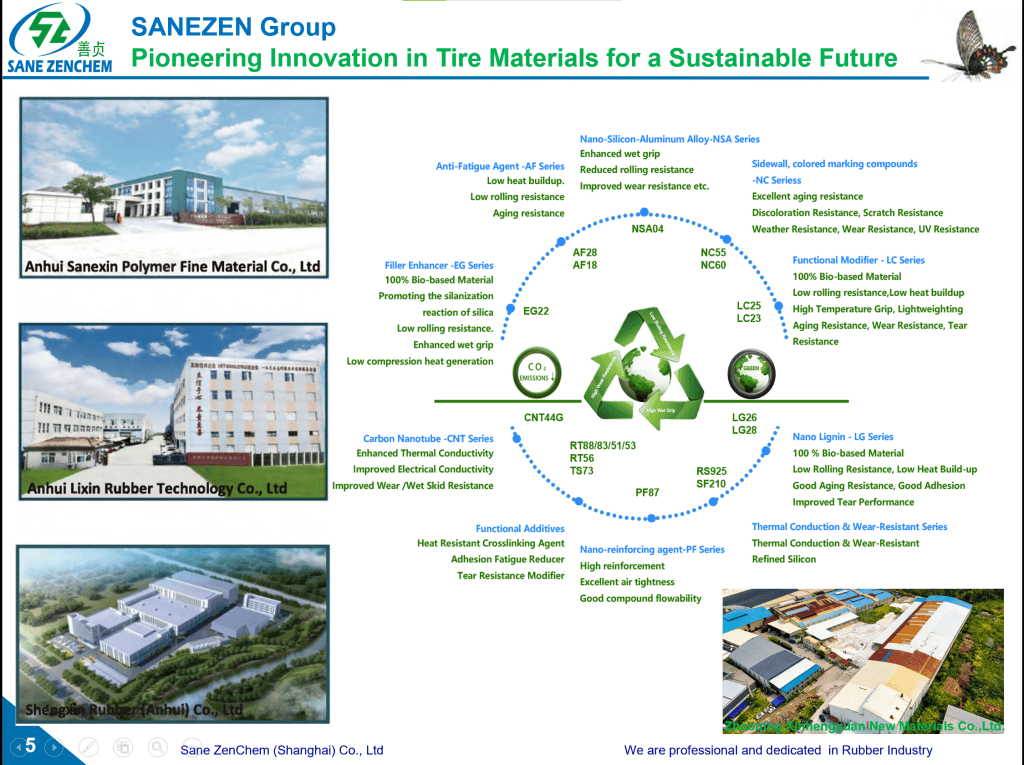
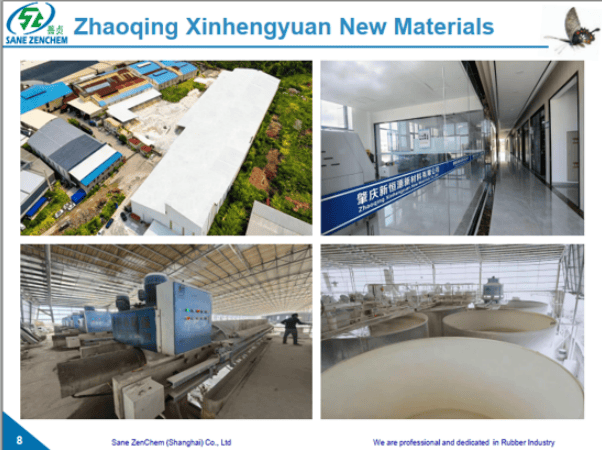
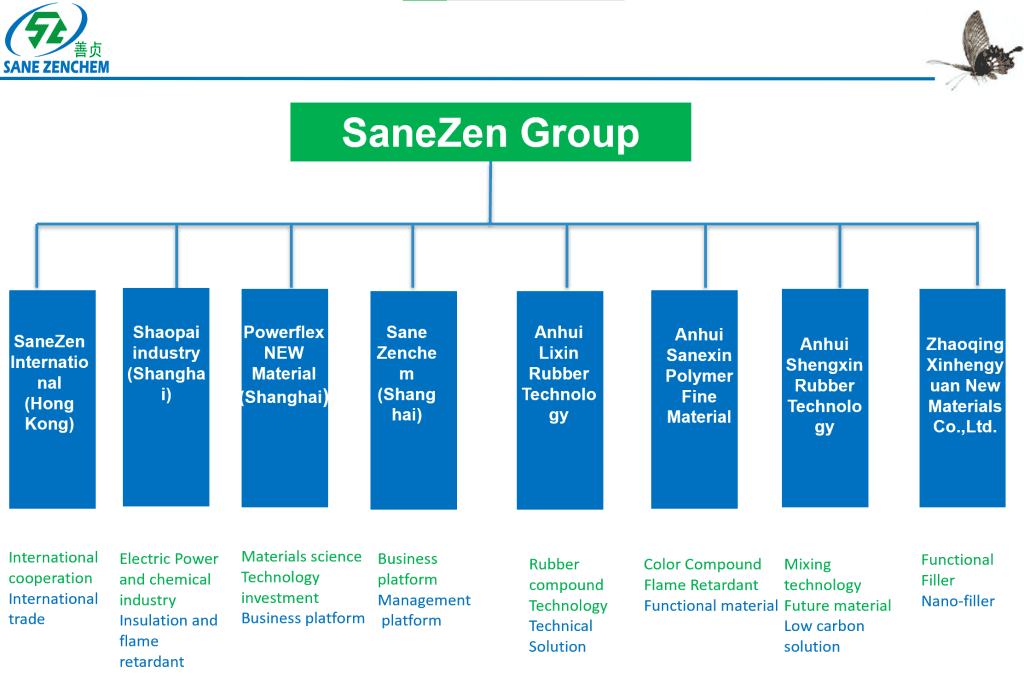
SaneZenChem operates five manufacturing facilities specialising in:
• Rubber Compounds
• Silicone Rubber Compounds
• Specialty Functional Fillers
• Flame Retardants
• Polymer Performance AdditivesBecause we formulate and manufacture rubber and silicone compounds ourselves, every specialty product we develop originates from solving real production challenges rather than laboratory concepts alone. This application-driven approach allows us to deliver practical solutions that create measurable improvements in customer products – from eliminating processing viscosity spikes and preventing micro cracking, to ensuring high dielectric strength in harsh electrical environments. Our unique dual position as both a direct compounder and a premier specialty functional filler manufacturer means we are uniquely equipped to support rubber, epoxy, and electrical insulation manufacturers in achieving longer service life, processing efficiency, and ultimate reliability.
9. Technical FAQ
Q1: What is the essential difference between this additive and ordinary anti-fatigue agents or adhesion promoters?
This additive is not a single-function anti-fatigue agent or adhesion promoter, but rather a multi-in-one additive combining co-crosslinking, interfacial modulation, and anti-reversion functions. Ordinary anti-fatigue agents typically function only through physical plasticization or chemical retardation, without directly participating in crosslink network construction. The core differentiator lies in its direct participation in vulcanization crosslinking reactions, while simultaneously utilizing the benzene ring structure to optimize filler dispersion and interfacial adhesion, achieving “one additive, multiple benefits.” As a premier rubber compound specialty additive supplier, we have engineered this solution to address multiple performance dimensions simultaneously.
Q2: Does this additive affect the Mooney viscosity and processing safety of compounds?
Data show precisely the opposite — it reduces Mooney viscosity from 95 to 80 (↓15.8%) and extends scorch time t5 from 8.6 minutes to 16.6 minutes (↑93%), significantly broadening the processing safety window. This translates to greater robustness and process stability across mixing, extrusion, and calendering operations.
Q3: How can formulators effectively balance hardness and fatigue resistance in rubber compounds using this additive?
To balance hardness and fatigue resistance in rubber compounds, the recommended dosage range is 1-8 phr. Hardness shows a linear upward trend with increasing dosage, while fatigue resistance improves significantly across the entire dosage range. It is recommended to start with a low dosage (2-3 phr) and optimize gradually based on target property requirements. This additive allows for independent tuning of hardness and fatigue performance to a degree not possible with conventional formulation approaches.
Q4: Can this additive help extend zero pressure durability of run flat tires in peroxide cure systems?
This additive is primarily designed for sulfur cure systems, with its co-crosslinking mechanism based on the formation of polysulfidic and C-C bonds, offering optimal compatibility with sulfur/accelerator systems. To extend zero pressure durability of run flat tires in peroxide systems, it is recommended that small-scale trials be conducted in advance to confirm its reactivity and crosslinking efficiency.
Q5: What is the recommended approach to improve carbon black dispersion in NR tire compound using this additive?
To improve carbon black dispersion in NR tire compound, it is recommended that rubber, carbon black, and the additive be added together to the internal mixer first, mixed for 60 seconds, followed by other additives. The benzene ring structure preferentially adsorbs onto carbon black surfaces, reducing cohesive forces between aggregates and promoting uniform dispersion. A heat treatment step of 160°C × 1 minute further activates the interfacial modulation function.
Q6: Can this additive serve as both a steel cord adhesion promoter for tire compounds and a rubber chemical to improve steel cord pull out force simultaneously?
Yes. The surface activation and interfacial modulation mechanisms enhance adhesion between rubber and steel cord through multiple pathways: improved filler dispersion reduces localized stress concentration at the interface; co-crosslinking increases crosslink density in the interfacial region; and the benzene ring structure improves chemical affinity between the rubber matrix and cord surface. This dual functionality makes it an effective steel cord adhesion promoter for tire compounds and a reliable rubber chemical to improve steel cord pull out force before and after aging.
Q7: What makes this product different from other offerings in the market as a rubber compound specialty additive supplier?
As a rubber compound specialty additive supplier, we formulate and manufacture rubber compounds ourselves. Every specialty product we develop originates from solving real production challenges rather than laboratory concepts alone. This application-driven approach allows us to deliver practical solutions that create measurable improvements in customer products. Our unique dual position as both a direct compounder and a premier additive supplier means we are uniquely equipped to support tire and rubber product manufacturers in achieving longer service life, processing efficiency, and ultimate reliability. The 6.5× improvement in flex fatigue life and 175% enhancement in zero-pressure durability are direct results of this application-focused development approach.
10. Resources and Contact
The technical solution described in this report has completed pilot-scale validation and production scale-up in run-flat tires, engine mounts, conveyor belts, and other application areas. Whether you are seeking a rubber additive to improve rubber flex fatigue life, a steel cord adhesion promoter for tire compounds, a trusted rubber compound specialty additive supplier, an additive to reduce compression fatigue temperature rise, a run flat tire support compound performance additive, a rubber chemical to improve steel cord pull out force, or an additive to prevent sidewall separation in run flat tires — our technical team is ready to support your specific requirements.
For customized comparative testing based on your specific formulation system or process scale-up guidance, please contact our technical team for detailed experimental reports and sample support.
SaneZen Group
Rubber Solution Provider
Website: www.sanezenrubber.com
Email: yorichen@sanezen.com
WeChat/WhatsApp: +86 – 136 7164 1995
 English
  Spanish
  Russian