Choosing the right rubber filler—whether silica, flame retardant compounds, or nano alloy systems—determines how a finished product performs under real operating conditions. These functional additives modify elastomer behavior at the molecular level, affecting everything from tensile strength to thermal resistance. The interaction between filler surface chemistry and the polymer matrix is where performance gains actually happen, which is why dispersion quality and surface treatment matter as much as the filler type itself.
What Functional Fillers Actually Do in Rubber Compounds
Functional fillers change the baseline properties of rubber in ways that raw elastomers cannot achieve alone. When properly dispersed, these materials create reinforcing networks within the polymer that increase tensile strength, improve abrasion resistance, and raise tear strength. The mechanical improvements come from load transfer between the filler particles and the rubber matrix, a mechanism that depends heavily on interfacial adhesion.
Beyond mechanical reinforcement, certain fillers introduce thermal stability, electrical conductivity, or chemical barrier properties that expand where rubber products can be used. A compound designed for high-temperature sealing applications, for instance, requires different filler chemistry than one intended for fuel system components exposed to aggressive solvents. The surface area, particle morphology, and chemical treatment of the filler all influence how effectively it integrates with the elastomer.
| Property Enhanced | Common Filler Examples | Impact on Rubber |
|---|---|---|
| Tensile Strength | Silica, Carbon Black | Increased durability |
| Abrasion Resistance | Silica, Alumina | Extended wear life |
| Tear Strength | Silica, Nano Alloys | Improved resilience |
| Thermal Stability | FR Fillers, Clay | Higher temperature tolerance |
| Chemical Resistance | Barrier Fillers | Reduced degradation |
Where Silica, FR Fillers, and Nano Alloys Differ in Application
Each filler class addresses distinct performance requirements, and selecting the wrong one creates problems that cannot be fixed downstream. Silica reinforcement excels in applications where mechanical strength and low hysteresis matter—tire treads are the classic example, where reduced rolling resistance translates directly into fuel efficiency. Flame retardant fillers serve an entirely different function, meeting fire safety codes in construction materials, wire insulation, and automotive interior components. Nano alloy technology occupies a more specialized space, delivering property improvements at lower loading levels because the nanoscale particles create more interfacial area per unit weight.
How Silica Reinforcement Works in Rubber Compounds
Precipitated silica forms a reinforcing network through hydrogen bonding between silanol groups on the filler surface and the rubber polymer chains. This interaction increases tensile strength and tear resistance, but the hydrophilic nature of untreated silica creates processing challenges—the filler tends to agglomerate rather than disperse uniformly. Coupling agents, typically silanes, solve this problem by chemically bridging the silica surface to the rubber matrix, improving both dispersion and interfacial adhesion.
The practical result is a compound that processes more consistently and performs better in service. Tire manufacturers rely on this chemistry to achieve the balance between wet grip and rolling resistance that fuel economy regulations now demand. Footwear applications use similar principles, though the silica grades and loading levels differ based on the specific durometer and wear requirements.
Why Flame Retardant Filler Selection Matters for Compliance
Flame retardant fillers work through several mechanisms: some form a protective char layer that insulates the underlying material from heat, others release gases that dilute the combustible atmosphere around the burning surface, and endothermic types absorb heat during decomposition. The choice depends on the fire test requirements the final product must pass and the smoke density limits that apply in the intended use environment.
Halogen-free flame retardants have become the default specification in many markets because halogenated compounds release toxic gases during combustion. The transition has required reformulation work across the industry, since halogen-free alternatives often require higher loading levels to achieve equivalent fire performance. Mineral hydroxides like aluminum trihydrate and magnesium hydroxide are common choices, though they affect compound viscosity and mechanical properties differently than the halogenated systems they replace.
What Makes Nano Alloy Technology Different from Conventional Fillers
Nano alloy systems incorporate metallic or ceramic particles at the nanometer scale, creating dramatically more surface area per unit weight than conventional fillers. This geometry means that meaningful property improvements occur at loading levels where conventional fillers would have minimal effect. The practical benefits include increased stiffness and fatigue resistance without the weight penalty that high filler loadings normally impose.
Barrier properties improve because the nanoparticles create a tortuous path that slows gas and liquid permeation through the rubber matrix. Automotive fuel system components and industrial sealing applications benefit from this effect. The challenge is achieving uniform dispersion—nanoparticles tend to agglomerate due to their high surface energy, and specialized mixing protocols are necessary to realize the theoretical performance advantages.
How Single-Source Procurement Changes Filler Supply Chain Economics
Working with one supplier for multiple filler types reduces the administrative burden of managing separate vendor relationships, qualification processes, and incoming inspection protocols. The logistics simplify because shipments can be consolidated, and the quality system operates under a single set of standards rather than requiring reconciliation between different suppliers’ specifications.
Technical support becomes more effective when the supplier understands the full formulation rather than just one component of it. If you are working with a supplier who provides both your silica and your flame retardant package, troubleshooting a processing issue or optimizing a property balance becomes a single conversation rather than a coordination problem between multiple parties. The cost structure often improves as well, since volume across multiple product lines creates leverage that purchasing each filler separately would not.
What Sane Zenchem Brings to Functional Filler Supply
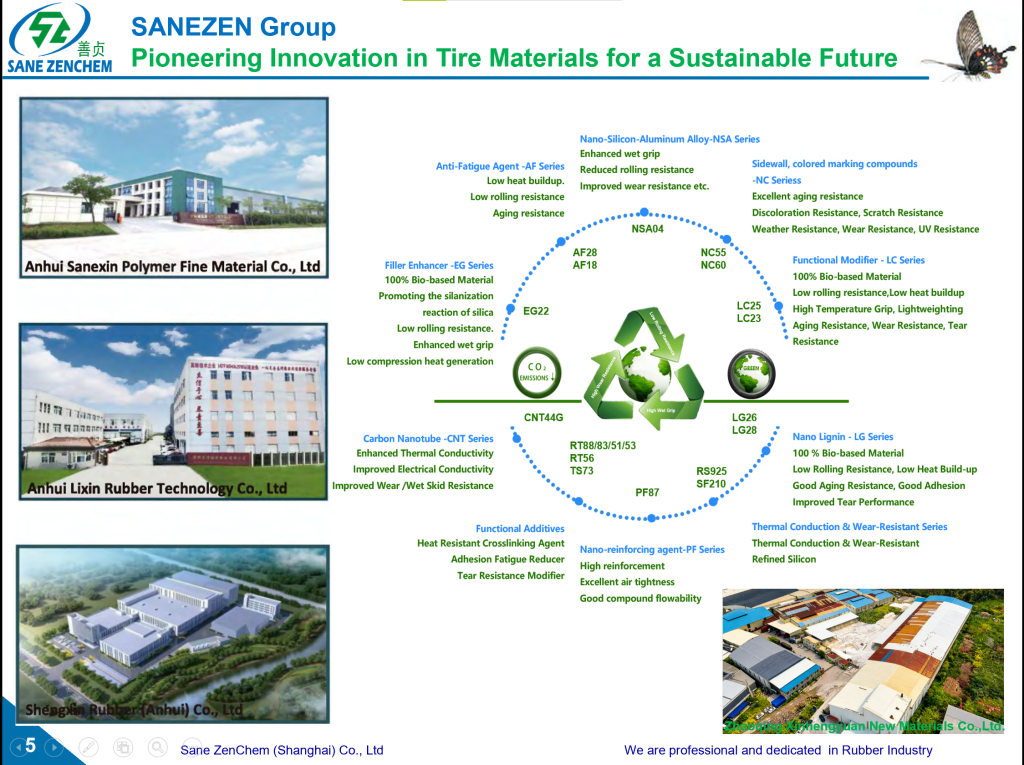
Sane Zenchem operates across the rubber raw materials and compound business with a focus on integrated solutions rather than commodity material sales. The company’s approach combines research and development capability with production capacity, allowing custom formulations that address specific application requirements. Partnerships with established industry players provide access to technologies and process knowledge that support continuous improvement in product performance.
The full industry chain involvement—from raw material sourcing through compounding and technical service—means that the supplier relationship extends beyond simple material transactions. When a formulation challenge arises, the response draws on direct experience with how the materials behave in actual processing and end-use conditions.
What to Evaluate When Selecting a Rubber Filler Supplier
Technical consultation capability separates suppliers who can contribute to your development work from those who simply fill purchase orders. A supplier with formulation expertise can identify potential problems before they appear in production and suggest alternatives when a specification proves difficult to meet with available materials.
Certifications indicate systematic quality management: ISO 9001 covers quality systems, ISO 14001 addresses environmental management, and product-specific certifications like REACH and RoHS compliance matter for materials entering regulated markets. Technical data sheets and material safety data sheets should be complete and current, not documents that require chasing down missing information.
Supply chain reliability becomes visible during disruptions. A supplier with robust logistics and inventory management maintains delivery schedules when raw material markets tighten or shipping capacity becomes constrained. This reliability is worth evaluating before it becomes urgent.
If your application involves specific performance requirements or compliance constraints, discussing the formulation approach early in the development process helps avoid costly reformulation later. Reach out to Sane Zenchem at +86 136 7164 1995 or yorichen@sanezen.com to explore how the right filler selection supports your product requirements.
Frequently Asked Questions About Rubber Functional Fillers
What separates silica, FR fillers, and nano alloys in terms of what they do in a rubber compound?
Silica reinforces mechanically—it increases tensile strength and abrasion resistance, which is why tire compounds use it heavily. Flame retardant fillers address fire safety by reducing flammability and smoke generation, critical for building materials and automotive interiors where fire codes apply. Nano alloys work at a different scale entirely, achieving property improvements at lower loading levels because the nanoscale particles create more interfacial area. The three filler types solve different problems, and many compounds use combinations of them.
How does consolidating filler purchases with one supplier affect procurement efficiency?
Single-source procurement eliminates the coordination overhead of managing multiple vendor relationships, separate quality specifications, and fragmented shipping schedules. Technical support improves because the supplier sees the full formulation picture rather than just one component. Inventory management simplifies, and the consolidated volume often supports better pricing. The efficiency gain is most noticeable when troubleshooting issues, since one supplier can address the interaction between different fillers rather than pointing at someone else’s material.
Which certifications indicate that a rubber filler supplier maintains adequate quality systems?
ISO 9001 certification demonstrates that the supplier operates a documented quality management system with internal audits and continuous improvement processes. ISO 14001 covers environmental management, which matters for suppliers handling chemical materials. For products entering European or other regulated markets, REACH registration and RoHS compliance are baseline requirements. Beyond certifications, complete technical data sheets and material safety data sheets should be available without delay—a supplier who cannot produce current documentation is signaling something about their quality discipline. Contact Sane Zenchem to discuss how our quality systems and technical capabilities align with your supplier qualification requirements.
If you’re interested, you may want to read the following articles:
rubber heat resistance antireversion agent additive demanding rubber applications
highreinforcement precipitated nanosilica comprehensive value proposition procurement technical management decision makers
custom silicone rubber manufacturers china high performance compounding solutions
 English
  Spanish
  Russian