
As the “seal guardian” of the complete washing machine, the washing machine door seal directly determines the machine’s water tightness, sound insulation, and service life. The reinforcing filler system serves as the “core framework” of the door seal formulation—it not only enhances the mechanical strength of the door seal rubber but also optimizes processing performance, reduces production costs, and even imparts special functions to the door seal. With the advancement of material technology, traditional reinforcing fillers are gradually revealing their limitations. Nanoparticle reinforcing fillers, leveraging their unique dimensional advantages, are becoming increasingly widely used in washing machine door seal formulations and have become key to enhancing product competitiveness.
Today, we will comprehensively analyze the various materials used in the reinforcing filler system of washing machine door seal formulations, deeply explore their characteristics and application scenarios, and focus on the application advantages of nanoparticle reinforcing fillers, providing practical references for industry professionals. For Rubber Functional filler Manufacturers, Rubber Functional filler Suppliers, and Rubber Functional filler Factory entities, as well as those searching for a functional filler supplier China, understanding these technical details is essential to meeting market demands.
I. Comprehensive Analysis of Traditional Reinforcing Filler System Materials (Common Types)
01 Silica
Silica (also known as hydrated silicon dioxide) is an inorganic reinforcing agent, divided into precipitated silica and fumed silica. It is commonly used in mid-to-high-end washing machine door seals, especially suitable for transparent or light-colored door seal products.
Characteristics: White powder, non-coloring, maintaining the natural color or transparent texture of the door seal; its reinforcing effect is second only to carbon black, significantly improving the tensile strength, abrasion resistance, and weather resistance of the rubber. It also offers good insulation and chemical resistance, withstanding corrosion from detergents and bleaches inside the washing machine.
Application Guidelines: The typical dosage is 15-40 phr. Fumed silica provides better reinforcement than precipitated silica but at a higher cost. Due to the presence of active silanol groups on the surface of silica, it is hydrophilic and difficult to disperse in rubber. A coupling agent (such as a silane coupling agent) is required to improve its dispersion and bonding with the rubber, preventing issues such as compound stratification or uneven performance.
02 Silicates
Silicate reinforcing agents (such as talc, kaolin, and layered silicates) are commonly used auxiliary reinforcing materials in washing machine door seal formulations. They serve both reinforcing and filling functions, offering excellent cost-effectiveness.
Characteristics: Widely available, low cost, they enhance rubber hardness, dimensional stability, and processing fluidity, reducing compound shrinkage and deformation. Among them, layered silicates (such as nano-sized layered silicates) can also improve the barrier properties of the door seal, reducing moisture penetration. Some grades can also assist in enhancing mechanical strength.
Application Guidelines: Typical dosage ranges from 30-80 phr. Excessive dosage can lead to reduced elasticity and increased brittleness, so the dosage must be controlled. They are often used in combination with carbon black and silica to balance cost and performance. In some patented formulations, nano-sized layered silicates are used as the core reinforcing filler system, significantly improving the mechanical and physical properties of rubber door seals.
03 Calcium Carbonate
Calcium carbonate is divided into ordinary calcium carbonate and activated calcium carbonate. It is a low-cost filler with slight reinforcing effects, mainly used to reduce the cost of door seal formulations and adjust compound hardness.
Characteristics: Low price, widely available, it increases the volume of the rubber compound, reducing raw material costs. Activated calcium carbonate, after surface modification, offers better bonding with rubber and can slightly improve tensile strength and abrasion resistance, whereas ordinary calcium carbonate only acts as a filler with weak reinforcing effects.
Application Guidelines: Typical dosage ranges from 50-100 phr. It is mostly used in combination with other reinforcing agents and should not be used as the primary reinforcing agent alone, otherwise it may lead to insufficient strength and easy breakage of the door seal. Activated calcium carbonate is more suitable for mid-to-low-end door seal formulations, ensuring basic mechanical performance while controlling costs.
II. New Nanoparticle Reinforcing Fillers: The “Upgrade Key” for Door Seal Formulations
As the washing machine industry continues to demand higher performance from door seals (such as improved abrasion resistance, aging resistance, lighter weight, and environmental friendliness), the limitations of traditional reinforcing filler materials have become increasingly evident—such as poor dispersion of silica and limited reinforcement of silicates. Against this backdrop, nanoparticle reinforcing fillers, with their unique nanoscale size effect, have become the core direction for upgrading door seal formulations. Nanoparticle reinforcing fillers refer to reinforcing materials with particle sizes between 1 and 100 nm. Their core advantage stems from the “nanoscale size effect”—extremely small particle size, extremely large specific surface area, significantly increased contact area with rubber molecules, and stronger bonding.
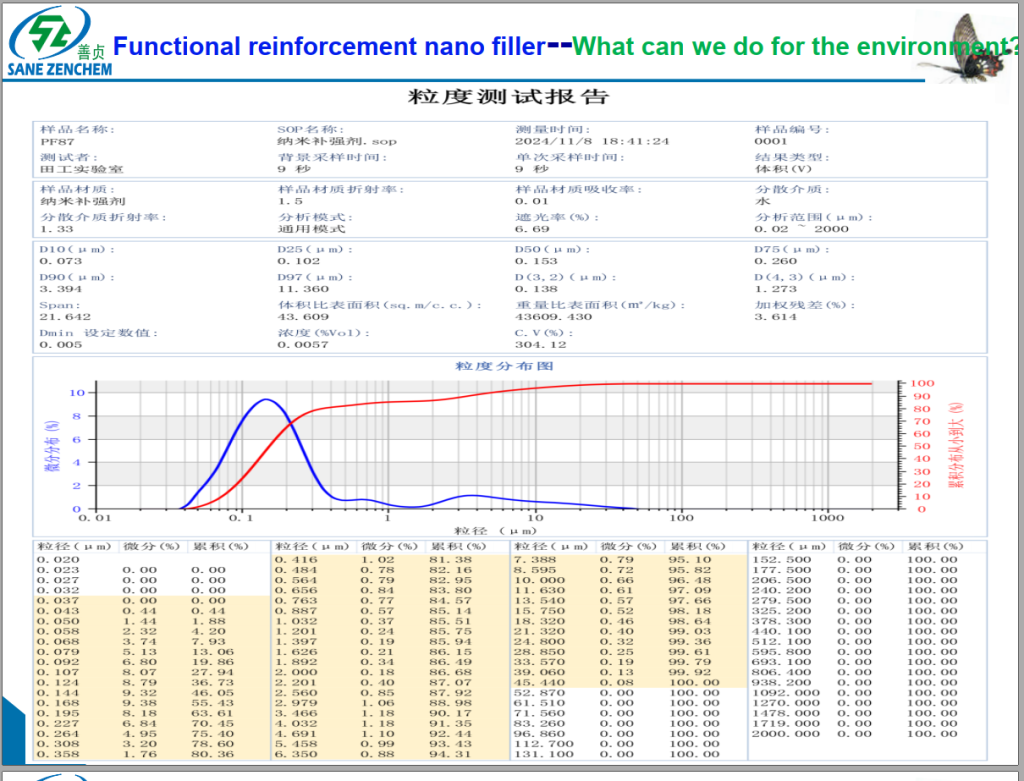
Sane Zenchem’s PF series functional nanoparticle reinforcing agents represent a representative product of this technological trend—with excellent reinforcement performance, outstanding dispersion, and high whiteness, they ensure “long life and high reliability” for washing machine door seals. (Typical PF88 product)
| Physical and Chemical Properties | Chemical Analysis |
| % +325 mesh (>45 µm) | 0.05% | General Whiteness GEM | 81 | SiO₂ | 47.02% |
| Median Particle Size D50 (µm) | 1.85 | pH (Aqueous Solution) | 7.56 | Al₂O₃ | 37.64% |
| *AFS 113-87-S* | |||||
| Median Particle Size D90 (µm) | 6.56 | Moisture Content AFS C-566 | 0.8% | TiO₂ | 0.41% |
Raw Material Formulation
| Raw Material Grade | Basic Formula, phr |
| EPDM 512E | 100 |
| Nano Reinforcing Agent (PF88 / PF87) | 130 |
| Paraffinic Oil 6030# | 40 |
| Indirect ZnO | 5 |
| Stearic Acid STA | 1 |
| PEG4000 | 1 |
| L-24 | 1 |
| S-80 | 1.5 |
| EG-3L/75GE | 5 |
Test Results
| Test Item | PF88 | PF87 |
| Rheometer Test Results (180℃ × 5 min) | ||
| ML | 0.63 | 0.71 |
| MH | 7.55 | 7.46 |
| TS2 | 48 | 52 |
| TC10 | 35 | 38 |
| TC90 | 201 | 172 |
| Physical Properties (Cured at 175℃ × 6 min) | ||
| Hardness (Shore A) | 61 | 59 |
| Tensile Strength (MPa) | 16.83 | 15.87 |
| Elongation at Break (%) | 685 | 667 |
| Modulus at 100% (M100, MPa) | 2.21 | 2.55 |
| Specific Gravity (g/cm³) | 1.278 | 1.265 |
Key Properties:
- Excellent Reinforcement: Comparable to N550 reinforcement, improving abrasion resistance, oil resistance, flex fatigue resistance, and thermal aging performance. This makes it an ideal high performance rubber filler for rubber compound in washing machine gasket applications.
- Good Airtightness: Produces rubber products with high airtightness, smooth extrusion, low compression set, and low heat generation.
- High Filling for Cost Reduction: Allows high filling levels while maintaining low Mooney viscosity and hardness, without affecting fluidity, effectively reducing costs. It serves as a cost effective rubber filler for washer door seal compound manufacturing.
- Good Processability: Offers good compound fluidity, easy extrusion, excellent dimensional stability, extended scorch time, and shortened optimal curing time.
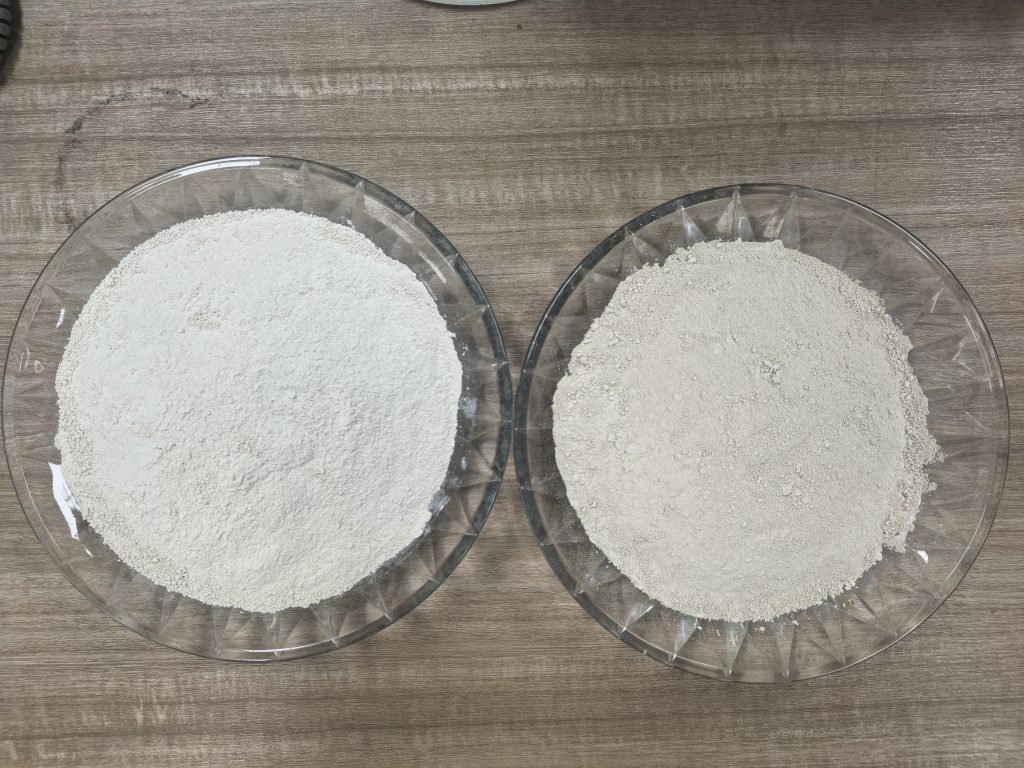
- Physical Properties: High whiteness, layered structure, high porosity; high specific surface area; lightweight, soft texture, reasonable particle size distribution. As a white reinforcing filler with good dispersion for rubber compound, it stands out in demanding applications.
- Chemical Stability: Low impurity content, non-toxic, odorless, excellent chemical stability. It functions as a nanoparticle reinforcing filler for rubber seal formulation, meeting the needs of advanced sealing solutions.
For door seal manufacturers, selecting appropriate reinforcing filler materials, optimizing formulation ratios, and fully leveraging the advantages of nanoparticle reinforcing agents not only improve product quality but also reduce production costs and enhance market competitiveness. In the future, with continuous advancements in nanomaterial technology, the dispersion and compatibility of nanoparticle reinforcing agents will be further improved, and their application scenarios will expand, injecting new momentum into the development of the washing machine door seal industry. For those seeking to improve rubber seal durability with functional filler in rubber compounding, this technology represents a reliable path forward.
About Our Factory
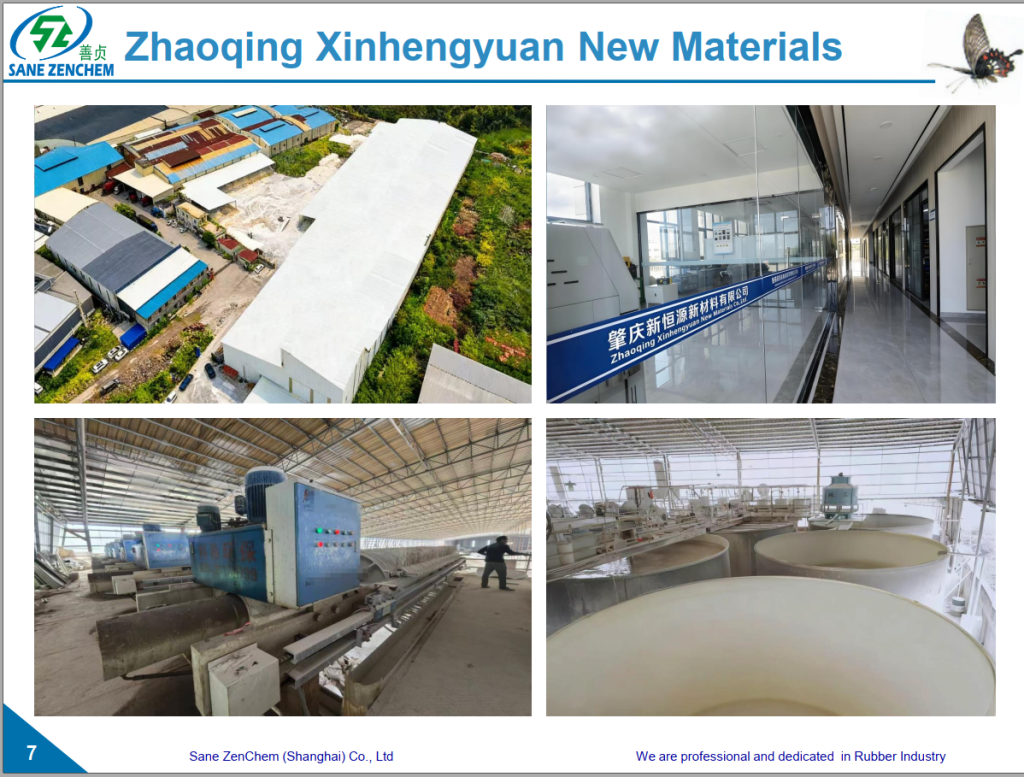
Located in Zhaoqing City, Guangdong Province, our factory is dedicated to the research, development, and production of high-performance functional reinforcing fillers for the rubber industry. As a trusted Rubber Functional filler Manufacturers and functional filler supplier China, we combine advanced manufacturing capabilities with rigorous quality control to serve Rubber reinforcing filler Suppliers and compounders worldwide.
Our manufacturing facility is equipped with state-of-the-art production lines, enabling consistent output of high-quality products such as the PF88 series. We maintain a modern laboratory for formulation development, raw material testing, and finished product validation, ensuring that every batch meets the performance expectations of demanding applications like washing machine door seals.
Frequently Asked Questions (FAQs)
Q1: Are you a reliable supplier for rubber compound manufacturers outside China?
A4: Absolutely. We are more than just a filler manufacturer—we are also a top 5 custom rubber compound manufacturer in China. With a strong focus on technology, research and development, and a commitment to providing integrated one-stop solutions, we serve Rubber Functional filler Manufacturers, Rubber reinforcing filler Suppliers, and Rubber Functional filler Factory partners worldwide. Backed by consistent quality, stable supply, and comprehensive technical support for formulation optimization, we help customers across global markets achieve cost-effective and high-performance rubber sealing solutions.
Q2: What makes your functional filler different from traditional reinforcing fillers like silica or calcium carbonate?
A1: Traditional fillers such as silica often face challenges with dispersion and require coupling agents, while calcium carbonate offers limited reinforcement. Our PF series functional filler is a nanoparticle reinforcing filler for rubber seal formulation, designed with a nanoscale layered structure, high specific surface area, and excellent dispersion in rubber compounds. It provides reinforcement comparable to N550 carbon black while maintaining high whiteness, good processability, and superior aging resistance—making it an ideal high performance rubber filler for rubber compound in washing machine gasket applications.
Q3: Can your filler be used as a direct replacement for carbon black or silica in existing rubber compounds?
A2: Yes, our PF series functional filler can be partially or fully substituted for carbon black or silica depending on the performance requirements of the final rubber seal. It functions as a white reinforcing filler with good dispersion for rubber compound, allowing compounders to achieve balanced mechanical properties, improved processing safety, and reduced compound costs. For manufacturers seeking a cost effective rubber filler for washer door seal compound manufacturing, our product offers a practical and reliable solution.
Q4: How does your filler improve processing efficiency for rubber compounders?
A3: Our functional filler enhances processing by improving compound fluidity, extending scorch time, and shortening optimal curing time. It allows high filler loading without significantly increasing Mooney viscosity or hardness, ensuring smooth extrusion and excellent dimensional stability. These features are especially valuable when formulators aim to improve rubber seal durability with functional filler in rubber compounding while maintaining production efficiency and consistency.
Contact Us
Ready to enhance your rubber compound performance with our PF series functional reinforcing fillers? Whether you are a Rubber Functional filler Manufacturers, Rubber reinforcing filler Suppliers, or a compounder looking for a reliable functional filler supplier China, our team is here to support your formulation needs.
Email: yorichen@sanezen.com
Website: www.sanezenrubber.com
Phone: 86 – 136 7164 1995
Contact us today for technical data sheets, sample requests, or formulation recommendations. Let us help you improve rubber seal durability with functional filler in rubber compounding and drive success in your next sealing application.