1. Introduction: New Challenges and Responses in the Rubber Industry
In the modern elastomer industry, particularly within high-load dynamic sectors such as high-performance tires, automotive damping components, and heavy-duty conveyor belts, polymer materials are continually pushed to their physical extremes. Operational environments characterized by prolonged high-temperature exposure, continuous cyclic strain, and aggressive chemical contact inevitably trigger irreversible structural degradation. The primary culprit behind premature component failure is sulfur reversion—the thermodynamic breakdown and rearrangement of unstable polysulfidic crosslinks within traditional vulcanization systems under sustained thermal and mechanical stress. This degradation manifests macroscopically as a severe drop in crosslink density, accelerated heat buildup, loss of modulus, and ultimate catastrophic fatigue failure.
To overcome these structural limitations, formulation engineering must transition from passive defense to active molecular modification. As a premium global manufacturer of high-performance rubber additives and fine chemicals, Sane ZenChem (Sanexin Group) has engineered a definitive solution: GreenThinking® RT88. Positioned as a premier choice for any heat resistance agent for rubber manufacturer and a highly efficient anti reversion agent for natural rubber supplier, RT88 actively restructures the elastomer network. It bridges the gap between raw material vulnerabilities and the rigid durability baselines required by global OEMs, making it a trusted brand among special rubber chemical supplier and rubber chemical additives factory China operations.
In today’s competitive environment, compounders constantly seek answers to critical questions such as how to reduce heat buildup in natural rubber, how to maintain performance under prolonged thermal stress, and how to extend the service life of dynamic rubber components. RT88 directly addresses these challenges as a dedicated rubber anti reversion agent, a potent rubber heat resistance additive, and an effective heat resistant crosslinking agent that simultaneously functions as a rubber sulfur reversion inhibitor and a high temperature rubber additive. Moreover, its unique network-stabilizing chemistry qualifies it as a true dynamic rubber heat stabilizer, making it one of the most versatile Special additives for natural rubber compounded rubber available on the market. The following sections detail the scientific principles, empirical validation, and application-specific benefits that establish RT88 as the industry benchmark.
2. In-Depth Analysis of GreenThinking® RT88 Core Technical Characteristics
The engineering architecture of GreenThinking® RT88 targets the foundational vulcanization kinetics of sulfur-curable elastomers. Rather than acting as a non-reactive physical shield, RT88 functions as an interactive molecular modifier that reconstructs the crosslink network during the cure cycle.
2.1 Hybrid Crosslinked Networks: Balancing Rigidity and Flexibility
During compounding vulcanization, RT88 participates directly in the sulfur-diene reaction pathway, directing the formation of highly stable carbon-sulfur heterochain hybrid crosslinked networks. Traditional vulcanization networks typically face an engineering trade-off:
- Polysulfide bonds (C-Sₙ-C): Provide excellent initial fatigue life and flexibility but possess low thermal dissociation energy (Ed ≈ 250 kJ/mol), making them prone to rapid reversion at temperatures exceeding 140°C.
- Monosulfidic bonds (C-S-C) / Disulfidic bonds (C-S₂-C): Exhibit much higher thermal stability (Ed ≈ 285 kJ/mol) but lack the conformational flexibility required to deform under rapid dynamic cycles without breaking.
RT88 resolves this dilemma by introducing a hybridized network that combines the high thermal resistance of mono/di-sulfide links with the spatial flexibility of polysulfide configurations. Even during extended high-temperature processing or intentional overcure scenarios (above 160°C), it suppresses rearrangement and prevents network cleavage. This ensures that critical mechanical properties—such as tensile strength, modulus, and elastic recovery—remain stable after thermal stress, establishing RT88 as an essential rubber additive that maintains properties after aging.
2.2 Dual-Action Anti-Reversion Mechanics
As a leading choice among global rubber anti reversion agent manufacturers, Sane ZenChem designs its anti-reversion mechanics around two distinct pathways:
- Active Thermal Compensation: Operating as a core component within advanced compensation-type vulcanization systems, RT88 acts as a molecular “backup.” When high temperatures break down existing polysulfide bonds, the active intermediates of RT88 capture the free sulfur fragments and re-crosslink the polymer chains, maintaining a stable crosslink density.
- Structural Stabilization: By favoring the synthesis of short-chain heterochain crosslinks from the start, it lowers the overall concentration of fragile polysulfide links, reducing the compound’s baseline susceptibility to thermal cleavage.
This dual-action protection maintains steady physical properties under heavy thermal loads, positioning Sane ZenChem as a highly competitive, cost effective rubber aging inhibitor manufacturer.
2.3 Dynamic Thermal Stabilization and High-Temperature Performance Enhancement
Beyond its anti-reversion function, RT88 acts as a premier dynamic rubber heat stabilizer by continuously moderating the internal friction and hysteresis of the filled elastomer under cyclic loading. The hybrid network structure not only resists thermal cleavage but also dissipates mechanical energy more evenly across the crosslink junctions, thereby reducing localized hot spots that accelerate degradation. This stabilization effect is particularly valuable for applications involving high-frequency oscillations, where traditional additives often fail to prevent modulus decay and creep. As a high temperature rubber additive, RT88 maintains compound integrity even when service temperatures consistently exceed 150°C, a regime where conventional sulfur-cured systems would rapidly revert. This makes RT88 an indispensable component for engineers who require a heat resistant crosslinking agent that does not compromise processing safety or final part flexibility.
3. Empirical Performance Analysis Across Critical Application Scenarios
The practical value of GreenThinking® RT88 is supported by extensive laboratory and field testing across several demanding industrial applications.
3.1 High-Performance Damping Components & Shock Absorbers
In automotive anti-vibration systems (such as engine mounts, suspension bushings, and torsional dampers), maintaining a low dynamic-to-static stiffness ratio (Kd/Ks) across variable frequencies is critical for passenger comfort and component lifespan. High hysteresis leads to severe heat generation, accelerating compound breakdown.
To evaluate performance, an industrial control compound based on natural rubber (Formula 1 – Blank) was compared against a formulation modified with 0.8 phr of GreenThinking® RT88 (Formula 2 – RT88).
Table 1 – Damping Compound Formulation Matrix
| No. | Ingredient / Specification | Manufacturer | Formula 1 – Blank (phr) | Formula 2 – RT88 (phr) |
| 1 | Natural Rubber (3L) | Standard Grade | 100 | 100 |
| 2 | Carbon Black N774 | Industry Standard | 70 | 70 |
| 3 | Zinc Oxide / Stearic Acid | Processing Essentials | 5 / 1 | 5 / 1 |
| 4 | Accelerator CZ / Sulfur | Vulcanization Package | 1.3 / 1.8 | 1.3 / 1.8 |
| 5 | Paraffin Oil / Process Wax | Plasticizers | 5 / 1 | 5 / 1 |
| 6 | Anti-degradant (4010NA / RD) | Protection Package | 2 / 1 | 2 / 1 |
| 7 | GreenThinking® RT88 | Sane ZenChem | 0 | 0.8 |
| Total Mass (Phr) | 188.1 | 188.9 |
Table 2 – Mechanical & Dynamic Rheological Evaluation (Unaged vs. Aged)
| Performance Indicator | Test Standard | Formula 1 – Blank | Formula 2 – RT88 | Engineering Impact with RT88 |
| Hardness (Shore A) | ASTM D2240 | 64 | 64 | Maintains original design hardness baseline. |
| Tensile Strength (MPa) | ASTM D412 | 23.10 | 22.74 | Preserves structural integrity with no loss. |
| 100% Elongation Modulus (MPa) | ASTM D412 | 3.64 | 3.91 | Higher initial structural modulus. |
| Dynamic Stiffness (Kd, KN/mm) | Dynamic Test | 0.61 | 0.59 | 3.4% Reduction (improved isolation). |
| Static Stiffness (Ks, KN/mm) | Static Test | 0.41 | 0.44 | 6.9% Increase (superior static load support). |
| Dynamic/Static Ratio (Kd/Ks) | – | 1.49 | 1.34 | 10.1% Drop (optimized vibration damping). This directly confirms RT88 as an effective additive to lower dynamic static stiffness ratio. |
| Natural Frequency (Hz) | Harmonic Test | 12.5 | 11.9 | 4.8% Reduction (shifts resonance bands). |
| Creep Index (%) | Long-term Load | 4.83 | 4.52 | 16.5% Improvement in deformation resistance. |
| Rubber-Metal Adhesion (N/mm) | Pull-out Test | 6.54 | 6.56 | Interfacial bonding remains excellent. |
| Air Aging (70°C × 72h) | ASTM D573 | |||
| * Hardness Change (Points) | +4 | +3 | Reduced thermal hardening. | |
| * Tensile Strength Change (%) | -5.8% | -3.2% | 44.8% Lower tensile strength loss. | |
| * Elongation Change (%) | -17.4% | -7.6% | 56.3% Lower ductility loss. | |
| Compression Set (70°C × 24h, %) | GB/T 7759 | 18.09% | 16.09% | 11.0% Lower permanent set. |
| Severe Air Aging (100°C × 72h) | ASTM D573 | |||
| * Tensile Strength Change (%) | -24.9% | -15.5% | Minimizes high-temperature degradation. | |
| * Elongation Change (%) | -37.9% | -24.7% | Maintains polymer matrix flexibility. |
The results show that adding just 0.8 phr of RT88 drops the dynamic-to-static stiffness ratio by 10.1%. This allows the component to provide firm static support while remaining highly compliant under dynamic vibration. Furthermore, after hot-air aging at 100°C × 72h, the control compound experienced a 24.9% drop in tensile strength, whereas the RT88-modified formula limited this loss to 15.5%. This performance confirms RT88’s status as a premier heat resistant additive for natural rubber compounds. By effectively lowering heat buildup during cyclic deformation, RT88 provides a direct answer to how to reduce heat buildup in natural rubber without sacrificing other mechanical properties.
3.2 High-Durability Non-Pneumatic (Hollow) Tires
Non-pneumatic, airless tires represent the future of puncture-proof military, industrial, and agricultural mobility. However, because they lack compressed air to distribute loads, their structural spokes and outer shear bands endure continuous cyclical compression. This leads to severe localized heat buildup and high stress concentrations, frequently causing early structural tearing and spoke fracture.
To address these vulnerabilities, Sane ZenChem operates as a specialized non pneumatic tire durability additive supplier and a high-tier non pneumatic tire durability compound additive manufacturer. In a recent validation trial using a challenging NR/BR/SBR blend formulation, the insertion of 1.5 phr of RT88 yielded significant improvements:
- Flex Fatigue Life Leap: Under cyclic flex testing, the cracking threshold jumped from a baseline of 100,000 cycles without RT88 to over 300,000 cycles with 1.5 phr RT88. This represents a >200% extension in lifespan, completely resolving early spoke fracture challenges. This outstanding outcome explicitly demonstrates RT88’s ability to improve flex fatigue life of non pneumatic tires and effectively prevent structural cracking in airless tire rubber by reinforcing the polymer network against repeated compressive and tensile stresses.
- Stiffness Retention with Reduced Heat Generation: The modified compound maintained high structural rigidity (increased Shore hardness) while simultaneously dropping internal heat generation metrics from 24 down to 22. This balance of rigidity and flexibility is critical for high-load airless structures.
- Thermal Oxidation Resistance: Under hot-air aging conditions (100°C × 72h), the retention rates for hardness, tensile strength, and ultimate elongation improved by 20% to 30% compared to the unmodified baseline. This performance highlights RT88’s role for companies seeking an expert improve tire tread longevity additive supplier to optimize extreme long-haul performance.
3.3 Heavy-Duty Automotive Wiper Blades: Resisting Chemical Chlorination
Automotive wiper blades rely on complex surface treatments to ensure smooth operation. During manufacturing, extruded natural rubber wiper strips undergo a harsh chemical chlorination process—immersion in a bath of 30% concentration Hydrochloric acid (HCl) and 40% content Calcium hypochlorite at 46°C for 30 minutes. This treatment reduces the surface coefficient of friction, ensuring smooth assembly and quiet operation against windshield glass. However, this highly reactive solution can leach into the subsurface rubber matrix, breaking down vulnerable chemical bonds and causing micro-cracking and premature tearing.
By incorporating 1.5 phr of RT88 into the base natural rubber compound, manufacturers can utilize an effective chemical defense strategy:
- Chemical Corrosion Resistance: The stable carbon-sulfur heterochain network generated by RT88 resists internal oxidation and halogen leaching during the aggressive acid-chlorine wash. This makes RT88 an excellent chemical resistance additive for natural rubber wipers, ensuring that the blade core retains its elasticity and strength even after aggressive surface treatment.
- Surface Matrix Integrity: Post-treatment microscopic analysis shows that RT88 prevents deep subsurface degradation, eliminating the delayed micro-cracking that typically appears several days after chlorination. Thus, RT88 serves as a powerful agent to prevent micro cracking in chlorinated rubber parts, a common failure mode in wiper blades and other chlorinated rubber components.
- Acoustic Optimization & Longevity: By preserving the structural uniformity of the wiping edge, the blade maintains smooth contact with the glass over a longer service life, significantly reducing operating squeak and chatter noise. This highlights Sane ZenChem’s position as a premier automotive rubber parts heat resistance solution provider and an expert natural rubber additive manufacturer.
4. Manufacturing Scale, Compliance, and Customization Excellence
Selecting a chemical additive partner requires more than evaluating laboratory performance; it requires verifying large-scale industrial consistency and corporate stability.
4.1 Industrial Production Capacity
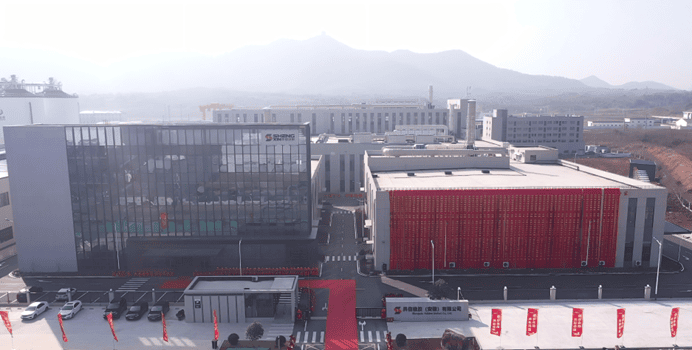
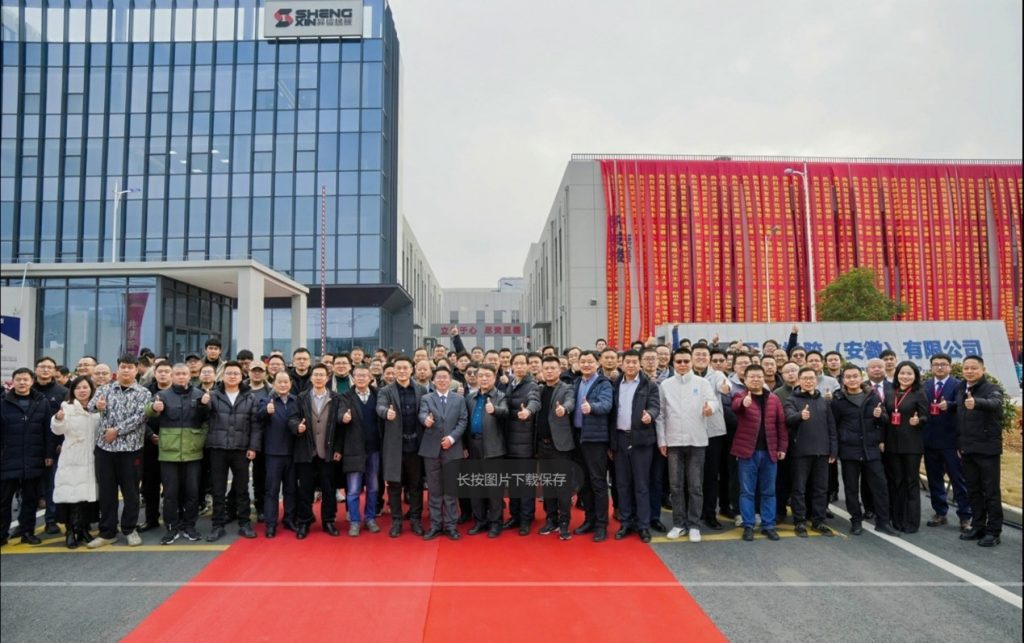
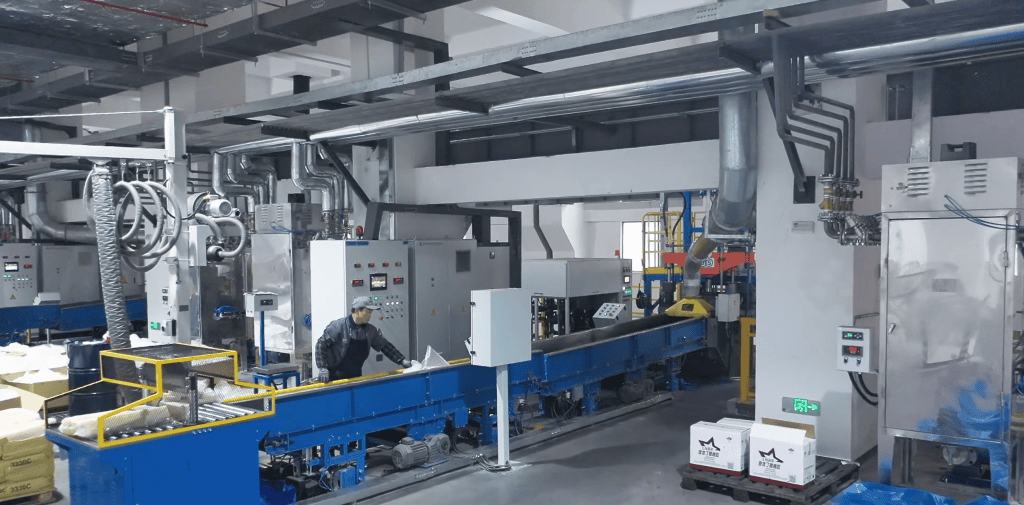
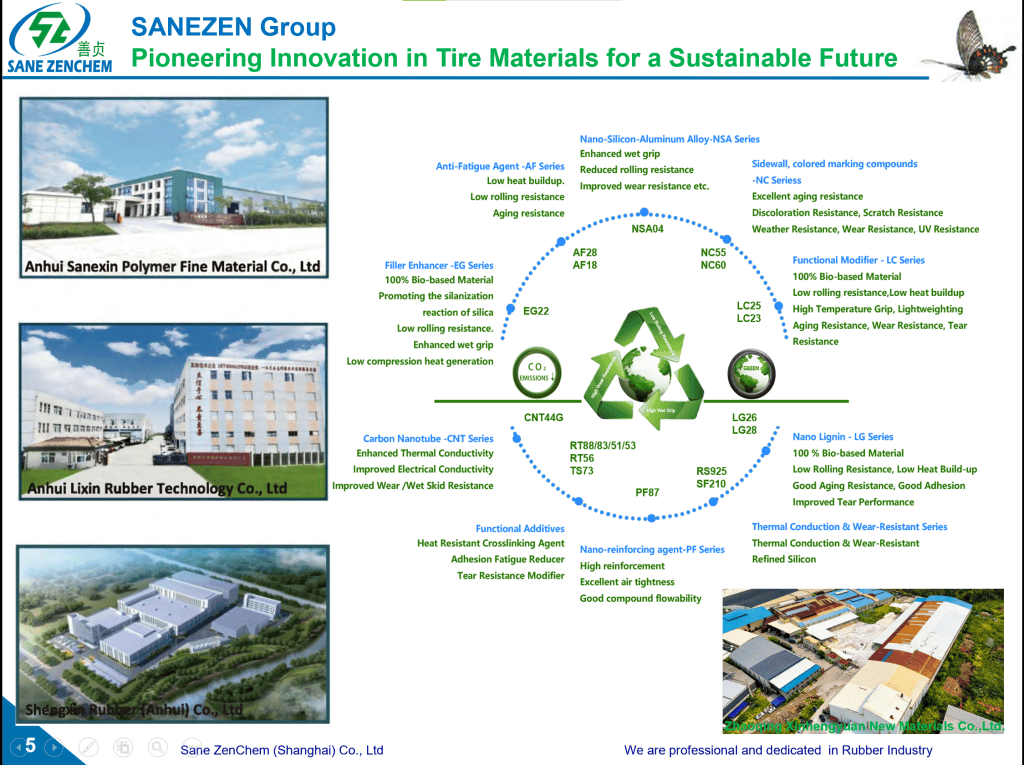
Sane ZenChem operates a modern, fully automated masterbatch and rubber chemical compounding facility in Xuancheng, Anhui Province. Annual Output: Featuring an annual production capacity of 120,000 metric tons, our facility ranks among the top ten largest rubber compounding operations in China.
- Process Control: All production lines utilize closed-loop, automated gravimetric feeding systems and integrated PLC software. This ensures close control over mixing temperatures, rotor speeds, and addition sequences, reducing batch-to-batch variation and keeping Mooney viscosity metrics within tight tolerances.
4.2 Comprehensive Regulatory Compliance
As a responsible tire rubber compounding additives supplier, Sane ZenChem integrates strict ESG principles throughout its manufacturing processes. The entire GreenThinking® product portfolio fully complies with EU REACH and RoHS regulatory frameworks, ensuring zero usage of restricted or hazardous substances. To support global carbon reduction goals, our current R&D focus centers on expanding bio-based material streams. This includes sustainable filler enhancers and nano-lignin particles, which serve as renewable options to substitute traditional carbon black while improving matrix tear strength.
4.3 Custom Rubber Compounding Services
We recognize that standard chemical solutions cannot satisfy every unique operating environment. Backed by our technical application centers in Shanghai, Anhui, and Changzhou, Sane ZenChem offers a professional custom rubber compounding service for heat resistance. Our material science teams work directly with client engineering groups to adjust crosslink densities, optimize vulcanization curves, and refine accelerator ratios to match specific processing equipment and performance targets. This cooperative model establishes Sane ZenChem as a reliable natural rubber additive factory partner for high-tier industrial projects.


5. Practical Usage and Technical Processing Guidelines
To maximize the performance of GreenThinking® RT88 within the elastomer matrix, compounding engineers should adhere to the following technical guidelines:
5.1 Mixing and Dispersion Sequence
- Physical Form: RT88 is supplied as a highly refined, low-dust white powder with an initial melting point of 90.8°C and a heating loss of just 0.46%. This melting profile ensures rapid incorporation and uniform dispersion within the rubber matrix under standard shear mixing.
- Addition Point: It is recommended to introduce RT88 during the final stage of the mixing cycle (the downstream non-productive or final productive pass) on an internal mixer or open two-roll mill. It should be added concurrently with sulfur and accelerators. This placement ensures that RT88 participates directly in the final vulcanization network construction without undergoing premature thermal breakdown during high-temperature masterbatch cycles.
5.2 Recommended Dosage Configurations
- Synergistic Co-Agent Use (With Traditional Sulfur Systems): For standard anti-reversion and thermal stabilization in tire treads, conveyor belts, or automotive dampers, the recommended dosage ranges from 0.5 to 3.0 phr. Optimal performance in natural rubber compounds is typically achieved between 1.0 and 2.0 phr.
- Stand-Alone Crosslinking (Sulfur-Free Curing Systems): For specialized heat-resistant seals or gaskets requiring low compression set at high temperatures, RT88 can function as the primary crosslinking agent. In these sulfur-free formulations, the addition level should be increased to 7.0 phr.
6. Technical Data & Quality Metrics
The following metrics represent typical quality values for GreenThinking® RT88:
- Appearance: Free-flowing white powder (Visual check)
- Initial Melting Point: ≥ 89.0°C (Typical result: 90.8°C)
- Heating Loss: ≤ 1.0% (Typical result: 0.46%)
- Packaging: Standardized 20 kg/bag heavy-duty moisture-lock packaging.
- Storage Life: 24 months when retained in original sealed containers under cool, dry conditions (≤ 25°C).
7. Frequently Asked Questions (FAQs)
Q1: Is GreenThinking® RT88 compatible with synthetic elastomer matrix blends, or is its use restricted solely to natural rubber formulations?
Answer: GreenThinking® RT88 exhibits excellent structural compatibility across a wide range of diene-based elastomers. While it delivers outstanding performance benefits in natural rubber (NR) and isoprene rubber (IR)—which are highly susceptible to sulfur reversion—it is equally effective in polybutadiene rubber (BR), styrene-butadiene rubber (SBR), and their structural blends. This broad utility makes Sane ZenChem a versatile special rubber chemical manufacturers partner for complex multi-polymer formulations.
Q2: Does the addition of RT88 require an adjustment to the existing vulcanization package (accelerators and sulfur levels)?
Answer: Under standard operating conditions within the recommended dosage window (0.5 to 3.0 phr), RT88 functions synergistically with the existing vulcanization package, meaning no major adjustments to initial sulfur or accelerator levels are necessary. It acts as a performance enhancer rather than a replacement. However, for specialized formulations targeting extreme thermal limits, small-scale pilot testing is recommended to optimize the crosslink balance.
Q3: How does RT88 impact compounding processing safety and green tire rolling resistance?
Answer: RT88 has a negligible effect on early-stage vulcanization kinetics, meaning it does not compromise scorch safety margins (t_s₂) during processing. Its primary chemical activity occurs during the mid-to-late vulcanization phase, optimizing the final network architecture. For tire applications, this optimized network lowers hysteresis loss under cyclic strain, which directly reduces rolling resistance and improves vehicle fuel efficiency while maintaining high tear and abrasion performance.
Q4: Can RT88 truly help engineers solve the practical problems of heat buildup, fatigue failure, and chemical attack in natural rubber components?
Answer: Absolutely. RT88 is specifically engineered to address these exact pain points. It provides a clear solution for how to reduce heat buildup in natural rubber by stabilizing the crosslink network and minimizing internal friction. As a dedicated additive to lower dynamic static stiffness ratio, it optimizes damping performance. Its proven ability to improve flex fatigue life of non pneumatic tires and prevent structural cracking in airless tire rubber has been validated in rigorous testing. For chemically aggressive environments, it serves as an effective chemical resistance additive for natural rubber wipers and reliably prevents micro cracking in chlorinated rubber parts. Overall, RT88 functions as a comprehensive rubber anti reversion agent, rubber heat resistance additive, heat resistant crosslinking agent, rubber sulfur reversion inhibitor, high temperature rubber additive, dynamic rubber heat stabilizer, and one of the most versatile Special additives for natural rubber compounded rubber available. Its multi-functional profile makes it indispensable for modern high-performance elastomer systems.
8. Strategic Partnership: Contact Sane ZenChem Today
At Sane ZenChem, we operate as strategic technical partners dedicated to helping you manage compound risks, resolve processing bottlenecks, and secure your production quality floor. Whether you are looking for rubber heat resistance and crosslinking agent manufacturers China or require a specialized rubber heat resistance and crosslinking agent suppliers China network to stabilize your international supply chain, our engineering teams are ready to support your goals.
Contact our global advisory desk to request technical samples, arrange rheological evaluations, or discuss custom compounding specifications:
- Business Operations Center: Rooms 1606-1608, Boda Business Building, No. 11 Puhuitang Road, Xuhui District, Shanghai, China.
- Smart Manufacturing Base: No. 22 Meizigang Road, Northern District, Xuancheng Economic Development Zone, Anhui Province, China.
- Quick Technical Inquiry Channel: Email: yorichen@sanezen.com
- Global Web Portal: www.sanezenrubber.com
 English
  Spanish
  Russian