The global tire and high-performance rubber products industry is rapidly evolving towards electrification, sustainability, and higher performance, placing unprecedented demands on fundamental material science. A key bottleneck in technological advancement is the fundamental, synergistic resolution of three interconnected challenges in high-dynamic-load applications centered on natural rubber: rolling resistance, dynamic heat generation, and sulfur reversion. This article systematically elaborates on an anti-fatigue agent, AF28 (GreenThinking® AF28), designed on an innovative molecular architecture. Its function transcends the traditional “additive” category, providing an essential performance optimization pathway for natural rubber/carbon black composite systems through precise interface engineering and network stabilization strategies. Supported by comprehensive experimental data, this paper reveals how AF28’s unique dual-functional group design constructs a robust covalent “bridge” between carbon black and rubber polymer chains. This action significantly reduces hysteresis loss, inhibits the thermal degradation of the vulcanization network, and ultimately achieves simultaneous improvement in product lifespan, energy efficiency, and dynamic performance. This article aims to provide formulation engineers facing stringent performance and environmental regulations with a new, data-driven perspective on material solutions, addressing the need for a Rubber additive to reduce heat generation and an Anti reversion agent for natural rubber tires.
1. Introduction: Contemporary Challenges for High-Performance Rubber Products
As a typical viscoelastic material, the dynamic mechanical behavior of rubber directly dictates the performance boundaries of the final product. In critical applications such as tires, engine mounts, and high-speed rail damping elements, the energy dissipation (i.e., hysteresis) of the material under periodic stress and strain is a core factor affecting efficiency, durability, and safety. This hysteresis is released as heat, raising the system temperature and triggering a chain reaction:
- Performance Decay: High temperatures accelerate rubber aging and can induce sulfur reversion—the breakdown of polysulfide crosslinks leading to a permanent loss of crosslink density, modulus, hardness, and tensile strength. Engineers constantly seek solutions for How to solve sulfur reversion in natural rubber at high temperatures.
- Reduced Energy Efficiency: For tires, hysteresis-induced heat directly contributes to rolling resistance, impacting vehicle fuel economy or electric vehicle range. This creates a strong demand for a Rolling resistance reducer for tire tread.
- Shortened Lifespan: Cumulative thermomechanical fatigue is a primary cause of ultimate rubber product failure, highlighting the need for a Natural rubber anti fatigue agent supplier offering durable solutions.
Traditional coping strategies, such as adjusting filler loadings, oil types, or the curing system, often fall into the “performance seesaw” dilemma: improving one property frequently comes at the expense of another. This is particularly acute in natural rubber systems. While prized for its exceptional mechanical strength and tear resistance, NR’s unsaturated molecular backbone is sensitive to heat and oxygen, and the relatively weak physical adsorption interface between carbon black filler and rubber exacerbates these contradictions. Therefore, the industry urgently needs a novel technology capable of intervening at the molecular level to reshape filler-rubber interaction while simultaneously stabilizing the vulcanization network. AF28 is precisely such a “performance modulator” developed based on this philosophy. Its goal is not mere modification but the fundamental redesign of the composite’s microstructure, positioning it as a High performance tire additive manufacturer‘s advanced offering.
2. The Mechanism of AF28: A Bridge from Molecular Design to Macro-Performance
Understanding AF28’s efficacy requires delving into its molecular structure and the chemical-physical nature of its interaction with composite components.
2.1 Targeted Molecular Design: A Dual-Functional Group Synergy Strategy
The AF28 molecule can be conceptualized as an “X-R-Y” structure, where R is a linker backbone, and X and Y are meticulously designed active end groups:
- Y-end (Rubber-reactive end): This terminal contains functional groups capable of specific reactions with natural rubber polymer chains. Active sites present at the chain ends of NR molecules or generated on the backbone during processing (e.g., aldehyde groups C=O) can undergo chemical reactions with AF28’s Y-end, forming covalent linkages. This process achieves “capping” and “grafting” of the rubber chains, effectively reducing the number of free chain ends in the system—a significant source of ineffective internal friction and hysteresis loss.
- X-end (Carbon black-anchoring end): This terminal is rich in strongly polar or reactive groups like hydroxyl and amino groups. Its design targets the sparse but high-energy “active sites” on the carbon black surface—primarily oxygen-containing functional groups (such as carboxyl, phenolic hydroxyl, lactone groups) located at crystallite edges and slit-shaped cavities. AF28’s X-end can firmly anchor onto these sites through various strong interactions like ester bonds, amide bonds, and hydrogen bonds.
2.2 Core Mechanisms: Dual Effects of Interface Coupling and Network Stabilization
Through the above dual-functional group structure, AF28 initiates two fundamental positive changes within the composite, acting as an Anti fatigue agent for carbon black reinforced systems:
Mechanism One: Constructing a Tough Filler-Rubber Interface Layer
The AF28 molecule acts as a “bridge,” covalently connecting to carbon black at one end and to the rubber chain at the other. This fundamentally alters the traditional weak connection state dominated by physical adsorption (van der Waals forces) between carbon black and rubber, establishing a stable chemical bonding interface. The direct results are:
- Significantly Reduced Interface Slip: Under dynamic deformation, the resistance to slippage of rubber chains over the carbon black surface is greatly increased. The energy dissipation (hysteresis) caused by slip friction is substantially suppressed. This is the root cause for reducing dynamic heat generation and rolling resistance, providing a Rubber dynamic heat generation solution.
- Promoted Uniform Carbon Black Dispersion: The AF28 molecules anchored on the carbon black surface have an “R” backbone exterior compatible with rubber, acting like a “compatibility shell” around carbon black aggregates. This effectively prevents their re-agglomeration, promoting dispersion at a smaller, more uniform scale within the rubber matrix. Uniform dispersion reduces local stress concentration, further optimizing the dynamic mechanical response.
Mechanism Two: Participating in and Stabilizing the Vulcanization Crosslink Network
AF28’s molecular design allows it to participate appropriately in the sulfur vulcanization system. More importantly, after network formation, it acts as a “crosslink stabilizer”:
- Inhibits Polysulfide Bond Thermal Degradation: Polysulfide bonds (-Sx-) within the vulcanization network are prone to breakage and recombination at high temperatures—the chemical essence of reversion. The presence of AF28 can slow this process, potentially by “buffering” thermal stress through its specific structure or interacting with polysulfide chain ends, thereby enhancing the overall network’s thermal stability. This function aligns with that of a Crosslink stabilizer for natural rubber vulcanizates.
- Maintains Network Integrity: Under prolonged service or overheating conditions, vulcanizates containing AF28 better retain their crosslink density and network structure. This maintains the stability of key physical properties like modulus and hardness, extending product service life.
3. Performance Validation: A Deep Interpretation of Data Beyond Conventional Testing
Based on comparative data from a standard NR/carbon black tread compound formulation (Formula 1 as control, Formula 2 with 1 phr AF28), we can move beyond simple percentage comparisons to perform deeper performance correlation analysis, answering What additive can reduce rolling resistance and heat generation simultaneously.
3.1 Curing Characteristics and Processability Optimization
- T90 reduced from 10.21 minutes to 7.21 minutes: This signifies an approximately 29% increase in curing efficiency. In industrial production, this directly translates to shorter cure cycles, higher equipment utilization, and lower energy consumption per unit, offering significant economic benefits.
- ML Mooney viscosity increased from 1.92 dN.m to 2.56 dN.m: A moderate rise in Mooney viscosity is often associated with better carbon black dispersion and higher “green strength,” which benefits the dimensional stability and processability of semi-finished products during shaping.
3.2 Synergistic Enhancement of Static and Dynamic Mechanical Properties
| Performance Indicator | Control | +1 phr AF28 | Interpretation & Significance |
| Rebound Resilience (%) | 43 | 49 | ~14% improvement in elastic recovery capability. This is the most direct macroscopic manifestation of reduced hysteresis loss, meaning the material can store and release elastic work more efficiently during deformation, converting a smaller proportion of energy into heat. |
| Tan δ @ 60°C | 0.098 | 0.080 | Reduction of 18.4%. This parameter is the gold standard indicator for predicting tire rolling resistance. This level of reduction is a crucial step towards achieving the highest energy efficiency grades (e.g., Grade A) on labels like the EU Tire Label, directly correlating to extended range for electric vehicles. It is a key metric for an Additive to improve tire rolling resistance to EU Label Grade A. |
| Loss Modulus E” @ 60°C (MPa) | 12.45 | 10.57 | Reduction of 15.1%. The loss modulus directly characterizes the material’s energy dissipation capacity at a specific temperature. Its decrease corroborates the reduction in Tan δ, jointly confirming effective control of dynamic heat generation and rolling resistance. |
| Modulus at 300% (MPa) | 14.8 | 15.5 | Slight increase. This indicates that while significantly improving elasticity, the material’s reinforcement effect is not compromised but even slightly optimized, achieving the ideal balance of “strong yet not hard, elastic yet not soft.” |
| Tensile Strength (MPa) | 33.3 | 32.9 | Essentially maintained. Proves that AF28 does not compromise the material’s fundamental mechanical strength while optimizing dynamic performance and thermal stability. |
3.3 Durability and Anti-Reversion Performance Validation
- Property Retention After Heat Aging: After 100°C × 48 hours of hot air aging, the compound with AF28 showed superior retention rates in key indicators like tensile strength and elongation at break compared to the control. This indicates AF28 effectively slows the rate of performance degradation at high temperatures, addressing How to reduce heat buildup in natural rubber compounds.
- Rebound After Aging: Post-aging, the control sample had a rebound of 48%, while the AF28 sample reached 51%. This further proves that even after experiencing heat aging, the low-hysteresis characteristics of the AF28 sample are maintained, demonstrating the persistence of its performance advantage.
4. Application Scenario Expansion and Formulation Integration Strategy
The value of AF28 extends beyond tire treads. Its mechanism based on molecular interface engineering grants it broad application prospects in various dynamic products based on NR/carbon black systems.
4.1 Tire Sector
- High-Performance Passenger Car / Electric Vehicle Tires: Focused on reducing rolling resistance to improve energy efficiency while ensuring sufficient wet grip (by modulating Tan δ near 0°C) and wear resistance. AF28 is a powerful tool for achieving this balance, serving as a High performance passenger car tire tread additive.
- Truck and Bus Radial Tires (TBR): Heavy-duty vehicle tires have extremely stringent requirements for heat generation and durability. AF28’s anti-reversion and heat-reduction properties help enhance the service life and safety of TBR tires under long-distance, high-speed operation, particularly in heat-prone areas like the belt edge and shoulder. It contributes to developing a Truck and bus tire compound for long haul durability.
- Off-the-Road Tires (OTR): Facing harsh conditions and massive loads, the cut/chip resistance, tear resistance, and thermal fatigue performance of OTR tires are paramount. AF28, which enhances heat and fatigue resistance while maintaining NR’s high strength, has application potential here.
4.2 Non-Tire Dynamic Rubber Products
- Damping Components: Such as automotive engine mounts, chassis bushings, and rail transit damping pads. AF28 can effectively optimize the dynamic-to-static stiffness ratio (Kd/Ks) and reduce dynamic heat generation, thereby improving damping efficiency and product durability under long-term vibration. It is a Material to improve dynamic-to-static stiffness ratio of rubber damping components and a Material for improving dynamic properties of engine mounts.
- Dynamic Seals: Under conditions of cyclic compression and temperature fluctuations, AF28 helps maintain the elasticity and compression set resistance of seals, preventing failure due to reversion.
4.3 Formulation Integration Recommendations
- Target System: AF28 is specifically designed for natural rubber (NR) or NR-dominant compounds and is most effective in carbon black-reinforced systems, positioning it as a Best filler for natural rubber carbon black systems enhancer.
- Dosage and Addition Stage: The recommended addition range is 1.0 – 1.6 phr. It must be added during the first mixing stage (non-productive stage) in the internal mixer, together with the raw rubber, carbon black, and other main ingredients. This ensures sufficient opportunity for reaction and dispersion under high temperature and high shear conditions.
- Synergy with Curing System: AF28 is compatible with conventional accelerators and sulfur. As it moderately accelerates the cure rate, it is advised that formulation engineers fine-tune the original curing system (e.g., slightly reducing accelerator dosage or adjusting the sulfur/accelerator ratio) based on the new curing curve (e.g., shortened T90) to achieve the optimal balance between scorch time and cure rate.
- Relationship with Silica Systems: While AF28 primarily targets carbon black, in carbon black/silica dual-phase systems, its action of optimizing carbon black dispersion and reducing the hysteresis contribution from carbon black remains effective. It can serve as a complementary means to balance performance in high-performance “green tire” formulations aimed to Reduce hysteresis loss in carbon black filled rubber.
While AF28 is specifically optimized for tire applications, our GreenThinking® AF series offers synergistic solutions across the rubber industry. AF27, for instance, is specially formulated to enhance the dynamic properties and service life of non-tire industrial goods such as vibration dampers and seals. To explore the detailed mechanisms and full spectrum of the AF series, please refer to our comprehensive technical portfolio:
https://sanezenrubber.com/wp-content/uploads/2025/12/AF28-Anti-fatigue-data-information-EN.pdf
5. Conclusion: Towards a New Generation of High-Performance Rubber Material Design
In an era where rubber material science is evolving from empirical formulation towards precise molecular design, AF28 represents an innovative solution paradigm. It no longer indirectly influences performance by “adjusting” formulation components but directly intervenes in the two most decisive microstructural domains of composites: the interface and the network.
By constructing a covalent connection of carbon black-coupling agent-rubber chain, AF28 fundamentally strengthens the interface, drastically reducing hysteresis heat generation dominated by interface slip. By stabilizing the polysulfide bonds within the vulcanization network, it effectively inhibits reversion at high temperatures, enhancing the material’s long-term durability. Comprehensive data proves this dual mechanism can enhance elasticity, reduce rolling resistance, and extend lifespan while preserving the inherent high-strength characteristics of natural rubber. It is truly an Additive to reduce dynamic heat generation in natural rubber.
For rubber product manufacturers facing EU label regulation upgrades, new electric vehicle demands, and sustainability pressures, AF28 provides a powerful, validated technological lever. It grants formulation engineers unprecedented freedom and possibilities when confronting the classic “Magic Triangle” challenge, laying a solid material foundation for developing the next generation of more efficient, safer, and more durable rubber products.
About SANEZEN Group
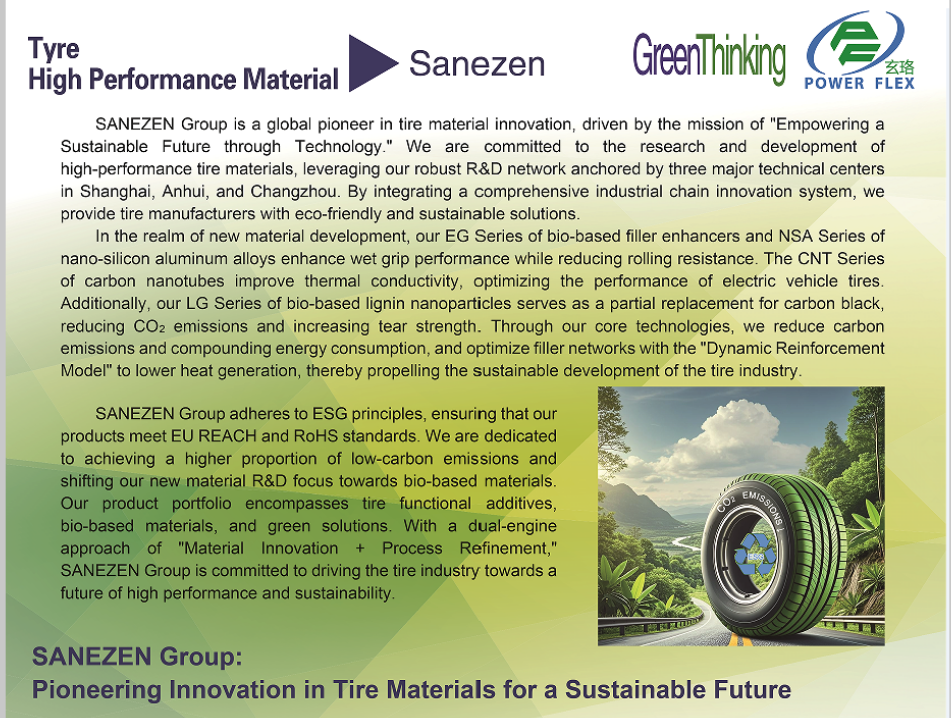
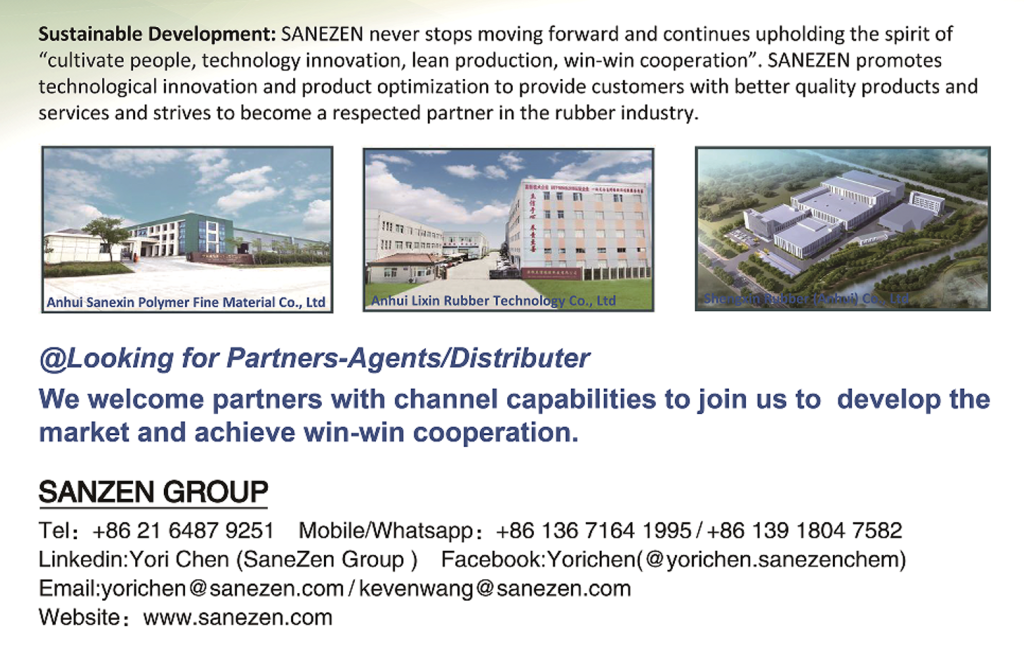
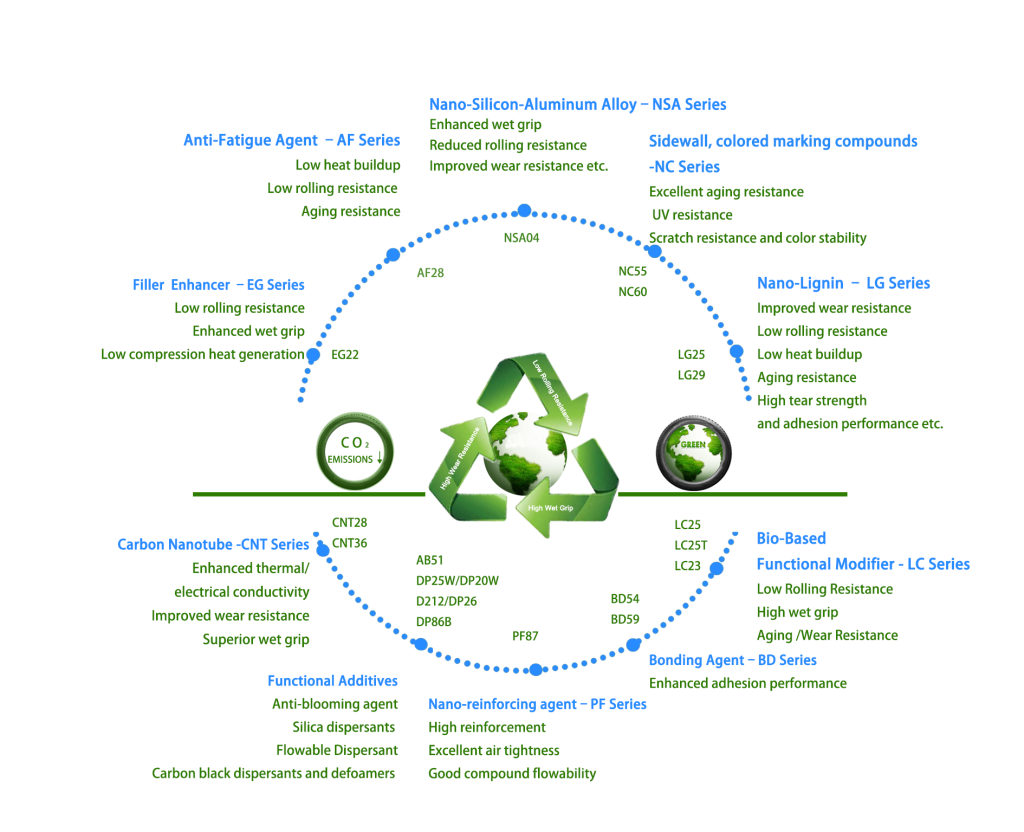
SANEZEN Group is a technology and innovation-driven manufacturer of high-performance rubber materials and specialty chemicals. We focus on the sustainable development challenges of the rubber industry. Through R&D centers in Shanghai, Anhui, and Changzhou, we are committed to developing cutting-edge product solutions including the AF-series anti-fatigue agents, fully bio-based fillers, nano silicon-aluminum alloys, and carbon nanotubes. As a leading Rubber chemical manufacturer for tires and Tire additive supplier in China, we strive to be a strategic partner for our clients in material science, jointly advancing the industry towards a high-performance and greener future. We are your reliable High performance rubber raw material supplier.
 English
  Spanish
  Russian