Sane Zenchem Production Facility — A Premium Rubber Material R&D and Manufacturing Platform in China
In the high-end rubber products industry, material performance determines not only the initial quality of a product but also its reliability throughout the entire lifecycle. From automotive powertrain seals to oil drilling blowout preventers, from new energy battery thermal management systems to aerospace pipeline systems, the failure of rubber products is rarely attributable to a single factor—it is the result of complex interactions between material design, manufacturing processes, and service conditions.
As a professional rubber material R&D and manufacturing enterprise, Sane Zenchem is consistently dedicated to technological innovation in high-performance compounded rubber and large-scale manufacturing. As a Custom Rubber Compound Manufacturer and High Performance Rubber Compound Manufacturer, we have established a comprehensive R&D system covering specialty rubber compounds, rubber processing aids, and high-performance reinforcing materials, providing One Stop Custom Rubber Compound Manufacturing Solutions for automotive, petrochemical, rail transportation, new energy, aerospace, semiconductor, and other industries—spanning material development, formulation optimization, process validation, and large-scale supply. We are also a reliable Rubber Compound Supplier in China, committed to long term partnership.
The company has now built a complete high end rubber material manufacturing platform:
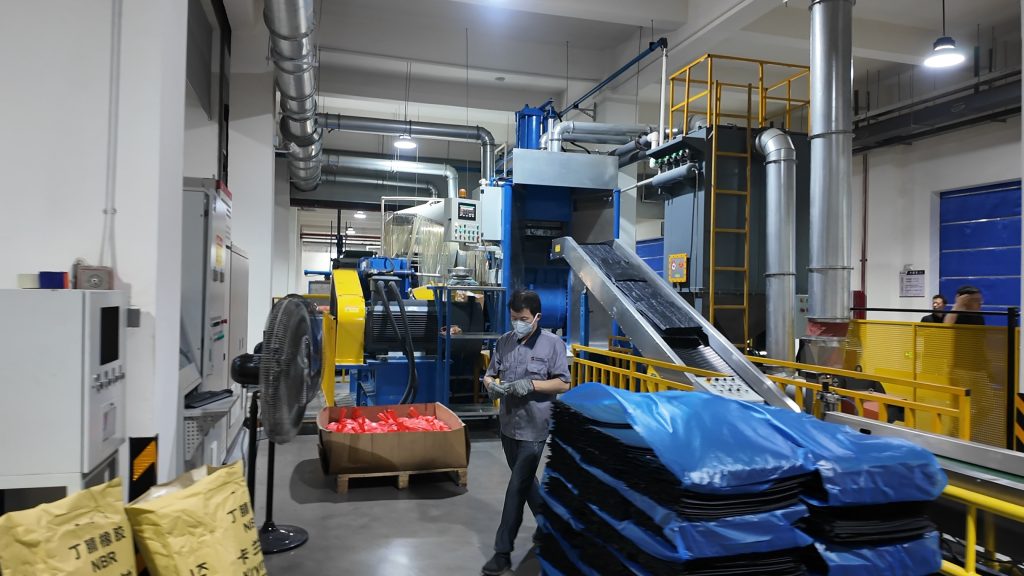
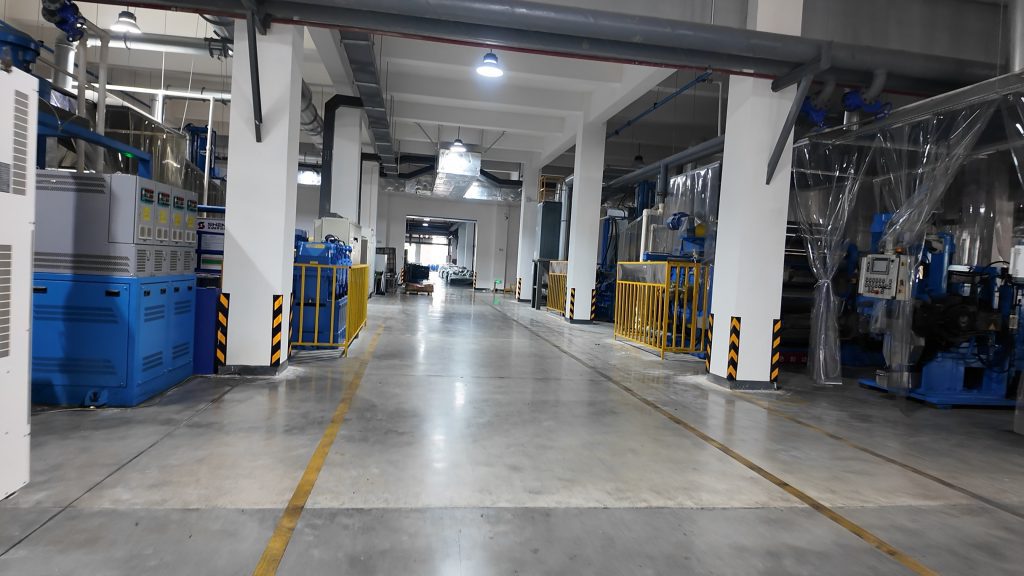
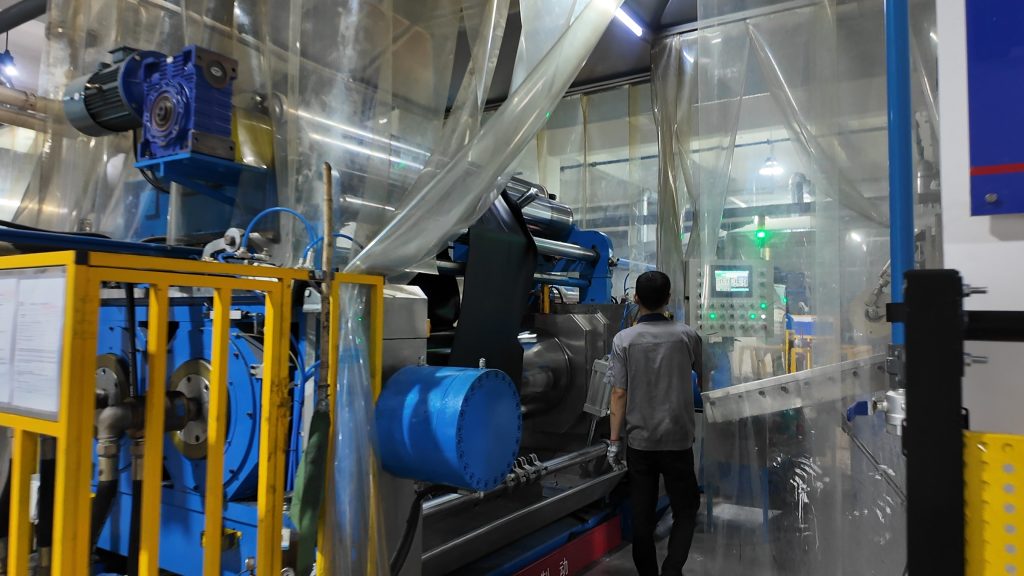
- 23 modern mixing production lines (18 fully automatic)
- Annual production capacity of 90,000 tons of high performance rubber compounds
- CNAS national level laboratory standard testing platform
- Full process MES digital manufacturing system
- Full series specialty rubber compound R&D and mass production capability
- Specialty tire additive R&D center
- High performance nano reinforcing filler R&D platform
Through sustained R&D investment and manufacturing capability development, Sane Zenchem continuously integrates new materials and new processes into its rubber compound products, achieving stable transformation from laboratory R&D to industrial production. We provide high end rubber material solutions that deliver superior performance, batch to batch consistency, and reliable supply security. As a leading China Rubber Compound Manufacturer, we serve global customers with excellence.

Executive Summary
In the past, the specialty rubber compound industry focused primarily on whether materials could meet the initial performance requirements of products. However, with the growth of new energy vehicles, high end equipment manufacturing, petrochemicals, aerospace, and other industries, the criteria by which downstream enterprises evaluate material suppliers are undergoing profound transformation.
The real concerns of enterprises have shifted from “is the product qualified?” to:
- Whether batch to batch performance remains consistent
- Whether materials purchased in different years maintain stable properties
- Whether the supplier possesses long term, sustained production capacity
- Whether full process quality traceability can be achieved
- Whether custom development and production scale up can be completed rapidly
Consequently, the competitiveness of modern rubber compound manufacturers is no longer confined to formulation development, but is built upon comprehensive capabilities across multiple dimensions: material R&D, intelligent manufacturing, quality control, digital traceability, and supply chain assurance.
This white paper presents a systematic overview of the consistency assurance system for high performance rubber compounds—from R&D design and process control to large scale production—based on the manufacturing system of Sane Zenchem (Anhui) Co., Ltd. It analyzes the technical logic linking material properties to manufacturing processes, using typical polymer types such as HNBR and FKM as examples, to provide a reference for rubber product manufacturers establishing supplier evaluation systems.
1. Industry Background: Specialty Compounds Enter the Era of “Performance + Manufacturing Consistency”
1.1 Market Expansion and Demand Diversification
The global rubber compound market continues to expand, with the 2026 market size projected to exceed US$11 billion, while the domestic Chinese rubber compound market is expected to surpass RMB 21 billion. Emerging sectors including new energy vehicles, semiconductor equipment, energy storage systems, and deep sea oil and gas extraction impose demands on rubber seals, vibration isolators, and medium resistant hoses—in terms of temperature resistance, chemical resistance, and compression set—that far exceed those of traditional applications.
Simultaneously, downstream customers’ evaluation criteria for rubber compound suppliers are undergoing profound change. They no longer focus solely on a single test report’s “pass/fail” result, but increasingly scrutinize the drift range of Mooney viscosity between batches, the reproducibility of cure curves, the response time for emergency orders, and the supplier’s technical capability to deliver differentiated innovation at the material level.
1.2 From “Material Supply” to “Technology Enablement” — A Paradigm Shift
In the high end rubber products sector, the value proposition of material suppliers is undergoing a fundamental transformation. In the past, rubber compound manufacturers were viewed as “material processing plants”—simply producing according to customer provided formulations. Today, downstream product manufacturers increasingly expect their rubber compound suppliers to participate deeply in product development, providing professional technical support in material selection, formulation optimization, process validation, and failure analysis.
The key driver of this transformation is that the performance ceiling of a rubber product is determined by the material, while the realization and stability of that performance are determined by the manufacturing process. Only with a deep understanding of both materials science and manufacturing engineering can a supplier genuinely help customers solve real world problems.
2. Full Series Specialty Rubber Compound Platform: One Stop Custom Rubber Compound Manufacturing Solutions
Sane Zenchem has developed a comprehensive product portfolio covering polar rubbers, non polar rubbers, high temperature rubbers, oil resistant rubbers, and specialty media resistant rubbers, meeting the material requirements of diverse industrial sectors.
Main Product Portfolio:
| Polymer | Chinese Name | Key Characteristics | Typical Applications |
| FFKM | Perfluoroelastomer | Ultimate chemical resistance, extreme high temperature | Semiconductor, chemical seals |
| FKM | Fluoroelastomer | High temperature media resistance, ozone resistance | Engine seals, chemical valves |
| HNBR | Hydrogenated Nitrile Butadiene Rubber | High temperature oil resistance, excellent dynamic properties | Automotive oil seals, drilling equipment |
| ACM | Polyacrylate Rubber | Balanced heat and oil resistance | Automotive transmission seals |
| AEM | Ethylene Acrylic Elastomer | Heat and coolant resistance | Automotive thermal management systems |
| ECO | Epichlorohydrin Rubber | Combined low temperature and oil resistance | Fuel lines, diaphragms |
| VMQ | Silicone Rubber | Wide temperature range, electrical insulation | Electronic seals, medical |
| EPDM | Ethylene Propylene Diene Monomer | Weather resistance, polar media resistance | Automotive sealing systems, wire and cable |
| NBR | Nitrile Butadiene Rubber | General purpose oil resistance | Oil seals, gaskets |
| CR | Chloroprene Rubber | Weather resistance, flame retardancy | Industrial conveyor belts, cable jackets |
| NR | Natural Rubber | High elasticity, high strength | Vibration isolators, tires |
Figure 1: Full Series Specialty Rubber Compound Performance Matrix
(Suggested visual: Radar chart or matrix displaying relative performance of each polymer type across dimensions including temperature resistance, oil resistance, chemical resistance, ozone resistance, dynamic performance, and processability. ALT description: “Sane Zenchem full series specialty rubber compound performance matrix — covering 11 polymer types including FFKM/FKM/HNBR/ACM/AEM/ECO/VMQ/EPDM/NBR/CR/NR”)
Leveraging a unified R&D platform and mature database, all polymer types can be custom formulated according to customers’ process conditions, performance specifications, and application environments, with long term, consistent supply assurance.
3. Core Technical Challenge: Why Is It Difficult to Reproduce Laboratory Formulations Stably in Mass Production?
3.1 Failure Logic Under Multi Axial Stress Fields
In actual service conditions, rubber products are subjected to the coupled effects of heat oxidation oil dynamic loading. Single factor accelerated aging tests (e.g., hot air aging alone) often underestimate the actual degradation rate. For sealing components, for example, the evolution of compression set in high temperature oil media deviates significantly from results obtained under purely thermal aging conditions.
Therefore, understanding the performance degradation slope under multi factor coupled conditions has greater engineering significance than single point performance values. This is precisely why specialty polymers like HNBR and FKM are widely adopted in high end sealing applications—they demonstrate superior performance retention under multi stress coupled fields.
3.2 The Gap Between the Formulation Ceiling and the Manufacturing Floor
No matter how excellent the formulation, if filler agglomeration, uneven dispersion of additives, or localized over concentration of curatives occurs during the mixing stage, the fatigue life of the final product may drop by 30% to 50%. These microscopic defects may not be detected in outgoing quality control via macroscopic tensile testing but will manifest in service as premature cracking, stiffness degradation, or leakage failure.
Research shows that the smaller the reinforcing filler particle size, the larger the specific surface area, and the better the reinforcing effect. However, once the particle size is refined beyond a certain threshold, dispersion becomes the new bottleneck—ultra fine particles are highly prone to agglomeration. Without uniform dispersion, even the finest particle size cannot translate into actual reinforcement benefits.
The formulation defines the theoretical performance ceiling, but manufacturing consistency determines the actual quality floor.
3.3 DOE Driven Formulation Robustness Design
Modern rubber compound development typically follows DOE (Design of Experiments) methodology. Through collaborative optimization of formulation variables (polymer grade, filler type and loading, curative and additive systems), mixing energy (mixing time, rotor speed, ram pressure), temperature profiles (drop temperature, cooling rate), and time windows, a manufacturable process window is established for industrial replication.
Compared with single batch laboratory validation, the critical objective is to ensure the process window possesses sufficient robustness, enabling the product to maintain consistent performance output over long term production—even in the face of variations in raw material batches, environmental temperature and humidity fluctuations, and other interfering factors.
4. Intelligent Manufacturing System: Ensuring Excellent Formulations Are Reproduced with Precision
4.1 Production Capacity and Line Configuration
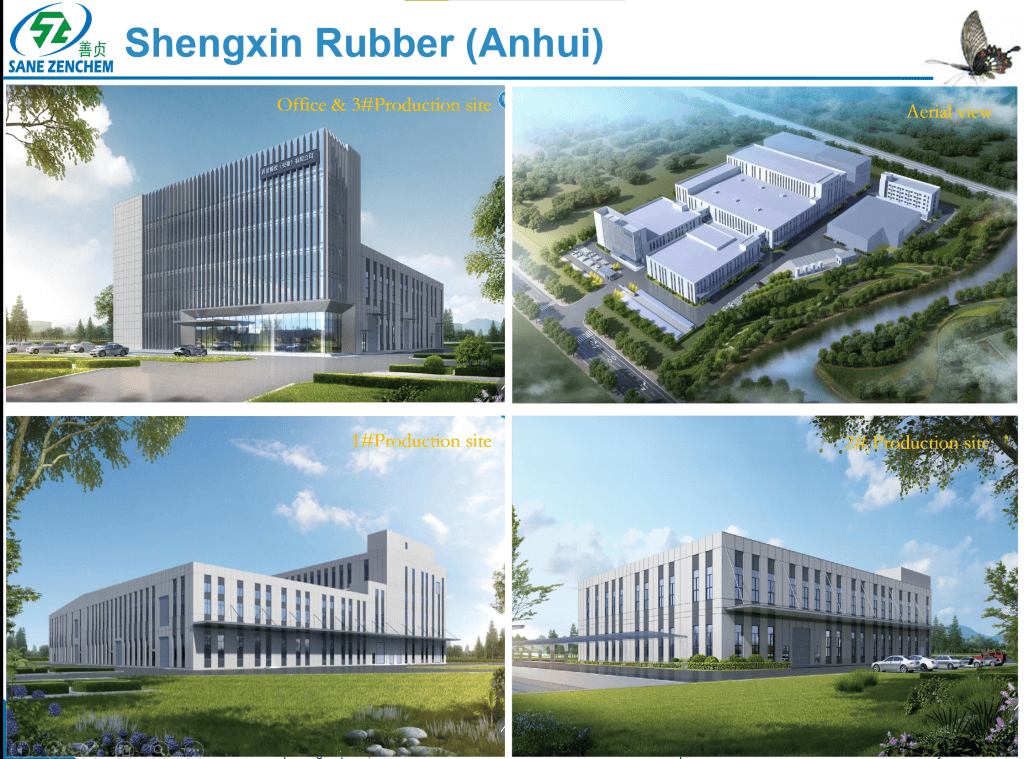
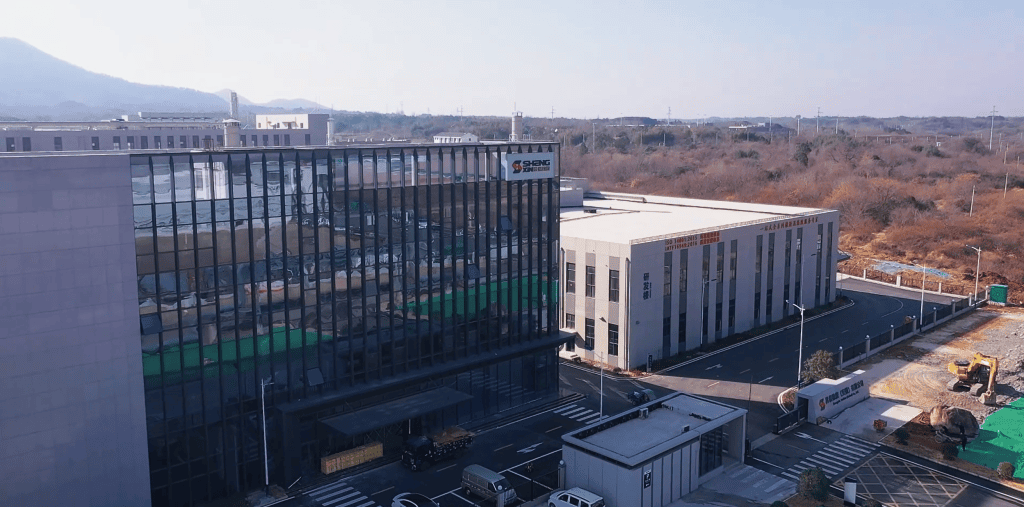
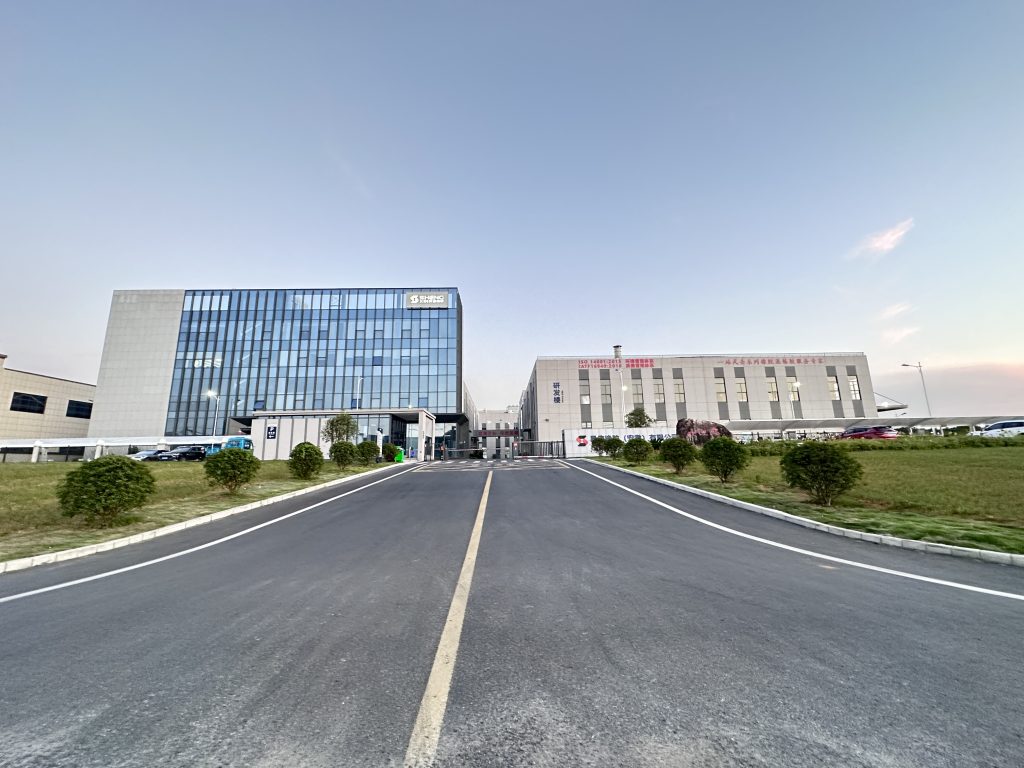
The Sane Zenchem (Anhui) facility is positioned as China’s premium one stop high performance rubber compound supply base, with a total investment of RMB 580 million across 70 mu (approx. 4.7 hectares) of land. Phase I has successfully commissioned 19 fully automatic mixing lines (190E/160E/110E/110L models), with a planned total of 23 mixing production lines. When fully operational, annual production capacity will exceed 90,000 tons, with maximum capacity reaching 106,000 tons per year.
Production lines are arranged by polymer polarity and curing system, featuring dedicated drop door mixer workshops, tilted mixer workshops, specialty rubber dedicated workshops, and high standard environmental protection workshops. This configuration simultaneously accommodates the stringent temperature control and cleanliness requirements of fluoroelastomers, silicone rubber, acrylic rubber, and other specialty polymers.
4.2 SPC Statistical Process Control
The entire manufacturing process employs SPC (Statistical Process Control) methodology to continuously monitor key quality indicators including Mooney viscosity, cure curves (ML, MH, TS2, TC90), and hardness. Control charts are used to promptly identify process variations, enabling preventive quality management rather than relying solely on final inspection.
The core value of SPC lies in detecting trends before problems occur and implementing corrective actions before non conforming products are produced. For batch type production like rubber compounding, SPC means every batch is produced under statistically controlled conditions—not left to chance.
4.3 National Level Laboratory Standard Testing Capability
The facility houses a CNAS national level accredited testing laboratory equipped with 16 categories of specialized testing instruments, including Shore hardness testers, rheometers, ozone aging test chambers, and tensile testers—covering comprehensive core indicators such as hardness, tear strength, tensile properties, aging resistance, and high/low temperature performance. From raw material incoming inspection through process control to finished product release, every batch undergoes full process testing.
Figure 5: CNAS National Level Testing Laboratory — Major Equipment
4.4 Full Process MES and Automated Warehousing
A Manufacturing Execution System (MES) is deployed throughout the workshop, enabling real time data collection and traceability across the entire chain: raw material receiving → batching/weighing → internal/open mixing → straining → calendering/pelletizing → testing → finished product dispatch. Every batch is traceable back to its raw polymer batch number, filler batch number, additive batch numbers, and all mixing process parameters.
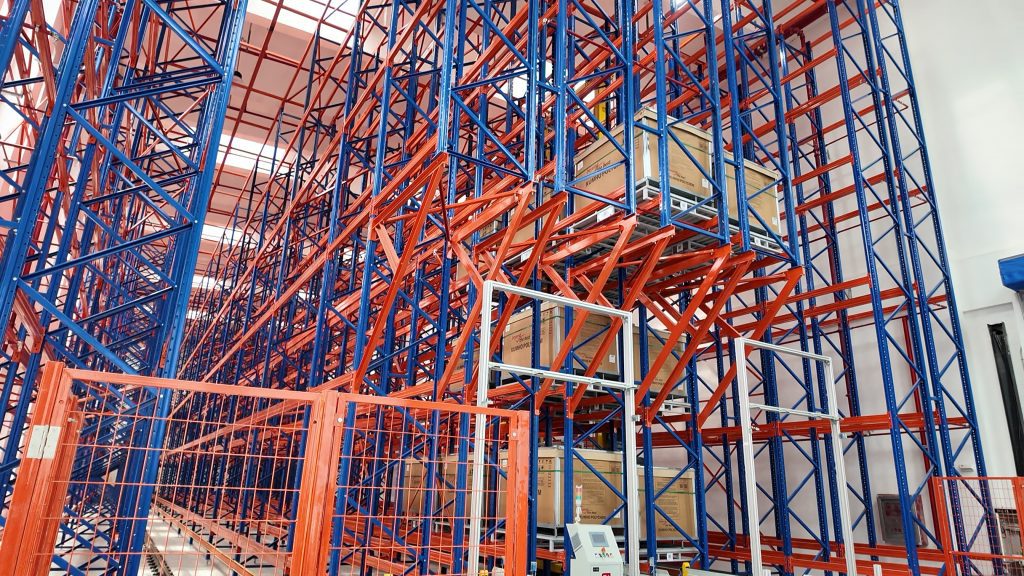
Complemented by intelligent automated warehousing and a WCS (Warehouse Control System), the facility achieves fully automated material receiving, categorized storage, and precision dispatch.
4.5 Global Raw Material Procurement System
Leveraging its proprietary trading company resources, Sane Zenchem has established a global raw material procurement system that sources high quality raw materials directly, significantly reducing procurement costs. This approach delivers high value products to customers while ensuring uncompromising quality.
5. Technology Platform Extension: From Rubber Compounds to a Rubber Material Innovation Platform
Rubber compounds remain the core business of Sane Zenchem and the foundation upon which the company’s technology system is built.
Over the years, the company has continuously participated in customer product development and material optimization, accumulating extensive industry experience in formulation design, process improvement, and product failure analysis. This deep engagement with different rubber systems has also given Sane Zenchem keen insight into the challenges customers face in actual production—including inadequate mixing dispersion efficiency, processing stability fluctuations, limited reinforcement efficiency, and constrained durability improvement potential.
Based on this long term accumulation, Sane Zenchem has progressively extended upstream into the rubber material value chain. While continuing to deepen its rubber compound technology, the company has gradually established a material R&D platform encompassing specialty rubber processing aids, high performance reinforcing fillers, and novel functional fillers—continuously injecting new technical capabilities into its rubber compound products.
5.1 Specialty Rubber Processing Aid Platform
Dedicated processing aids have been developed for different polymer types and processing technologies to improve filler dispersion efficiency, enhance processing flowability, reduce energy consumption, and further improve mixing consistency.
In rubber reinforcement theory, the dispersion state of fillers in the rubber matrix directly determines reinforcement efficiency. Through precise formulation of coupling agents, dispersants, and other additives, filler rubber interfacial interactions can be significantly improved, maximizing reinforcement benefits. Sane Zenchem’s processing aid platform is built on this mechanistic understanding, developing customized additive solutions for various filler systems (carbon black, silica, nano fillers, etc.) and different polymer types (polar/non polar).
5.2 High Performance Tire Additive R&D — Breaking the “Magic Triangle”
Sustained research is conducted on the “Magic Triangle” —the trade off among rolling resistance, wet traction, and wear resistance that is widely recognized in the tire industry.
For a long time, tire formulation design has faced the classic challenge of simultaneously optimizing three key performance indicators:
- Rolling resistance relates to heat generation and energy loss inside the tire during operation, affecting fuel economy.
- Wet traction directly impacts grip, braking distance, and driving safety.
- Wear resistance determines tire service life.
These three performance attributes are interrelated and mutually constraining—improvement in one often compromises one or both of the others. The “Magic Triangle” represents a challenge that rubber tire technologists have long aspired to overcome.
The R&D team focuses on two strategic directions: additive molecular structure design and interfacial interaction modulation, developing a series of specialty additives targeting the “Magic Triangle”:
- Interfacial coupling additives: Optimize filler rubber interfacial interactions through chemical bonding, effectively reducing hysteresis loss while maintaining wear resistance.
- Low rolling resistance functional additives: Reduce dynamic heat generation, significantly lowering the 60°C tan δ value of the compound.
- Wet traction enhancing additives: Improve tire grip on wet surfaces while maintaining low rolling resistance.
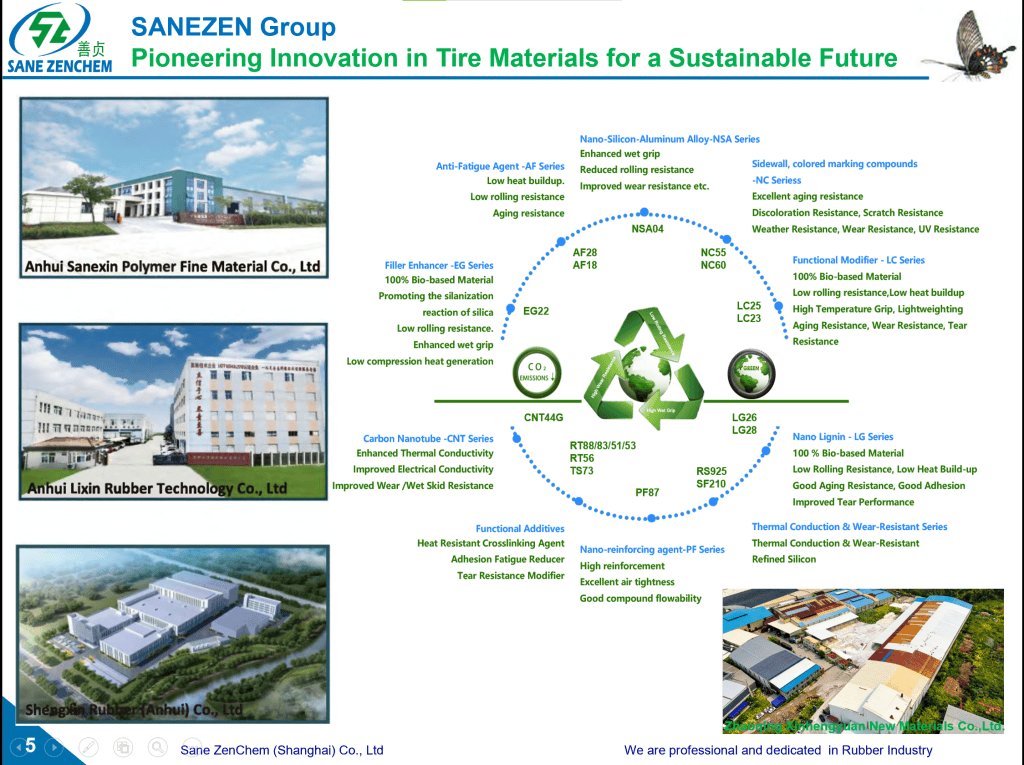
5.3 High Reinforcement Nano Filler Platform
Independent development of ultra fine particle size, high reinforcement fillers—some of which have achieved world leading particle size levels, demonstrating excellent performance in reinforcement efficiency, dispersion behavior, and comprehensive mechanical properties.
Reinforcement Mechanism: The smaller the reinforcing filler particle size, the larger the specific surface area, the more complete the contact interface with rubber molecules, and the better the reinforcement effect. Ultra fine refinement results in quantum size effects, small size effects, surface effects, and macroscopic quantum effects due to changes in the filler’s crystal structure and surface electronic configuration. Ultra fine particles form three dimensional network structures with rubber molecules, effectively restricting rubber molecular chain deformation, thereby significantly enhancing tensile strength, tear strength, and other mechanical properties.
Core Breakthroughs:
- Particle size limit breakthrough: Through unique milling and classification processes, filler particle size has been reduced to unprecedented fineness levels.
- Surface chemical modification: Active functional groups capable of forming chemical bonds with rubber molecular chains are introduced on the surface of ultra fine particles, achieving single nanometer level dispersion.
- Reinforcement efficiency improvement: Compared with traditional reinforcing fillers, equivalent or even higher reinforcement levels can be achieved at lower loading levels.
These innovation platforms do not operate in isolation but work synergistically with the rubber compound R&D system. New additives, novel fillers, and process innovations are first validated on the rubber compound platform and continuously fed back into the formulation database and manufacturing processes, driving ongoing improvements in product performance and manufacturing stability.
For customers, the collaboration extends beyond a rubber compound supplier to encompass a rubber technology partner with sustained material innovation capability.
6. HNBR and FKM — Typical Material Analysis
6.1 HNBR Rubber Compounds: Balancing Heat Oil Dynamic Performance
As an HNBR Rubber Compound Manufacturer, we specialize in hydrogenated nitrile butadiene rubber (HNBR) produced by selective hydrogenation of carbon carbon double bonds in the NBR molecular chain. It retains NBR’s excellent oil resistance while significantly improving heat resistance, ozone resistance, and chemical media resistance, with continuous service temperature capability of 150–165°C. Our HNBR Rubber Compounds for Oil & Gas Sealing Applications are engineered to withstand harsh downhole and refinery conditions.
Typical Data for Five Hardness Grades (HNBR45 – HNBR85):
| Property | HNBR45 | HNBR55 | HNBR65 | HNBR75 | HNBR85 |
| Mooney Viscosity ML(1+4)100°C | 40 | 48 | 56 | 67 | 72 |
| Hardness (Shore A), points | 50 | 57 | 64 | 73 | 84 |
| Tensile Strength, MPa | 10.79 | 13.32 | 17.01 | 18.67 | 20.16 |
| Elongation at Break, % | 520 | 379 | 365 | 336 | 211 |
| Heat Aging 150°C×70h — Hardness Change | +5 | +4 | +3 | +1 | +1 |
| Heat Aging 150°C×70h — Tensile Change | -9.98% | -8.76% | -6.78% | -5.6% | -3.6% |
| IRM 903# Oil Volume Swell | -9.98% | -9.75% | -5.34% | -5.70% | -3.87% |
Data Interpretation:
- Higher hardness grades exhibit superior heat aging and oil resistance but reduced processing flowability.
- HNBR85 retains over 96% of tensile strength after 150°C × 70h heat aging, indicating a more stable crosslinked network structure in higher hardness formulations.
- Customers can select the appropriate hardness grade based on actual sealing pressure requirements and processing equipment capabilities.
6.2 FKM Rubber Compounds: Robust Performance Under Extreme Heat and Chemical Media
As an FKM Rubber Compound Manufacturer, we offer fluoroelastomer (FKM) leveraging the high bond energy of C F bonds, capable of long term service above 200°C. Our FKM Rubber Compounds for High Temperature Chemical Resistance deliver outstanding performance in aggressive media. Taking peroxide cured FKM (LXF100CA/LXF200CA) as an example:
| Property | LXF100CA | LXF200CA |
| Mooney Viscosity ML(1+4)100°C | 53 | 48 |
| Hardness (Shore A), points | 70 | 70 |
| Tensile Strength, MPa | 11.28 | — |
| Elongation at Break, % | 257 | — |
| 200°C×504h Aging — Hardness Change | +3 | — |
| 200°C×504h Aging — Tensile Change | -4.2% | — |
| 150°C×24h Compression Set, % | 26.48 | 23.48 |
| Ozone 80ppm × 40°C × 120h | No cracks | No cracks |
Data Interpretation:
- After 504 hours (21 days) of aging at 200°C, hardness increases by only 3 points, with tensile strength retention exceeding 95%.
- Compression set is controlled at 23%–26%, suitable for high reliability sealing applications.
- No cracks are observed under the severe conditions of 80 ppm ozone concentration at 40°C for 120 hours.
Data are derived from Sane Zenchem laboratory standard formulation test results and are provided for material selection reference only. Actual performance will vary depending on product geometry, curing conditions, and service environment.
Figure 7: Typical Application Scenarios by Polymer Type
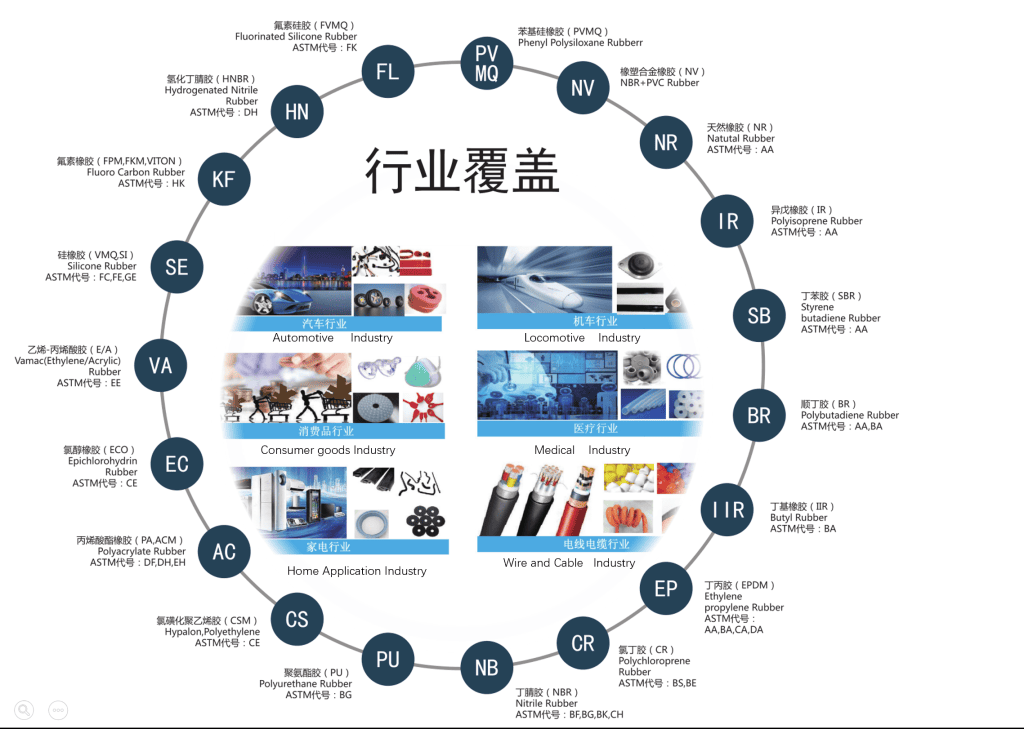
We provide Custom High Performance Rubber Compounds for Automotive Applications — from powertrain seals to thermal management systems — with tailored formulations to meet stringent OEM requirements. For sealing systems, our EPDM Rubber Compounds for Automotive Sealing Systems offer excellent weather resistance and long term durability. We are also a dedicated EPDM Rubber Compound Manufacturer, ensuring consistent quality for high volume production.
7. Customer Value: From Material Procurement to Long Term Manufacturing Assurance
7.1 Reducing Total Cost of Ownership (TCO)
The unit price of high performance rubber compounds may be higher than that of conventional grades, but the comprehensive benefits—extended maintenance intervals, reduced unplanned downtime, and lower customer complaint and return rates—far outweigh the price differential. For sealing components, for example, if FKM or HNBR can extend replacement intervals from 1 year to 3 years, end user maintenance costs decrease by approximately 60%.
7.2 Supply Assurance and Regulatory Compliance
We offer REACH RoHS Compliant Specialty Rubber Compounds across all product grades, meeting stringent environmental regulations. Safety stock mechanisms are in place for critical raw materials. During concurrent multi polymer production, independent production line segregation and rigorous cleaning protocols effectively prevent cross contamination.
7.3 Differentiation Driven by Material Innovation
Through its specialty additives + ultra fine fillers + rubber compounds three in one technology system, Sane Zenchem delivers not only standardized rubber compound products but also customized material performance enhancement solutions—whether breaking through the tire “Magic Triangle” performance bottleneck or achieving leapfrog reinforcement efficiency through ultra fine fillers.
7.4 Full Lifecycle Technical Support
Beyond providing rubber compound products, Sane Zenchem offers technical engagement at customers’ request—including preliminary material selection, formulation optimization, molding process validation, failure analysis, and development of import replacement materials—helping customers shorten R&D cycles and reduce overall manufacturing costs.
8. Technical FAQ
Q1: How should the selection boundary between HNBR and FKM be defined?
A: HNBR is suitable for applications around 150°C involving dynamic fatigue and mineral oil resistance, such as automotive oil seals, vibration isolators, and drilling equipment seals. FKM is suitable for applications above 200°C involving strong corrosive media or extreme cold/ozone environments, such as chemical valves and aerospace seals. The specific selection should be based on actual operating temperature, media composition, and service life requirements, with comparative validation data available from the technical team.
Q2: Are Sane Zenchem specialty additives compatible with existing formulations? Is adjustment of the curing system required?
A: Sane Zenchem specialty additives are designed as directly addable raw materials requiring no modification to the base formulation. Additives are added at the recommended ratio during the internal or open mixing stage to achieve their effect. The technical team can provide specific addition protocols and process parameter recommendations for different polymer types and curing systems.
Q3: How is the dispersion of ultra fine, high reinforcement fillers ensured? Is agglomeration during mixing a concern?
A: Sane Zenchem ultra fine fillers address the dispersion challenge through surface chemical modification, introducing active functional groups on the particle surface that can form chemical bonds with rubber molecular chains. Combined with Sane Zenchem’s specialty dispersion aids and optimized mixing processes, single nanometer level uniform dispersion of ultra fine particles in the rubber matrix can be achieved, fundamentally avoiding agglomeration issues.
Q4: What tangible improvement can Sane Zenchem deliver in breaking through the tire “Magic Triangle”?
A: Based on laboratory test data, Sane Zenchem’s additive systems can reduce the 60°C tan δ value (rolling resistance indicator) by 8%–14%, while DIN abrasion volume (wear resistance indicator) outperforms conventional formulations. Actual improvement magnitude varies with polymer type, filler, and specific formulation; small scale validation is recommended to determine the optimal solution.
Q5: Can Sane Zenchem undertake small batch custom formulations? What is the minimum order quantity?
A: Yes, small trial batches (typically starting from 100 kg) can be undertaken for customer process validation or performance benchmarking. Upon successful validation, seamless transition to mass production orders is possible, with formulation locking ensuring long term consistency.
Q6: Can confidential development be conducted based on customer supplied formulations?
A: Yes. Sane Zenchem has established a comprehensive technical confidentiality system. Exclusive formulation development can be conducted under customer technical agreements, with strict confidentiality applied to all related processes and data.
How to Choose the Right Rubber Compound Manufacturer in China
When selecting a partner, consider the following critical factors:
- Technical R&D capability – Does the manufacturer offer formulation design and optimization support?
- Production consistency – Are SPC and MES systems in place to ensure batch to batch uniformity?
- Quality assurance – Is there a CNAS accredited lab and full traceability?
- Regulatory compliance – Do products meet REACH, RoHS and other global standards?
- Supply reliability – What is the annual capacity and raw material sourcing strategy?
- After sales support – Can the team assist with failure analysis and process troubleshooting?
Sane Zenchem excels in all these dimensions, making us a trusted Specialty Rubber Compound Manufacturer in China for demanding industries. We deliver High Performance Rubber Compounds with Consistent Batch Quality — every batch, every time.
9. Conclusion
An excellent rubber compound originates not only from an excellent formulation but also from a manufacturing system capable of reproducing the formulation’s value with long term consistency.
Truly reliable material supply should deliver to the customer—at every receipt, every production run, and every product batch—consistent processing behavior, consistent cure characteristics, and consistent final quality.
With 23 modern mixing production lines, a CNAS national level laboratory standard testing platform, a full process MES digital management system, and full series specialty rubber R&D capabilities, Sane Zenchem continues to build a complete technology system from material R&D to scale manufacturing—while extending into rubber additives, high performance reinforcing fillers, and other domains, driving continuous innovation in rubber materials technology.
Going forward, Sane Zenchem will remain committed to driving industrial upgrading through materials science and engineering, working alongside customers worldwide to develop more reliable, higher performance, and more competitive rubber product solutions.
10. Contact Us
If you are interested in any of the following, please feel free to contact us for technical documentation or sample support:
- Custom formulation development for specific polymer types
- Additive solutions for tire “Magic Triangle” performance breakthroughs
- Ultra fine, high reinforcement filler samples and test reports
- Cost reduction solutions for import replacement rubber compounds
- Quality assurance agreements for large volume supply
- Factory tours and technical exchange
Sane Zenchem (Anhui) Co., Ltd.
| Item | Information |
| Factory Address | No. 6 Xinqing Road, Xuancheng North Economic Development Zone, Xuanzhou District, Xuancheng City, Anhui Province, China |
| Business Center | Room 1606-1608, Bowo Business Building, No. 11 Puhuitang Road, Xuhui District, Shanghai, China |
| Telephone | +86 21 6487 9251 |
| Fax | +86 21 5106 2693 |
| yorichen@sanezen.com | |
| Website | www.sanezenrubber.com |
 English
  Spanish
  Russian