
Abstract: This report investigates the reinforcement limitations of traditional spherical fillers under extreme operating conditions and proposes a physical barrier and reinforcement solution based on lamellar nanostructures. As a leading High performance rubber reinforcing filler manufacturer , we analyze the performance degradation laws of materials under the coupling effects of dynamic stress and thermo-oxidative environments through comparative experimental data.
1. Industry Background: Structural Contradiction between Reinforcement Logic and Service Life
In the R&D of specialty seals, air springs, and high-performance tire inner tubes, the static life prediction models defined by [ISO 11346] often fail to fully cover actual service environments. A common industry pain point is that even if initial tensile strength and hardness meet standards, materials often exhibit non-linear performance slumping in mid-to-late service stages. To address this, manufacturers are seeking Cost reduction solutions for rubber compounds without compromising safety.
2. Complex Stress Analysis: Critical Variables Leading to Early Failure
Rubber components in actual service endure the coupling stress of heat, oxygen, chemical media, and alternating dynamic loads.
- Micro-crack Induction: During dynamic flexing, traditional spherical fillers like N550 tend to create stress concentration at the filler/polymer interface. Many engineers now ask How to improve air tightness of rubber inner tubes while preventing these micro-defects.
- Performance Decay Curve: In [ASTM D412] standard tests, the tear strength retention of conventional formulas often drops sharply after simulated aging.
3. Technical Solution: Reconstructing the Lamellar Nano-Reinforcement Mechanism
To mitigate systematic failure, technical research has shifted toward high-aspect-ratio lamellar nanomaterials. As one of the top Rubber Functional filler Manufacturers , we utilize the “labyrinth effect” created by these structures within the matrix.
| Evaluation Dimension | Traditional Carbon Black/Silicate (Spherical) | Functional Lamellar Nanomaterials (PF87) | Technical Gains |
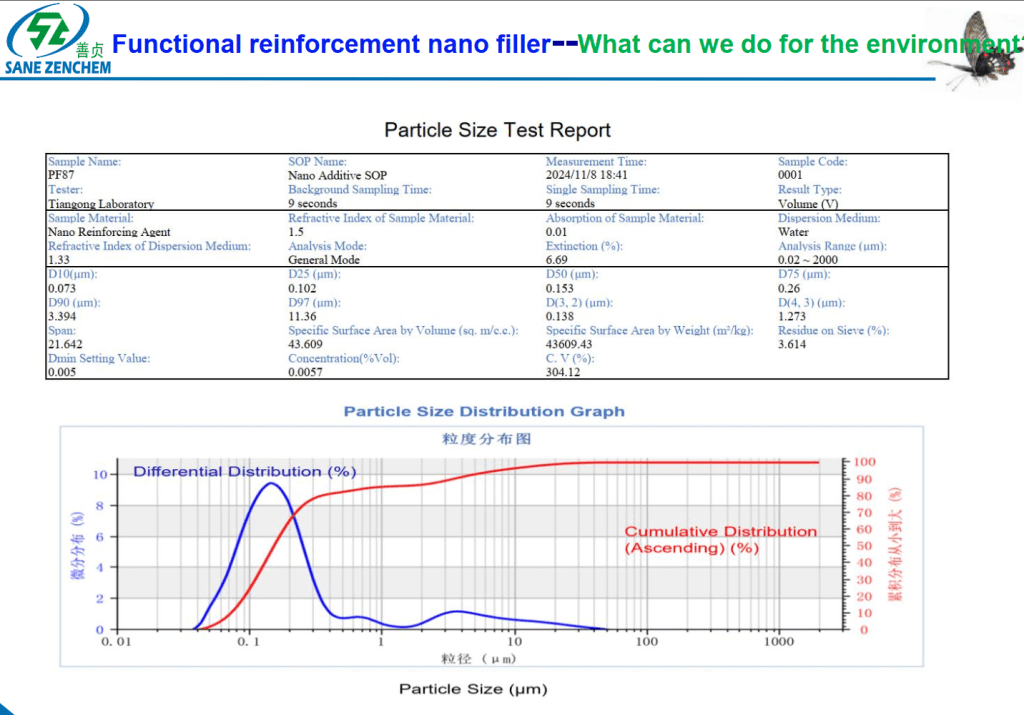
| Micro-morphology | Near-spherical aggregates | Lamellar structure (D50 ≈ 150nm) | Significantly extended physical barrier path |
| Air Tightness | Single path, average barrier | Labyrinth effect, high barrier | Improve air retention in rubber inner tubes |
| Fatigue Resistance | Cracks expand easily through gaps | Forced crack bypassing | Enhanced dynamic fatigue life and flex resistance |
For those looking for a Substitute for N550 carbon black in rubber , this lamellar structure provides a superior balance of physical properties and processability.
4. Experimental Validation: From Accelerated Aging to Real Service Trajectories
While [ISO 188] accelerated aging tests are efficient, their extrapolation can be biased for long-term prediction. We focus on the “slope” of performance decay; experiments show that lamellar systems maintain better modulus retention than conventional carbon black after long-term hygrothermal aging. This is a critical factor for Special Rubber chemical Manufacturers China when designing long-life components.
5. Manufacturing Consistency and Practical Application
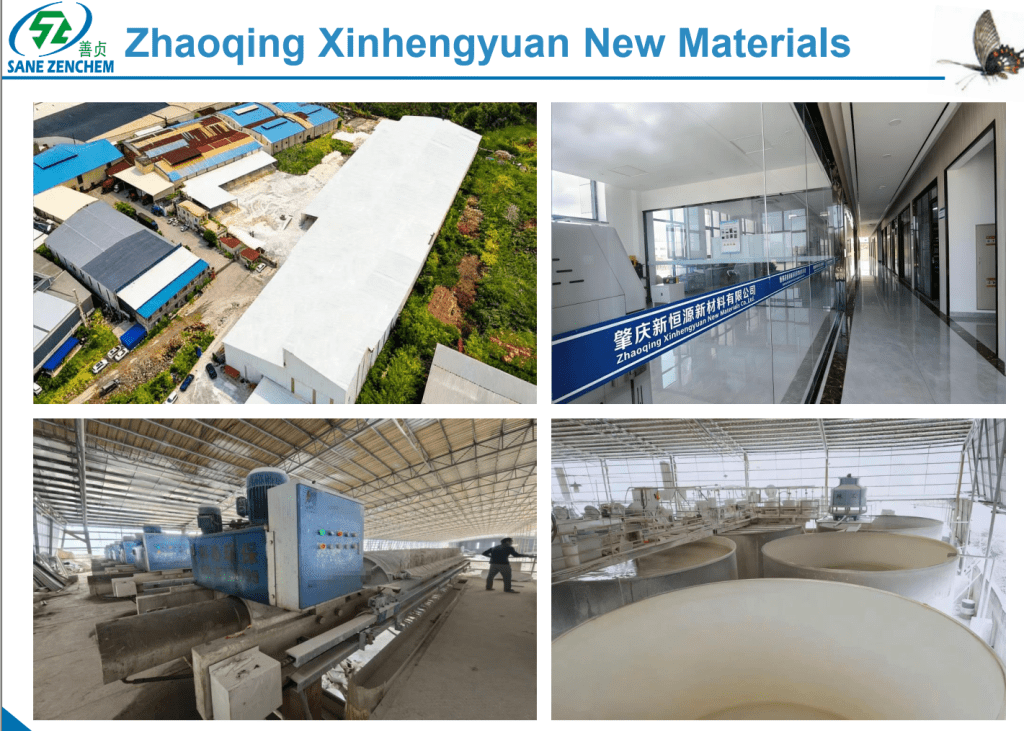
The TDS represents the “theoretical ceiling,” but micro-dispersion at the manufacturing end determines the “floor”.
- Dispersion Logic: If lamellar materials agglomerate, they downgrade to ordinary fillers.
- Cost-Benefit: For many factories, the Replacement for kaolin and calcium carbonate with functional nano-fillers like PF87 allows for higher loading and better reinforcement simultaneously.
6. Total Cost of Ownership (TCO) and FAQ
For critical components, a 20% decline in performance can lead to total system downtime, exceeding the initial material investment. Our data helps clients understand How to reduce rubber compounding costs by extending maintenance cycles rather than just cutting ingredient prices.
Technical Q&A:
- Q: How does this Nano filler for high gas barrier rubber affect extrusion?
- A: The result is positive. Due to its nano-scale particle size and surface modification, it significantly reduces Mooney viscosity and die swell, making it ideal for complex profiles.
- Q: How to ensure dispersion in large-scale mixing?
- A: We ensure wetting through pre-treatment. We suggest adding it at the early stage of mixing and extending the shear time to ensure complete dissociation of the nano-layers.
[Technical Support & Contact]
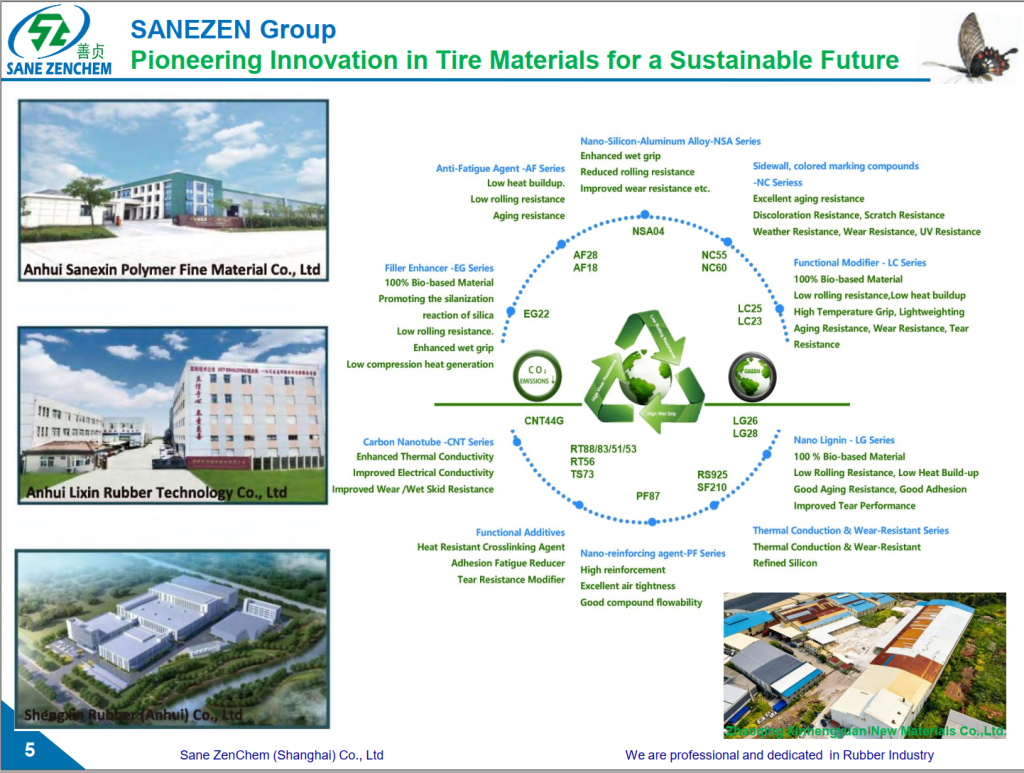
SaneZen Group is committed to providing high-performance, eco-friendly material solutions. As premier Rubber Functional filler Suppliers China, Rubber reinforcing filler Manufacturers, and Rubber reinforcing filler Suppliers, we are ready to support your production needs.
- Phone: +86 136 7164 1995
- Email: yorichen@sanezen.com
- Address: Room 1606, Boda Business Building, No. 11 Pujiangtang Road, Xuhui District, Shanghai, China
Website: www.sanezenrubber.com
 English
  Spanish
  Russian