1. Current Status and Background: Identifying Structural Deviations in Service Life
In the field of elastomer sealing and vibration damping systems, engineers have long relied on standardized tests (such as ISO 11346) to predict service life. However, field data and actual failure analysis repeatedly reveal a significant structural deviation: a systematic gap between theoretical predicted life and actual service life in working conditions.
The root cause of this gap lies in traditional life assessment models, which are often based on accelerated aging data under a single stress (such as constant temperature) and assume that degradation follows a linear Arrhenius extrapolation. Yet, real working conditions are typical non-steady-state processes. As a leading high temperature silicone rubber compound manufacturer, our focus is not merely on the initial static physical properties—data shows that most commercial products meet specifications at “time zero”. The true technical watershed lies in the evolution trajectory of the microstructure under long-term coupling effects of heat, oxygen, chemical media, and dynamic loads. This is a critical factor in how to select silicone rubber for high temperature and oil resistance for high-reliability projects.
2. Composite Stress Matrix Analysis: Deep Analysis of Failure Risks
In actual service, sealing or vibration-damping components are rarely exposed to a single stress field. For instance, in power trains or industrial hydraulic systems, materials endure a composite stress matrix composed of temperature cycling, media erosion, dynamic alternating loads, and environmental oxidation.
Traditional single-dimension accelerated aging tests (e.g., only high-temperature air aging) cannot reproduce this coupling effect. This is particularly vital when designing silicone rubber compound for automotive seals or silicone rubber for aerospace sealing, where performance signals like shear modulus retention and abnormal compression set trajectories are early indicators of failure. Evaluating a material’s “response tolerance” under composite stress, rather than its static strength, is the technical prerequisite for reliable selection.
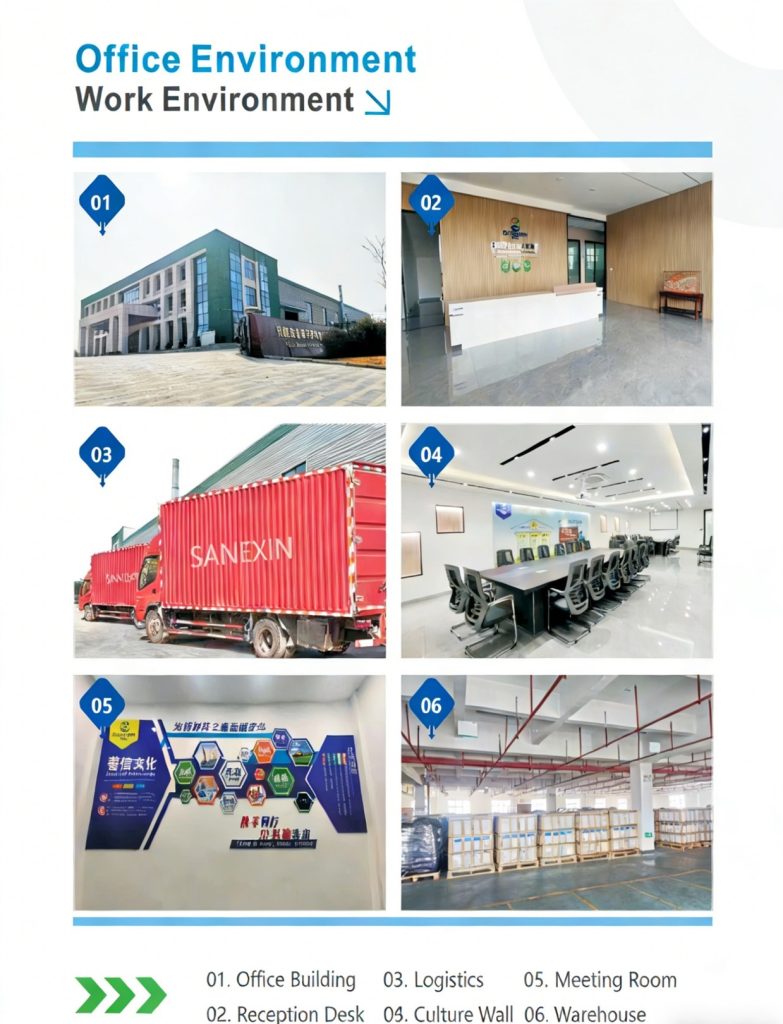
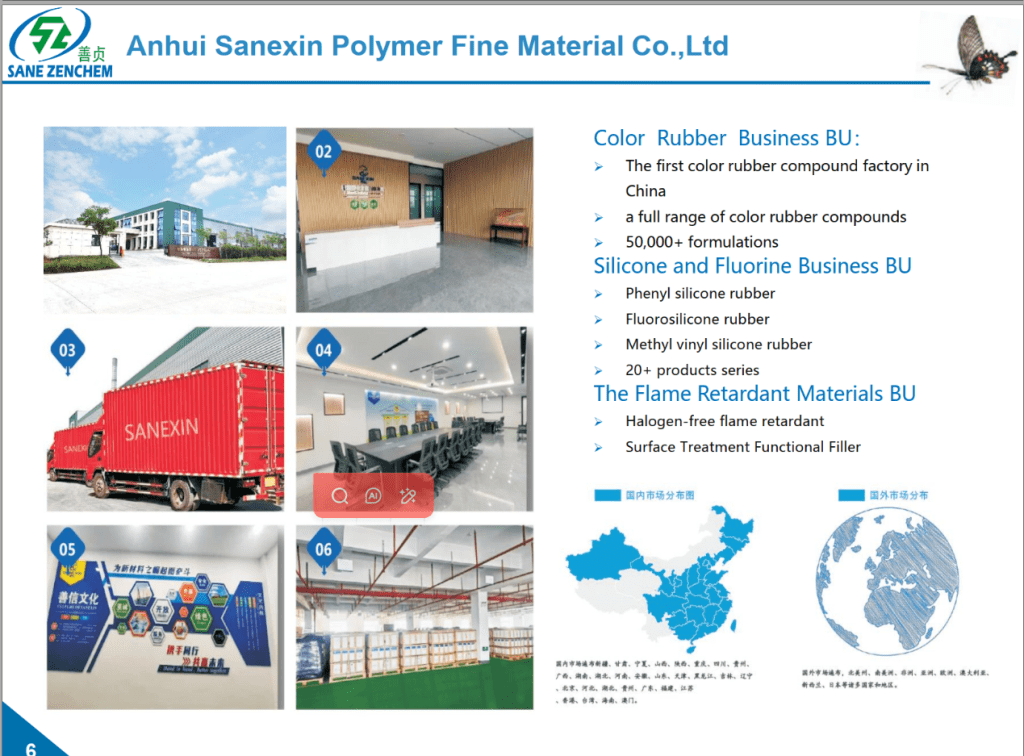
ALT Text: Aerial panoramic view of Anhui Sanexin Polymer Fine Materials Co., Ltd. modern manufacturing facility
3. Microscopic Mechanism Deep Dive: Molecular Structure Support for Performance Gains
To address these challenges, the technical solutions discussed in this report center on optimizing the “structure-performance relationship” at the molecular level. As a professional fluorosilicone rubber supplier China and a dedicated phenyl silicone rubber manufacturer, we focus on building stable and uniform cross-linked networks with specific functional responses.
| Microstructural Features | Traditional Solutions (e.g., High-fill VMQ) | Specialized Functional Modification | Macro-Performance Impact |
| Polymer Main Chain | Single -Si-O- structure | Specific side groups (phenyl, fluoroalkyl) | Wider temp window, optimized oil/solvent resistance |
| Cross-linked Topology | Random radical cross-linking | Optimized, uniform network topology | Lower compression set, long-term resilience |
| Filler-Polymer Interface | Physical adsorption, prone to agglomeration | Chemical bonding via specialized coupling agents | Improved dispersion, enhanced dynamic fatigue life |
4. Empirical Validity Boundaries: Critical Thinking on Standardized Testing
We must recognize that standard methods like ASTM D395 provide benchmark comparison data under simplified conditions, not a direct mapping of real-world performance. The core value lies in capturing the “performance degradation slope”. For instance, our silicone rubber compound with very low compression set for oil seals is evaluated not just for meeting a specification (e.g., <30%), but for its stability when temperatures rise to 200°C or 225°C in the presence of IRM 903 oil.
5. Process Consistency Control: Manufacturing Impact on Technical Ceilings
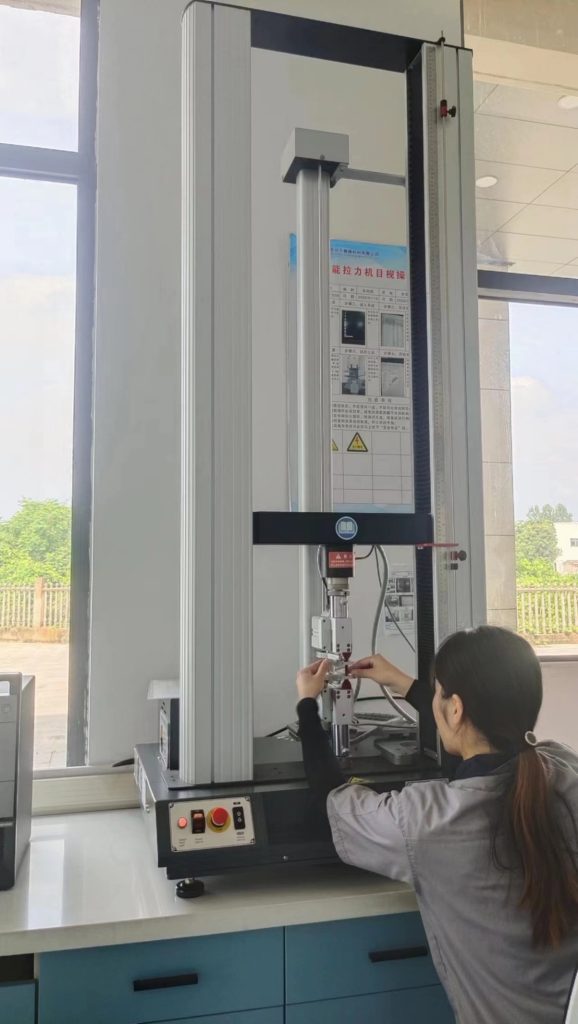
High performance in a laboratory setting has no engineering value if it cannot be replicated in large-scale production. At our heat resistant silicone rubber factory, we manage the risks of micro-scale agglomerates, which act as stress concentrators and priority channels for chemical degradation. We focus on the batch stability of capillary rheological behavior and Mooney Scorch Time to ensure consistent final product quality.
6. Life Cycle Value Engineering: Quantifying Total Cost of Ownership (TCO)
When discussing the economics of high-performance materials, one should introduce the TCO model. Utilizing silicone rubber with excellent oil resistance may lead to a 10-30% increase in direct material costs, but it significantly reduces the TCO by extending maintenance intervals by 2-3 times and reducing the risk of unplanned downtime.
7. Technical Consultation: Evidence-Based FAQ
Q1: Is modified silicone rubber compatible with existing peroxide vulcanization systems? A: Most models, like the FS2200U series, are compatible with standard 2,5-Dimethyl-2,5-di(tert-butylperoxy)hexane systems. This is applicable when selecting the best fluorosilicone rubber for fuel line quick connect seals or a silicone rubber compound for military aircraft hydraulic system seals. Adjustments in injection speed may be needed due to altered relaxation behavior.
Q2: Does flame-retardant silicone rubber compromise mechanical strength? A: Our halogen-free flame-retardant systems, such as those used in silicone rubber compound for transformer oil sealing applications, achieve a balance between UL 94 V-0 ratings and mechanical properties, maintaining tensile strength at 6.5-7.2 MPa.
Q3: Is additional heat-resistant additive needed for 315°C environments? A: We do not recommend self-addition. We offer specialized products like the silicone rubber compound without secondary vulcanization for high temperature or silicone rubber for hot stamping rollers up to 300°C (specifically the SR1200UTH series) that are already optimized for peak stability.
Technical Support & Contact
Factory Name: Shengxin Rubber (Anhui ) Co., Ltd.
Address: Baishou Road, North Zone, Xuanzhou Economic Development Zone, Xuancheng City, Anhui Province, China
Group Business Center: Rooms 1606–1608, Boda Business Building, No. 11 Puhuitang Road, Xuhui District, Shanghai (Sane Zenchem Group)
Phone: +86 136 71641995
Email: yorichen@sanezen.com
Website: www.sanezenrubber.com
 English
  Spanish
  Russian