Surface treated wollastonite has become a standard reinforcement choice for rubber and plastic compounders who need predictable mechanical gains without complicating their processing windows. The mineral’s acicular particle shape delivers stiffness and dimensional stability that spherical fillers cannot match, while proper surface chemistry keeps dispersion consistent batch after batch. For procurement teams evaluating bulk surface treated wollastonite quotes, the real question is not whether the filler works—it does—but whether a given supplier can hold tight specifications at volume and ship reliably to your plant.
How Surface Treatment Changes What Wollastonite Actually Does in a Polymer Matrix
Untreated wollastonite particles sit inside a polymer like gravel in concrete: they add bulk, but the interface between filler and resin remains a weak point. Surface treatment with silane or titanate coupling agents creates covalent bonds between the mineral surface and the polymer chains, turning that interface into a load-transfer zone rather than a stress concentrator. The practical result is that treated wollastonite contributes to tensile strength and impact resistance instead of merely occupying space.
Coupling chemistry also prevents particle agglomeration during compounding. When wollastonite clumps, you get inconsistent mechanical properties and visible surface defects in molded parts. Treated grades disperse more readily in the melt, which means lower mixing torque, shorter cycle times, and fewer rejects at the end of the line.
What Mechanical Improvements Can You Actually Measure?
Compounders working with surface treated wollastonite in polypropylene or nylon typically report tensile strength gains of 15–25 percent and flexural modulus increases of 30–50 percent compared to unfilled resin, depending on loading level and aspect ratio. Impact strength improvements are more variable—high-aspect-ratio grades reinforce well but can reduce elongation at break, so the net effect on toughness depends on your baseline formulation and end-use requirements.
These numbers matter most when you are replacing glass fiber or reducing resin content to hit a cost target. Wollastonite will not match glass fiber pound-for-pound on stiffness, but it processes more gently, causes less barrel and screw wear, and leaves a smoother surface finish on molded parts. For applications where appearance and dimensional stability outweigh absolute strength, the trade-off often favors the mineral filler.
Processing Behavior: Why Dispersion Quality Drives Everything Else
Surface treated wollastonite lowers melt viscosity compared to untreated grades at the same loading. Lower viscosity means faster mold fill, reduced injection pressure, and less energy consumption per part. It also means you can push filler loading higher before the compound becomes too stiff to process—useful when cost reduction is the primary goal.
Dispersion quality shows up immediately in part consistency. Poor dispersion creates weak spots where agglomerates act as stress risers; it also causes flow marks and surface roughness that are unacceptable in visible automotive or consumer goods applications. If you are sourcing bulk surface treated wollastonite, ask for dispersion test data or request a trial batch before committing to a long-term supply agreement.
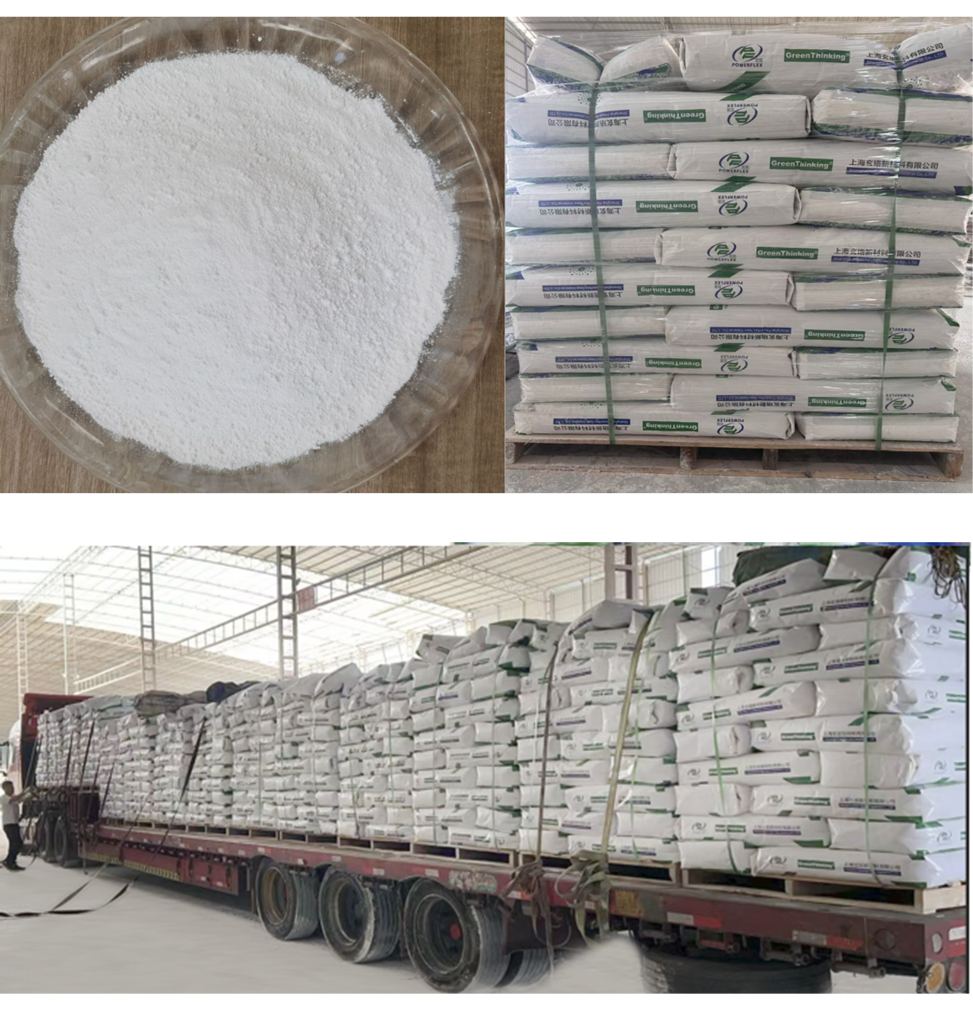
Matching Wollastonite Grades to Your Application Requirements
Rubber and plastic grade wollastonite comes in a range of particle sizes and aspect ratios, each suited to different performance priorities. Fine powders with low aspect ratios (around 3:1) improve surface finish and flow but contribute less reinforcement. High-aspect-ratio acicular grades (15:1 or higher) maximize stiffness and dimensional stability but require more careful compounding to preserve needle length. Ultra-fine grades below 5 µm disperse easily and work well in thin-wall molding, though they cost more per kilogram.
| Grade Type | Aspect Ratio | Typical D50 | Best Fit |
|---|---|---|---|
| Fine Powder | 3:1 | 5–10 µm | Surface finish, flow |
| Acicular | 15:1 | 10–20 µm | Stiffness, reinforcement |
| Ultra-Fine | 2:1 | <5 µm | Thin-wall, high flow |
Surface chemistry varies as well. Silane treatments optimized for polypropylene differ from those designed for nylon or EPDM rubber. Specifying the wrong coupling agent wastes money and undercuts performance, so confirm that your supplier offers grades matched to your polymer system.
What to Evaluate When Sourcing Bulk Wollastonite from China
China accounts for a significant share of global wollastonite production, and Chinese suppliers can offer competitive pricing on bulk orders due to scale and proximity to raw material deposits. The challenge for international buyers is verifying that cost savings do not come at the expense of consistency or lead time reliability.
When evaluating a China-based wollastonite supplier, request certificates of analysis for recent production lots and compare particle size distribution, aspect ratio, and surface treatment loading against your specifications. Ask about quality management certifications—ISO 9001 is a baseline, but some compounders also require IATF 16949 for automotive supply chains. Confirm packaging options (bulk bags, palletized sacks, or container liners) and typical lead times from order confirmation to port departure.
If your production schedule cannot tolerate supply interruptions, consider qualifying a secondary source or holding safety stock. Freight disruptions and port congestion have made single-source strategies riskier than they were five years ago.
How Sane Zenchem Maintains Specification Control at Volume
Sane Zenchem operates production lines equipped with in-line particle size monitoring and automated surface treatment dosing, which reduces batch-to-batch variation compared to manual processes. Finished product testing includes laser diffraction for particle size distribution, oil absorption for surface treatment efficacy, and moisture content verification before packaging.
For customers with tight incoming inspection requirements, we provide lot-specific certificates of analysis and can arrange third-party testing through accredited laboratories. If your application demands custom particle size cuts or non-standard coupling agents, our technical team can develop a tailored grade—though minimum order quantities apply for specialty formulations.
Cost Structure: Where the Savings Actually Come From
Surface treated wollastonite typically costs more per kilogram than untreated grades or commodity calcium carbonate, but the total cost picture includes processing efficiency and downstream performance. Lower melt viscosity reduces energy consumption and cycle time. Better dispersion cuts scrap rates. Improved mechanical properties may allow you to reduce wall thickness or eliminate secondary reinforcement, saving material cost per part.
The economic case is strongest when you are replacing a more expensive filler (glass fiber, talc with higher loading requirements) or when part performance is currently marginal and rejects are eating into margins. If your current formulation already meets specifications comfortably, switching fillers for cost savings alone requires careful validation to ensure you do not introduce new problems.
If your current formulation is borderline on stiffness or impact and you are considering a filler change, it is worth running a trial with surface treated wollastonite before locking in a new supply contract.
Where Wollastonite Fits in the Shift Toward Recycled Content
Recycled polypropylene and nylon often have lower mechanical properties than virgin resin due to chain scission during reprocessing. Adding surface treated wollastonite can recover some of that lost stiffness and strength, making recycled compounds viable for applications that previously required virgin material. This approach supports sustainability targets without forcing a complete reformulation.
The filler also helps mask the variability inherent in recycled feedstocks. Because wollastonite contributes a consistent reinforcement effect, it narrows the property range of batches made from mixed-source recyclate. For compounders supplying automotive or appliance OEMs with recycled-content mandates, this consistency is often more valuable than the mechanical improvement itself.
Request a Bulk Surface Treated Wollastonite Quote
To discuss specifications, lead times, or custom grade development for your rubber or plastic application, contact Yori Chen at yorichen@sanezen.com or +86 136 7164 1995.
Frequently Asked Questions About Surface Treated Wollastonite
What performance differences justify the cost premium of surface treated wollastonite over untreated grades?
Surface treated wollastonite bonds chemically to polymer chains through coupling agents, which converts the filler-resin interface from a weak boundary into a load-bearing zone. This bonding mechanism produces measurable gains in tensile strength (typically 15–25 percent in polypropylene), flexural modulus, and impact resistance that untreated grades cannot deliver at equivalent loading. The treatment also prevents particle agglomeration, which improves dispersion, lowers melt viscosity, and reduces scrap from surface defects. For applications where mechanical performance or surface quality is critical, the cost premium is recovered through fewer rejects and the ability to reduce resin content or wall thickness.
Which end-use sectors see the largest performance gains from rubber and plastic grade wollastonite?
Automotive interior and under-hood components benefit most because they require dimensional stability across temperature cycles, resistance to creep under sustained load, and acceptable surface appearance without painting. Electrical housings and connectors gain from wollastonite’s contribution to dielectric strength and flame retardancy when combined with appropriate additives. Construction profiles and pipes use the filler for stiffness and weatherability. Consumer goods with visible surfaces—appliance housings, power tool casings—value the smooth finish that well-dispersed wollastonite provides compared to glass fiber reinforcement.
How does Sane Zenchem verify that bulk shipments meet the specifications on the certificate of analysis?
Every production lot undergoes laser diffraction testing for particle size distribution, oil absorption measurement to confirm surface treatment loading, and moisture content verification before packaging. Certificates of analysis accompany each shipment and include lot-specific data rather than generic specification ranges. For customers with stringent incoming inspection protocols, we can arrange third-party testing through accredited laboratories or provide retained samples for independent verification. If you need to qualify our material against a specific internal standard, reach out to discuss a trial shipment before committing to volume orders.
If you’re interested, you may want to read the following articles:
solving challenges rubber dynamic heat generation reversion mechanism data application solutions natural rubber anti fatigue agents
how fundamentally enhance adhesion strength service life energy efficiency rubber products critical role high performance rubber composite bonding systems
upgrade your compounds cost effective rubber reinforcing filler manufacturers
high performance rubber filler manufacturer low heat high abrasion resistance thermal stability industry background market status
 English
  Spanish
  Russian